Buds are appearing, the last winter flowers fading slowly as crocus and snowdrop take their turn, and vegetation is building up to a frenzy. April is the month for sowing the lawn, planting summer bulbs and sowing carrot, bean and beet straight into the plot — leave the bulb patch unmown, and it will repay you next spring.
It is an important month for any garden, balcony and terrace, because vegetation is building up to a frenzy.
Buds appear, the first winter flowers are fading slowly as spring flowers start to bloom in turn.
This is the right time to push through with your spring sowing if this is a new lawn
If your lawn is already a few years old, you may need to de-thatch it. Dethatching helps the soil breathe. Find our de-thatching advice here.
You may now start mowing your lawn regularly without encountering any difficulties.
If you’ve got a patch where many spring flowers like crocus or snowdrop popped, up, refrain from mowing there until later in the season.
To increase the impact of this mini-bulb patch, go ahead and remove some of the grass by delicately pulling it out. The bulb flowers will benefit from not having too much competition, and in time they’ll cover the whole surface.
This gives bulbs time to recover nutrients for next spring.
Rub rose suckers off below the graft union while they are still soft.
Draw the mulch back from trunks and rose stems; bark that stays wet rots.
Advice for the vegetable garden
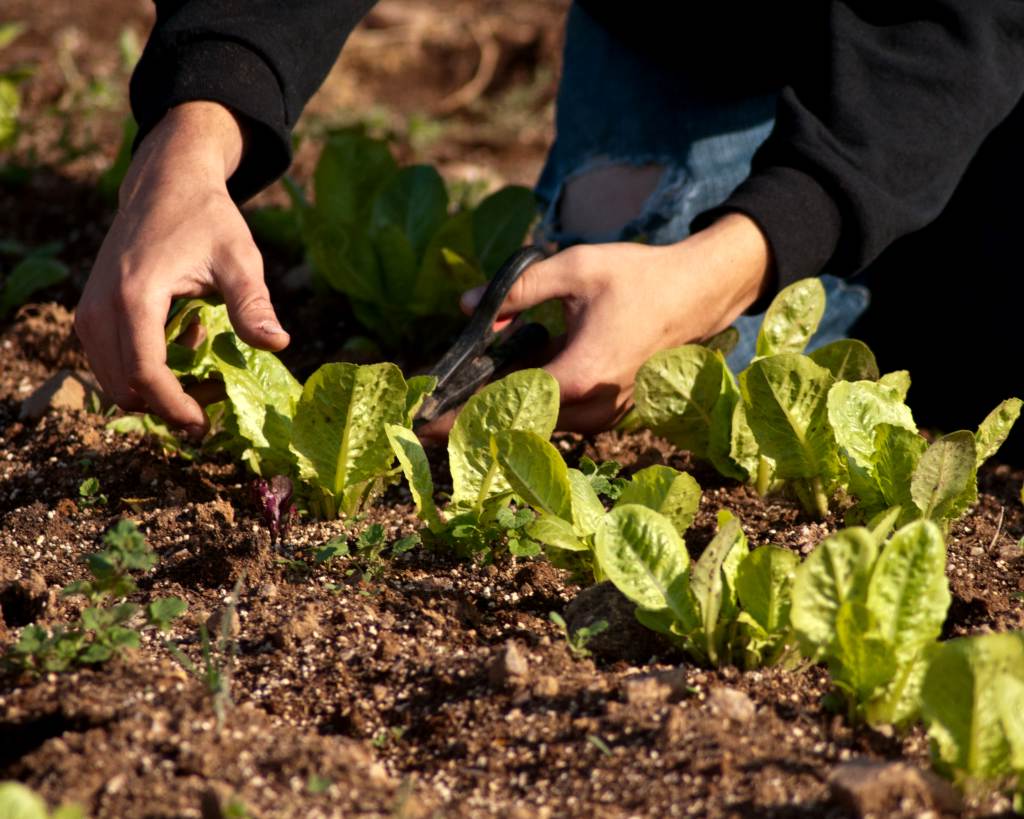
Thinning spring lettuce yields the first salad greens
Add dehydrated manure, organic soil conditioner and compost to the soil as you spade it or rototill to prepare the ground for future seedlings and vegetable plants.
In April it is already possible to sow directly in the plot (out in the open) for several varieties of vegetables.
As regards harvesting, it’s time to harvest your first asparagus (planted from the year before) and spring radish. Also, thin your spring lettuce which will give you your first salad greens, and start sowing summer lettuce.
Advice for balconies and terraces
It’s the month to plant summer-blooming and fall-blooming bulbs as well as annuals and climbing plants.
And protective winter coverings can finally be removed without fear!
Image credits (edits Gaspard Lorthiois):
CC BY-SA 2.0: Dennis Jarvis
Repot perennials and shrubs that have outgrown their containers, moving them into a pot one size larger with fresh potting mix.
Where a pot is too heavy to move, scrape off the top few centimetres of tired compost and top it up with fresh mix instead.
Check that drainage holes are clear before growth takes off.
Tender balcony plants that wintered indoors need a week or two outside in the shade during the day before being left out permanently, or their leaves will scorch.
Written by Gaspard Lorthiois | Loves helping out, especially when it comes to growing things. Worked in herbal medicine, runs a farm, and dabbles in tech. Master's degree and engineer.