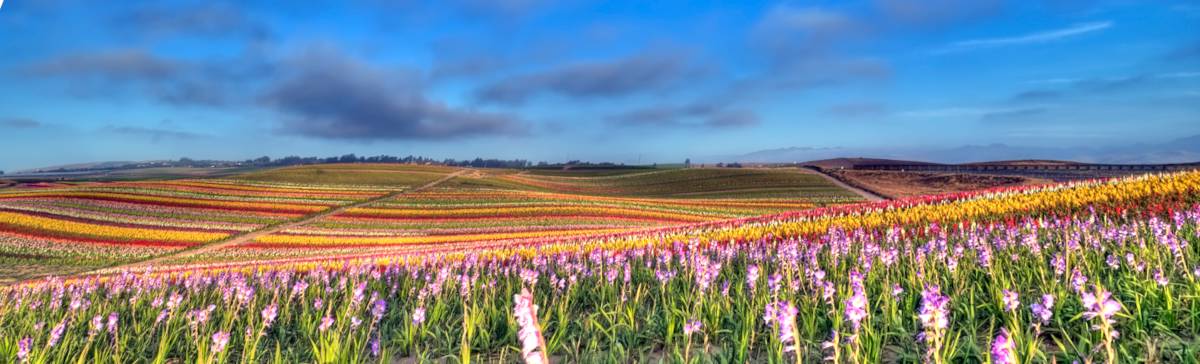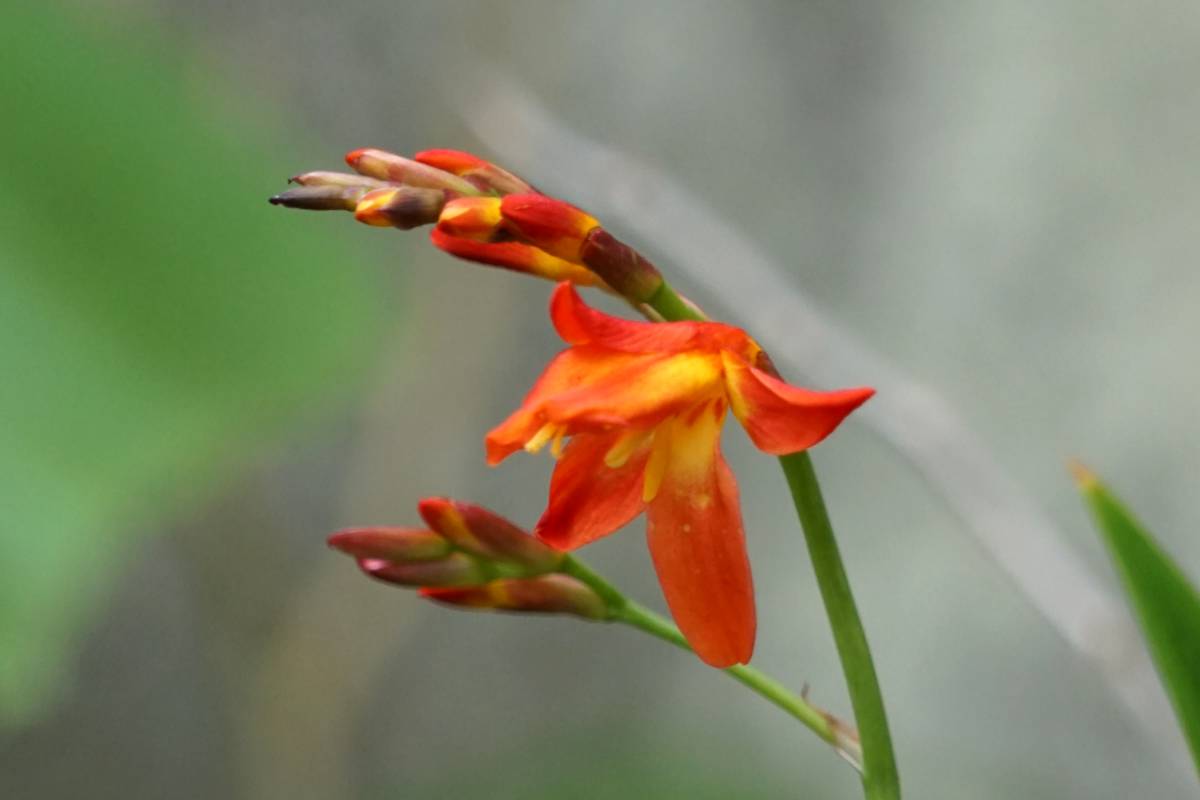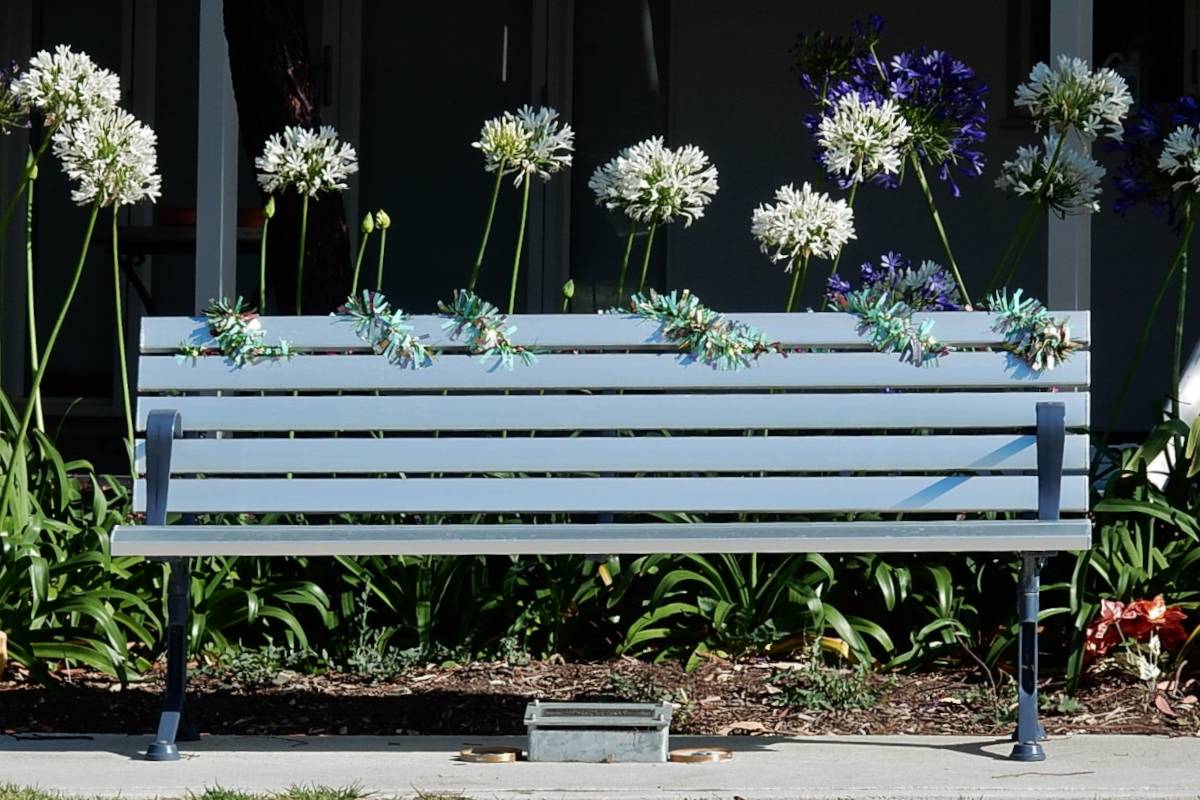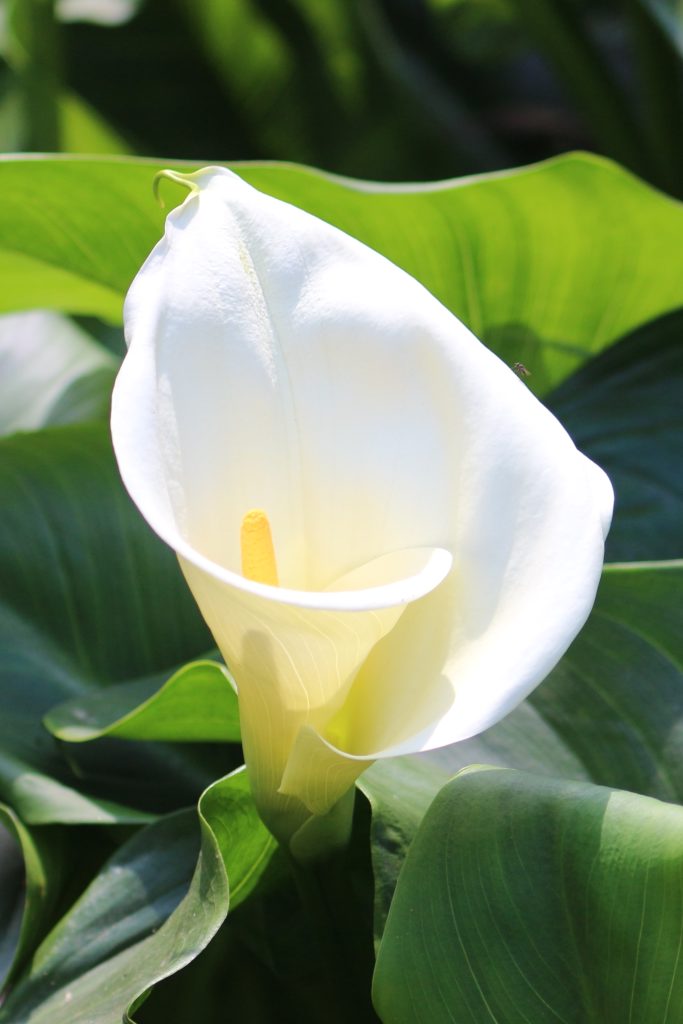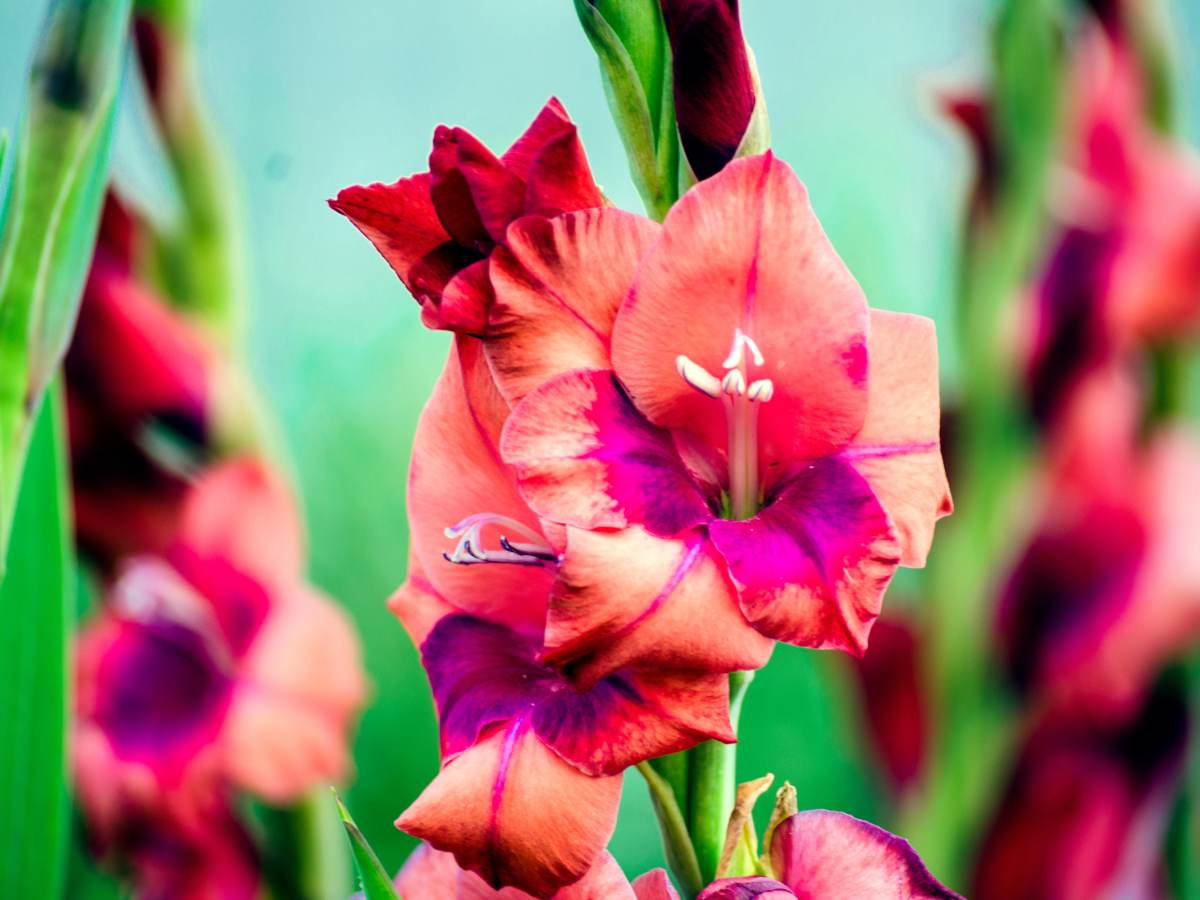
Its flower-bearing stems carry blooms from summer right into autumn, which is why gladiolus is the star of cut flower bouquets as well as a fine plant for beds and edges. Give it full sun and free-draining soil — stagnant water rots the bulbs — and regular watering and feeding bring spectacular flowering.
| Name | Gladiolus |
|---|---|
| Family | Iridaceae |
| Type | bulb plant |
| Height | 20 to 40 inches (50 to 100 cm) |
| Exposure | full sun |
| Soil | ordinary |
| Flowering | summer → fall |
Planting and caring for gladiolus from spring to winter means to perform several small steps along its life cycle that will increase its blooming. In summer, we admire the magnificent flowers, and in winter we care for the roots and keep them from freezing…
Gladiolus is planted in spring and until the beginning of summer to a depth of 4 inches (10 cm) with a spacing of about 8 to 10 inches (20 to 25 cm) between bulbs.
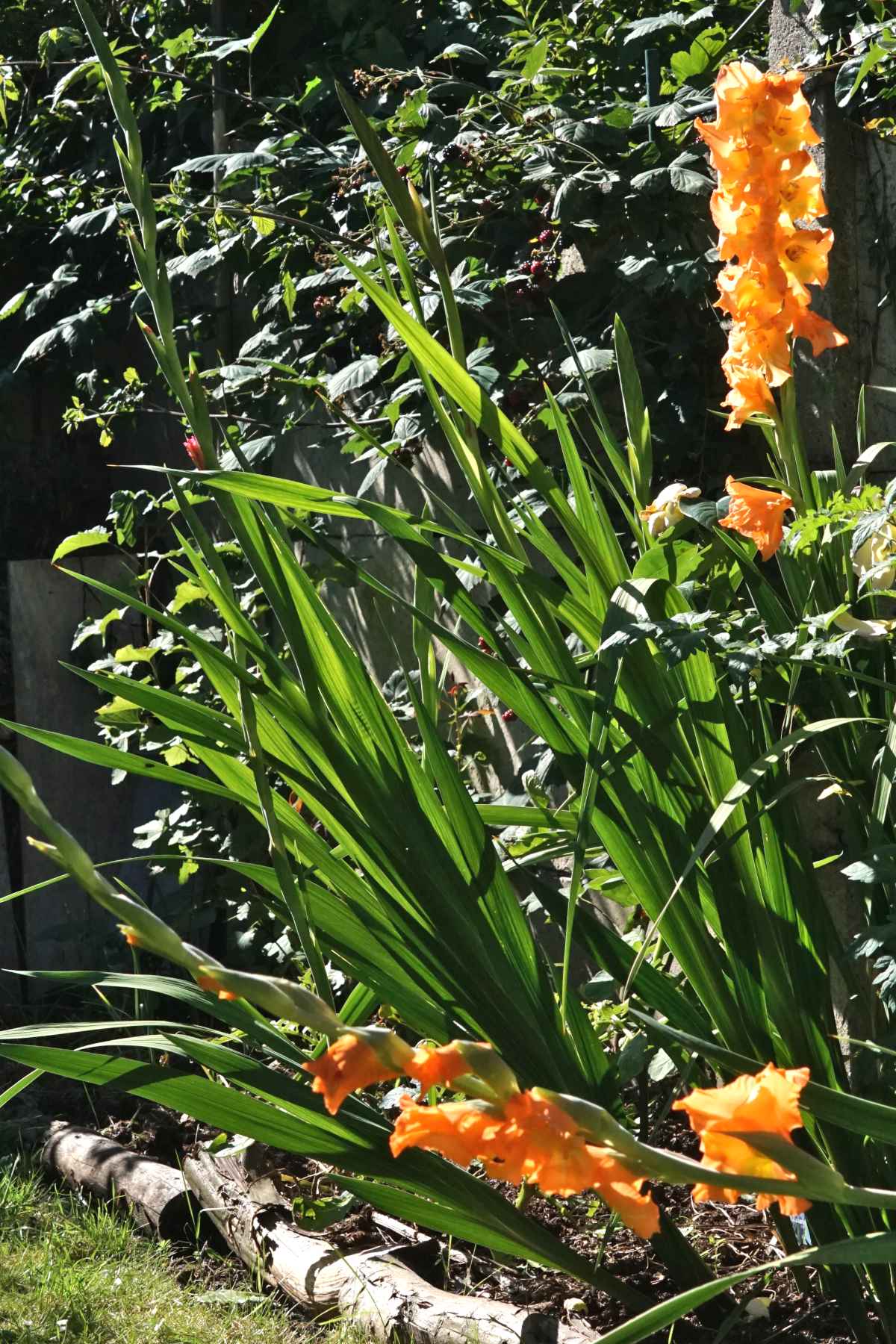
For beautiful blooming, choose a mostly sunny spot and rather light soil.
If you plant your gladiolus in spots that have different levels of shade, the blooming will be in stages. Those with the heaviest shade will bloom last.
Well drained soil is a mandatory criteria when planting gladiolus.
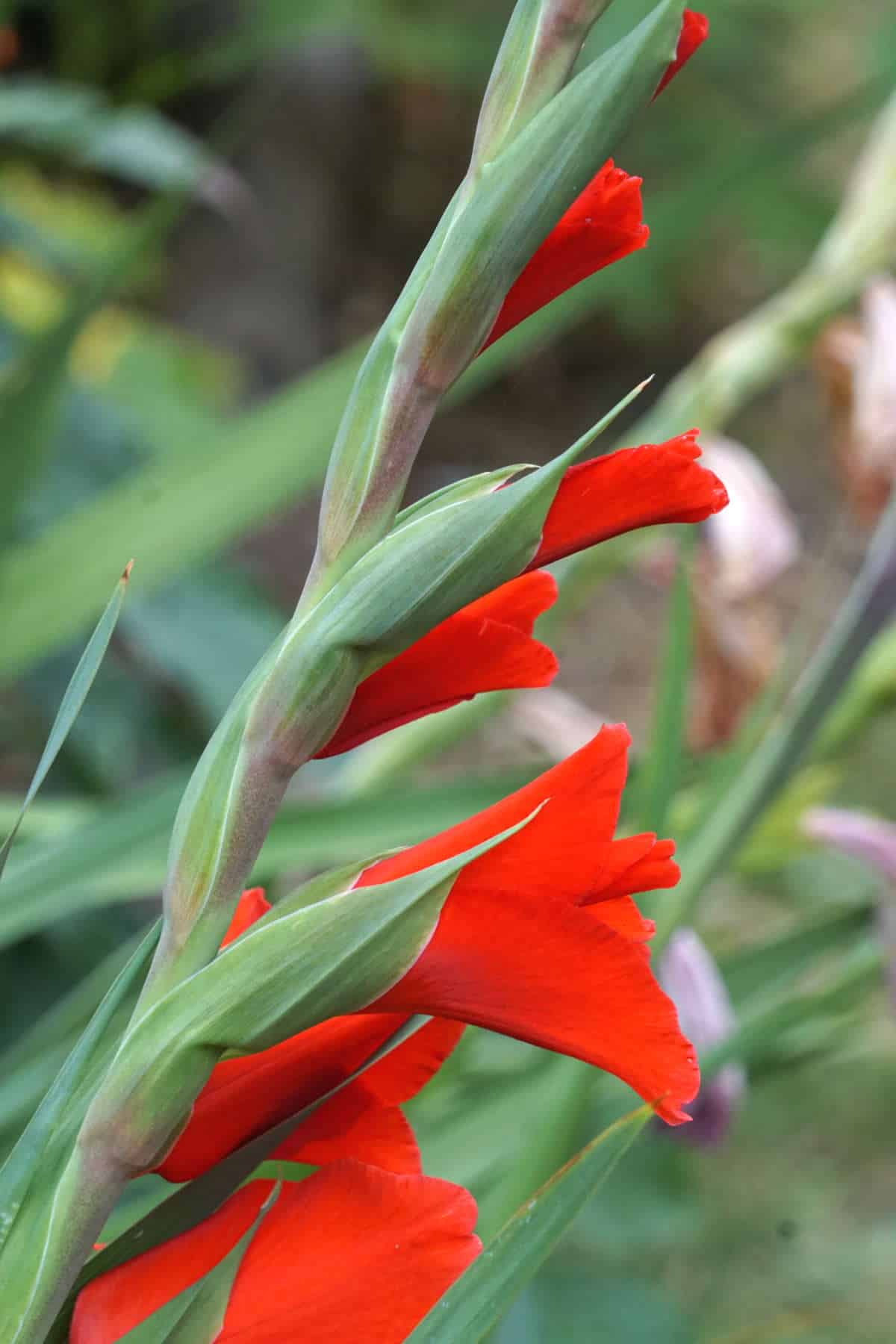
This flower bulb prefers warm places, or else it won’t bloom.
Its flowers are particularly alluring, which makes it the star of cut flower bouquets.
Gladiolus are also very beautiful flower bed or edge plants when grouped in small clusters.
You can also grow them in rows, to produce cut flowers destined to adorn bouquets.
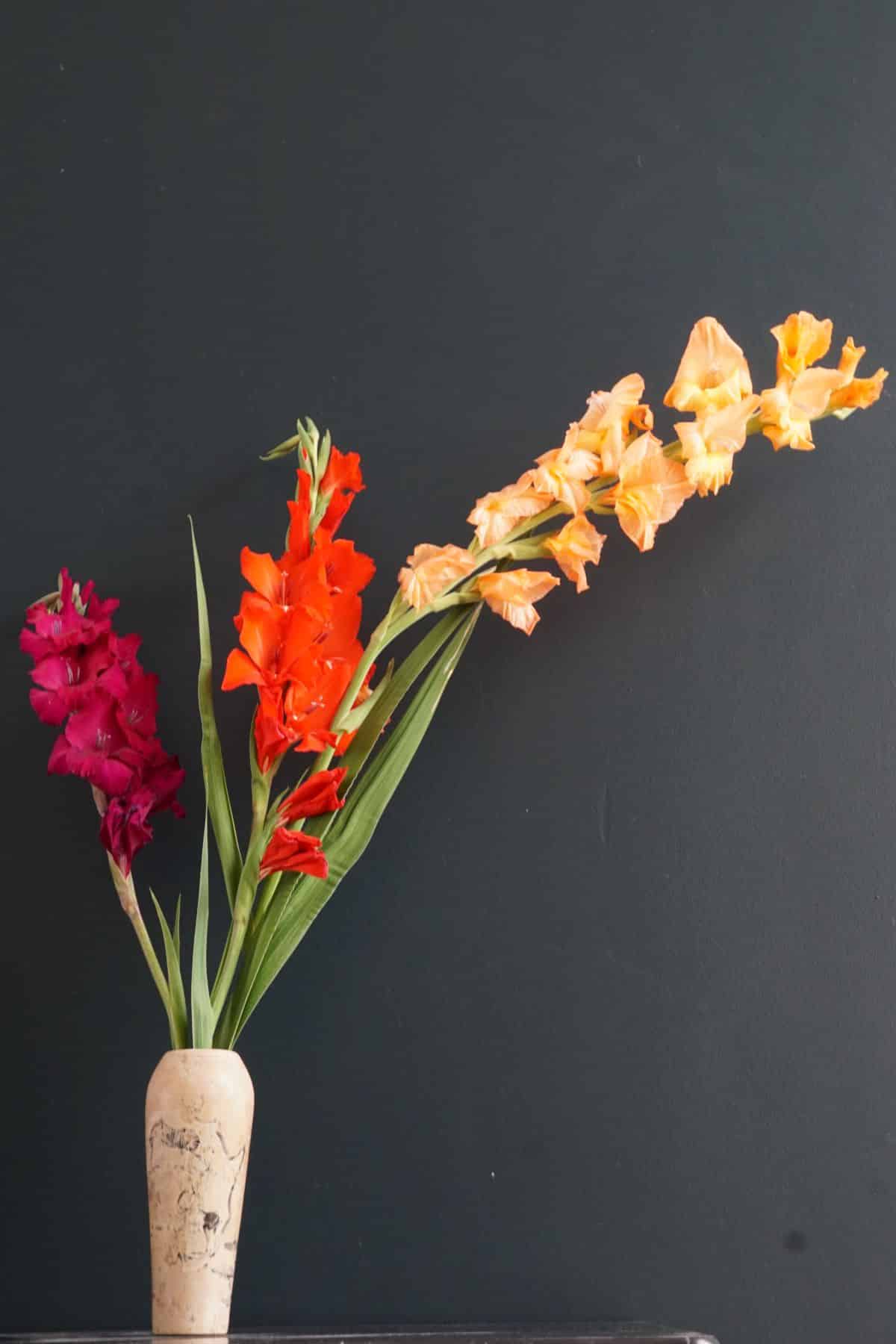
To use gladiolus in bouquets, you can cut the flower-bearing stems, but you must leave some of the green leaves on the stem to keep nourishing the bulb.
If the stem is cut too low, the gladiolus might not flower again in the following year.
Regular watering and adding flower fertilizer will induce spectacular and abundant flowering.
Gladiolus range from waist-high hybrids bred for the cutting row to slender, small-flowered types that suit pots and mixed borders. The selection below covers the colours and heights most commonly offered as corms.
| Variety | Flower colour | Height | Best use |
|---|---|---|---|
| ‘The Bride’ | Pure white, green throat | 24 in (60 cm) | Pots and border edges |
| ‘Peter Pears’ | Apricot salmon, red throat | 40 in (100 cm) | Cut flowers, warm schemes |
| ‘Green Star’ | Lime green | 44 in (110 cm) | Bouquets, foliage contrast |
| ‘Nymph’ | White, red-pink blotch | 24 in (60 cm) | Small clumps in beds |
| ‘Priscilla’ | White, pink edge, yellow throat | 40 in (100 cm) | Cut flowers |
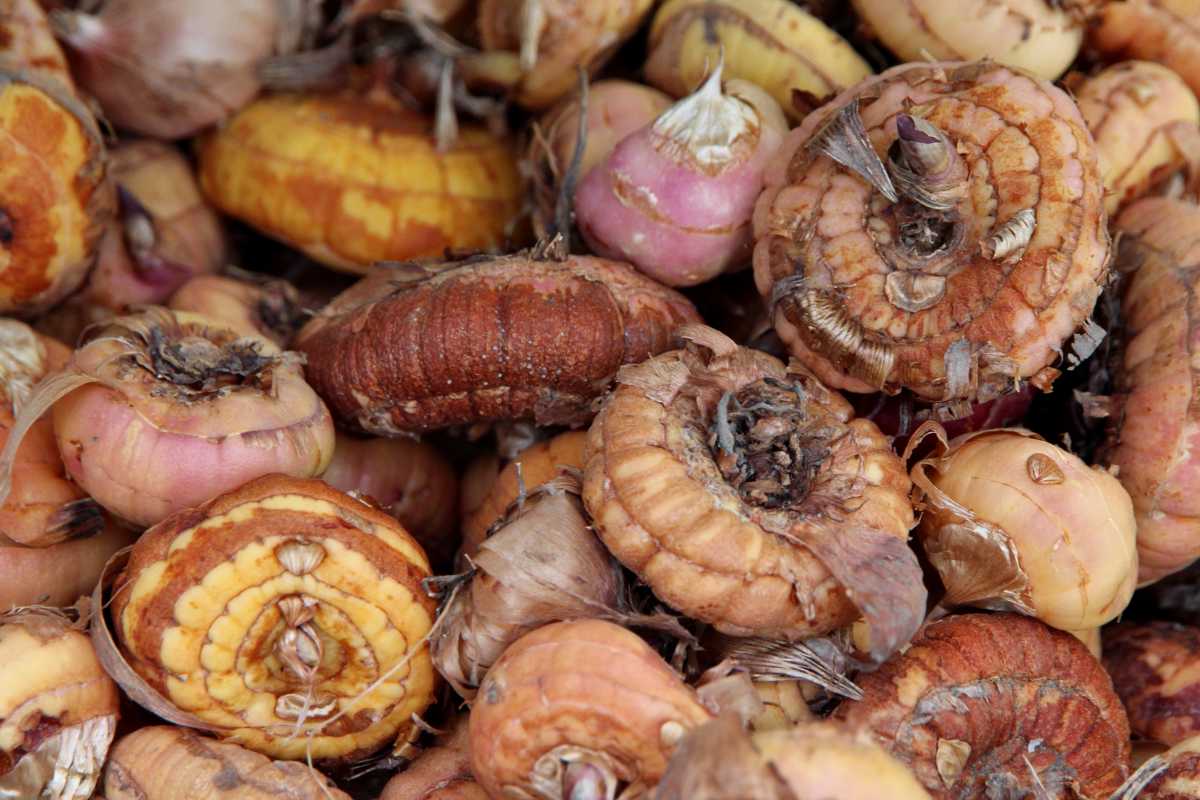
When gladiolus leaves have turned yellow but no earlier than that, cut the leaves to a stub. Indeed, the yellowing of leaves shows the transfer of nutrients from leaf to bulb, preparing stocks for the following blooming season.
In fall, pull out the bulbs, clean them and dry them with a brush, store them in a cool, dark spot over the winter, ready for replanting in the following spring.
If your climate permits and that the weather stays mild, you can leave them in the ground all winter long. But only do this if it doesn’t freeze in your area.
Gladiolus will produce offshoots called bulblets. These are tiny bulbs that appear to the side of the mother bulb. Offshoots are genetically identical to the mother plant.
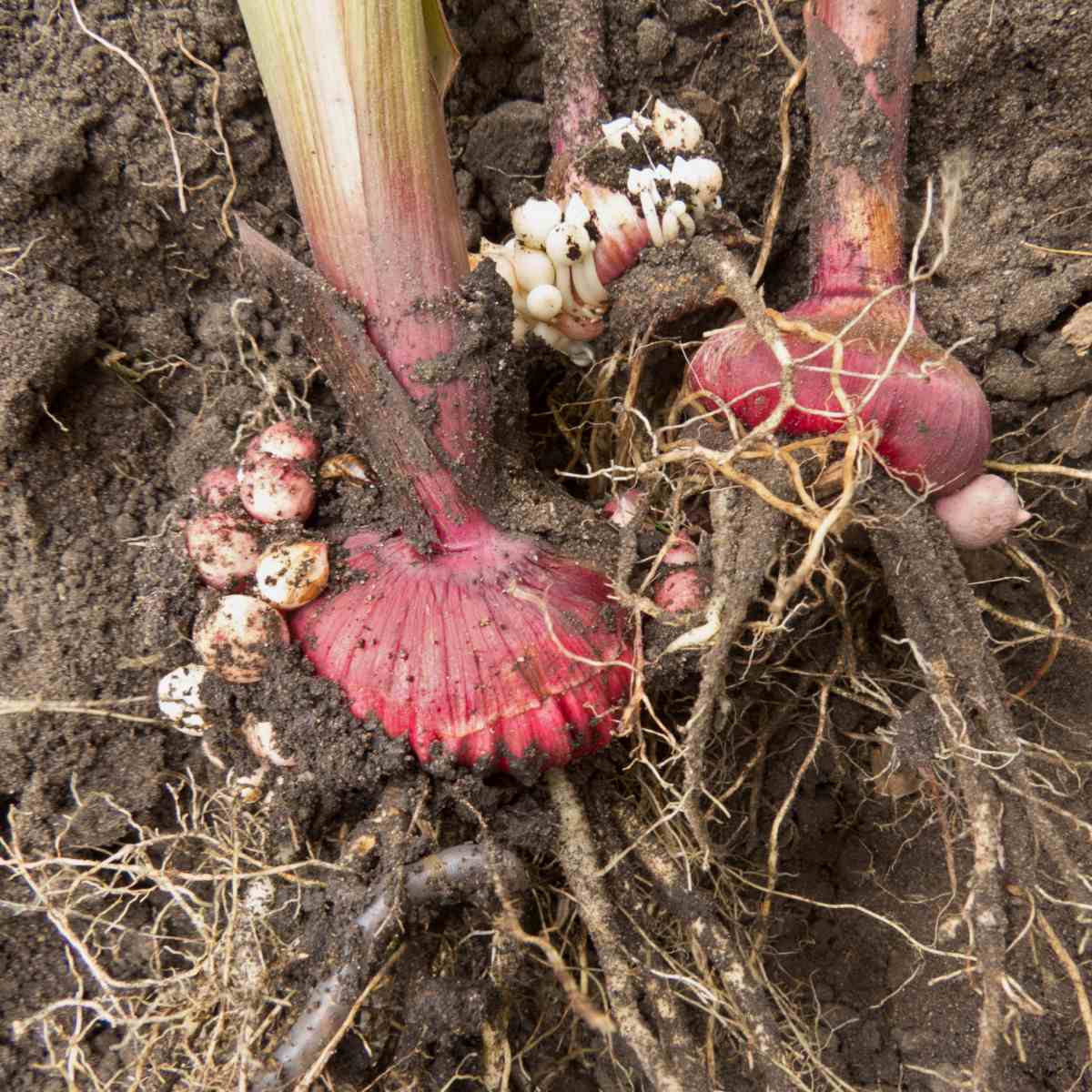
Typically, you would let them grow into larger bulbs right where they are. This leads to a dense, lusher cluster of gladiolus flowers. In time, you won’t even need to stake the flowers since they’ll hold each other up.
However, there comes a point where there are too many bulbs. They compete for nutrients and water. Also, you might want to plant some bulbs elsewhere or give a few away to friends and neighbors.
To do that, when you pull the bulbs out for winter, simply break the clumps of bulbs into single bulbs.
Another way to propagate gladiolus is through seeds. These appear in fall if you don’t cut flowers off. Each seed will be a mix of two parents, so you might not have the same traits as the mother flower. This is due to cross-pollination.
When preparing a bouquet, remove the top buds at the tip of the stalk because they won’t open and bloom.