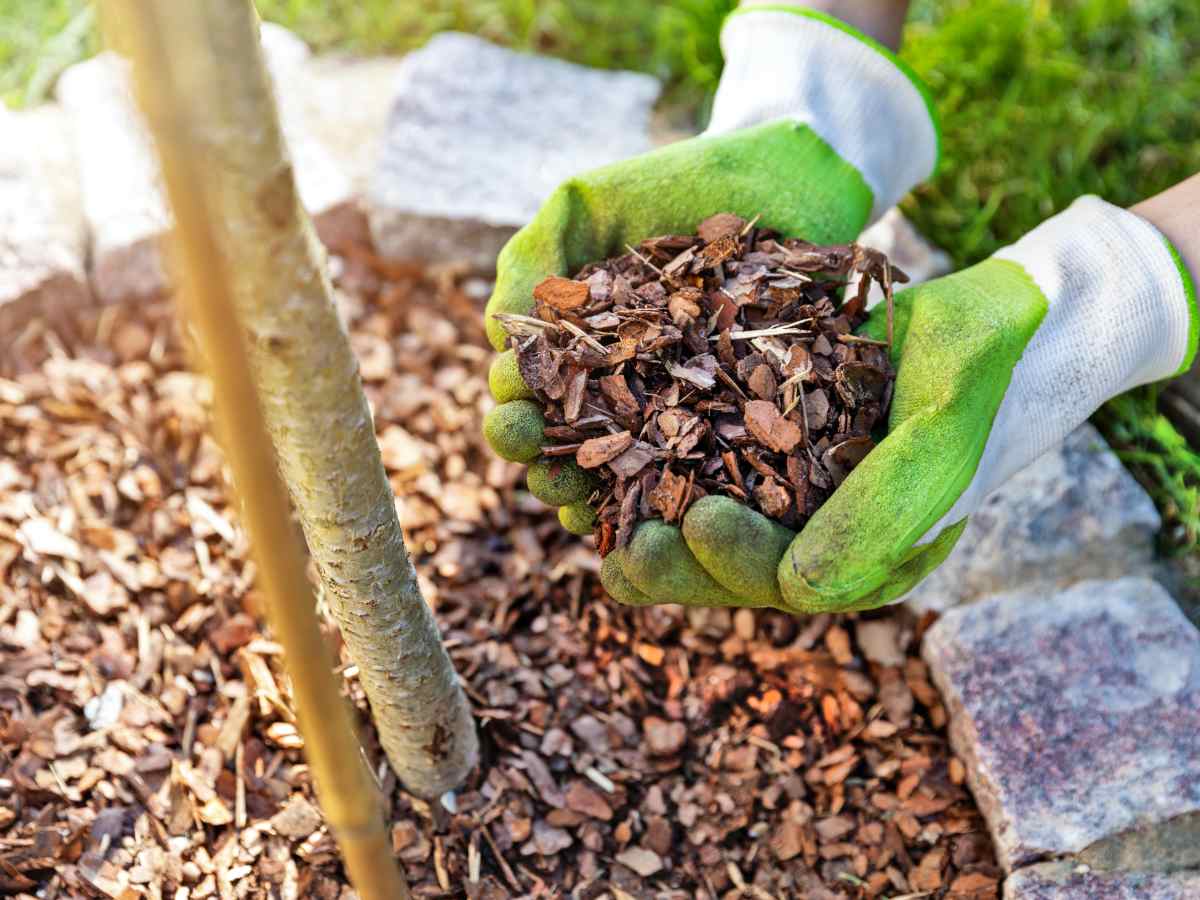
A couple of inches of pine bark, flax or cocoa hulls spread over bare soil forms an opaque blanket that blocks weed seeds, saves summer watering and keeps roots from freezing. As that plant mulch rots down it becomes fertiliser in its own right, feeding the bed beneath, provided you top it up as it disappears.
Usually made with natural products, mulching is very beneficial to plants and landscaping. When the material used comes from plants, it is also called plant mulch or plant-based mulch. In addition, it helps deal with that most tedious garden chore: weeding!
More than just a decorative ornament, mulch is totally nature-friendly – and wallet-friendly!
Read also:
Mulch reproduces nature’s way of working: soil should never stay bare. Always keep those vegetable and flower beds covered!
Mulch is one of today’s most trendy products, and it isn’t only because it looks great!
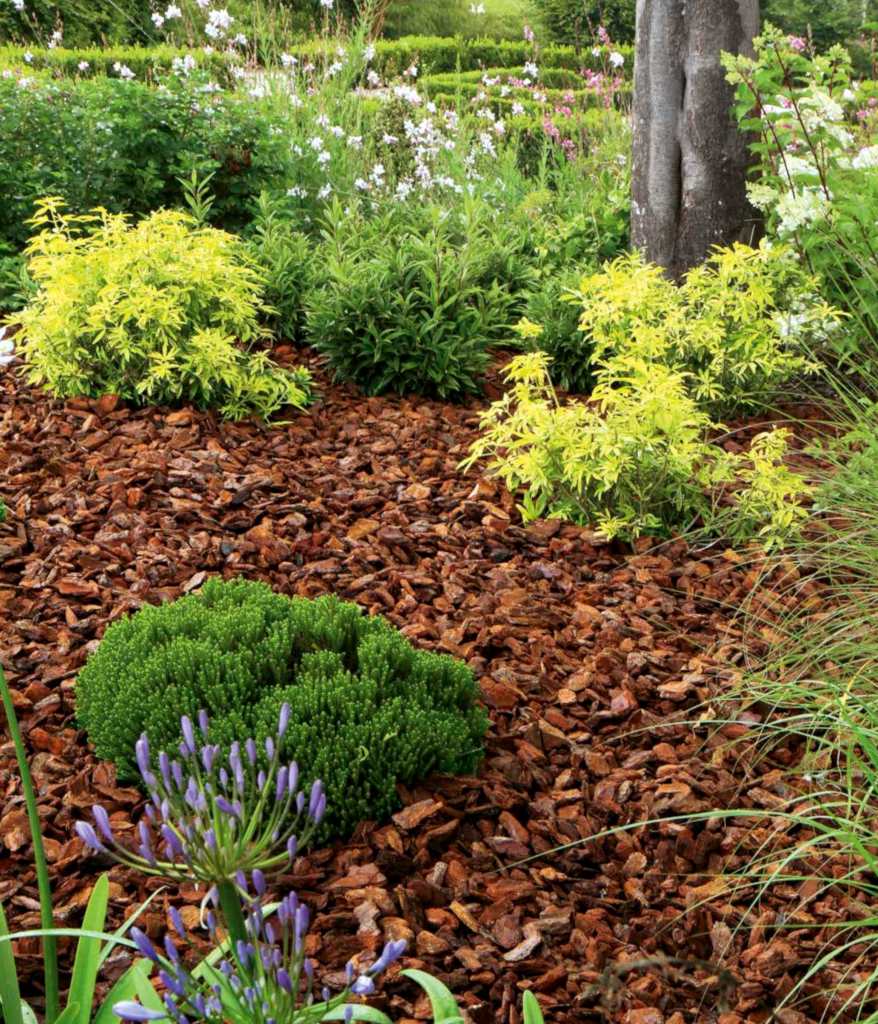 It is an excellent “weeding agent” because it hinders weed growth.
Thanks to the thick opaque layer that mulch forms on the soil surface, it prohibits weed seed germination and thus indirectly avoids the use of herbicides – all of which are chemical-based.
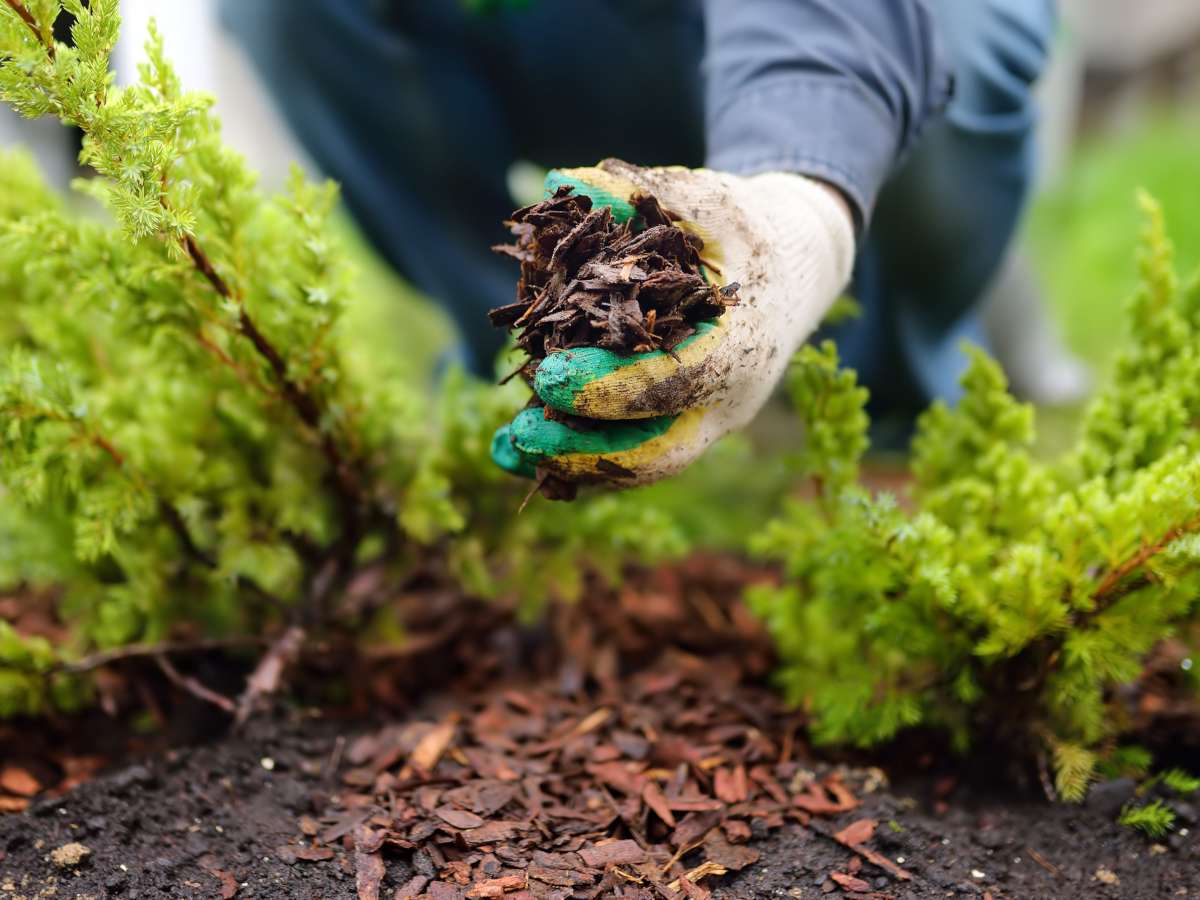
A layer barely 1 to 2 inches (3 to 4 cm) thick is enough to protect roots from freezing, especially for potted plants.
It will keep the root system in top form to burst with life in spring.
As they slowly break down, they will enrich the soil with important nutrients that will boost your plantation’s development, and avoid the use of fertilizer altogether.
The two great families of mulch, and the plant mulches within them, do not work in the same way. This table sets out what each is made of, how deep to spread it and what it is best at.
| Mulch type | Made from | Depth to spread | What it does best |
|---|---|---|---|
| Mineral mulch | Rocks, gravel, shale, pozzolana, pebbles, clay marbles | 1 to 2 in (3 to 5 cm) | Keeping weeds away and holding a constant, orderly look |
| Plant-based mulch | Pine bark, flax, cocoa hulls, dried leaves, wood chips | 2 in (5 cm) ornamental, 8 in (20 cm) to enrich | Feeding the soil as it slowly breaks down |
| Grassy mulches | Grass trimmings, flax, cocoa hulls, coffee grounds | 2 in (5 cm) minimum, renewed often | A nitrogen boost usable within the same season |
| Woody mulches | Bark mulch, pine bark, wood chips, ramial chipped wood | 2 in (5 cm) and up; the more the merrier | Trace elements, soil structure and tastier crops |
| Compost | Rich decomposed material from the compost heap | ½ in (2 cm), under other plant matter | Topdressing beneath a mulch, never as mulch itself |
Laying plant-based mulch as an underlayer to mineral mulch gives you the advantages of both.
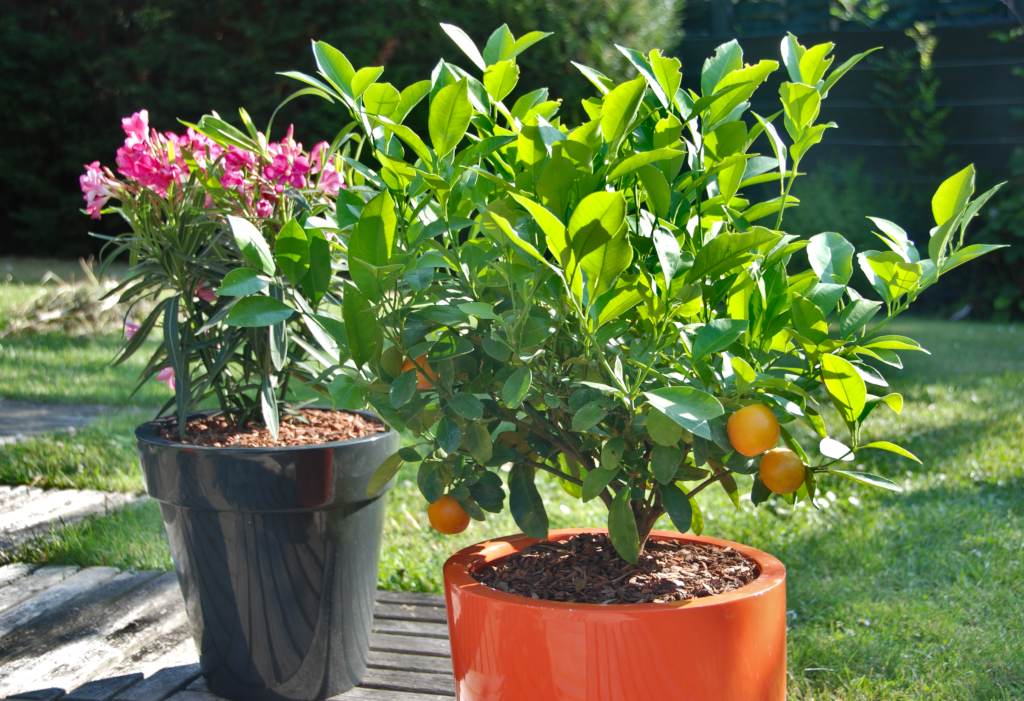 Mineral mulch makes for an orderly, controlled garden. The mulch is mineral in the sense that it comes from rocks, gravel or other hard materials. It’s easy to choose striking colors. The appearance of the garden bed or pot will stay constant as time goes by.
Here are a few possibilities: shale mulch, pozzolana mulch (shown in these pots), pebbles or clay marbles
This includes all types of mulch derived from plants. Abundant and renewable, these mulches always make the soil richer and plant-friendly as time passes. Always 100% natural, plant mulch is extremely ornamental and, on top of that, turns into excellent fertilizer as it breaks down, spreading essential nutrients into the soil. It must be renewed regularly, since it naturally decomposes with time.
| Criterion | Value |
|---|---|
| Thickness, ornamental | 2 in (5 cm) |
| Thickness, enrichment | 8 in (20 cm) |
| Renewal rate | Every 6 months to two years |
It is perfectly suited to mulching on:
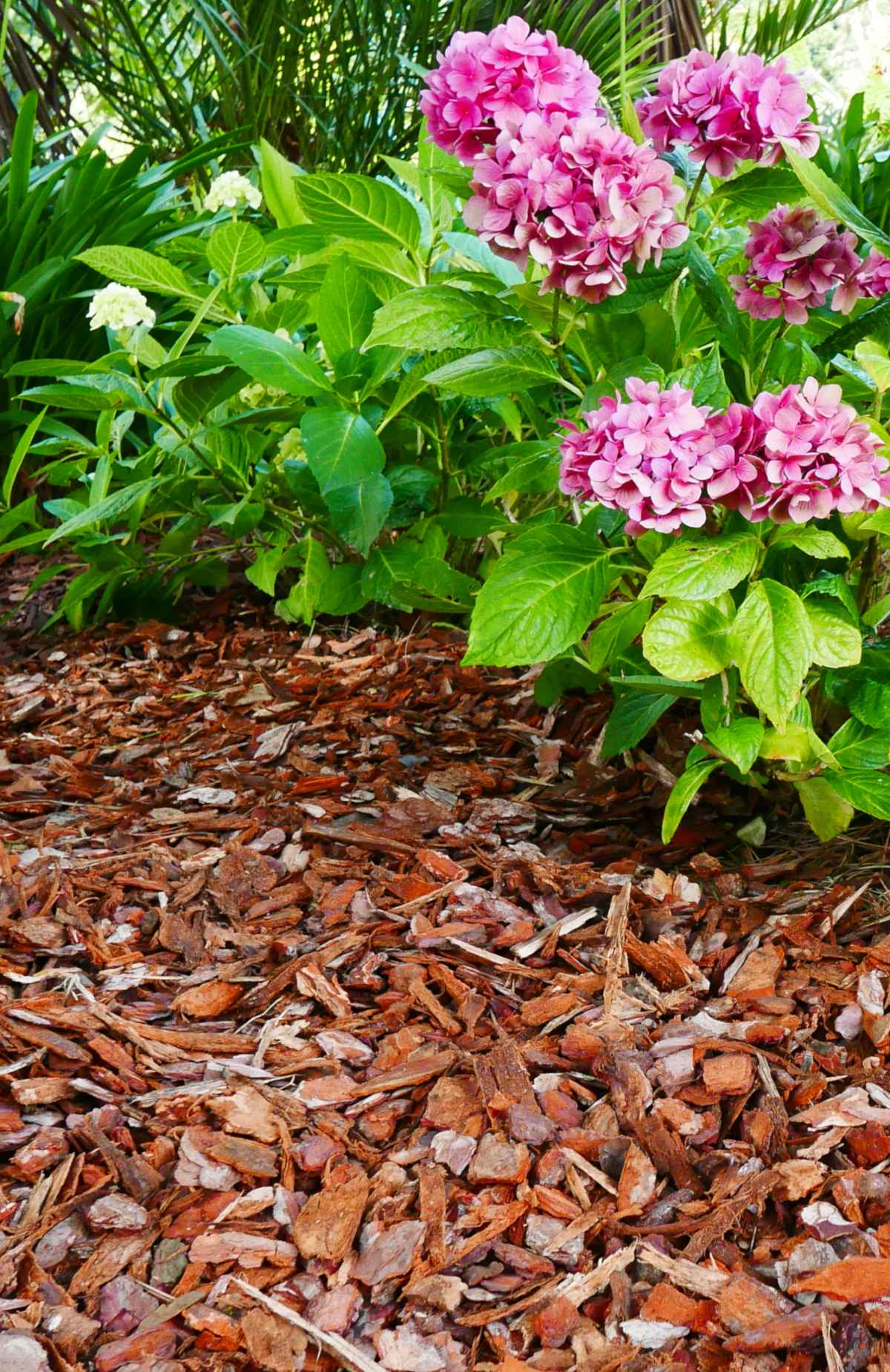 Always 100% organic and very trendy, there are many different plants you can use for mulch:
Though it is rich material, compost shouldn’t be used directly as mulch. For mulch to be efficient, it needs a thick layer, about 2 inches / 5 cm. Having that much compost around plants would lead to nitrogen burn and possibly kill weak plants. Nonetheless, a thin layer of compost (half-inch or 2 cm) underneath other plant matter is perfect. This is called topdressing.
Although not mulch in the actual sense, green manure is one way to perform the same functions as mulch, but only for a season.
Each type of mulch has specific advantages. Mineral mulch excels at keeping weeds away. Plant-based mulch releases nutrients as it breaks down.
Quantities differ for each as well. For example, mineral mulch will usually require only 1 to 2 inches (3 to 5 cm) of mulch to be effective, whereas for plant-based mulch, the more the merrier! It’s even possible to stack up to a foot (30 cm) of plant material if you’re starting a growing bed in poor soil!
You’ll have understood by now that mulching boasts many advantages, and is among those products that can easily replace others that don’t necessarily respect our planet.
Each type is ornamental in its own respect, and all share nutrients with the growing bed as well. The origin of the plant mulch, however, influences the richness of the soil once it’s broken down.
Includes grass trimmings, flax mulch, cocoa hull mulch and to a lesser degree recycled waste such as coffee grounds.
Grass-based mulches provide an excellent nitrogen boost for a single season. They break down quickly and their nutrients are ready for use within the season.
Includes all sorts of bark mulch, pine bark mulch, wood chips and Bois Raméal Fragmenté or ramial chipped wood.
Wood, especially hardwood, is made by plants to last for centuries. Loaded with trace elements and minerals, they provide an excellent source of rare nutrients for common flowers, fruits, and vegetables.
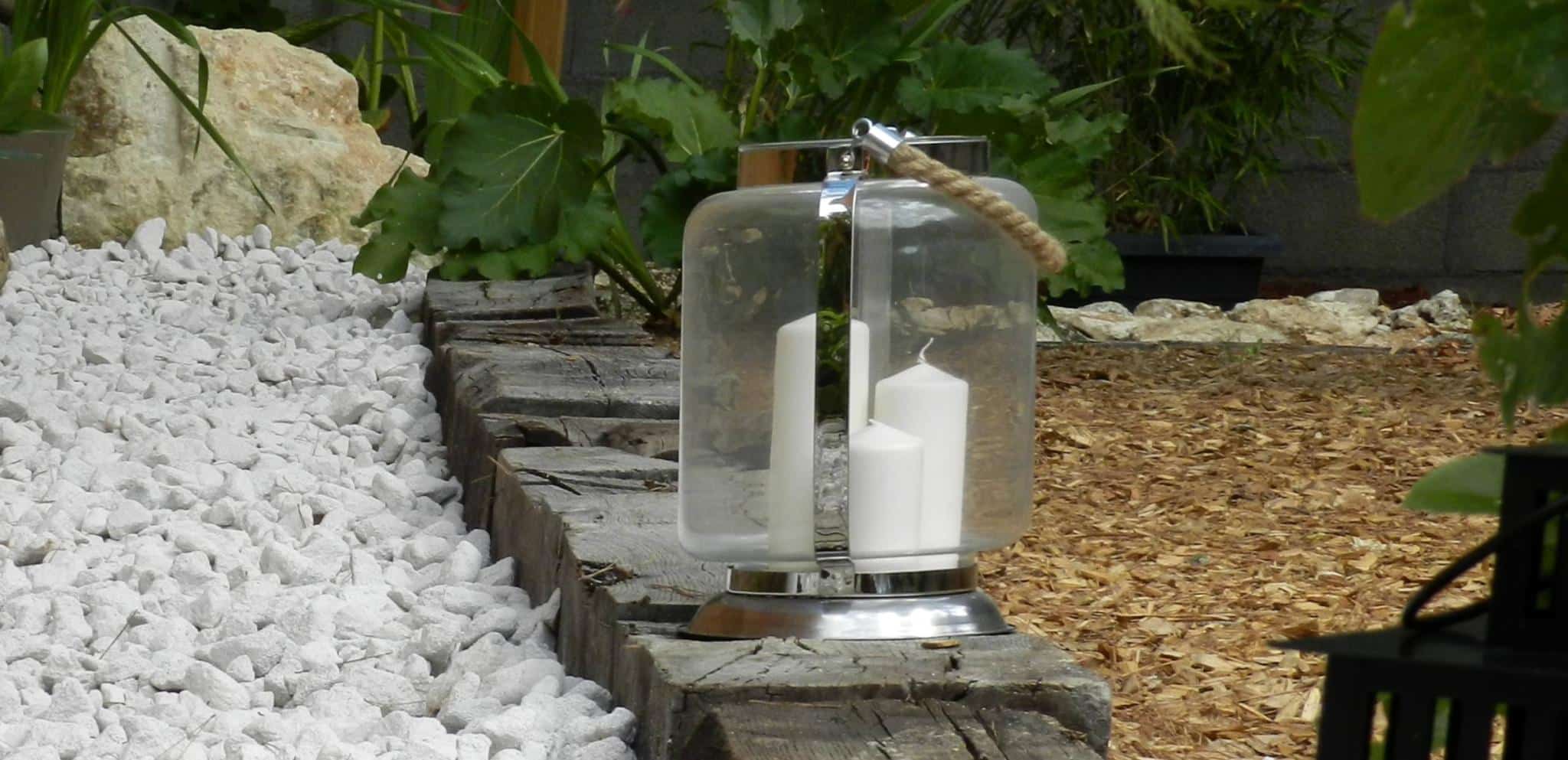
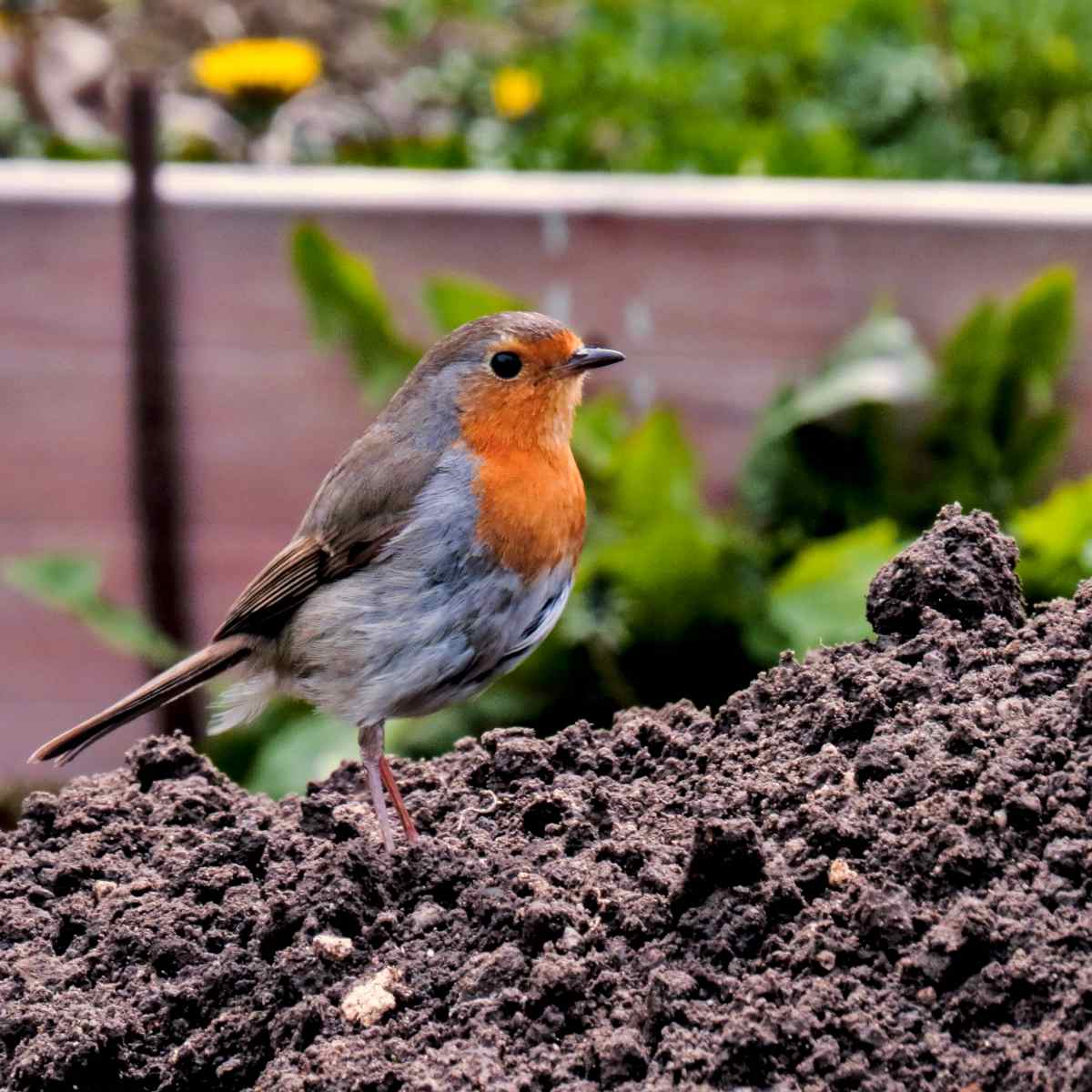
Since mulch creates a favorable environment within the ecosystem, such animals as worms, larvae, and insects will be attracted to it.
Birds will then come to feed on those.
Mulching thus enriches your garden’s ecosystem, and gives our bird friends a great nutritious pantry, especially in winter.
Blackbirds, and sometimes thrushes, scatter loose lightweight mulch onto lawns and paths while foraging for insects, so periodically rake the displaced material back over the root zone.
Hold off mulching a freshly sown bed, because a mulch layer can smother germinating seed and block seedling emergence; wait until the seedlings are up and established before applying it.
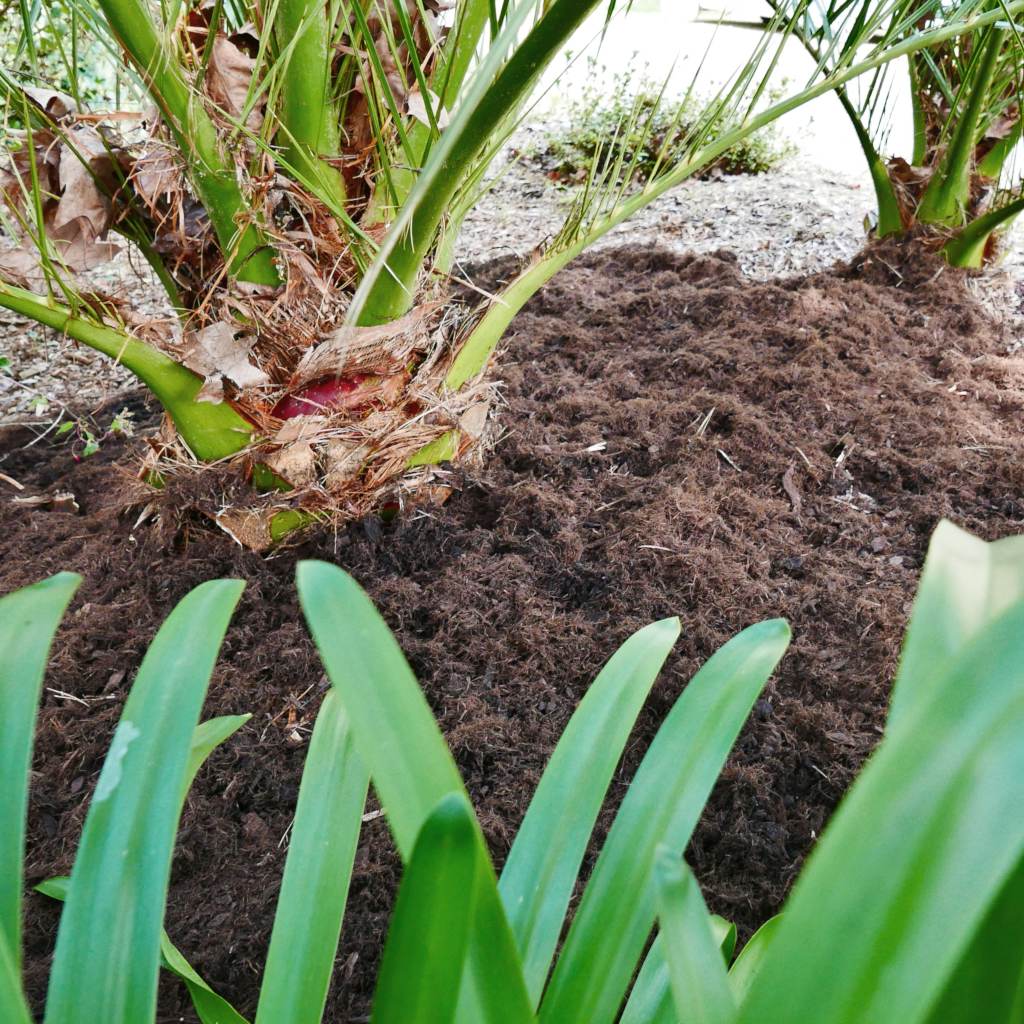 Some plants actually suffer from the excessive moisture levels that are provided for by mulch, so there are precautions to consider when deciding where to mulch.
Among these mulch-rejecting plants are Mediterranean-native plants, that can benefit from some mulch during summer, but only a thin layer. Succulents or rock plants, need dry soil, sometimes even arid.
Keep mulch clear of trunks and crowns, leaving a hand’s width of bare soil so the collar can dry between waterings.
For lavender, thyme, sage and other Mediterranean subshrubs, prefer a mineral mulch such as gravel or pozzolana, which drains freely instead of holding damp against the base.
A thick plant mulch also shelters slugs and snails, so keep the layer thin near lettuce, hostas and freshly planted seedlings.
Leave bare patches where self-seeders like poppies and forget-me-nots come up, since mulch blocks their seed as surely as it blocks weeds.
If you only have small batches of mulch material, you can pack it around a few plants and create a patchwork in your garden beds!
Plant-based mulch is 100% organic and can be used in organic farming. The more you use this option, the more your plants will grow and thrive, all the while adding a beautiful touch to your flower beds and garden!