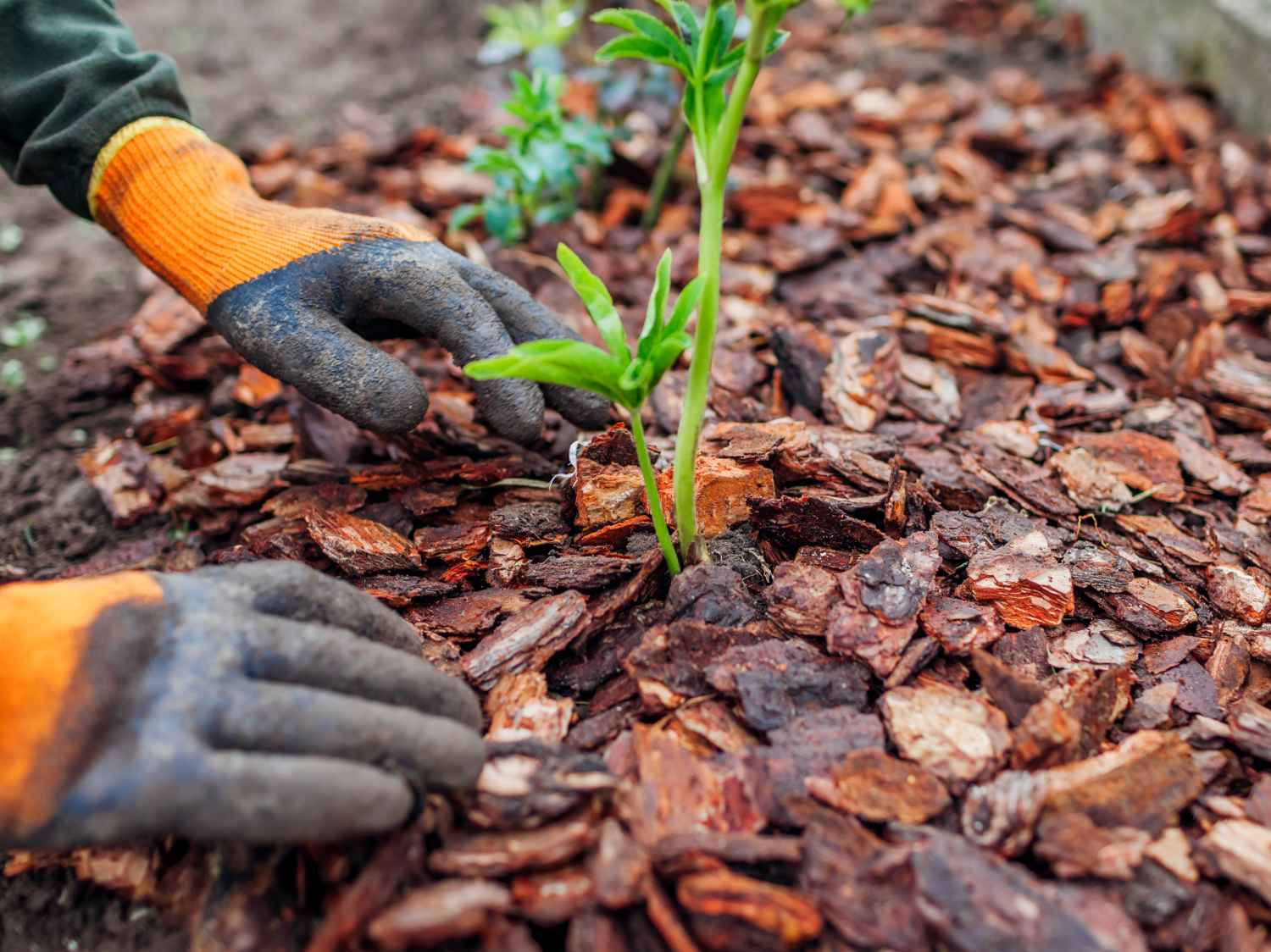
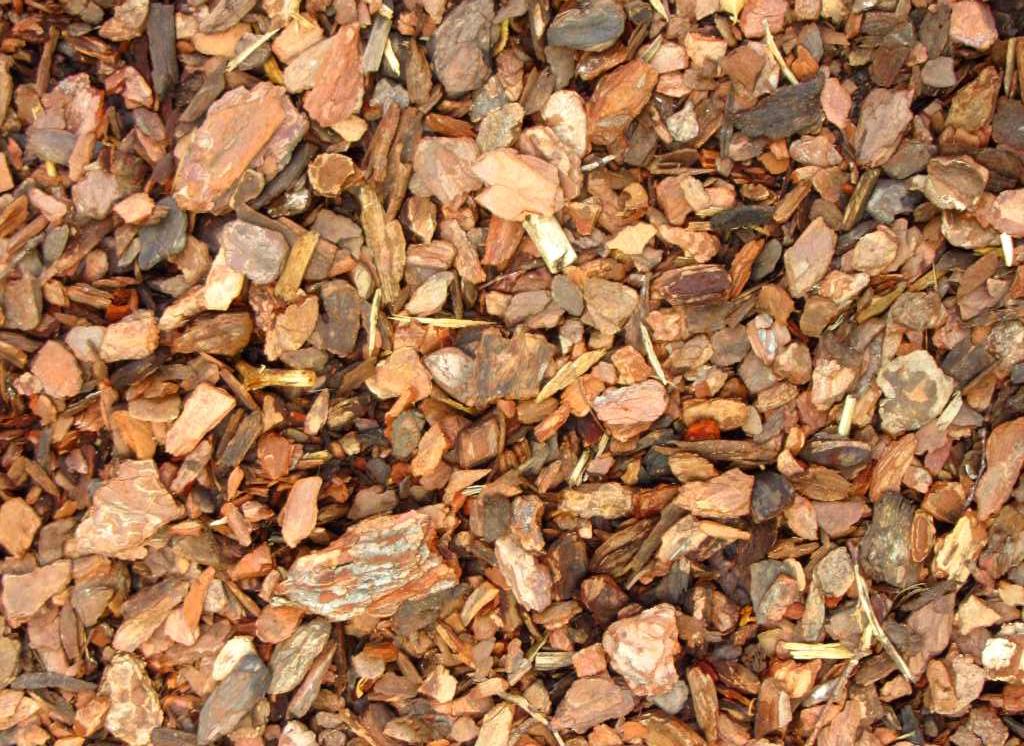
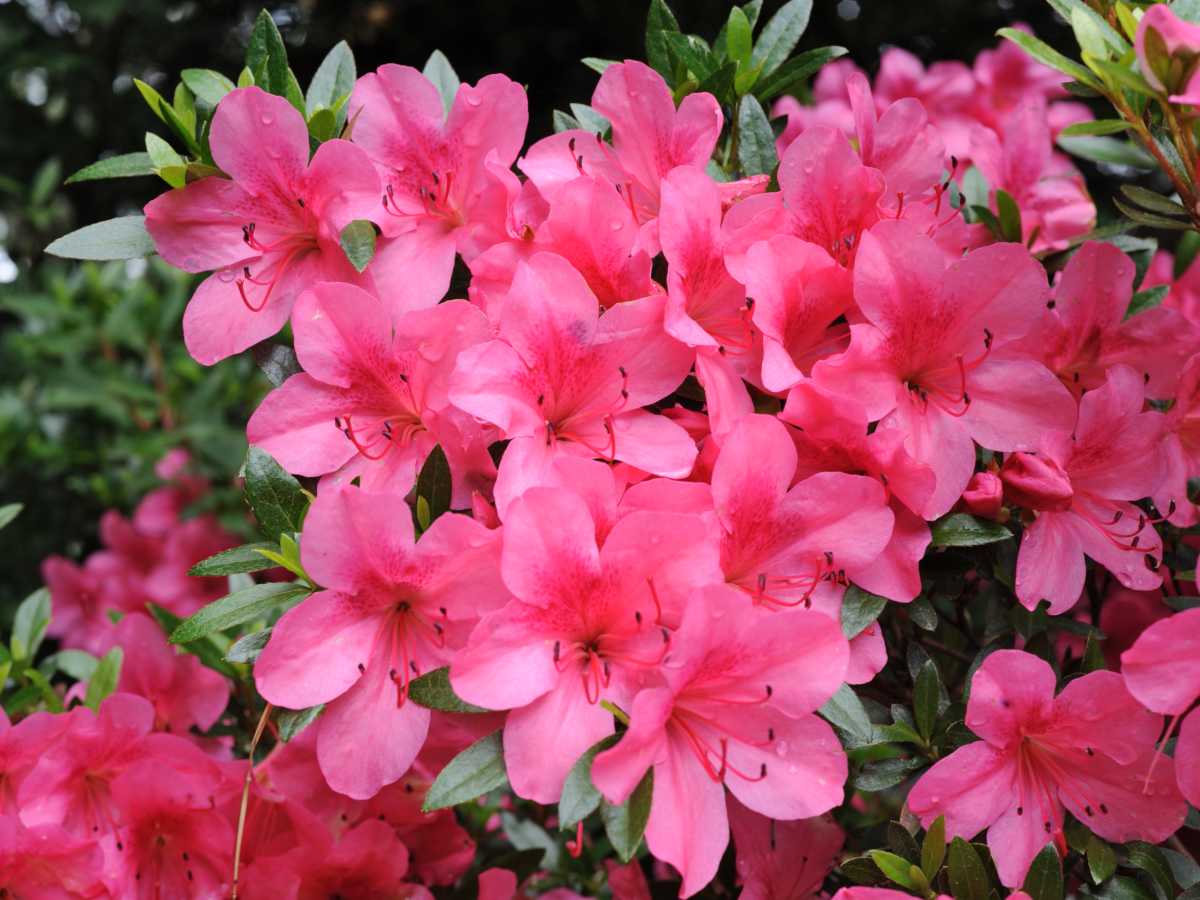
Spread two inches deep, the uniform brown flakes of maritime pine (Pinus pinaster) bark smarten a bed while hindering weeds, saving on watering and insulating roots against winter cold. Its pH of around 4.5 is the catch: keep it for acid-loving heath plants such as rhododendron, azalea and camellia, and blooms come more furnished.
It comes from maritime pine trees, and in Europe most of the production comes from Southwest France.
It can be used in several different manners, and has multiple advantages over other mulches.
Advantages of maritime pine bark
Use of pine bark for mulch has many advantages for plants and flower beds, especially for heath plants that thrive in acidic soil.
Bark mulch decorates beds and saves on watering
But pine bark also has other advantages as well, such as adding a very elegant touch of decoration to your garden, highlighting your flower beds.
Here is a list of all the advantages of maritime pine bark:
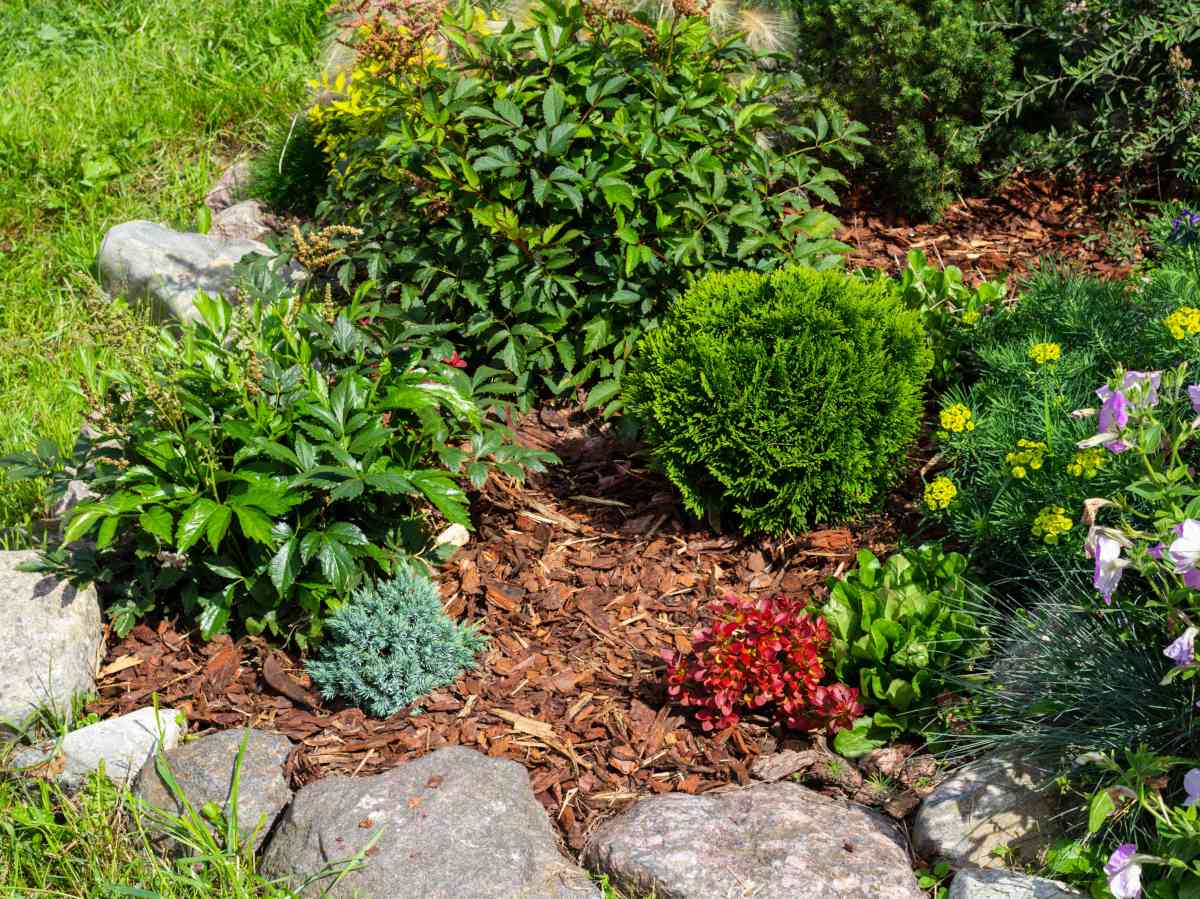
Bark mulch serves to decorate flower beds and plantation beds.
It serves to save on watering and retains soil moisture.
Pine bark mulch hinders growth of weeds and pulling them out is much easier.
It avoids erosion and evaporation.
This mulch is perfect for seaside gardens because it doesn’t fly off with the wind.
In winter, pine bark protects roots against cold and freezing.
Thanks to bark, plants are able to develop and grow in weed-free, light and broken up soil that retains good moisture levels.
Plants thus grow faster and blooms are more furnished.
Plants for acidic soil
Bark mulch has a pH of around 4.5
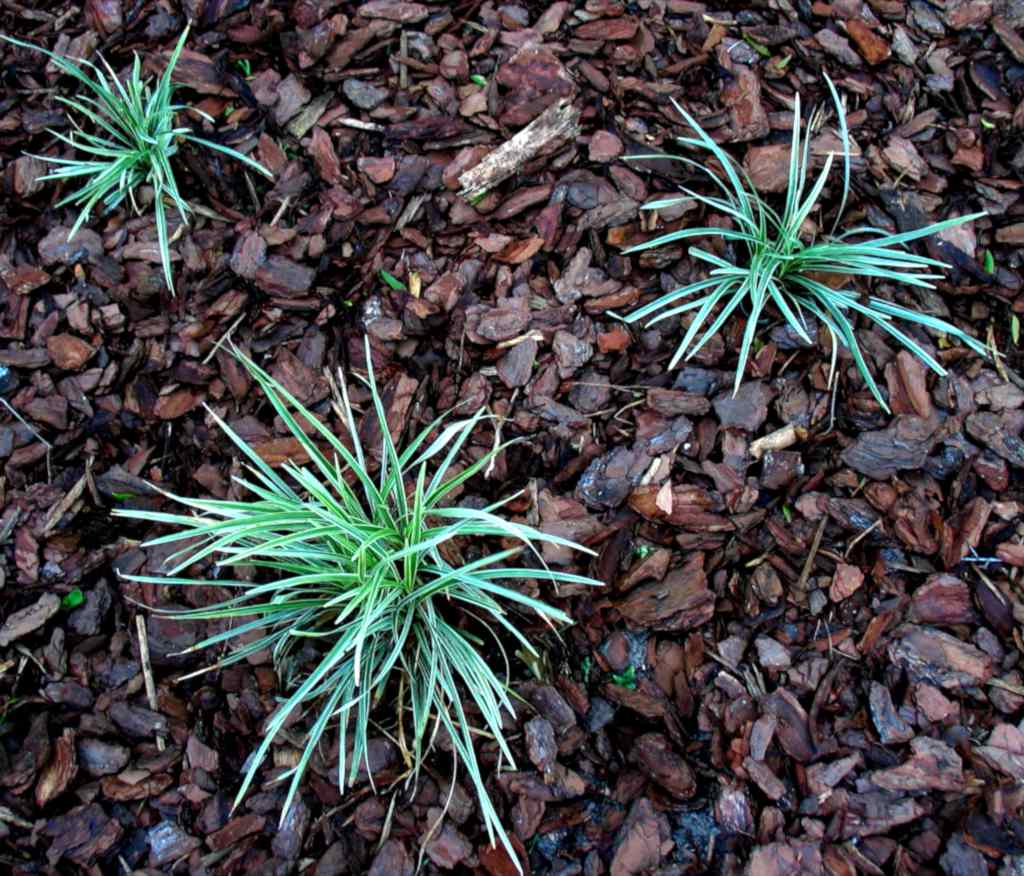
The pH of pine bark mulch is around 4.5, which makes it a relatively acidic product. Shown here are three specimens of ribbon plant (also called spider plants) growing on cypress pine bark mulch.
Pine bark turns the soil acidic, at least until it’s fully broken down (then, the natural soil pH wins out). This means it isn’t adapted for plants that need alkaline soil (usually limestone plants).
Use bark mainly as a surface mulch, since fresh, high-carbon bark can immobilise nitrogen as it decays; if you do dig it in, choose well-composted bark or add extra nitrogen.
Keep the bark clear of trunks and stem collars, where a permanently damp covering encourages bark rot.
Slugs and snails love sheltering under damp bark, so check beneath the layer near hostas and young seedlings.
Pine bark mulch and watering
The mulching effect of bark keeps the soil from forming a watertight clotted surface, and lets your plants take full advantage of water and nutrients every time they are provided.
This will especially benefit your geranium, flower bed and garden box annuals, rose trees, perennials and various shrubs.
Water the bed thoroughly before spreading the bark, since a dry mulch layer intercepts part of the first watering, so pre-moistened soil ensures that moisture actually reaches the roots.
Lay a soaker hose or drip line on the ground first, then cover it with the bark layer, so water goes straight to the roots of your roses and perennials.
Keep the bark from touching the stems of rose trees and shrubs, because moisture trapped against the collar encourages rot.
Bark mulch compared to other plant mulch
Cases where bark mulch is better
An ideal mulch for acid-loving heath plants
Compared to other types of plant mulch, bark mulch fares pretty well:
It’s better than compost against weeds, since no new seeds are brought in.
It’s better at insulating the ground when winterizing plants, since bark is a natural insulator for trees.
Uniform color is better for landscaping.
When using conifer bark or eucalyptus bark, you can influence soil acidity to make it better for heath plants.
Cases where other plant mulches are better than bark
One of the most nutrient-dense mulches is ramial chipped wood. Leaf buds and young shoots are full of nutrients, more than bark.
Color, brown, is a bit more common compared to brick-red cocoa hull mulch and fleece-white flax.
Clay pebbles retain water better than bark mulch, although bark mulch is pretty good compared to mineral mulch.