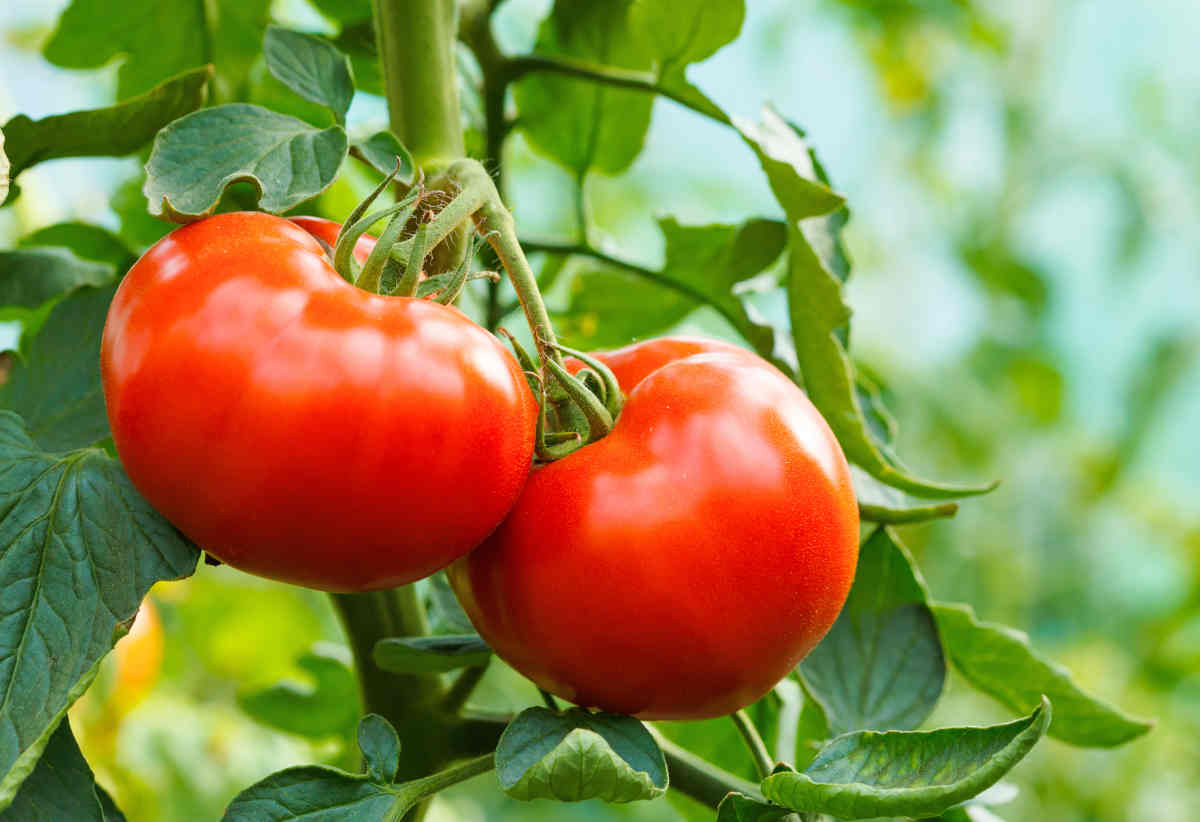
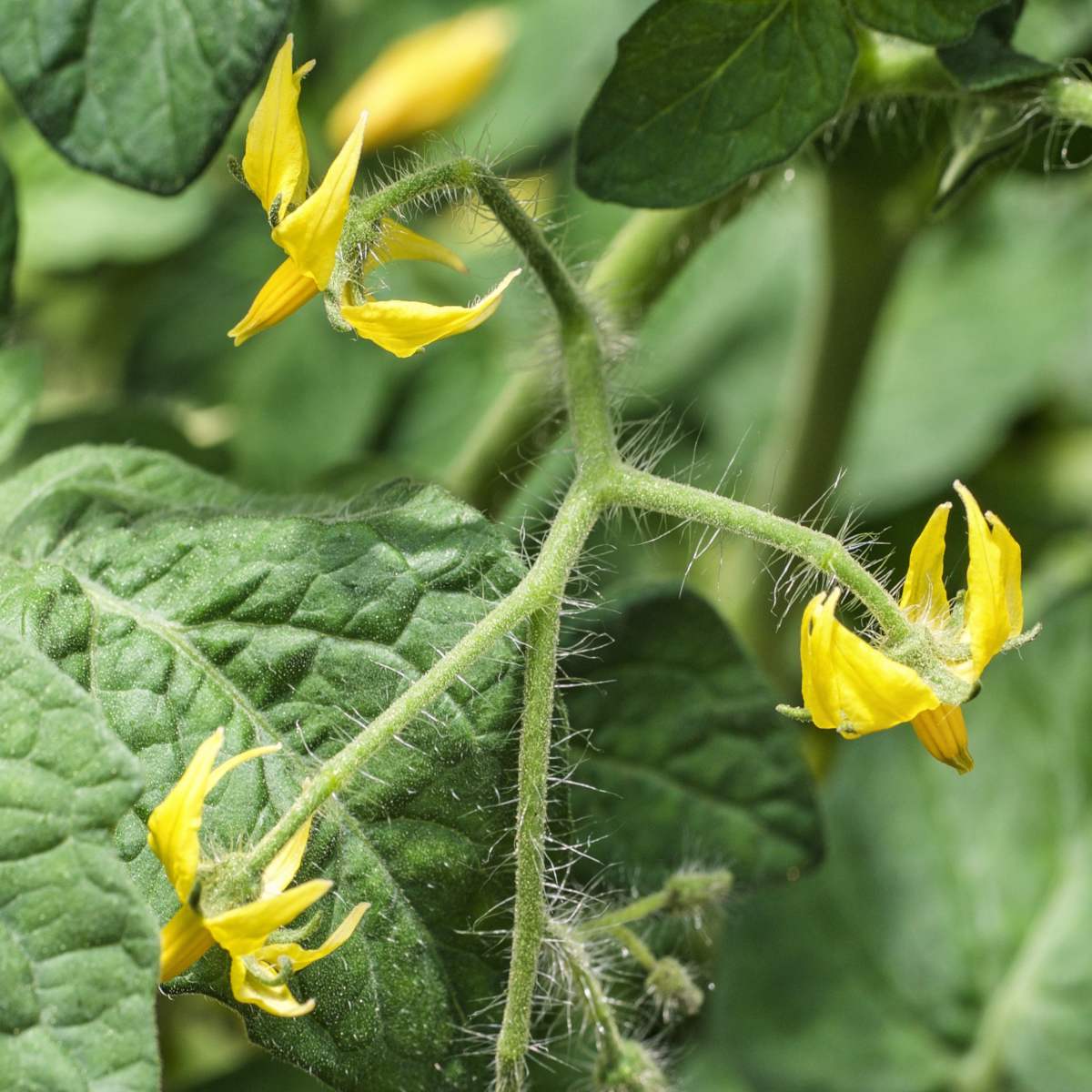
A bushy plant 30 to 55 inches (80 to 140 cm) tall, carrying fruit that ripens from late summer right through to the end of autumn in a mild season: the tomato (Solanum lycopersicon) is the staple of every vegetable patch. Keep it in full sun and water without wetting the leaves, and the crop follows.
From sowing to planting, caring and harvesting, every step is important and helps produce beautiful tomatoes.
Sowing and planting tomato
It’s best to consider that tomatoes can only successfully be planted outdoors after May 15th, and that it is useless to start sowing them too early.
Sowing tomato from seed
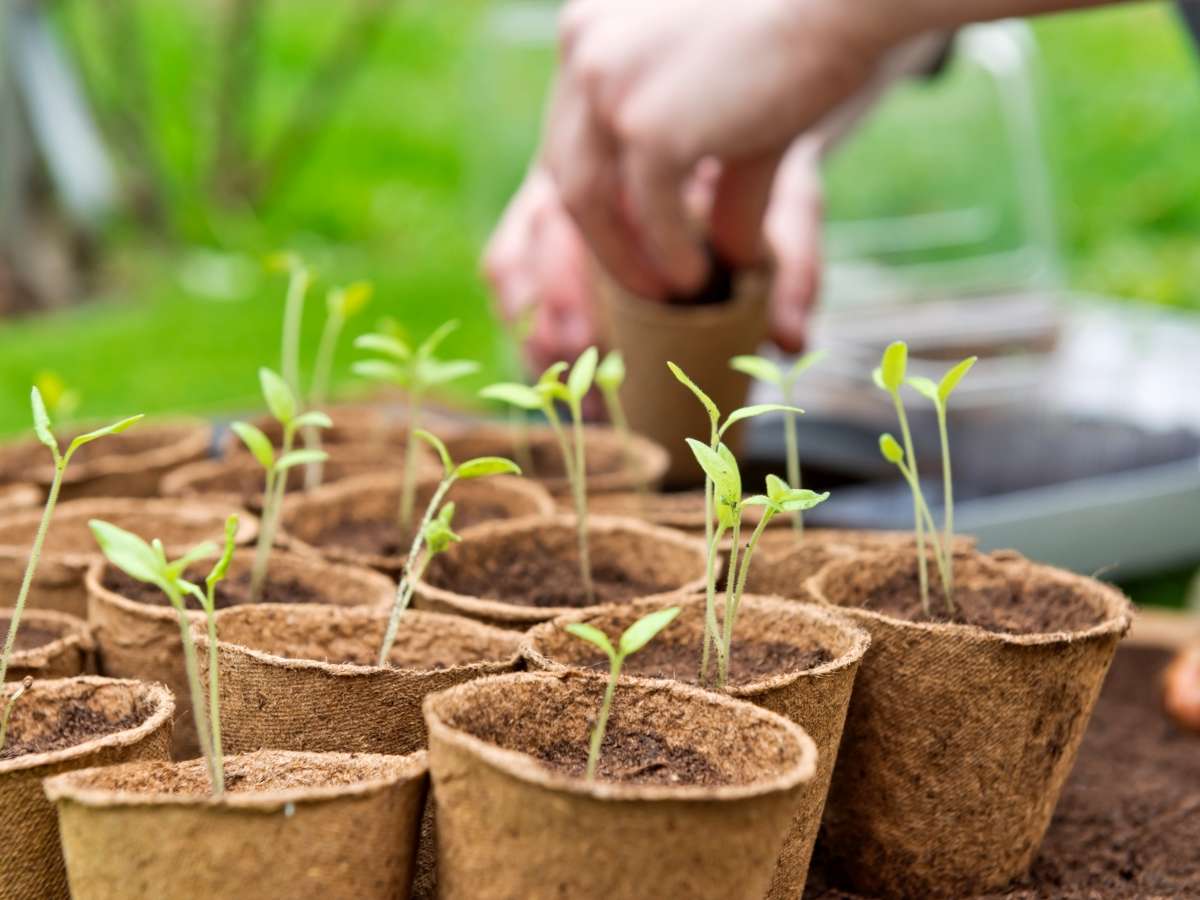
Sow indoors in warmth, late winter to early spring
Sowing tomato seeds must be done at the end of the winter, towards early spring, indoors and with a temperature of around 65°F to 70°F (18°C to 20°C).
If you don’t have seed growing equipment, or if you are growing tomato for the first time, start with small seedlings purchased in a nursery.
Refer to our page on sowing tomatoes and start indoors in Late winter-early spring.
This method takes longer, but it is very easy to accomplish and you’ll be rewarded with a unique, delicious taste in the fruits you will harvest!
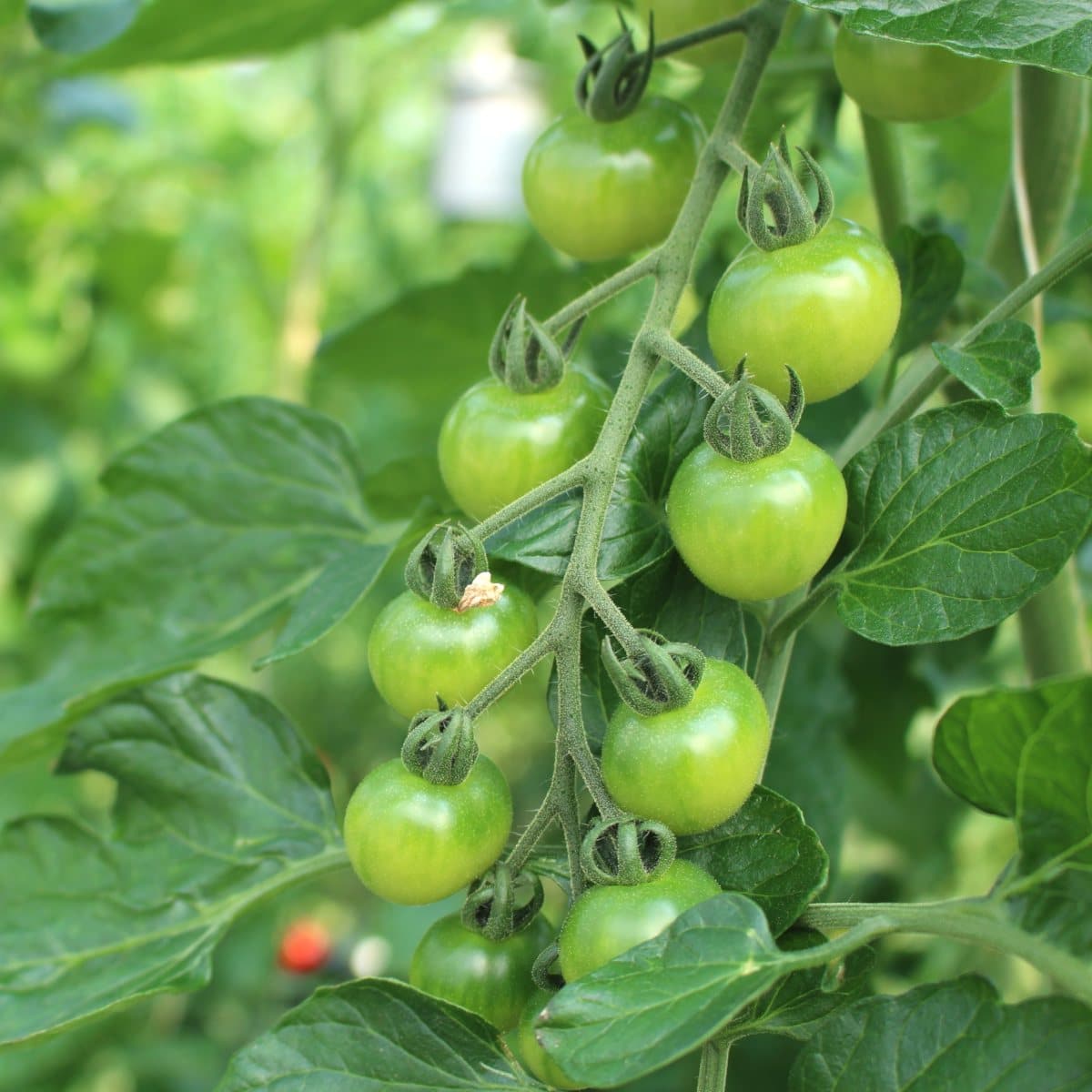
Fruit still green makes excellent green tomato jam
This is the best way to start growing tomatoes, or at the very least save all that seedling-growing time.
If you purchase tomatoes in nursery pots, it means you’ll have purchased them in spring.
Plant them in a sun-bathed area, sheltered from stronger winds, once freezing is definitely over.
Space each plant around 30 inches (80 cm) apart.
For better tomatoes, add organic tomato fertilizer once or twice a month.
Tomato loves
Humus-rich soils, preferably mixed in before planting.
Being exposed to the sun as much as possible.
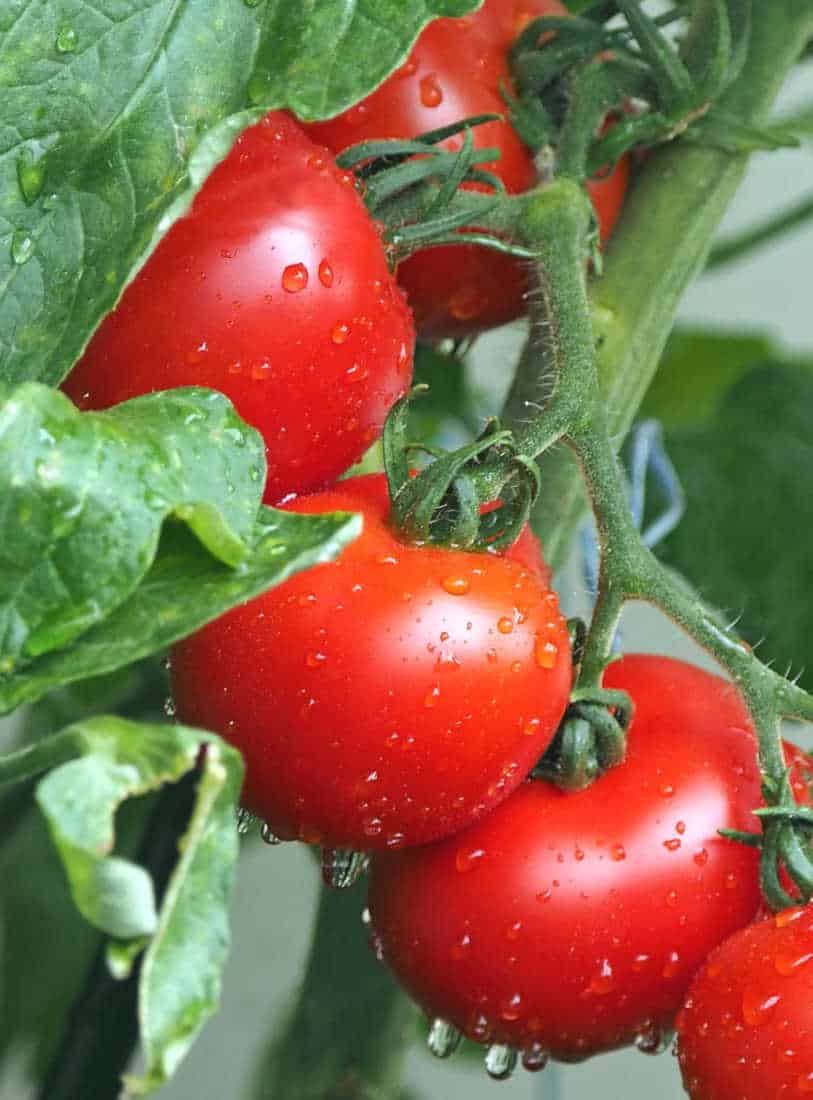
Regular watering, but without wetting the leaves to avoid diseases.
Pruning tomato, here is what to do
It is important that fruits be exposed to sunlight for them to develop correctly.
Remove growth (they’re called “suckers”) that may sprout where the leaves are connected to the stem.
These “suckers” tend to absorb a lot of sap, and this slows the growth of the plant.
When the plant has reached its maximum height, prune the head off, leaving 4 or 5 groups of leaves.
Harvesting tomato
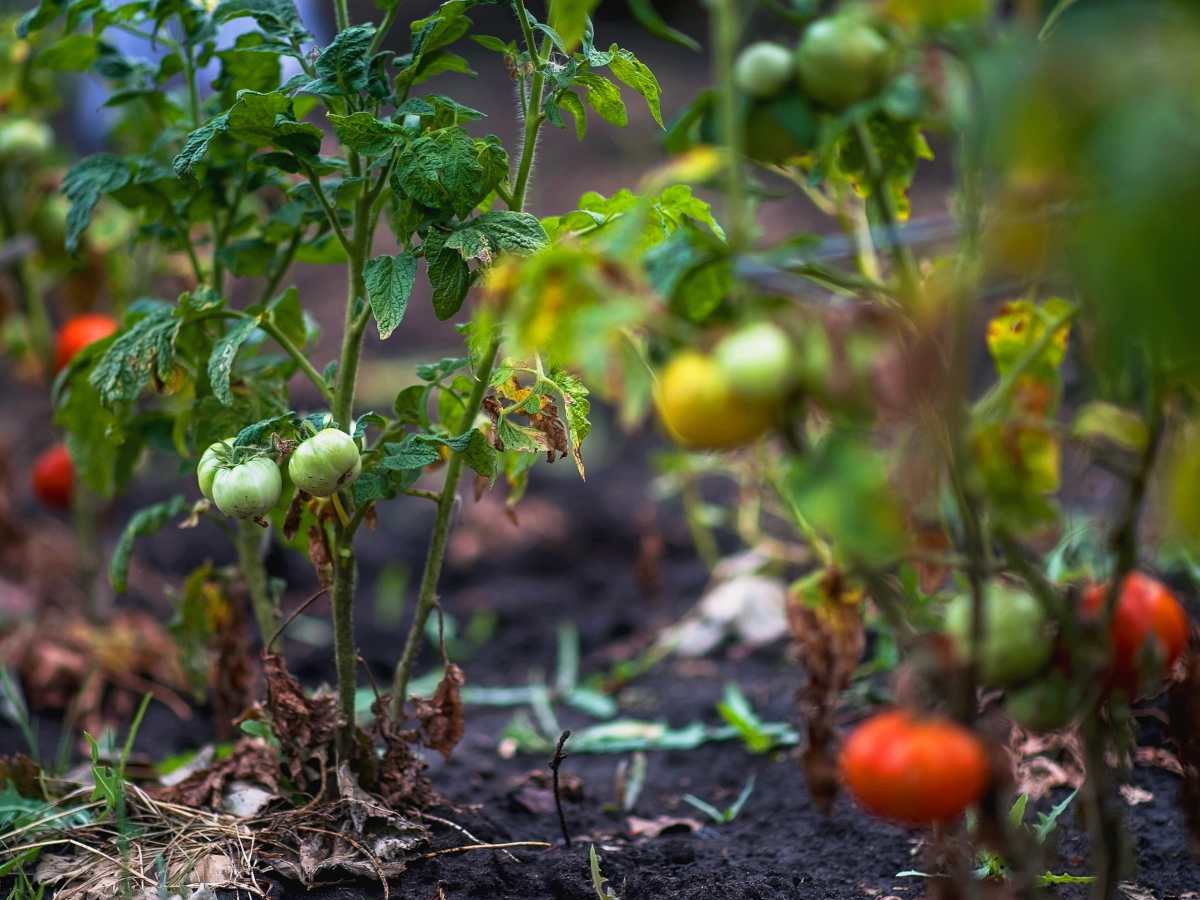
Tomatoes can generally be harvested starting late summer, and harvest can continue till the end of fall if the climate stays mild.
Pick only when the fruit is well coloured
Tomatoes are best harvested only once they are well colored.
Usually this takes 4 to 5 months of growing, from the moment seeds started sprouting.
Some fruits might mature very late in the season.
You can harvest them if still green and let them ripen in your garage or on a windowsill.
With green tomatoes, you can make delicious green tomato jam.
Don’t stop at harvesting tomato – save tomato seeds for next year’s crop!
Diseases and parasites that attack tomato
Most tomato fungal diseases are avoided by basic rules
There are various common diseases that attack tomatoes, often types of fungus that can be avoided if basic rules are followed.
You can find the best advice for each disease by clicking on the links for each of these diseases.
Whiteflies – Tiny flies gather on the underside of leaves. A plant-based insecticide must be sprayed on the pests, or nasturtiums can also be planted at the foot of your tomatoes.
Tomato pinworm – pinworm larvae dig tunnels on both stems and leaves of the tomato plant.
Take note that copper-based treatments such as Bordeaux mixture applied as a deterrent help avoid most of the diseases that impact tomato growing.
Among the best tomato varieties
Nature-and-Garden selected several delicious strains of tomatoes, both recent or heirloom, that stand out either due to their growth, or to their taste.
‘Banana Legs‘ – cylindrical, harvested from midsummer onwards; pleasant sweet flesh, ideal for salads or tomato carpaccio.
‘Beefsteak‘ – round, flat, large size; harvested from late summer onwards; the most productive, great for stuffed tomatoes, few seeds, also good for tomato-based sauces.
‘Cherry cocktail’ – also called cherry tomatoes, bears fruit in bunches, harvested from midsummer onwards; sweet and subtle taste.
Heirloom and modern strains differ in growth and taste
‘Andine Cornue‘ – long, matures relatively early; flesh both firm and melting.
‘Gardener’s delight’ – small, crunchy and slightly tangy. Very productive.
‘Elko F1’ – long and pointed, 3 inches (8 cm) long; whole season, from midsummer to mid-autumn; no need to prune or stake, very productive.
‘Fandango F1’ – round, matures early in midsummer; very productive.
‘Farta F1’ – long, thin and pointed; from late summer to mid-autumn.
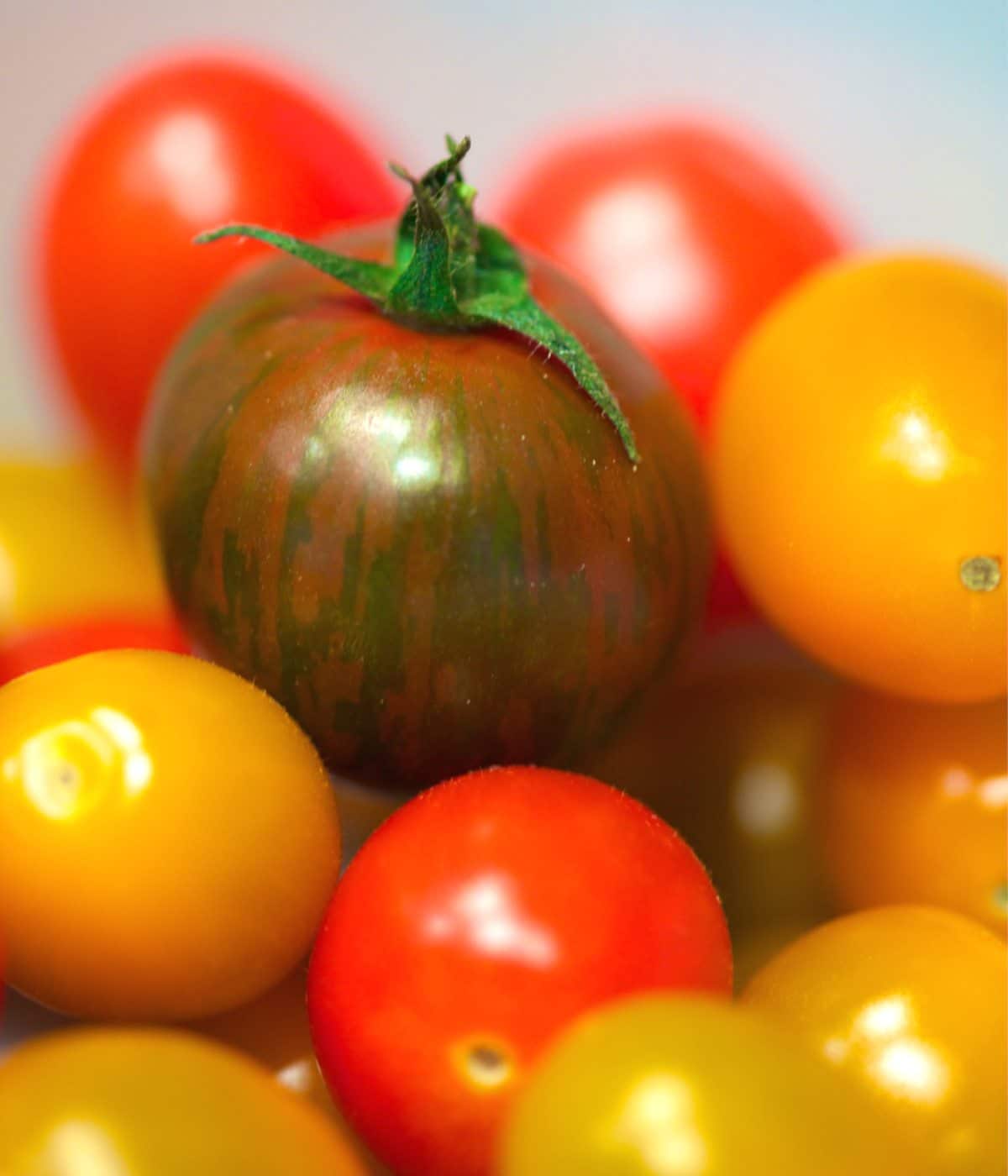
‘Green Zebra’ – round; harvested in midsummer; heirloom tomato, striped light green. Very beautiful.
‘Luxor F1’ – flat; whole season, from midsummer to mid-autumn; firm and juicy flesh.
‘Marmande‘ – flat and ridged; matures early during early summer; very productive variety.
‘Black Krim‘ – round, matures early during early summer; surprise deep red color, delicious taste, no seeds. It is fragile and its shelf life is rather short. It resists diseases well.
‘Ophelia F1’ – round, harvested in mid-season from midsummer to mid-autumn; generous production, holds well during baking and cooking, and resists diseases.
‘Roma‘ – long and pointed; harvested in mid-season from midsummer; firm flesh that keeps well.
‘St Pierre‘ – round; mid-early variety harvested in midsummer; easy to grow and disease-resistant.
‘Sweetie 100’ – round, small and matures early from early summer; savory flesh; resists diseases.
All there is to know about tomato
If all these tips are followed through, growing tomatoes is relatively easy.
Tomato is among the most cultivated fruits & vegetables in the world, and show up in many recipes.
In the vegetable patch, but also on a balcony or a terrace, this plant has the added advantage of being very decorative.
Since tomatoes are 95% water, they have very few calories, but are rich in vitamins C, B3, B6, A, K and E.
Tomato also has high mineral content, like potassium, manganese, copper, magnesium or phosphorus.
Written by Gaspard Lorthiois | Loves helping out, especially when it comes to growing things. Worked in herbal medicine, runs a farm, and dabbles in tech. Master's degree and engineer.