Tomato: what it contains, how to use it in the kitchen and on the skin
·
0
Tomato is 90% water, barely sweet, and among the lightest things you can put on a plate. This page sets out what the fruit actually contains, which parts to use, how to turn it into juice, sauce or a simple face mask, and who should go carefully with it — starting with anyone whose gut dislikes the skins.
Central and South America, arriving in Europe via Mexico
Part used
Ripe fruit (flesh, juice and pulp; skin optional)
Forms of use
Raw, cooked, sauce, juice, pulp, soup, mask or lotion for the skin
Harvest season
Midsummer to early autumn outdoors; longer under cover
Taste
Juicy, lightly acidic, sweet when fully ripe, savoury when cooked down
Main nutrients
Vitamin A, vitamin C, vitamin E, potassium, calcium, magnesium, trace elements
What it is credited with
Naturopathy values it first as a light, watery food: very low in calories, which is why it is a mainstay of low-calorie eating plans.
It has a long reputation as a refreshing summer food, eaten to rehydrate on hot days.
Traditional kitchen wisdom credits it with a gentle laxative effect, helping things move along when the diet is short on fresh produce.
Herbalists list it among the mildly diuretic foods, that is, those said to encourage water elimination.
It is traditionally used as a source of vitamin C, a vitamin associated in popular practice with seeing out the cold season in better form.
In home cosmetics, tomato pulp has a reputation for brightening a dull complexion, for cleansing oily and blemish-prone skin, and for softening rough hands.
Gardeners’ folklore credits the crushed foliage with keeping wasps and mosquitoes away from a seating area.
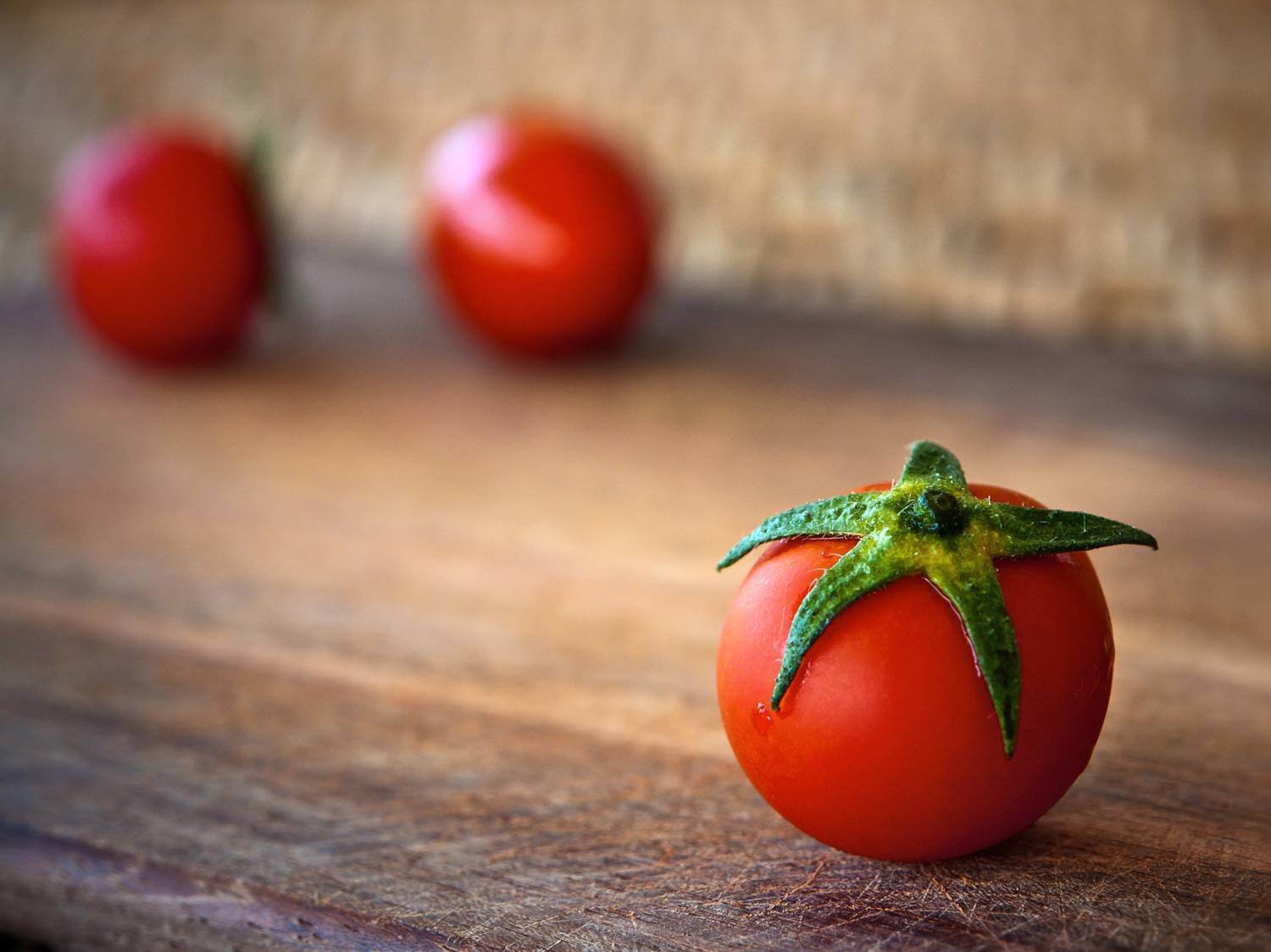
Sun-ripened fruit is where the flavour and the pigment are
How to use it
Raw, the simplest form
Choose fruit that is heavy for its size, fragrant at the stem, and yielding slightly under the thumb.
Slice, salt lightly, and dress with olive oil: the fat helps carry the pigment and the fat-soluble vitamins.
Eat within a few minutes of slicing — cut tomato loses its perfume fast.
Never refrigerate a ripe tomato you intend to eat raw. Cold flattens the aroma. Counter-top, out of direct sun.
Cooked and as sauce
Simmer roughly 2 lb (1 kg) of chopped ripe tomatoes with a splash of olive oil, a clove of garlic and a pinch of salt, uncovered, for 30 to 45 minutes, until it coats a spoon.
Cooking concentrates the flavour and the lycopene; it costs you much of the vitamin C and vitamin E, so keep some raw tomato in the week as well.
A peeled sauce is gentler on the digestion: score a cross in the base, drop into boiling water for 30 seconds, then into cold water, and the skins slip off.
Juice and pulp
Blend very ripe fruit, pass through a sieve to hold back the skins and seeds, and drink chilled with a pinch of salt.
A small glass in the morning is the classic form for anyone who finds whole tomatoes heavy going.
Fresh juice keeps a day in the fridge in a sealed jar, no longer.
On the skin
Brightening mask: mash the pulp of half a ripe tomato, spread over a clean face, leave 10 minutes, rinse with cool water. Once or twice a week is plenty.
Oily-skin wipe: dab a slice of tomato over the T-zone, leave 5 minutes, rinse well.
Hand softener: rub a little pulp into the hands after gardening, rinse, then apply your usual cream.
Always test on the inner forearm first and wait a day. Tomato is acidic and does not suit every skin.
Ways of using tomato, and what each is for
Form
How to prepare it
What it is used for
Raw, sliced
Ripe fruit, sliced, olive oil and salt, eaten straight away
The form richest in vitamin C and E; traditionally eaten to refresh in hot weather
Cooked sauce
Peeled, simmered 30–45 minutes with oil and garlic
Concentrates flavour and lycopene; easier on a sensitive gut than raw skins
Juice and pulp
Blended, sieved to remove skin and seeds, drunk chilled
The usual choice when the peel is a problem; reputed to be lightly diuretic
Pulp on the skin
Mashed flesh applied 5–10 minutes, then rinsed
Home cosmetics: dull complexions, oily skin, rough hands
Crushed leaves
Foliage bruised near a doorway or seat
Garden tradition: discouraging wasps and mosquitoes. Not for eating
Varieties worth a look
‘Beefsteak‘ — big, meaty slices for sandwiches and grilling.
‘Gardener’s Delight’ — small, sweet, reliable, good raw.
‘Black Krim’ — dark-shouldered Russian type with a deep, almost savoury flavour.
Yellow and orange kinds tend to taste less acidic, which some people find easier.
Frequently Asked Questions
The one thing to remember: eat some tomato raw for the vitamin C and some cooked with a little olive oil for the pigment, and peel it if your gut is touchy.
Is tomato better raw or cooked?
Both, for different reasons. Raw fruit keeps its vitamin C and vitamin E, which drop significantly when tomatoes are cooked or baked. Cooking, on the other hand, concentrates the flavour and makes lycopene, the red pigment, easier to take up, especially alongside a little olive oil.
Why do tomatoes upset my stomach?
Very often it is the skin rather than the flesh. If your digestive functions are sensitive, avoid eating tomato peels, as they tend to irritate the bowels. Peel them after a 30-second dip in boiling water, or stick to juice and pulp, which are not a problem.
Can I eat as many tomatoes as I like on a low-calorie diet?
They are among the lightest vegetables on the plate, at a little over 15 kcal per 3.5 oz (100 g) and around 90% water, which is why low-calorie eating plans are generous with them. Watch what goes on top instead: oil, cheese and salt add up far faster than the fruit does.
Does tomato really do anything for the skin?
Home cosmetics credit tomato pulp with brightening a dull complexion, cleansing oily skin and softening hands. Ten minutes of mashed pulp, once or twice a week, then a cool rinse, is the traditional method. Patch-test on the forearm first, because the fruit is acidic and does not suit everyone.
When should I pick tomatoes from the garden?
From midsummer to early autumn outdoors, and over a longer stretch under cover. Pick when the fruit is fully coloured, fragrant at the stem and gives slightly to the thumb, then keep it on the counter rather than in the fridge.
This information is provided for general interest and reflects the traditional use of plants. It is not a substitute for medical advice. If you are on medication, pregnant, or in any doubt, ask a healthcare professional.
🌿 Nature & Garden Newsletter
Gardening tips, recipes & seasonal advice, twice a week.