A hedge cut as a straight-sided block soon goes bare at the bottom, whereas one shaped wider at the base than at the tip lets light reach every shrub and stays dense enough to remain opaque. Get the timing right — early spring, even late winter, before the birds are nesting — and the shape you give will hold.
Often used to mark property boundaries, or simply to fence out special portions of the garden, a hedge usually requires little care: at most, trimming once or twice a year.
Follow our advice to get nice hedges all year round.
Conifers such as thuja and cypress will not resprout from bare brown wood, so keep every cut within the green, needled part of the branch.
Broadleaved hedges like privet, hornbeam and laurel take renovation far better and will shoot again from old bare stems.
When renovating an overgrown deciduous hedge or yew, hard-prune just one face in late winter, leaving the opposite side untouched for a year or two until the cut face has re-clothed itself.
After a hard cut, water and mulch the base so the shrubs have what they need to push out new shoots.
Which trim, and when: a quick guide
Not every cut is made at the same moment of the year. Match the job you have in mind to the window that suits it.
Which trim, and when: a quick guide
Type of hedge or job
When to trim
Why then
Ordinary hedge, shrub’s point of view
mid-spring to late spring and early autumn to mid-autumn
Both growth flushes have slowed, so the shape holds
Ordinary hedge, spring trim in practice
early spring, even late winter
Birds are not nesting yet
Drastic reduction in size
late winter or first half of early spring
Best chance of bouncing back lush and dense
Topiary and close growth control
Very frequently, all through the season
Precise shapes need repeated trimming
Flowered hedge
Once flowering is finished
Pruning earlier would cut the blooms off
Once the timing is settled, the way you hold the blade decides the rest.
Techniques to trim a hedge
Trimming a hedge well helps maintain it over the years, ensuring sufficient density to remain opaque and optimizing hedge growth.
The base must be trimmed wider than the tip.
This helps give light to all the shrubs that are part of the hedge.
Use an electric or gas-powered hedge trimmer for hedges longer than 16 feet (5 m) long, for better accuracy and especially easier workload.
Use pruners for the larger branches.
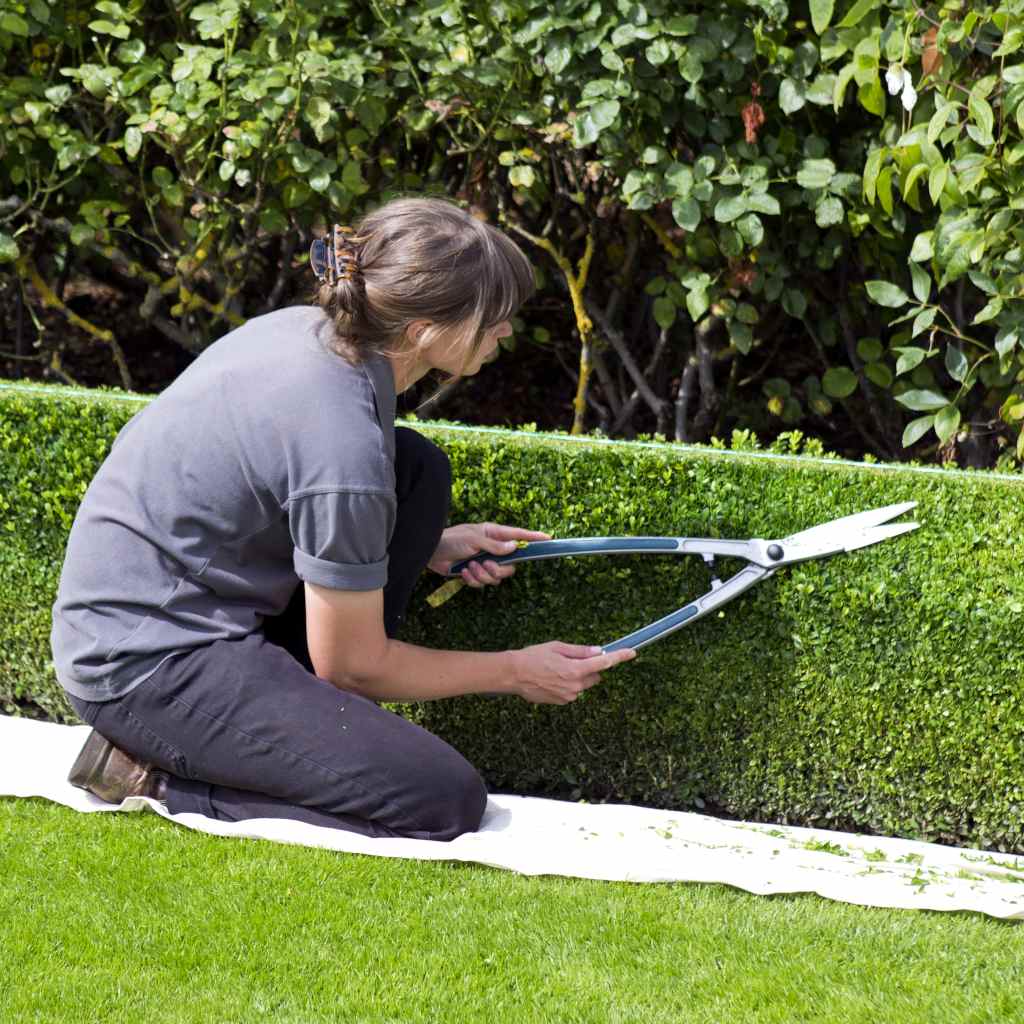
Shears are more accurate, which helps for lower hedges.
Stretch a string line between two canes at the finished height and trim to it, so the top of the hedge stays level from end to end.
Sharpen the blades first: blunt ones bruise shoots and leave brown tips.
Work each side from the bottom upwards so the clippings fall clear of the hedge, then finish the top.
Shrubs that make for good hedges
There are a great many hedge shrubs, but some are particularly well suited to hedges because they cope well with pruning.
Try to get a hold of a long roll of burlap or a tarpaulin, and lay it on the ground near the hedge.
Trimmings will fall onto it and picking them up is easy. You’ll save a lot of time and the result will be perfectly clean!
Written by Gaspard Lorthiois | Loves helping out, especially when it comes to growing things. Worked in herbal medicine, runs a farm, and dabbles in tech. Master's degree and engineer.