
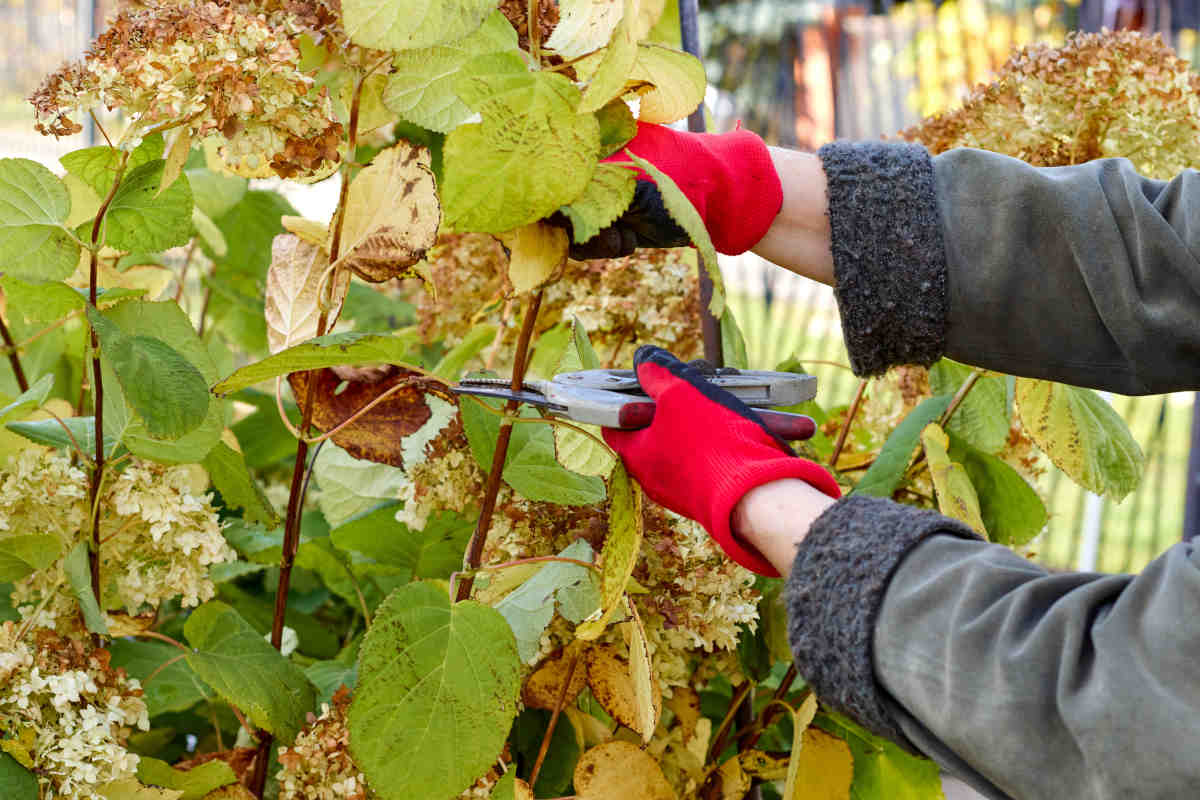
Hydrangea is a beautiful shrub, and pruning helps boost blooming and makes the plant healthier.Pruning a hydrangea is an easy task, as long as a couple guidelines are followed to help guarantee success!
Follow our guidance to have hydrangeas that stay magnificent year after year:
Flowers grow on the previous year’s growth, so it is important to not cut it off.
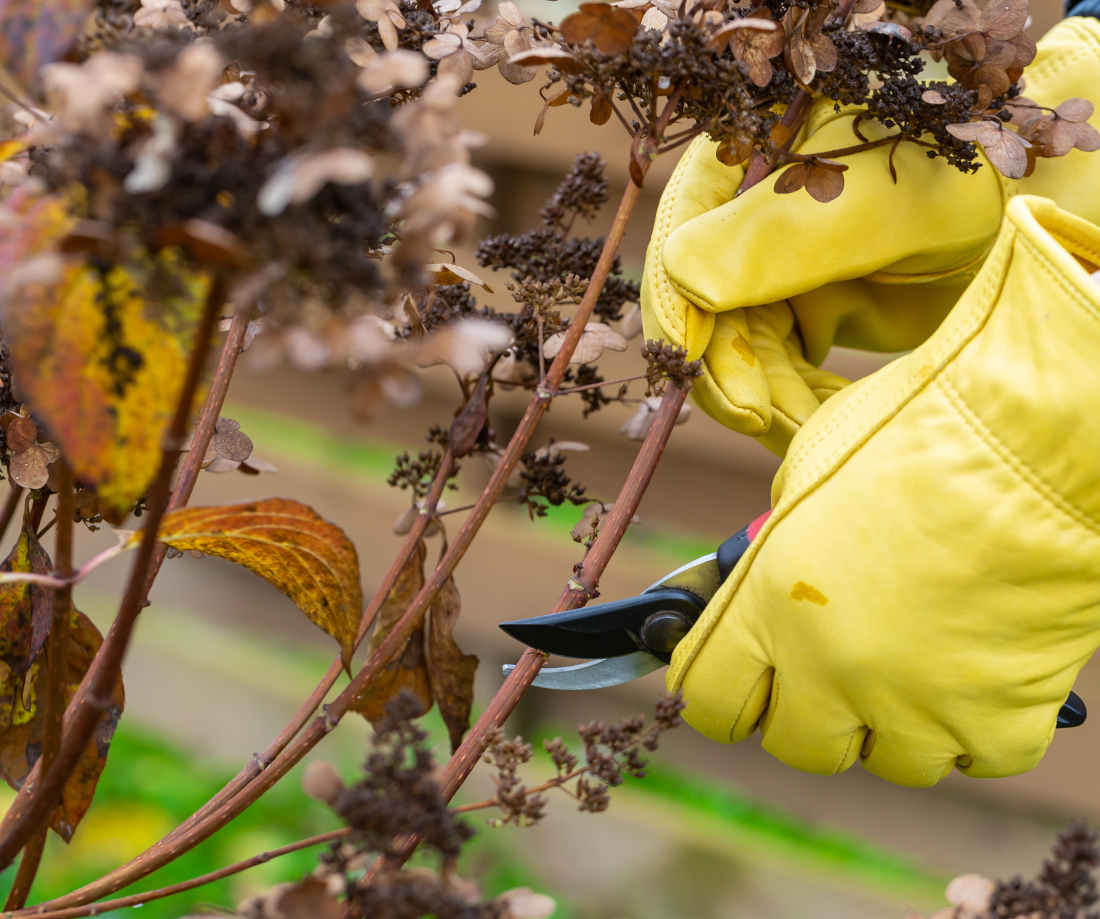 If you cut your shrub back by more than 12 inches (30 cm), there is a risk that you won’t have any flowers.
To have spectacular blooms, it is also possible to add hydrangea fertilizer.
Fall and the end of winter are the two moments of the year for pruning hydrangeas.
Remove dead wood and wilted flowers for a start.
At the end of blooming, it is useless to keep wilted flowers but it is still too early to cut the hydrangea shrub back.
Winter may be cold and if your hydrangea is cut back too much, it may be vulnerable to freezing.
So just remove wilted flowers where the stem meets the branch to freshen up your hydrangea a bit.
Ideally during the two last weeks of February or the two first weeks of March.
This pruning will be more severe than the one performed in fall, and it will help enhance blooming.
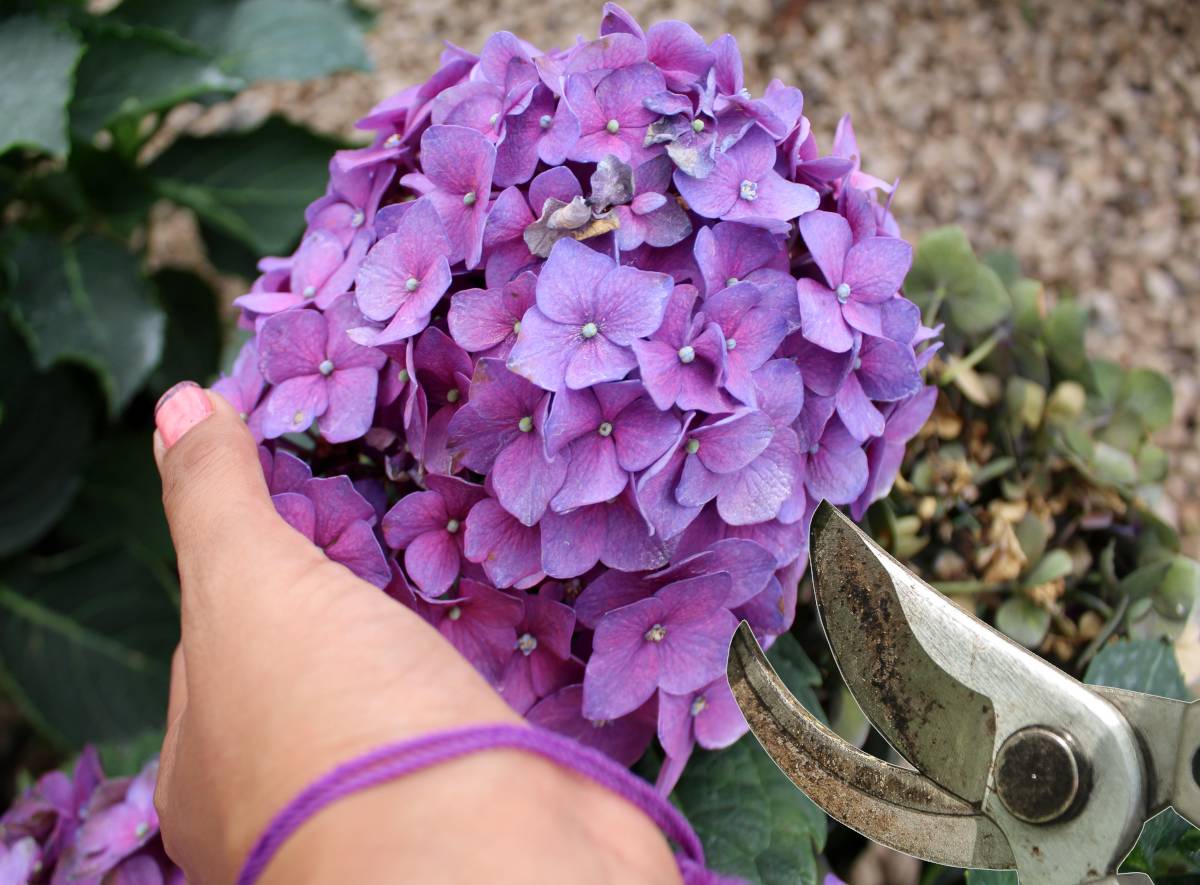 Flowers appear on the previous year’s growth.
This means that:
if you cut all new branches that grew in the past year, you won’t have any flowers.
Hydrangea can be cut back entirely when it takes up too much space. But this should be a one-shot job, because you’ll have to wait an extra year before blooming.
Truth be said, not much difference. There will even be more blooming, but flowers will be smaller and less impressive.
Let’s hear the advice of Hubert Buquet, Master Gardener in the renowned Valloires Gardens, in France:
Read also about pruning and hydrangea:
Wait for a dry, sunny day to prune off spent hydrangea flowers. Keep them in a dried flower vase, they will stay beautiful for months!
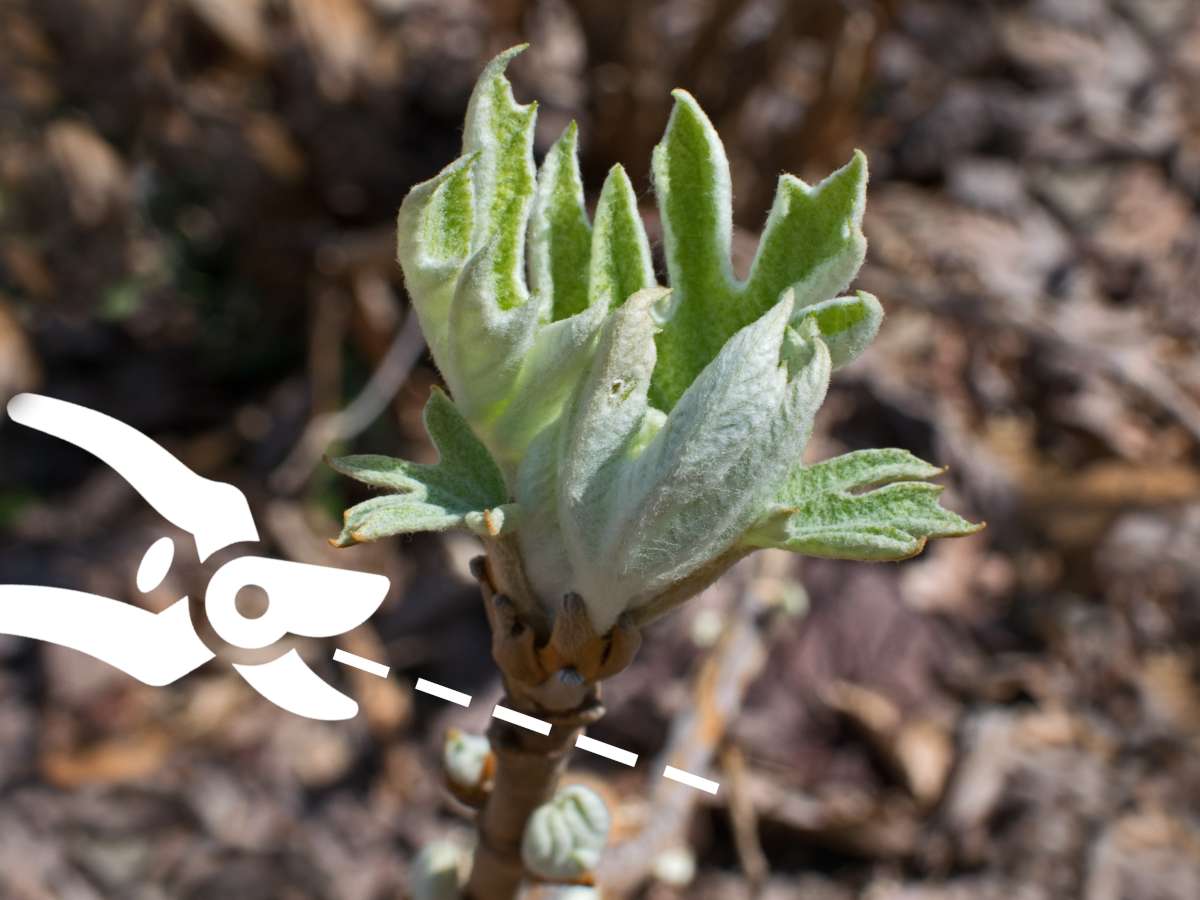
You should not cut your hydrangea back by more than 12 inches (30 cm), as cutting more than this risks removing next year’s flower buds and leaving you with no blooms. When pruning, cut just above the first pair of buds on each branch, about ½ inch (1 to 2 cm) above them.
The two best times are fall (when you should only remove dead wood and wilted flowers) and the end of winter, ideally during the last two weeks of February or first two weeks of March, when you can do more severe pruning to enhance blooming. Avoid heavy pruning in fall since winter cold can damage severely cut-back plants.
Hydrangea flowers grow on the previous year’s growth, so cutting off too much new growth will eliminate next year’s flower buds. If you cut back more than 12 inches, remove all new branches from the past year, or do heavy pruning in fall, you risk losing blooms.
Yes, in autumn it is possible to recover some of your pruning trimmings to start hydrangea cuttings. The article specifically notes this as an opportunity when doing fall pruning.
If you skip pruning, there will be more blooming overall, but the flowers will be smaller and less impressive than with regular pruning. Pruning helps boost blooming quality and makes the plant healthier.
This is an awesome gardening website!!
Thank you for the very useful information:)
Happy you found it of help! It’s a pleasure to read feedback such as yours. And new ideas are always welcome, too!