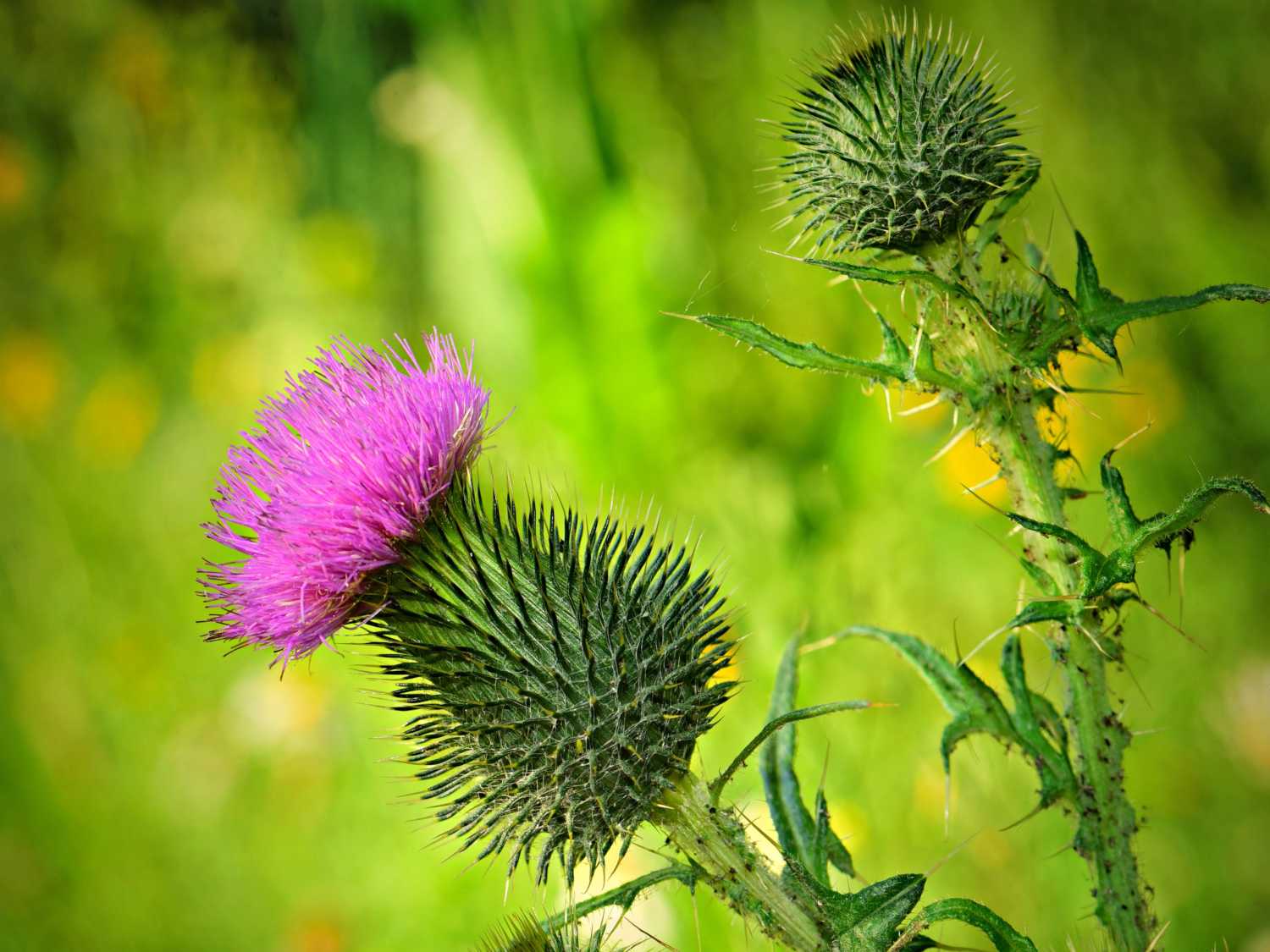
Silver-blue leaves and long stems bristle beneath round, needle-studded flowerheads that no one wants to embrace. Thistle (Echinops ritro) brings a wildflower touch to the heart of a bed and opens beautifully when cut for a vase or dried; give it full sun and an ordinary, well-drained soil and it flowers freely with almost no care.
| Name | Eryngium planus or Echinops ritro |
|---|---|
| Family | Apiaceae (parsley family) |
| Type | perennial |
| Height | 12 to 32 inches (30 to 80 cm) |
| Exposure | full sun |
| Soil | ordinary, well drained |
| Foliage | deciduous |
| Flowering | early summer to early autumn |
At the heart of a flower bed, it adds an aesthetic touch and a hint of wildflower that is very interesting. Elegant in dry flower compositions.
Favor planting in fall with a mix of garden soil and soil mix.
When purchased in containers or nursery pots, plant it in spring or at the beginning of summer, you won’t have any problems.
Being a very easy plant to care for, thistle requires practically no care at all.
But if you’re really craving for details about thistles, a secret tip is that removing dead flowers whenever they wilt away will trigger new blooms. Staking the stems of taller varieties will ensure that the stems won’t fold under the weight of the flowers and/or gusts of wind.
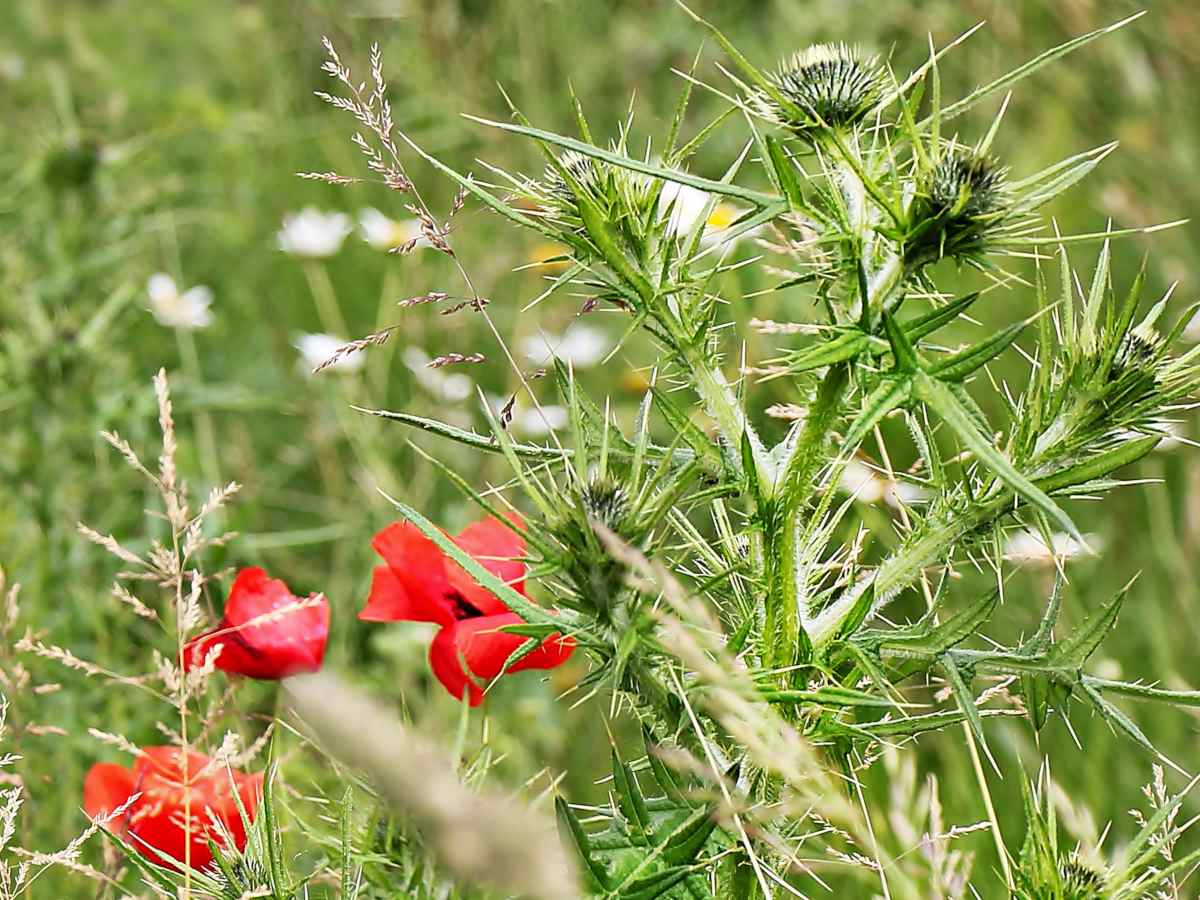
This perennial has leaves and flowers that are a distinctive silver blue color, long stems and thorny leaves that you don’t want to embrace…
It bears round, needle-studded flowers that will open very well when cut and placed in a vase. They’ll lend your bouquet that special wildflower touch, especially for dried flowers.
Here are a few interesting thistle species:
Apart from its beautiful violet blue flowers, some blue thistle species are also edible! The roots can be dug out and eaten. Thistle also is used for medicinal purposes against rheumatism and kidney stones.
Several thistle species and cultivars are grown as ornamental perennials. Use the table below to see at a glance what each one brings to a bed or a bouquet.
| Species or cultivar | Common name | Notable feature |
|---|---|---|
| Eryngium alpinum | Blue alpine thistle | Alpine species with blue flowers |
| Echinops ritro | Blue thistle | The most common blue thistle |
| Echinops ritro ‘Veitch’s blue’ | Blue thistle cultivar | 32 inches tall, electric blue colour |
| Eryngium bourgatii Gouan | Pyrenees blue thistle | Blue-flowered Pyrenean species |
Whichever you pick, all appreciate full sun and an ordinary, well-drained soil.
Beyond the straight species, a handful of named thistles are widely sold and each suits a different spot in the border or the vase. The table sets out height, flower colour and the job each does best.
| Variety | Height | Flower colour | Best use |
|---|---|---|---|
| ‘Taplow Blue’ | Up to 5 ft (1.5 m) | Pale grey-blue | Tall accent, needs staking |
| ‘Blue Glow’ | About 4 ft (1.2 m) | Deep violet-blue | Drying, pollinator planting |
| ‘Big Blue’ | About 3 ft (90 cm) | Intense silver-blue | Focal point, cutting |
| ‘Blaukappe’ | About 30 in (75 cm) | Blue-violet | Cut and dried flowers |
This plant needs a lot of water. To avoid spending your entire summer watering it, add mulch in spring.