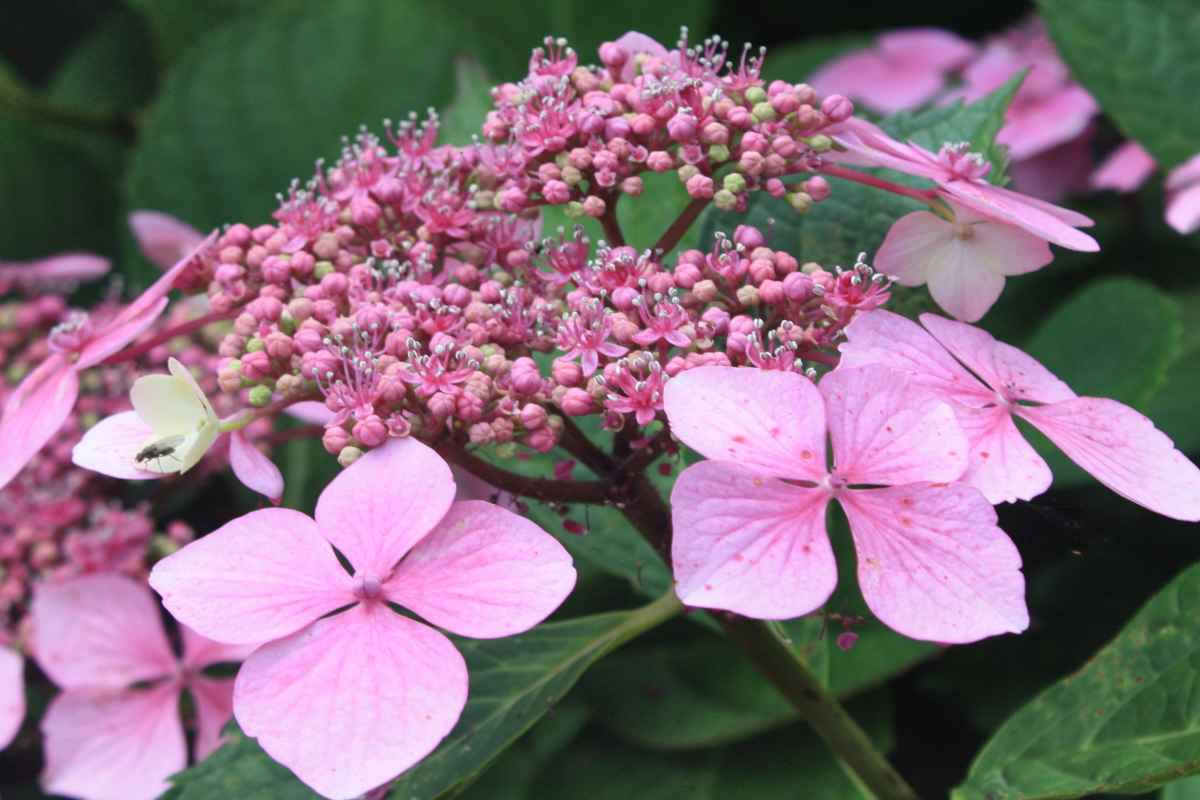
Little flowers gather into broad umbels 8 to 10 inches (20 to 25 cm) across on a deciduous vine that grips bare stone by itself, thanks to the small roots forming along its stems. Climbing hydrangea (Hydrangea petiolaris) is the rare climber that flowers in shade: give it a north wall and it will cover it.
| Name | Hydrangea petiolaris |
|---|---|
| Synonym | Hydrangea anomala subsp. petiolaris |
| Family | Hydrangeaceae |
| Type | climbing vine |
| Height | 25 to 40 feet (8 to 12 meters) |
| Exposure | shade or part sun |
| Soil | ordinary |
| Foliage | deciduous |
| Flowering | early summer to early autumn |
Caring for climbing hydrangea is easy and they will quickly join other flowers in decorating your garden boxes, walls, gazebos and other lattices along your terrace and garden.
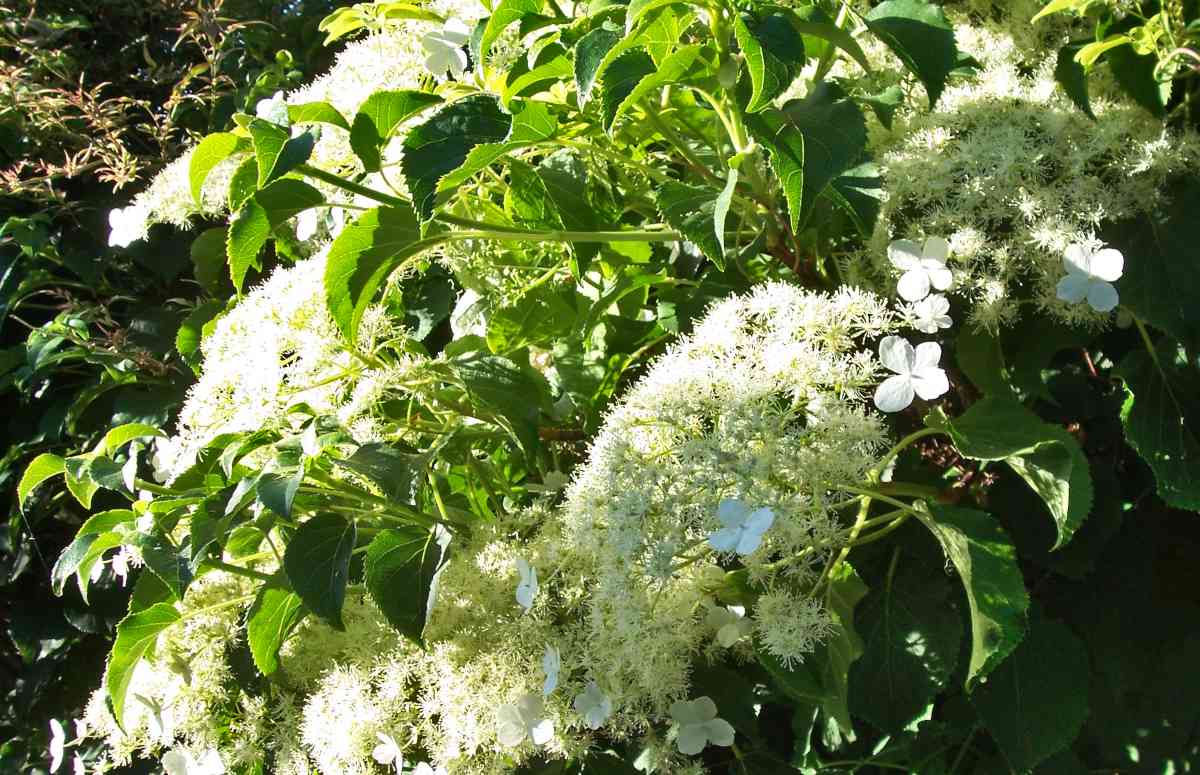
Best is to plant in fall in good garden soil ideally mixed in with heath. The light acidity heath provides is ideal for this particular hydrangea.
If you wish to plant in spring or summer, provide for regular watering at the beginning.
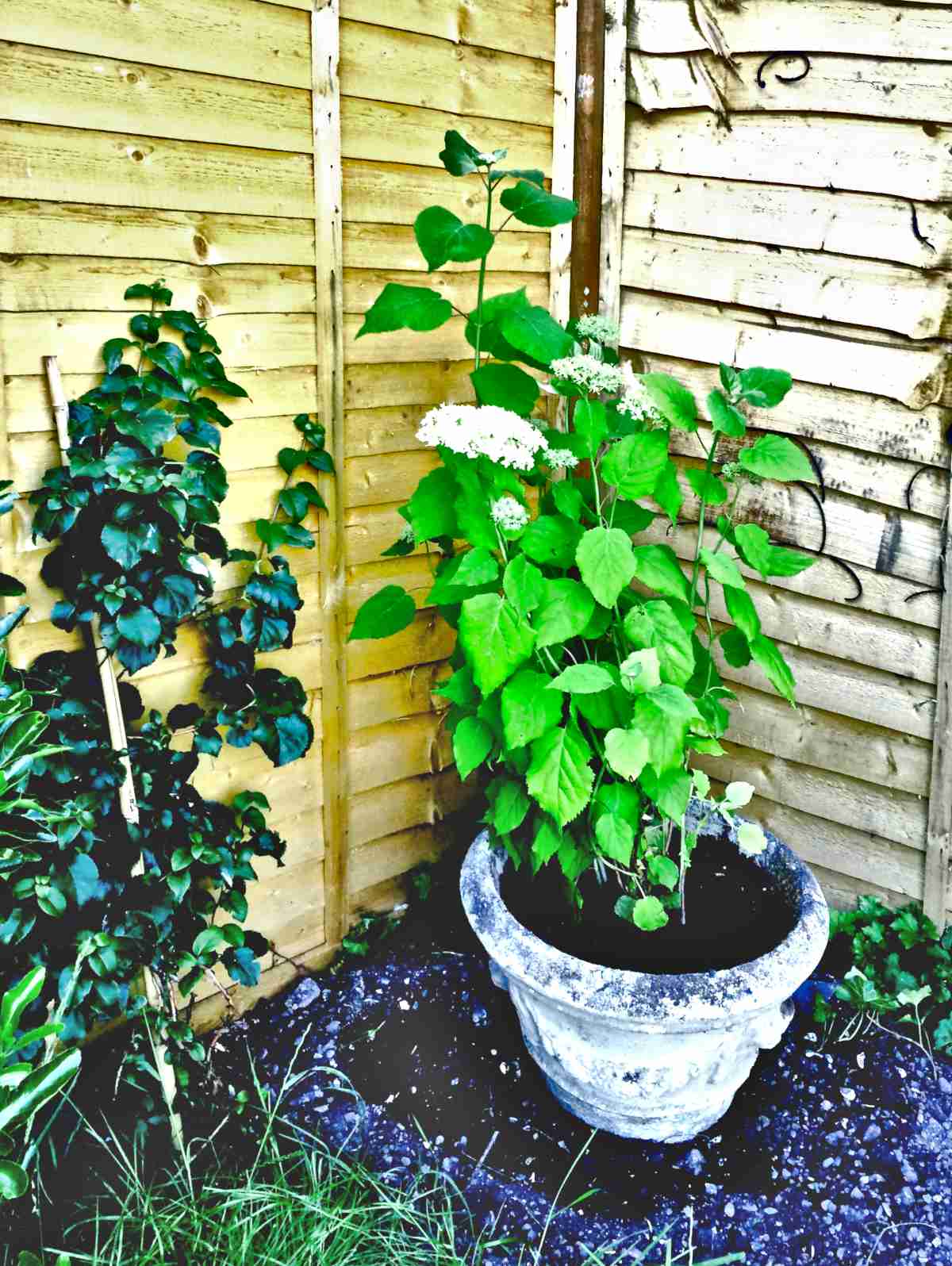
Climbing hydrangea also does great in pots. Just make sure of three things:
Since it even blooms in the shade, it will do great to add color to a shaded courtyard.
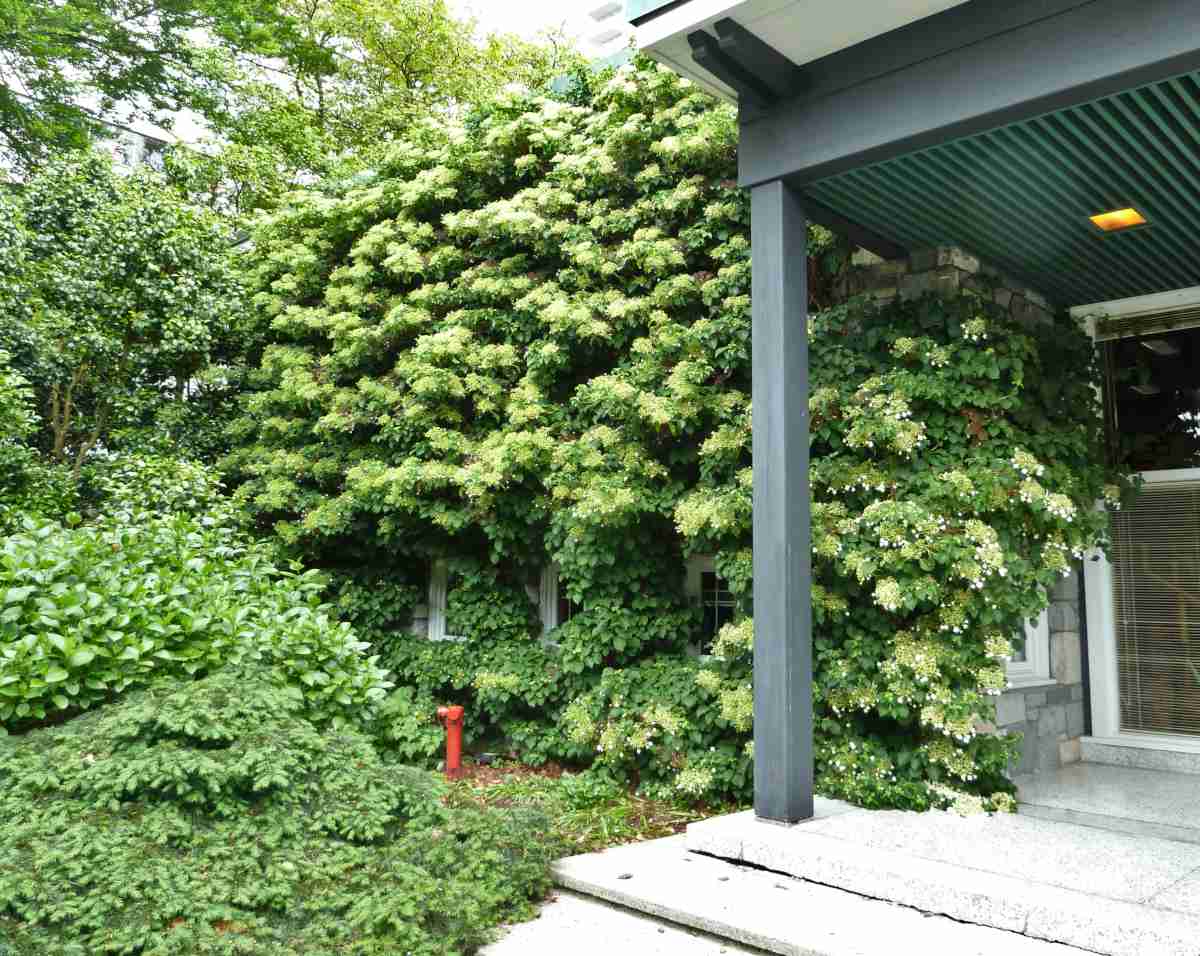
They don’t need any pruning to bloom well.
If ever it grows too wild and large, you can cut it back to a single, main stem to reduce its size. Indeed, it tends to build upon its woody growth to extend its reach as much as it can.
Do this “heavy maintenance” pruning about once every 3-4 years in fall, after the blooming is over.
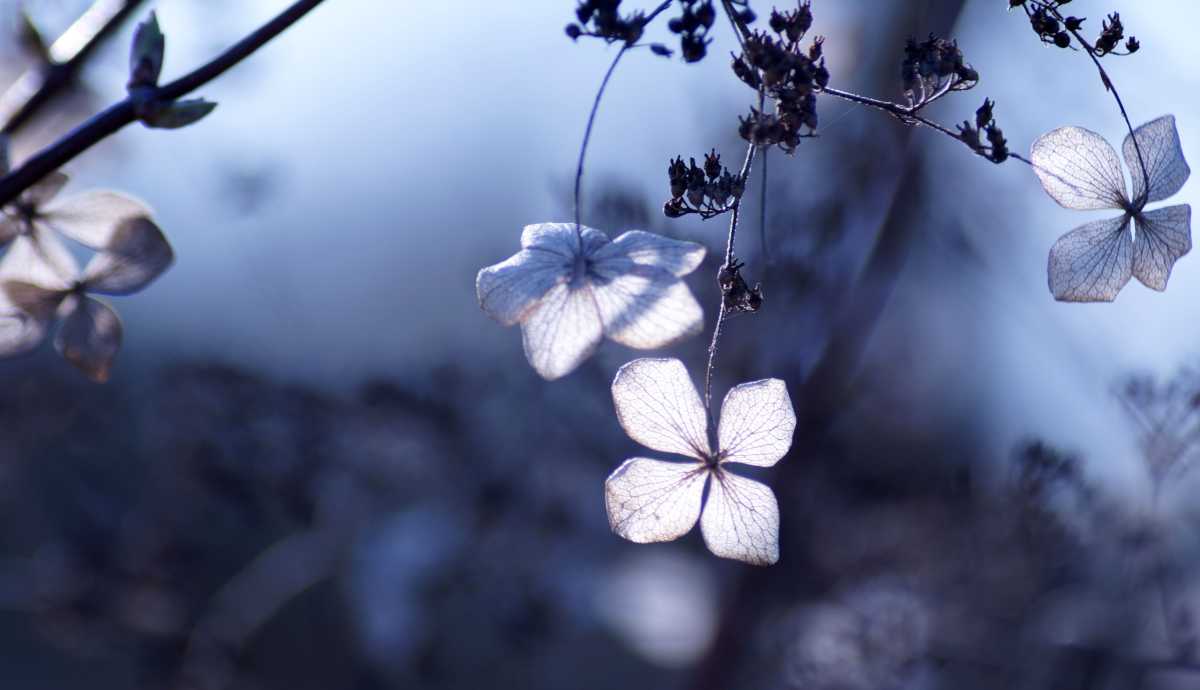
If you wish, deadheading is possible – snipping off wilted flowers – in order to spur appearance of new flowers. This will lead to more blooming right up to fall.
This climbing hydrangea-like vine is native to the Far East. Another name for it is “Japanese hydrangea“, since it grows in the wild there.
A beautiful climbing vine, this climbing hydrangea will produce magnificent little flowers grouped in umbels 8 to 10 inches (20 to 25 cm) across.
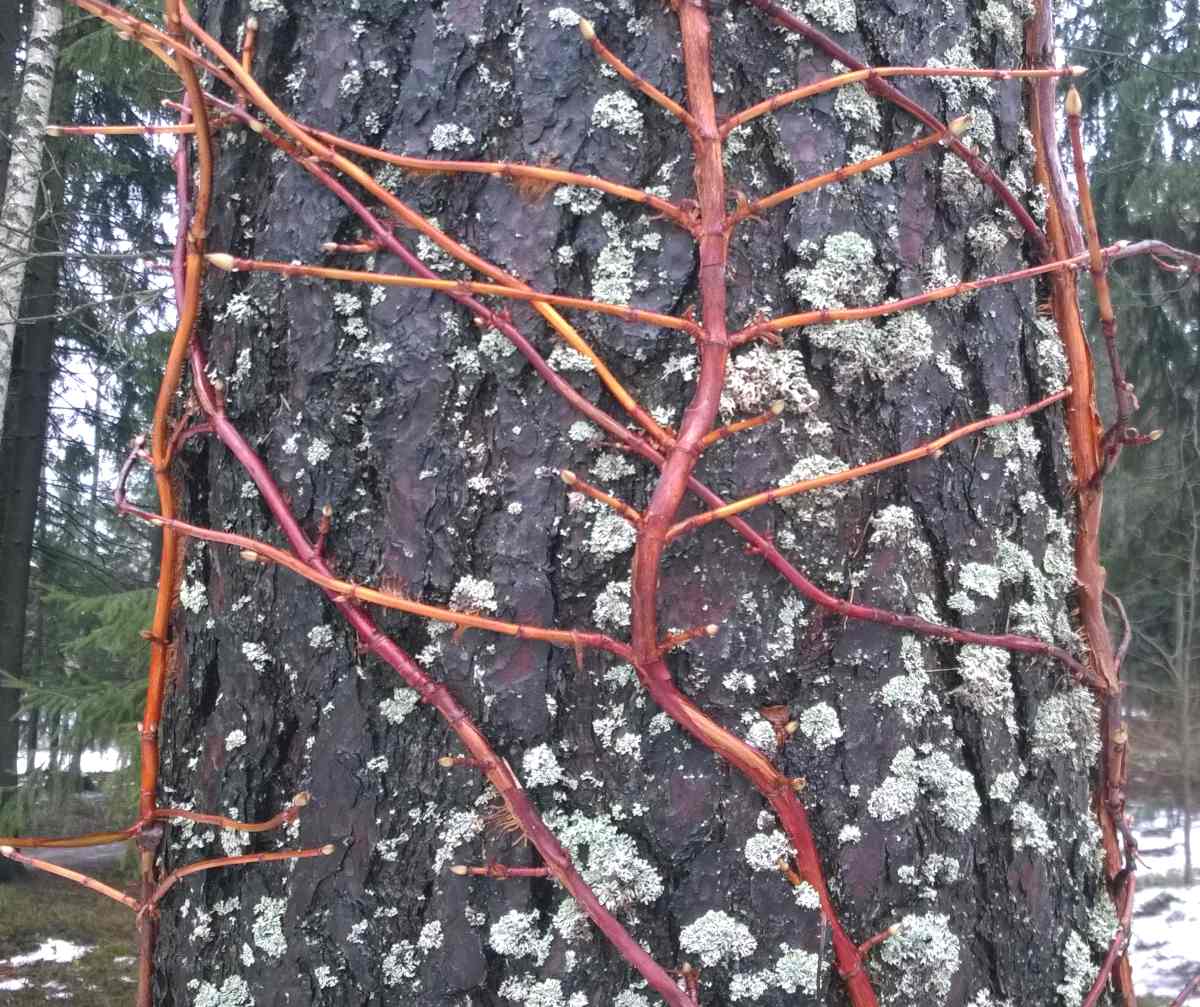
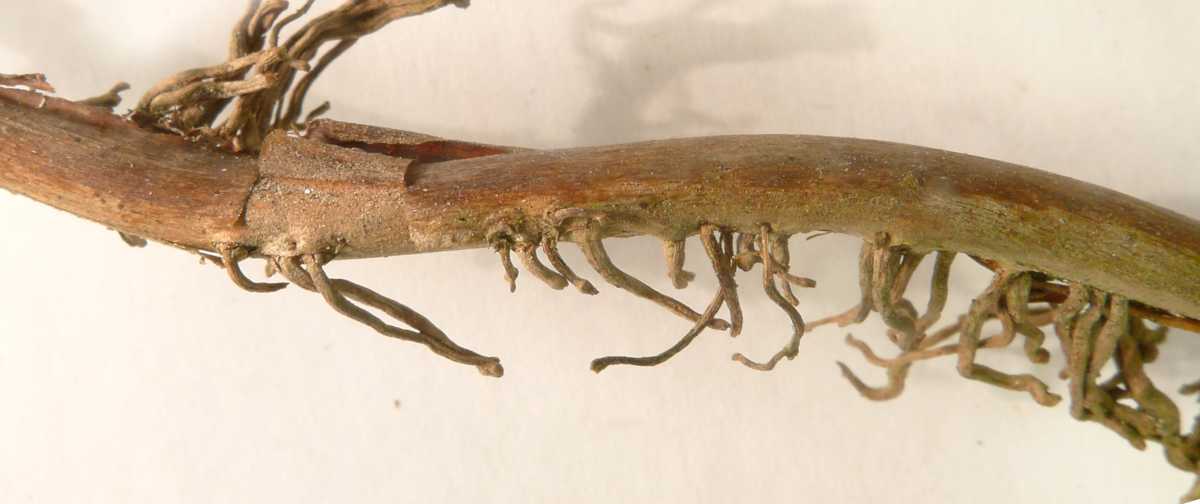
This plant is surprising in that can spontaneously attach itself to walls thanks to the little roots that form along its stem.
This hydrangea is both very appealing visually and easy to care for, and is an ideal choice for any walls that facing north.
Read also:
To support the growth of the plant, give it organic fertilizer from the start, in the form of time-release granules.
The article does not provide specific information about growth rate or time to reach mature size. It only states the mature height is 25 to 40 feet (8 to 12 meters) and mentions the plant will ‘quickly’ decorate garden structures, but no timeframe is given.
Yes, climbing hydrangea does great in pots. Ensure you use enough soil to avoid repotting later, provide excellent drainage by drilling additional holes, and topdress yearly with fresh nutrients or homemade fertilizer to maintain its health in a container.
The article specifies that if planting in spring or summer, you should provide regular watering at the beginning. For potted plants, excellent drainage is emphasized as critical, but specific watering frequency is not detailed in the article.
Climbing hydrangea thrives in shade or part sun and is particularly notable because it blooms even in the shade, making it ideal for adding color to shaded courtyards and north-facing walls.
Climbing hydrangea doesn’t need pruning to bloom well. If it grows too wild, cut it back to a single main stem about once every 3-4 years in fall after blooming ends. You can also deadhead wilted flowers to encourage more blooms through fall.