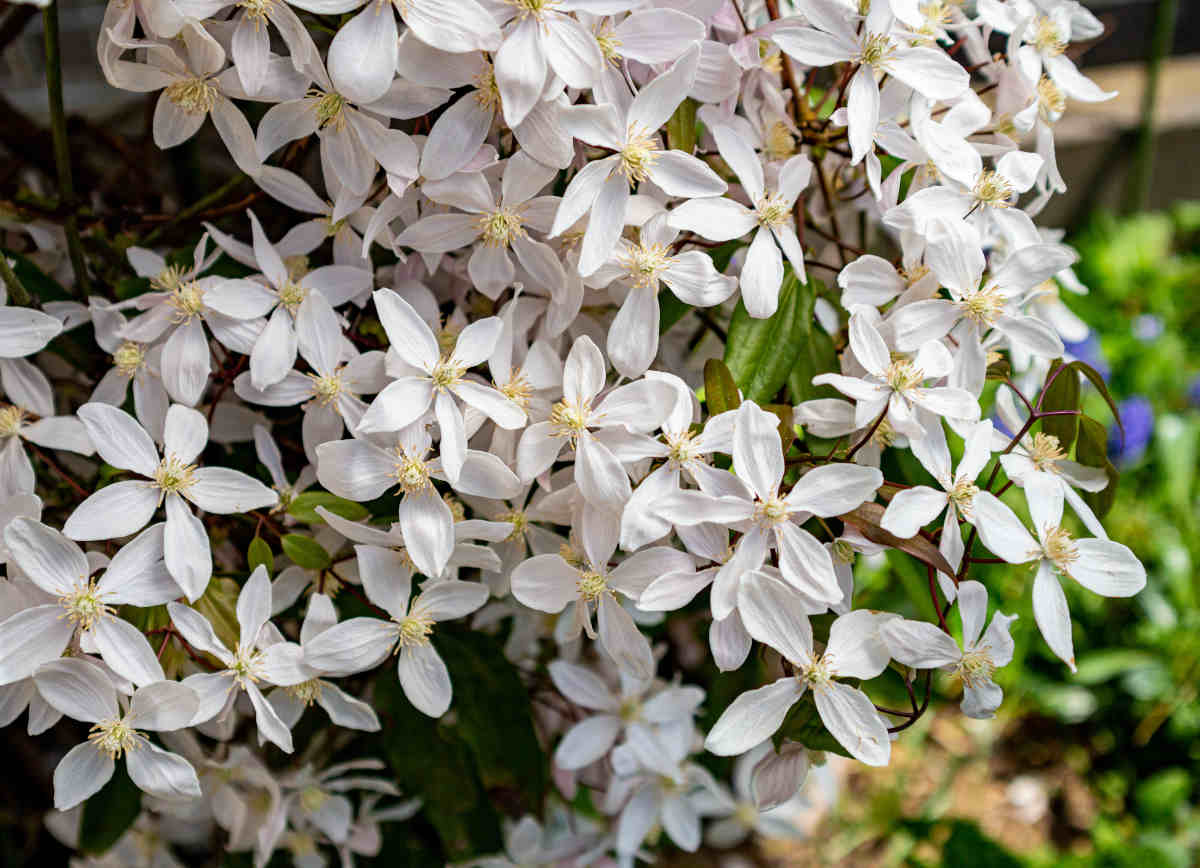
Thick, glossy evergreen leaves carry clusters of small white flowers from the end of winter, each one releasing a vanilla-like fragrance. Clematis armandii climbs 2 to 5 metres over old walls, lattices and even large containers, and asks for only one thing in return: its foot in the shade while its head basks in the sun.
| Name | Clematis armandii |
|---|---|
| Family | Ranunculaceae |
| Type | vine |
| Height | 6 ½ to 16 feet (2 to 5 meters) |
| Exposure | full sun, part sun |
| Soil | deep and cool |
| Foliage | evergreen |
| Flowering | spring |
They are perfectly suited to old walls, lattices and also container growing.
The most desirable season for planting Clematis armandii is spring, but it can also be done in fall if winter is mild in your area.
The golden rule with Clematis armandii is that the foot of the plant should stay in the shade while the head basks in the sun. If the base is in direct sun, then cover it with for example an old tile or a few odd rocks.
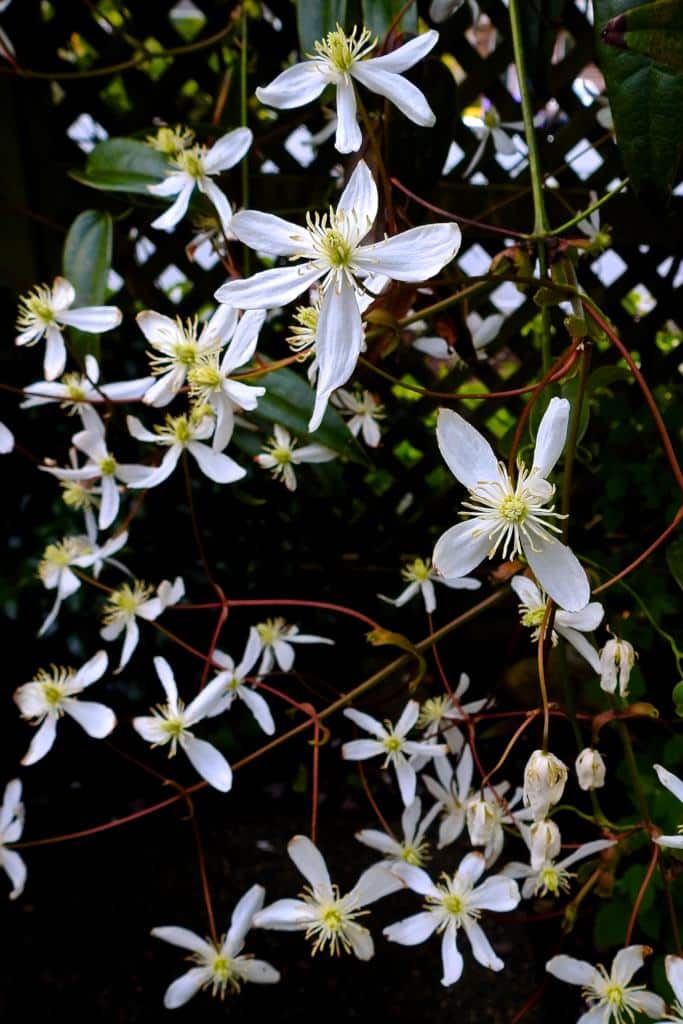
Clematis is quite easy to propagate.
If you’ve got a terrace, deck or balcony and that you wish to grow your Clematis armandii in a pot, it’s perfectly doable.
For that, selecting the pot and substrate well is important.
Since growing plants in pots is more demanding as regards watering, the solution is to mulch the base of the clematis with a thick layer for it to keep its foot cool while still having its leafage in the sun.
Clematis armandii grows just as well against a wall as on a terrace, but a pot changes the substrate, the watering and the upkeep. Here is what to adjust in each case.
| What to check | In the ground | In a pot |
|---|---|---|
| Substrate | Soil mix and heath soil, plus ⅓ river sand if the soil is heavy | Proper flower plant soil mix blended with heath soil |
| Room to root | A planting hole around 16 inches (40 cm) in diameter | A pot at least 16 inches (40 cm) across the first year, with a drainage hole |
| Watering | Worth watering over the first two years, keeping the soil a bit moist | Water as soon as the surface is dry, especially in summer |
| Keeping the foot cool | A tile, shingle or a few odd rocks over the base | A thick layer of mulch or clay pebbles |
| Long-term upkeep | Very little care once properly settled in | Repotting every 2 or 3 years |
Either way, the rule stays the same: shaded foot, sunlit head.
Once properly settled in, Clematis armandii requires very little care.
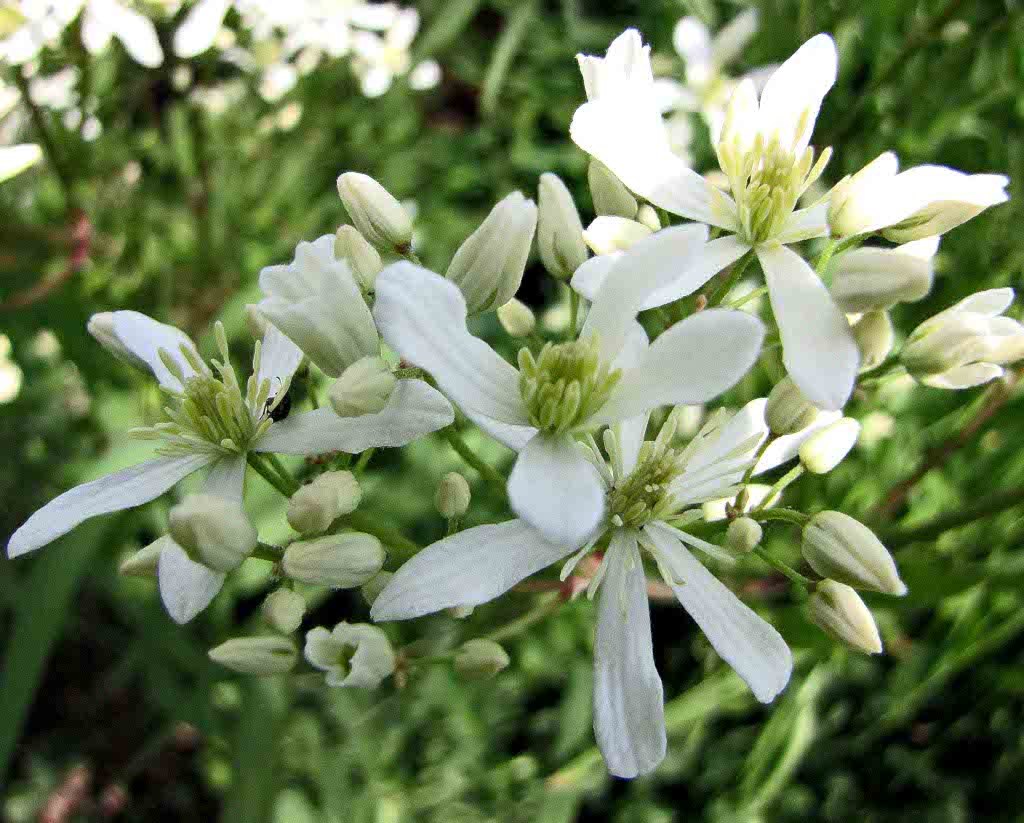
Since the armandii Clematis blooms quite early in the year, pruning can take place at the end of the blooming. Pruning serves to increase foliage density and enhance flowering in the following season.
The more clematis is pruned, the more it bears flowers!
Clematis armandii can take severe pruning in stride. Even if you hard prune it to a stump, it will sprout back new stems.
Watering is a good idea over the 2 first years, but no need to add fertilizer. Doesn’t this make it an easy plant to care for?
Needs of potted plants are more important in pots, because they dry off much faster when the weather is dry.
Look out for the cultivars ‘Snowdrift’ and ‘Apple Blossom’, both giving the same thick, shiny evergreen leafage and vanilla-scented white flowers that open at the end of winter, sometimes as early as late winter where winters are milder.
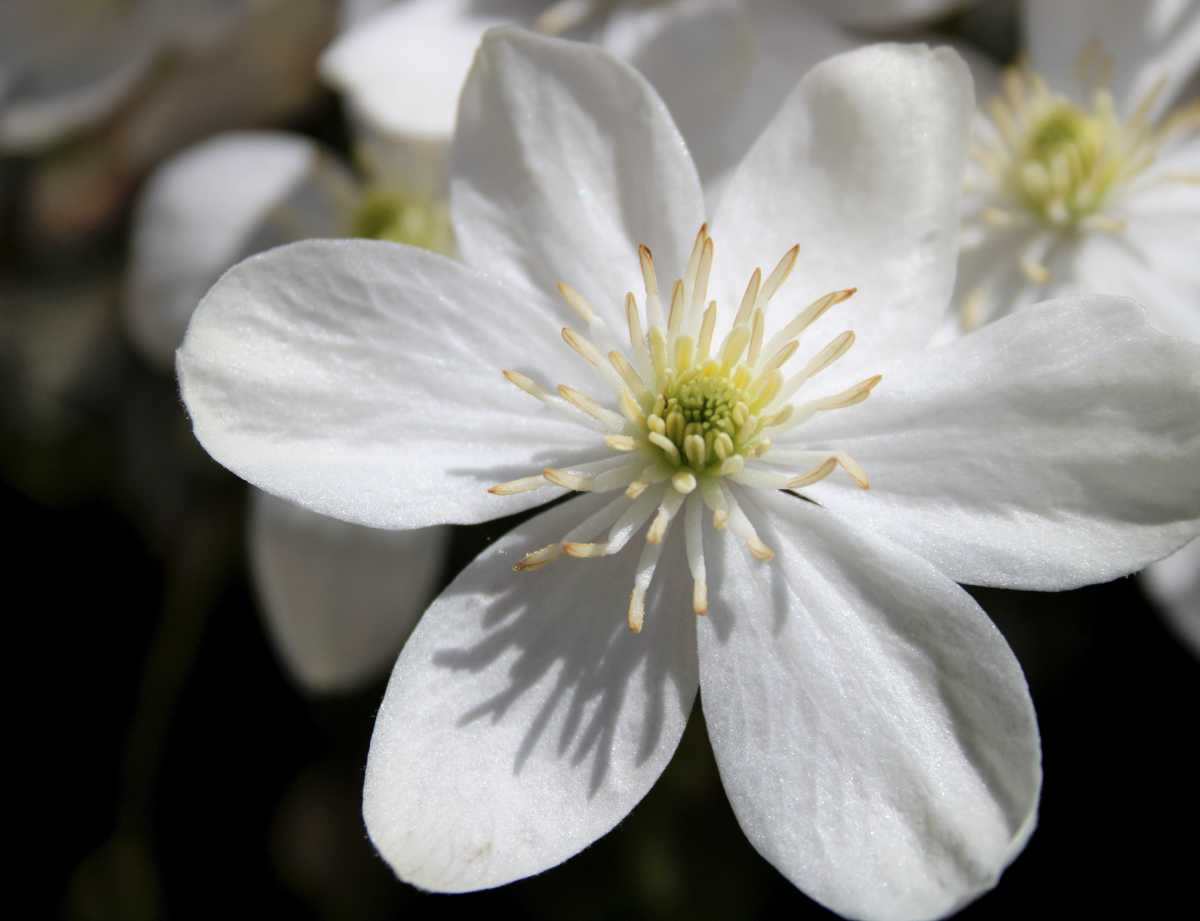
Clematis armandii lavishes us with superb evergreen leafage, thick and at the same time shiny leaves. Its early blooming starts at the end of winter. This particular species is among the rare fragrant clematis, with each cute white flower releasing a vanilla-like fragrance. Very ornamental for both senses, sight and smell!
Clematis armandii is native to China.
Hardiness isn’t what Clematis armandii is best known for. Indeed, it won’t resist temperatures lower than 14°F (-10°C). Consequently, it must be grown with care in places where winters are rather cold.
Areas with milder winters are actually where it will bloom earliest in season, sometimes as early as late winter. Its flowering will be all the more impressive.
You can attach your clematis to a lattice to ensure it grows the way you hope it will as it develops! Make it strong, because Clematis can live decades and grow rather large!