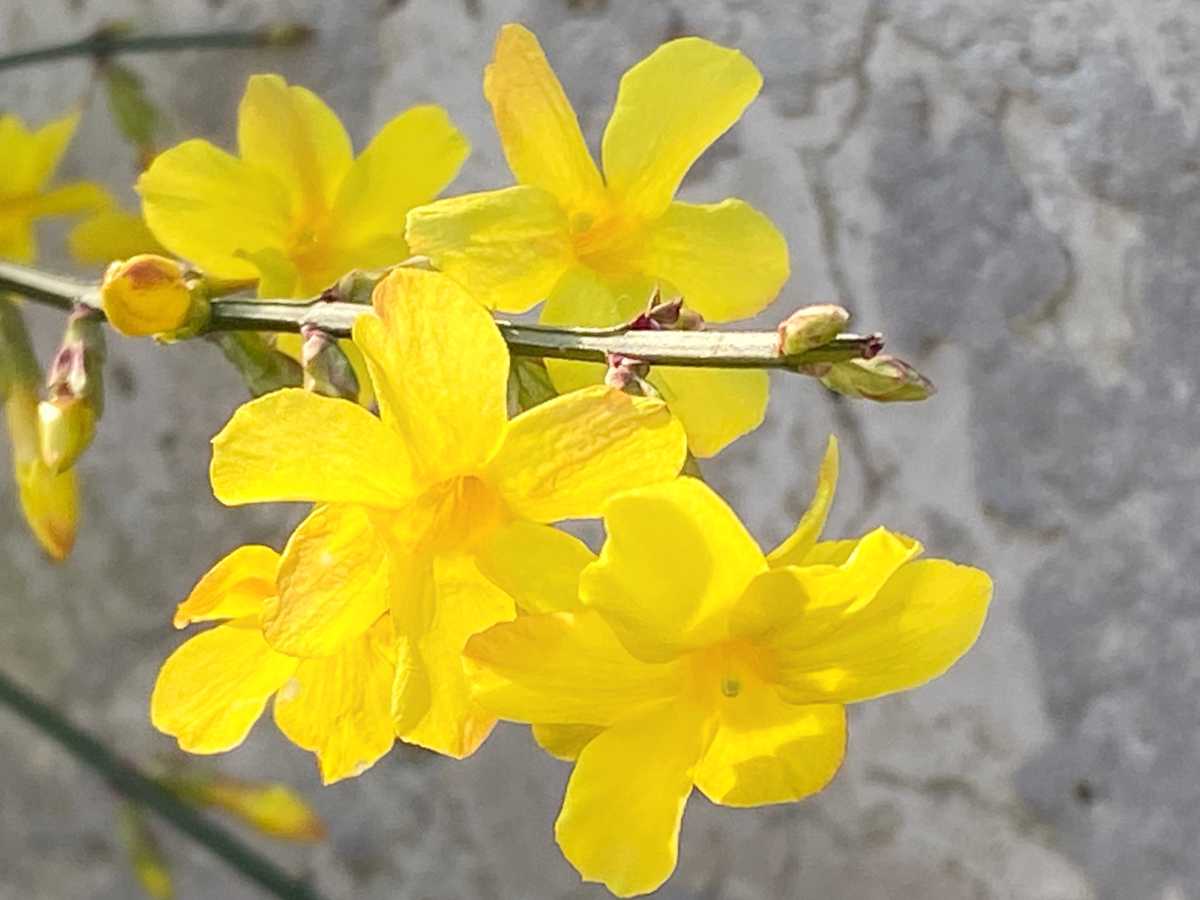
Small yellow flowers open along the stems while the rest of the garden sleeps, on a climbing vine that reaches 3 to 6½ feet and gives off no scent at all, unlike the jasmines used in perfume. Winter jasmine (Jasminum nudiflorum) is the only climber that flowers in winter, and it needs sun or part sun to do it.
| Name | Jasminum nudiflorum |
|---|---|
| Family | Oleaceae |
| Type | climbing vine, indoor plant |
| Height | 3 to 6 ½ feet (1 to 2 meters) |
| Exposure | light |
| Soil | soil mix |
| Foliage | evergreen |
| Flowering | winter, early spring |
Care, from repotting to pruning and including the watering is a set of proper actions that will help you grow magnificent jasmine.
Hardy winter jasmine grows in most of our regions and climates.
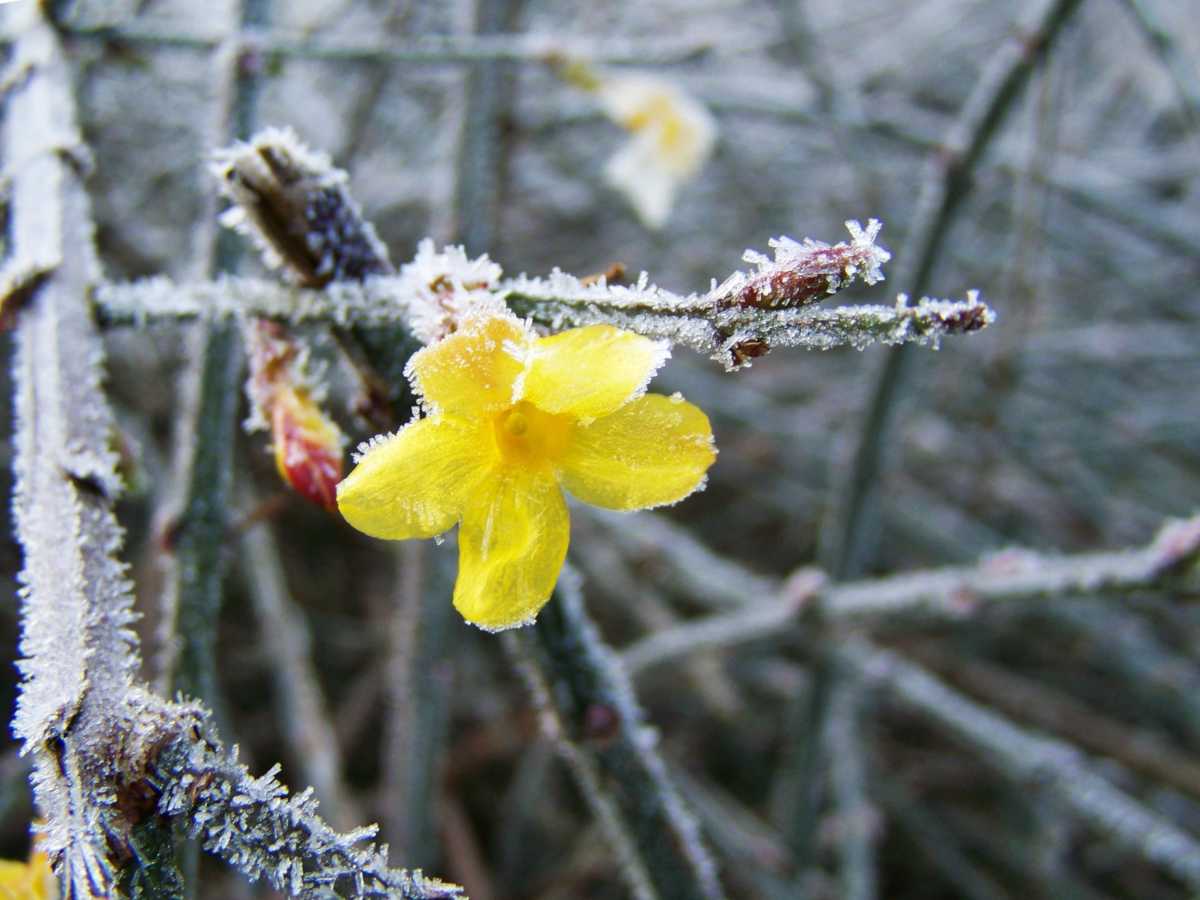
Fall is best for the planting, since this favors proper root development. Still, it is possible to plant it in other seasons as long as freezing and hot days are avoided.
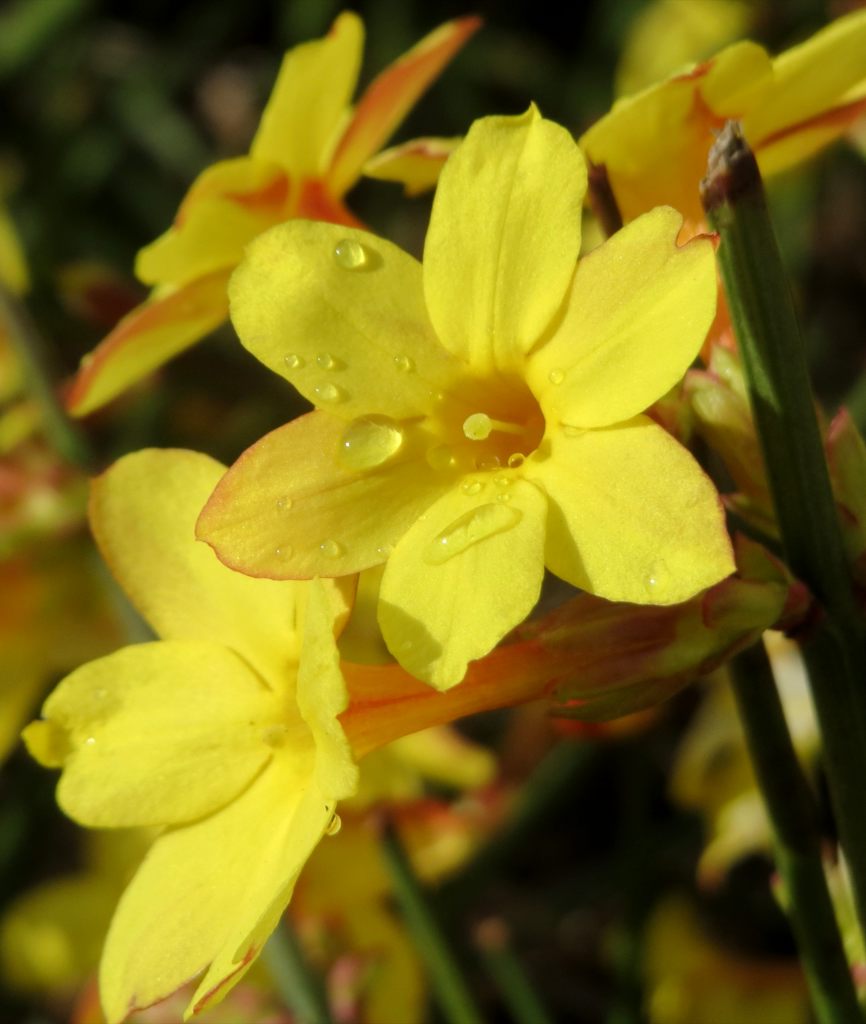
Winter jasmine, since it grows very slowly, is an ideal candidate to decorate balconies and terraces.
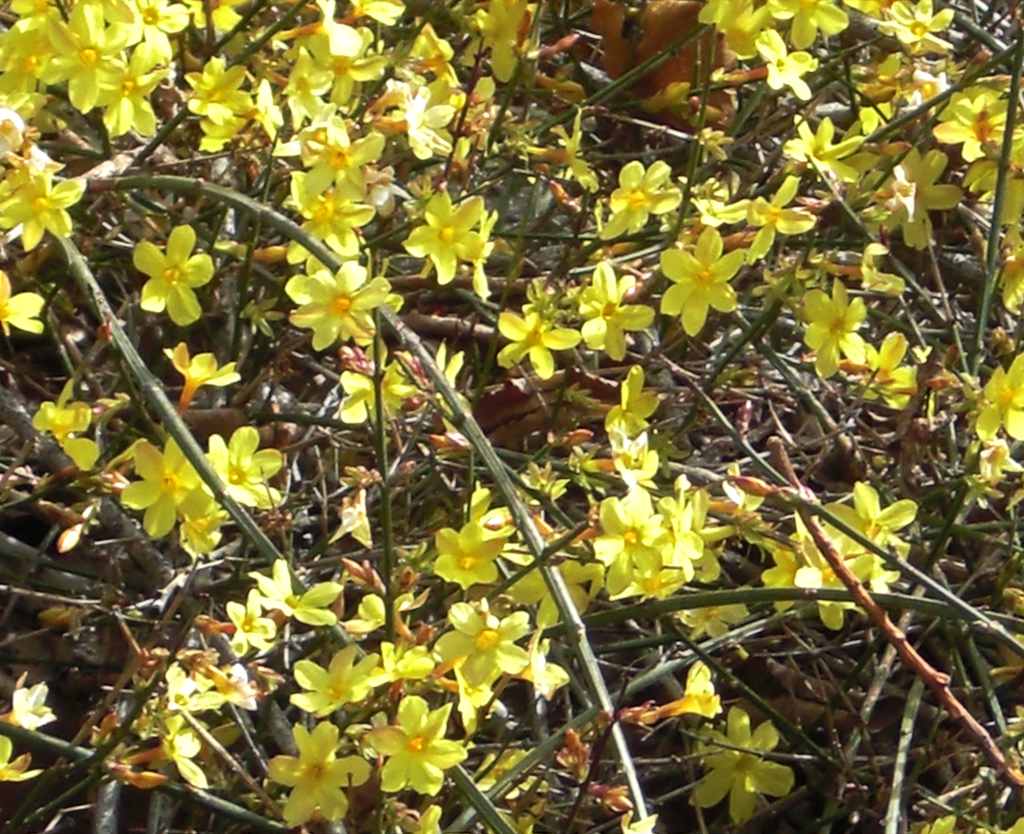
In spring, after the blooming, maintenance pruning is called for (dead branches, general shape).
In order to favor the following blooming, you should cut all stems back by 4 to 10 inches (10 to 25 cm) while keeping a harmonious silhouette.
After that, every month until fall, pinch new stems to create new ramifications which will lead to denser, more abundant blooming.
Winter jasmine flowers on shoots grown the previous summer, so pruning once those shoots have hardened in autumn removes the buds you were waiting for.
Adequate watering is required for the winter jasmine to bloom well. This is a plant that needs water but for which excess water can sometimes be detrimental, especially in fall.
This is the time frame where water needs are at their highest.
Abundant watering 2 to 3 times a week is appreciable for winter jasmine, especially if temperatures are high.
Start with slowly reducing the watering frequency, in the end only watering once a week in winter.
Each job on winter jasmine has its own moment, and most of them hang on one date: the end of the blooming. Here is what to do and when.
| Task | When | What to do |
|---|---|---|
| Planting | Fall, avoiding freezing and hot days | Incorporate soil mix into garden soil; space hedge plants 4 to 5 feet (120 to 150 cm) apart |
| Repotting | Spring, just after the blooming | Use flower plant soil mix, or peat and sand; mind the branches on a lattice |
| Maintenance pruning | Spring, after the blooming | Remove dead branches and cut all stems back by 4 to 10 inches (10 to 25 cm) |
| Pinching | Every month until fall | Pinch new stems for denser, more abundant blooming |
| Watering | Spring and summer | Abundant watering 2 to 3 times a week, more if temperatures are high |
| Watering | Fall and winter | Slowly reduce frequency, down to once a week in winter |
| Fertilizer | Every two weeks in the growing season, none during blooming | Feeding clearly increases growth; stop completely while it flowers |
Keep to this rhythm and the plant repays you with flowers at the bleakest point of the year.

The position and exposure of winter jasmine has a direct impact on its blooming, growth and development.
Even though it is the hardiest of all jasmine varieties, and thus the most able to resist cold, it can only stay outdoors in mild-climate areas. Its hardiness to freezing stands down to 5°F (-15°C).
Elsewhere, for example in mountainous areas, it should be grown in pots to be able to put it away during the fierce winter frost.
The plant loves being outside, even though it fears spots that may be too hot or too sunny.
Better to go for slightly covered sun.
Indoors, don’t place your jasmine directly behind a window in direct sunlight, or it could dry up too fast. Protect it from direct rays of the sun.
Jasmine needs up cool temperatures in winter for it to bloom, so it should be put in a room where temperatures don’t exceed 60°F (15°C). This isn’t really an indoor apartment plant.
Winter jasmine is a plant that doesn’t smell anything, unlike the other types of jasmine that are part of the ingredients used for perfume.
However, it is a beautifully blooming climbing vine.
Lastly, jasmine bears fruits, small berries that turn black when ripe, which aren’t edible.
There are two types of jasmine: winter jasmine bearing yellow flowers and summer jasmine or star jasmine which has white flowers.
Read also:
Winter jasmine still is great for indoor growing, as long as it can stay in cooler premises over the winter!