Clematis is a famous climbing vine. All varieties bear beautiful flowers. Some also add a delicious fragrant scent to their blooming! Here are a few of the best fragrant clematis vines.
Discover:
Clematis vines are fragrant, but their strength of their scent depends on many factors. For most varieties, the only way to clearly smell their perfume is to stick your nose in the flower! Luckily, some species and varieties have a more heady, wide-spreading fragrance.
Scent is only half the choice: flowering time and final height decide where each of these clematis will actually work. Here are the six side by side.
| Clematis | Flowering period | Height | Scent |
|---|---|---|---|
| Clematis x aromatica | early summer through early autumn | 6 feet / 2 metres | Vanilla with a touch of orange |
| Clematis viticella ‘Betty Corning’ | early summer to early autumn | 9 feet / 3 metres | Sweet, rose-like |
| Clematis x triternata ‘Rubromarginata’ | early summer, midsummer and late summer | 20 feet / 6 metres | Almondy |
| Clematis armandii ‘Apple blossom’ | early summer, midsummer and late summer | 25 feet / 8 metres | Almond-like, marzipan |
| Clematis montana ‘Mayleen’ | late spring and early summer, sometimes midsummer | 30 feet / 10 metres | Vanilla |
| Clematis cirrhosa ‘Jingle Bells’ | early winter, midwinter, late winter | 12 feet / 3 metres | Light, lemony |
Between them, these six carry scent through the garden from midwinter right round to autumn.
the clematis with the strongest scent
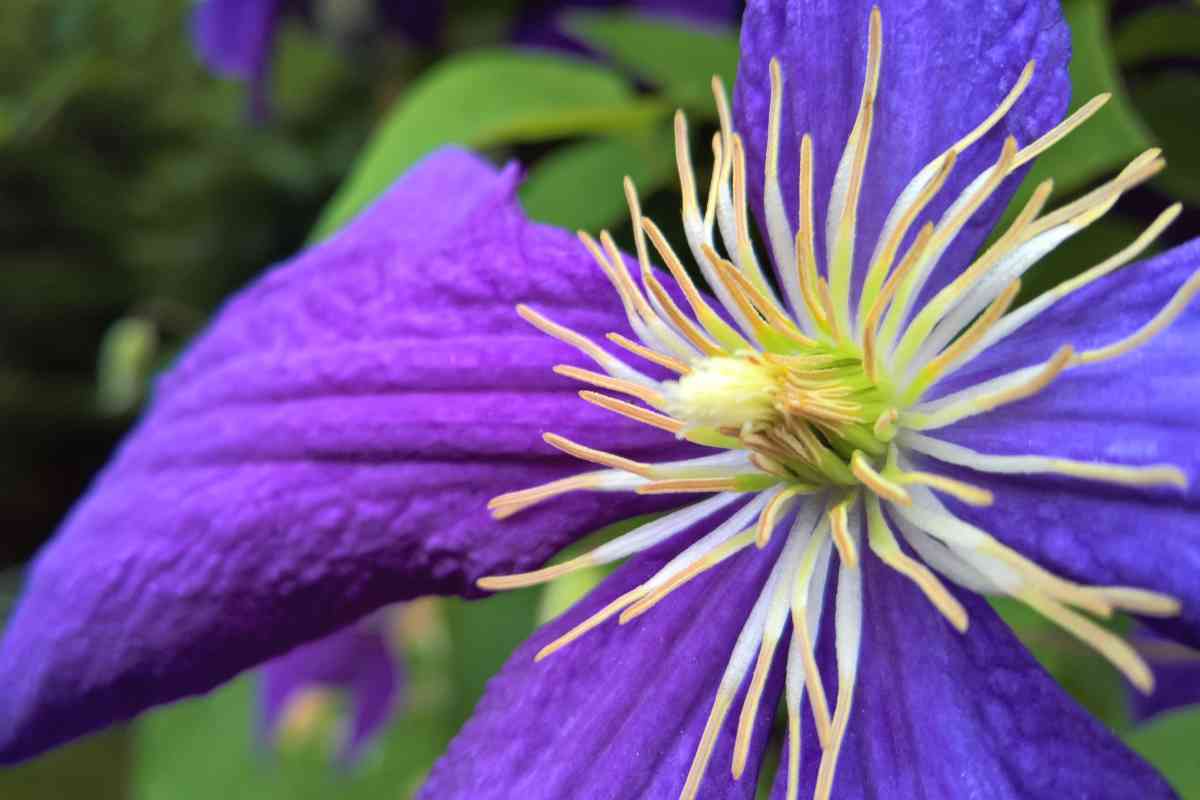
This dark-flowered clematis has a strong scent that reminds one of vanilla with a touch of orange. It’s a hybrid of two lesser-known species, C. flammula and C. integrifolia. It appeared in France in the mid-19th century and has been in cultivation ever since.
Part of the small-flowered clematis group, flowers rarely exceed 2 inches across (5 cm). Deep violet petals open up to reveal a cluster of ivory-cream scented stamens. Great for growing in pots. Must be protected from freezing in winter.
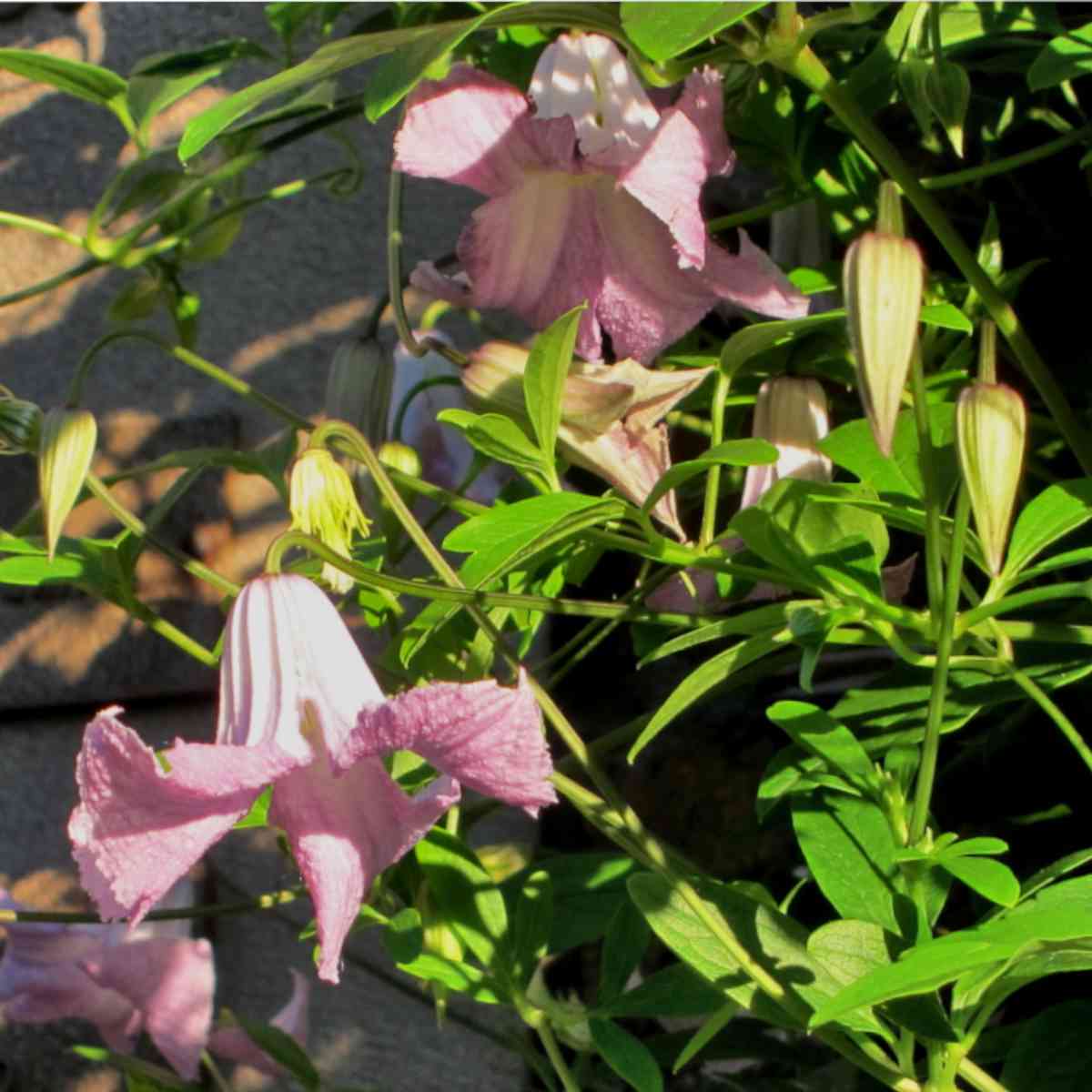
Thought to also include Clematis crispa parentage, the ‘Betty Corning’ clematis bears abundant scented bell-shaped flowers. Pale at the beginning of summer, hues darken as temperatures rise. Discovered by Elizabeth Corning in 1932.
Flowers form cute bells, with petals curling upwards as the flower ages. Can survive drought for several weeks, but flowers best if watered. Copes with freezing well.
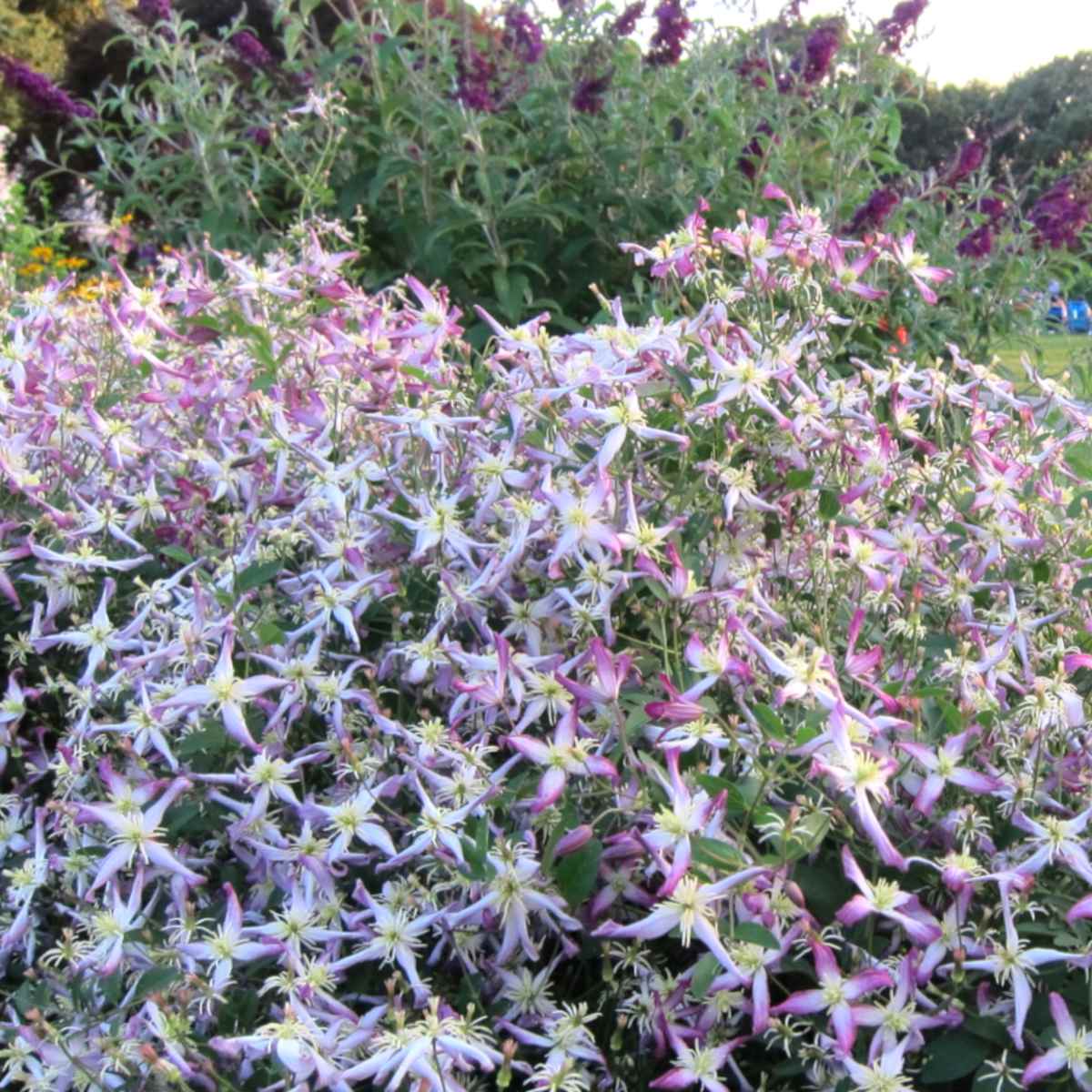
This clematis bears hundreds of flowers. Each releases a strong scent similar to the taste of almonds. An excellent climber, it can cover walls if given a trellis to latch on to. Hybrid, reportedly, of C. flammula and C. viticella, discovered like the aromatica around 1860.
Flowers are small, only about an inch across (2-3 cm), but they’re strongly scented. Four narrow petals are white towards the center and pastel purple at the curved tips. Hardy.
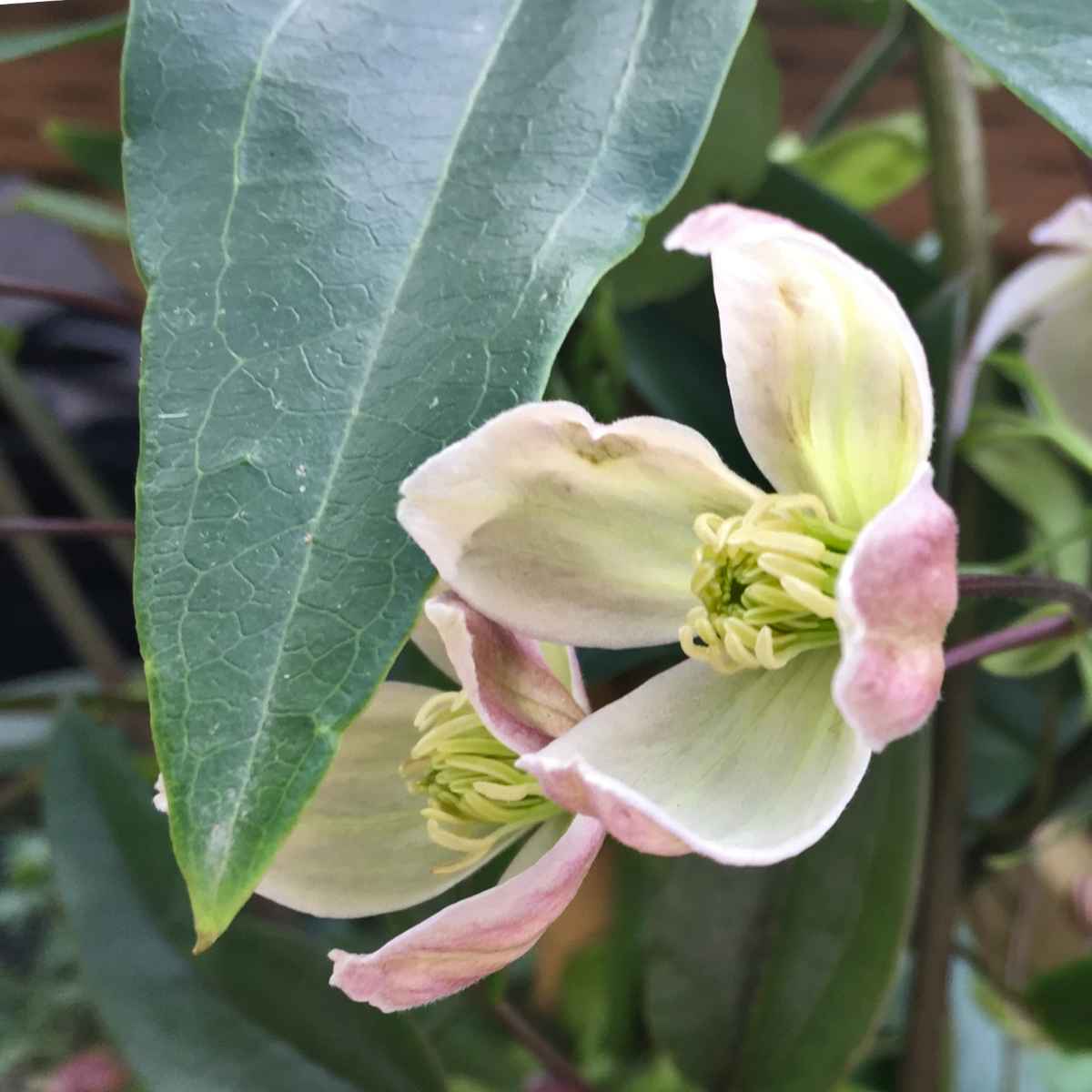
Like other Clematis armandii, the ‘Appleblossom’ cultivar releases an almond-like scent. Now produced by major horticulture companies, it’s easily available.
Flowers are like upside-down crocus blossoms, a fresh pastel pink hue. Thick, lanceolate leaves are dark green and droop down, giving this excellent climber a willow-like appearance even in winter since leaves stay on the vine.
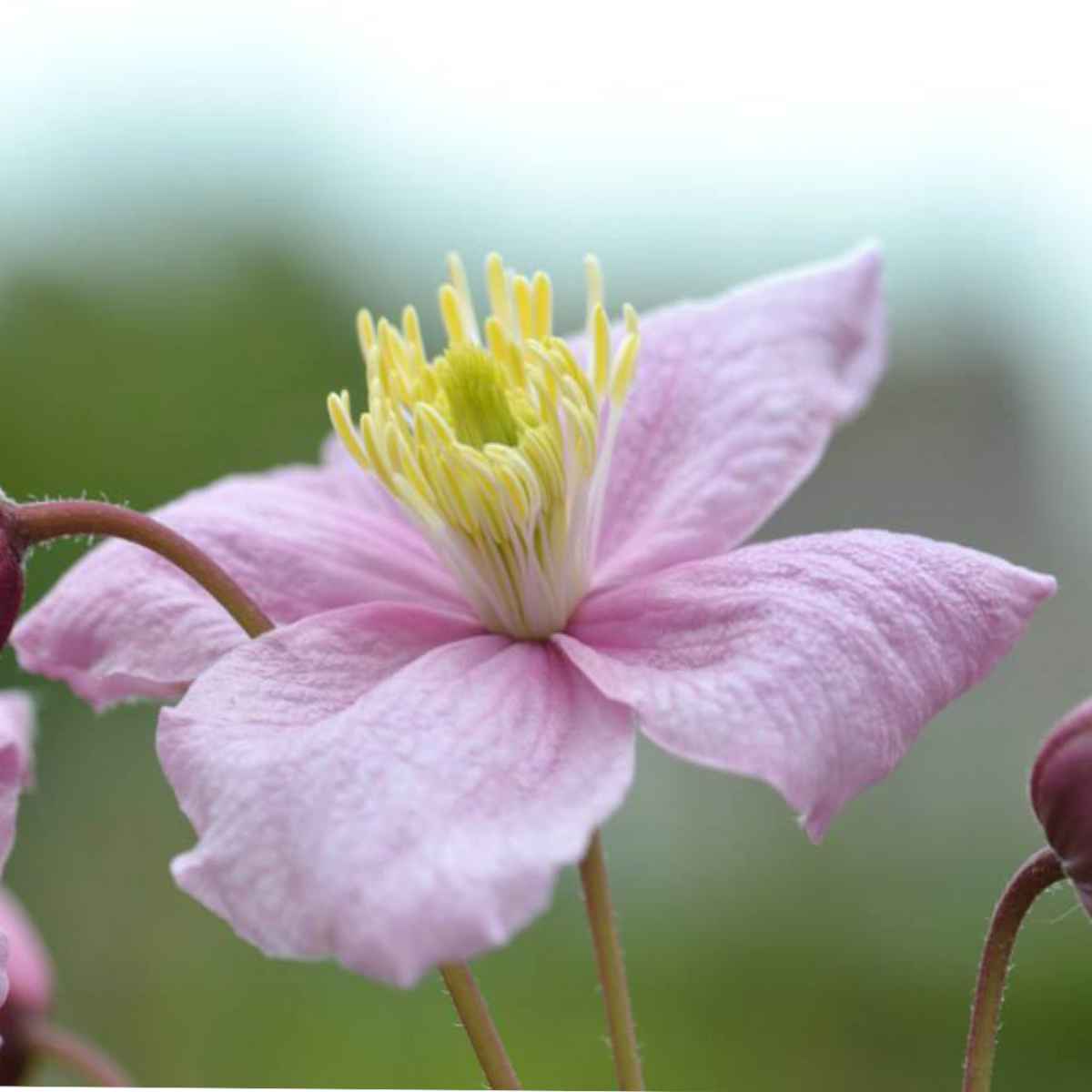
C. montana varieties are among the most fragrant, together with cultivars of the armandii species listed above. Still, a few champions have a unique scent, among them the ‘Mayleen’.
Each flower has four soft, pinkish petals that overlap slightly as they unfurl. Leaves are trifoliate, and each leaflet has a couple serrations near its tip. If allowed to dangle from an arbor, it’ll bless you with a waterfall of flowers!
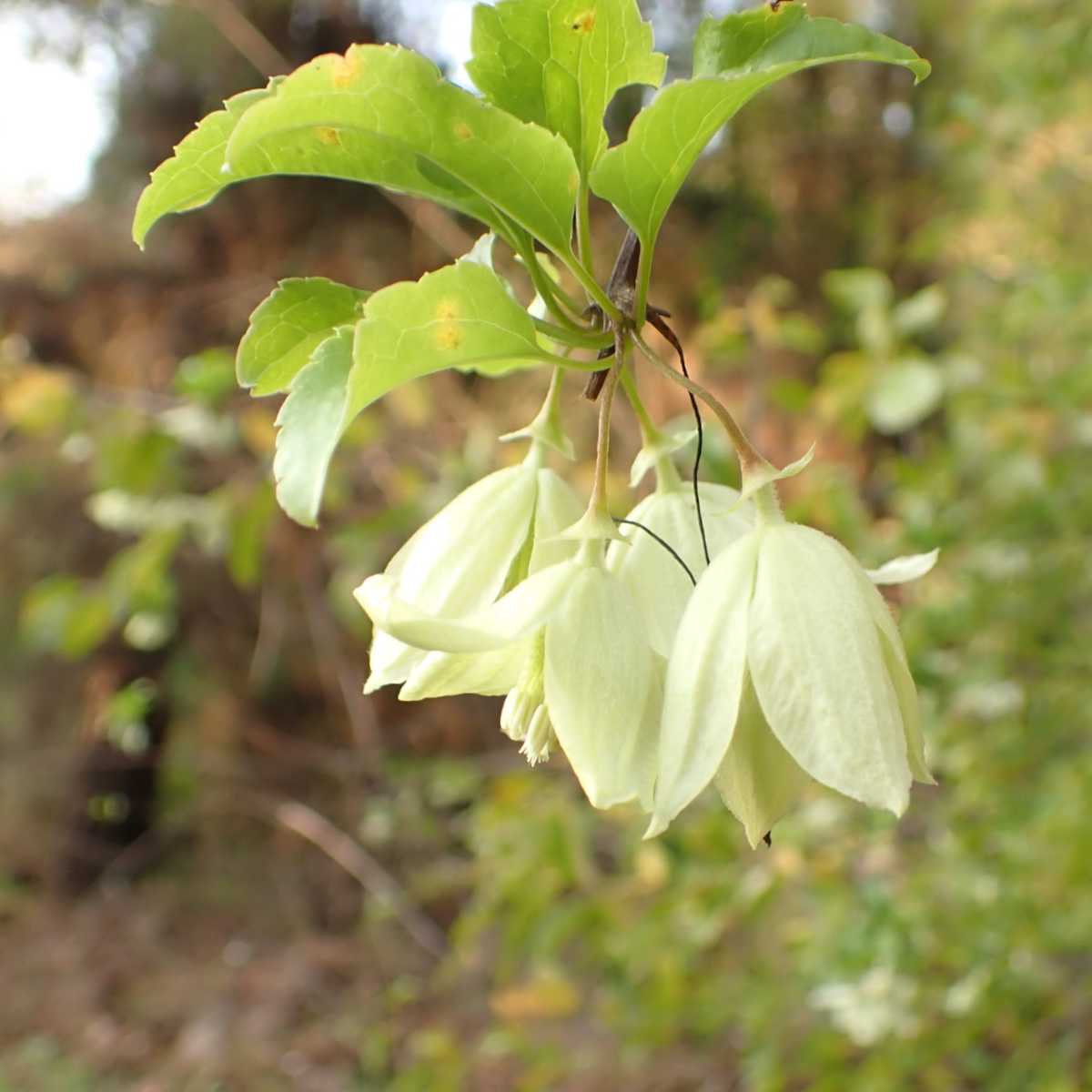
This family is unique in that it blooms in winter. Not all C. cirrhosa cultivars are fragrant, but the ‘Jingle Bells’ has a light, tangy citrus-like smell that appears on mature flowers.
Four pristine white petals open up under each flower, hanging down like little bells. Also nice in pots, it’s a slow grower that only needs pruning if it gets in the way. The photo here was taken just days before Christmas. A fitting garden ornament, don’t you think?
Beyond the six above, a handful of other widely sold clematis carry a genuine perfume. Use the table to match flowering time, final size and pruning group to the spot you have in mind.
| Variety | Flower colour | Flowering period |
|---|---|---|
| ‘Elizabeth’ | Pale pink | Late spring to early summer |
| ‘Wyevale’ | Mid blue | Mid to late summer |
| ‘Purpurea’ | White, bronze foliage | Early to midsummer |
| ‘Snowdrift’ | Pure white | Early spring |