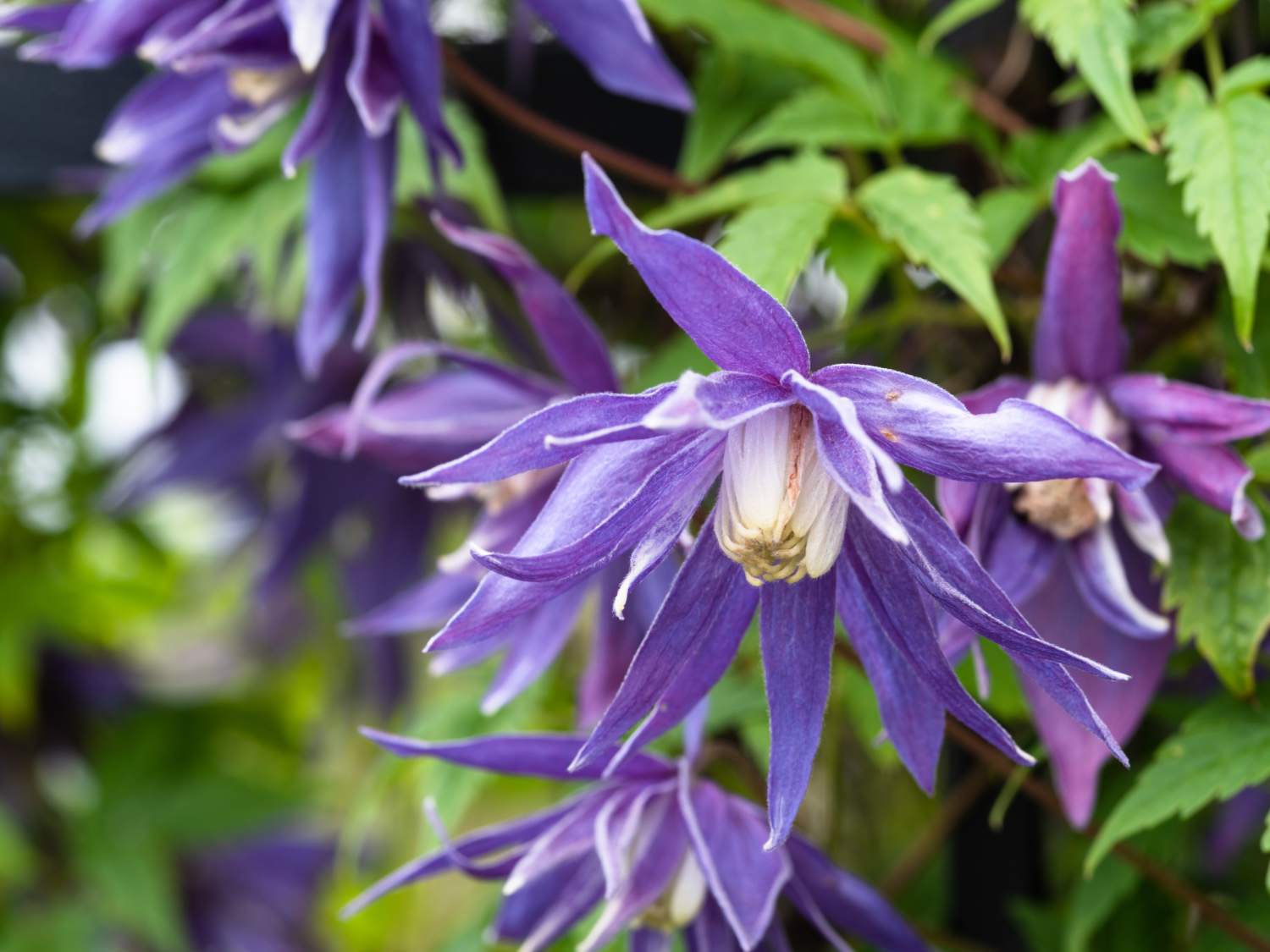
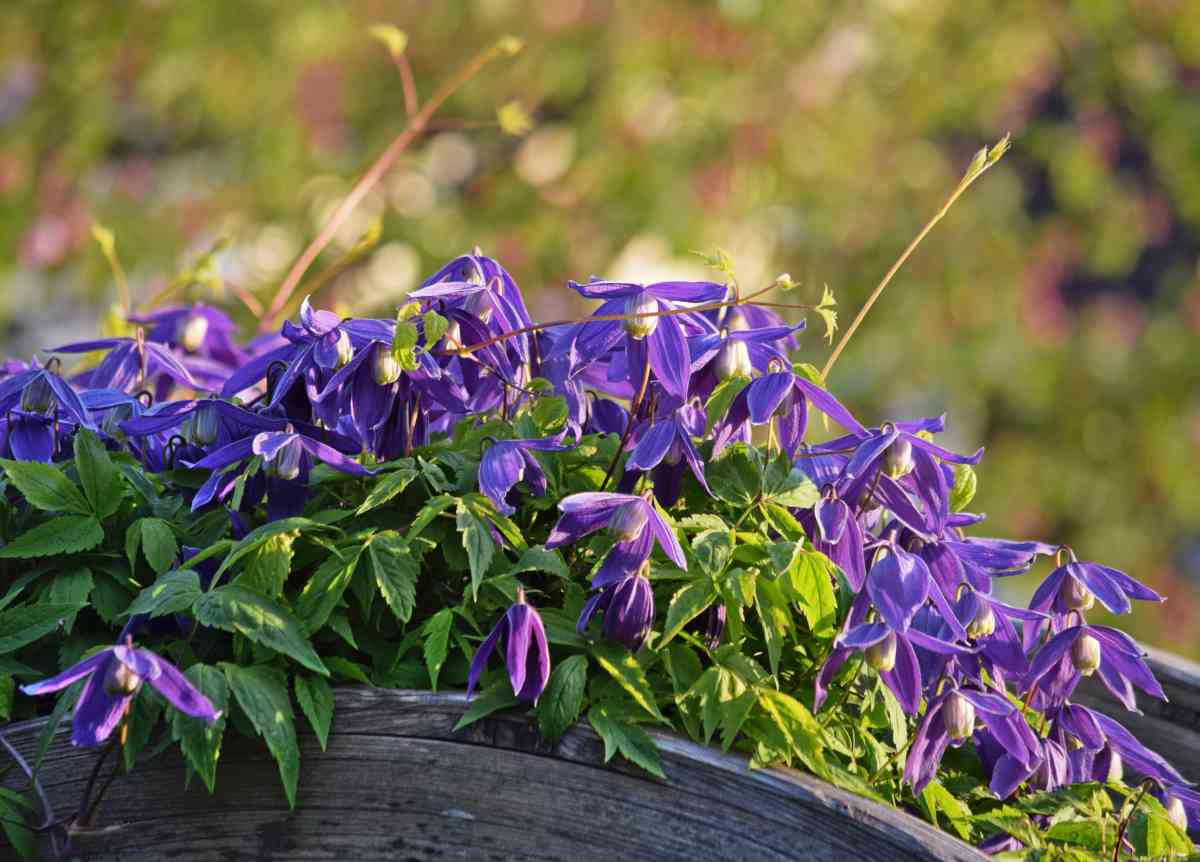
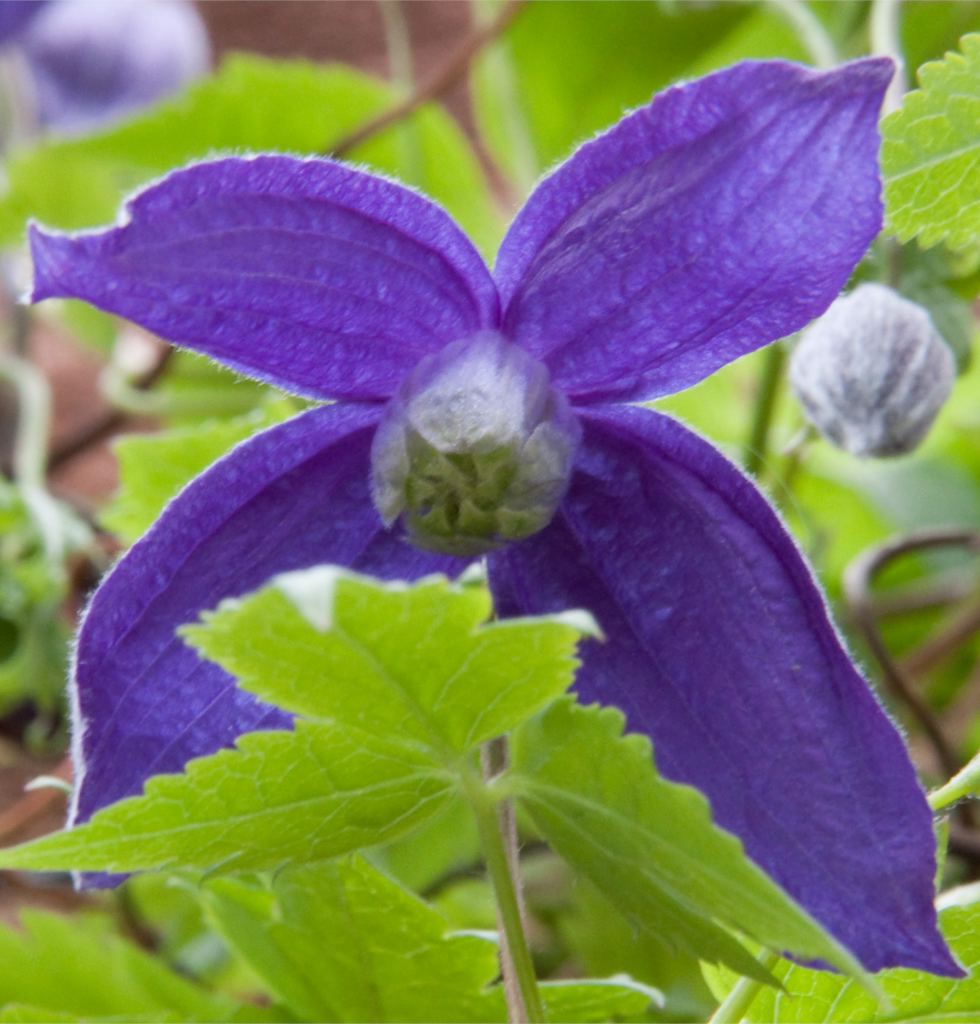
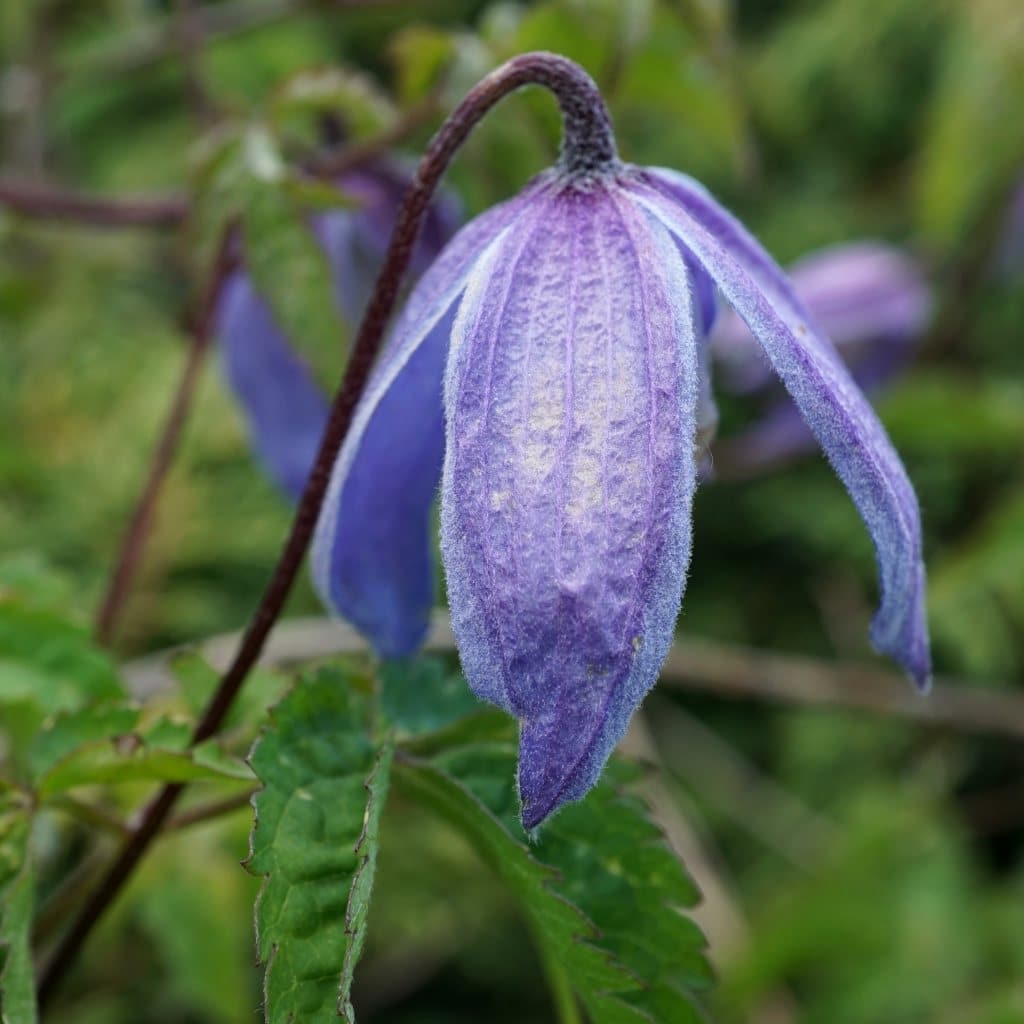
Small, nodding, violet-blue bells open in mid-spring and late spring on a deciduous climber that reaches 10 feet. Alpine clematis (Clematis alpina) is grown for that early, abundant flowering and for hardiness that shrugs off spring frost; keep the base of the plant shaded and cool, and it flowers almost infallibly.
Clematis alpina at a glance
Name
Clematis alpina
Family
Ranunculaceae
Type
Vine
Height
10 feet (3 meters)
Exposure
Full sun, part sun
Soil
Deep and cool
Foliage
Deciduous
Flowering
mid-spring to late spring
Both easy and early, you’ll enjoy its abundant flowers early in spring.
You’ll be planting your Clematis alpina preferably in fall for proper root development before winter and better regrowth in spring.
However, if purchased in a nursery pot, you can also plant your clematis alpina in spring, as long as it doesn’t freeze.
Clematis alpina copes well with part sun but dies off in scorching heat.
Set the foot 8 to 12 inches from its support
Something really important is that the base of the plant must stay in the shade. Plant other flowers around the base to cover it and keep it cool.
It the base is in direct sun, as in, if sunlight will hit the root collar, then cover it with for example an old tile or a few odd rocks.
Plant the foot of the plant about 8 to 12 inches (20 to 30 cm) from the lattice or structure you expect it to climb along.
Lean the young seedling towards the wall or lattice that is will hang from later on.
Fertilize the plant right at the moment of planting with a little compost or dehydrated manure. Doing so will support stronger growth.
Clematis alpina is perfectly suited to growing in pots due to its slow growth.
Proper flower plant soil mix is required.
The pot must have a drainage hole at the bottom and must be wide enough.
Repotting every 2 or 3 years will be a necessity for your potted clematis to keep growing and blooming.
Pruning and caring for Clematis alpina
Pruning isn’t a necessity on Clematis alpina.
You can nonetheless prune to constrain its growth or remodel your Clematis alpina.
It is usually pruned and trimmed after flowering, usually during late spring.
Cutting out dead, damaged, or crossing stemsafter flowering finishes is standard practice for many flowering shrubs, though ideal timing and method vary by species, so check guidance for the particular plant.
Clematis, pasqueflowers and related plants in the buttercup family form feathery, silky seedheads after flowering, and these structures can persist on the plant for weeks or months if left uncut.
Beautiful Clematis alpina varieties
Clematis alpina, though naturally blue, now comes in other colors as well. For instance:
Named varieties stray from the species’ natural blue
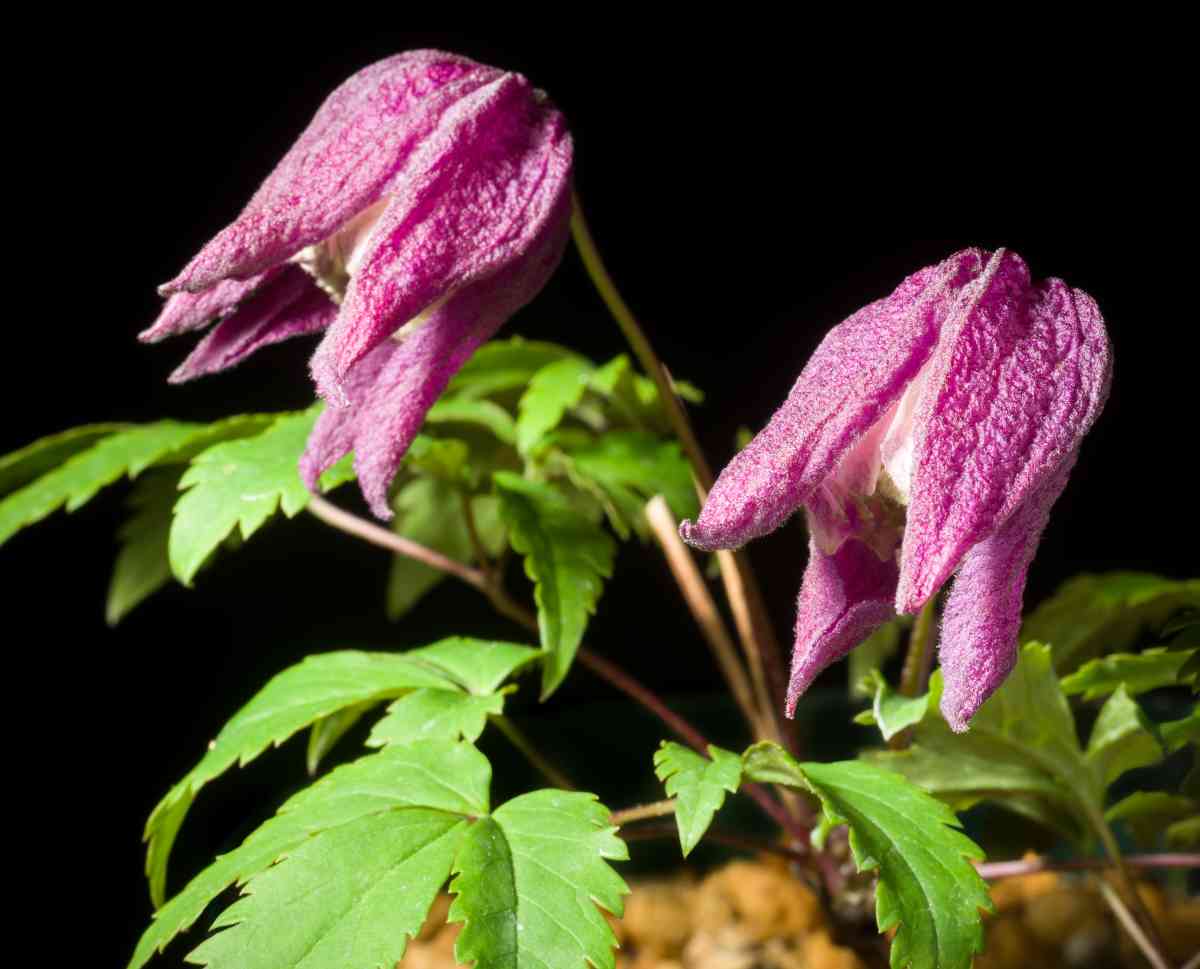
Clematis alpina ‘Ruby’ has pinkish-purple blooms
the ‘Constance’ alpine clematis has wonderful blooms with a gradient: pink on the edges and pastel purple near the center
‘Stolwijk Gold’ bears leafage that is a golden green color. It blooms abundantly
Lastly, the ‘Pamela Jackman clematis bears larger, open-petaled flowers.
Other subspecies have also developed, like the Clematis alpina subsp. ochotensis shown here.
White-flowered forms occur in many garden plants, including columbines (Aquilegia), though any specific cultivar name should be verified against a recognised horticultural register before it is cited.
‘Frances Rivis’ is an award-winning blue selection with noticeably long, slightly twisted sepals, and it is one of the easiest alpine clematis to find on sale.
Site the golden-leaved ‘Stolwijk Gold’ where it gets only part sun, since strong sun bleaches and scorches its foliage.
Named cultivars generally do not come true from seed, so propagate them vegetatively — by layering or cuttings — if you want plants that reliably reproduce the parent’s exact flower colour.
Which alpine clematis to choose
The wild species is blue, but named forms now cover pink, gradient and gold-leaved options. Here is what separates the ones described above.
Which alpine clematis to choose
Variety
Flower colour
Foliage
Notable for
‘Ruby’
Pinkish-purple
Green
A clear departure from the species’ blue
‘Constance’
Pink edges, pastel purple centre
Green
Two-tone gradient within each bloom
‘Stolwijk Gold’
Blue
Golden green
Grown as much for leaf colour as for flower
‘Pamela Jackman’
Blue
Green
Larger, open-petaled flowers
subsp. ochotensis
Blue
Green
A naturally occurring subspecies rather than a cultivar
Whichever you pick, the growing needs stay the same: a cool, shaded base and something to climb.
All there is to know about Alpine Clematis
Flowers are smaller than those of other clematis
Native to the Alps mountain range, this climbing vine’s unique characteristic is an an abundant and generous blue flower-bearing. Unlike other species, this clematis has smaller flowers.
Its hardiness means that Clematis alpina resists spring freezing and is suited to most climate types, because if ever the branches die of frostbite, it will send off new shoots from the base almost infallibly.
Clematis decidedly deserve their nickname: Queen of vines.
In Pieris japonica, flower buds set in late summer on that season’s shoots and open the following spring, so cutting the whole shrub back hard removes the next flush of bell-shaped flowers.
Alpine clematis is far less prone to clematis wilt than the large-flowered hybrids.
Petiole climbers such as clematis and nasturtium ascend by coiling their leaf stalks around slender supports, so provide wires, netting or slim trellis battens rather than a thick post they cannot grip.
On many clematis, leaving the spent blooms in place yields silky, silvery, feathery seedheads that persist on the vine for weeks or even months after flowering has finished.
Watering Clematis alpina
Water for the first two years, no fertiliser needed
Watering is a good idea over the 2 first years, but no need to add fertilizer. Doesn’t this make it an easy plant to care for?
In pots, water Clematis alpina regularly, especially in summer
Maintain moisture in the soil.
Always protect the base of the plant with a tile or shingle or stone to keep it cool.
For most garden plants prone to fungal leaf diseases, such as tomatoes, roses and squash, watering at the base rather than over the foliage keeps leaves drier and reduces infection risk.
A mulch of bark, leaf mould or compost spread over the root area keeps the soil cool and cuts how often you need to water.
Give the ground-grown plant one long soaking rather than a daily sprinkle, so water reaches the deep, cool root zone this clematis needs.
Never leave a potted Clematis alpina standing in a saucer of water, as roots left waterlogged will rot.
For many flowering plants, steady moisture during bud formation helps blooms last, though ideal watering varies by species, so check your particular plant’s needs rather than assuming even moisture suits every kind.
Smart tip about Clematis alpina
You can attach your Clematis alpina to a lattice to ensure it grows the way you hope it will as it develops!