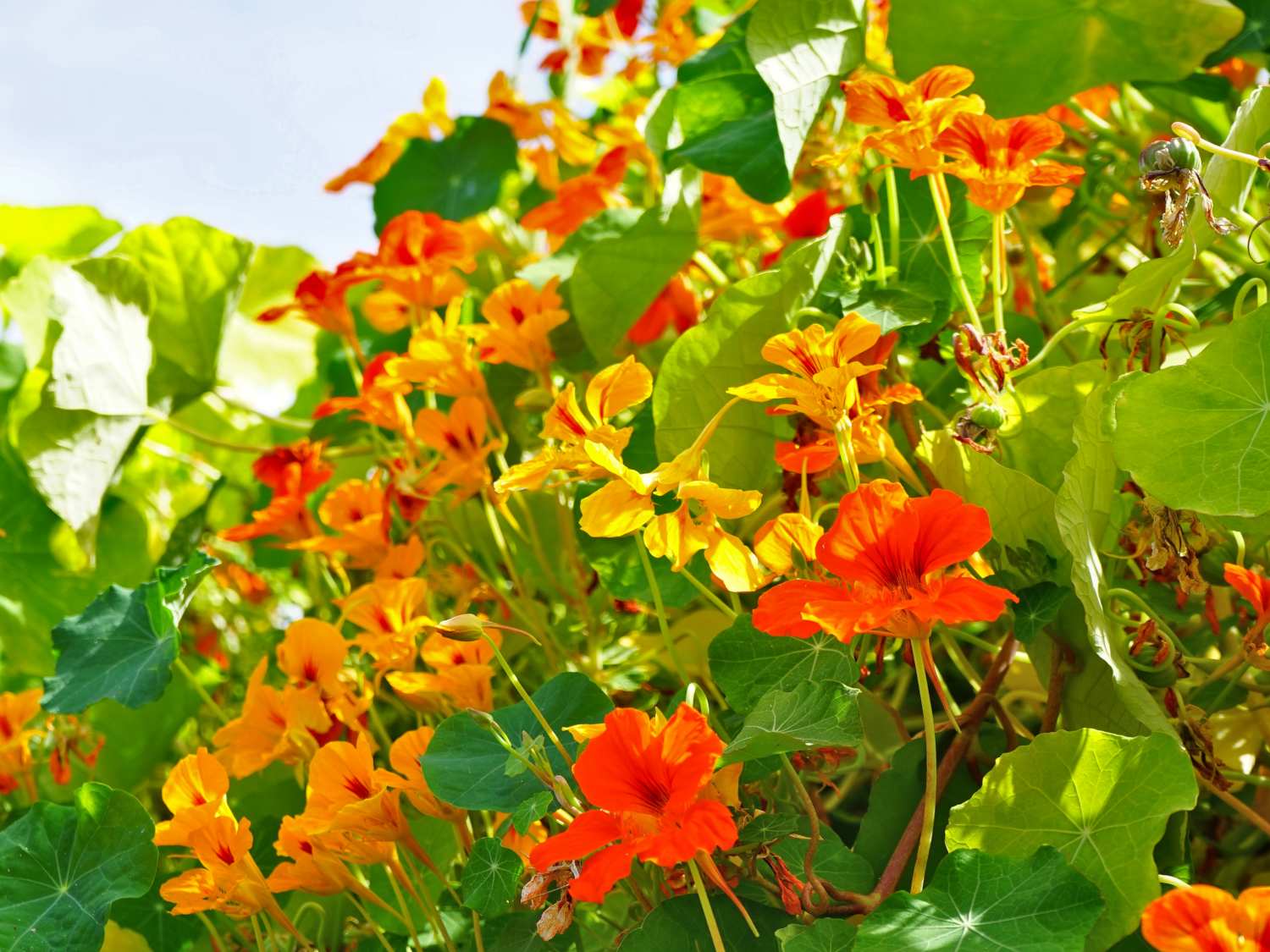
Trailing or climbing to 13 feet, nasturtium (Tropaelum majus) smothers hedges, fences, pergolas and low walls in orange and yellow flowers, and every part of it is edible, from pepper-spicy leaves to young seeds pickled like capers. Give it full sun and soil that never sits wet all day, and it asks for nothing else.
| Name | Tropaelum majus |
|---|---|
| Family | Tropaeolaceae |
| Type | annual |
| Height | 12 to 16 inches (30 to 40 cm) up to 13 feet (4 meters) for those climbing |
| Exposure | full sun |
| Soil | normal |
| Flowering | summer → early fall |
| Care | none |
| Special feature | random yellow, orange, red blooms |
Nasturtium will climb along hedges, fences, pergolas and low walls and cover them with orange and yellow flowers. Easy to care for and to grow, it can bear all kinds of soils and climates.
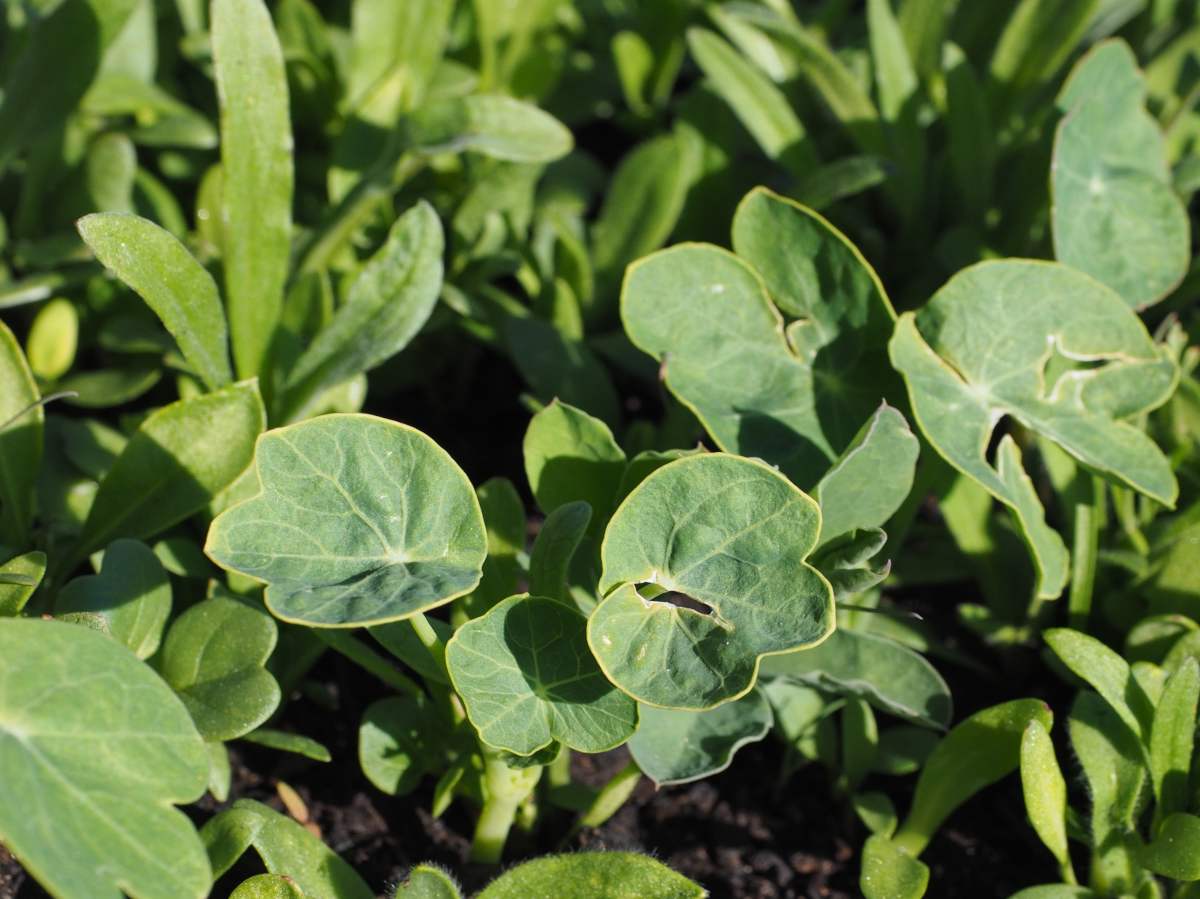
Simply dig a small hole, tease the seedling out of its pot, and plunk it in the hole. Pack the soil around it without pressing too much. As long as it isn’t sitting in water all day long, it’ll grow swell! No need to amend the soil with fertilizer or anything.
Also, don’t restrict yourself to a single color, your flower bed will be much more beautiful if you blend different colors together.
They’ll quickly cross-pollinate with other plants in the area anyways, so it’s difficult to keep a color or variety true to seed for this species.
It is a good idea to sow the seeds in place after the last frost spells during late spring. You can also start sowing in a sheltered place as soon as early spring.
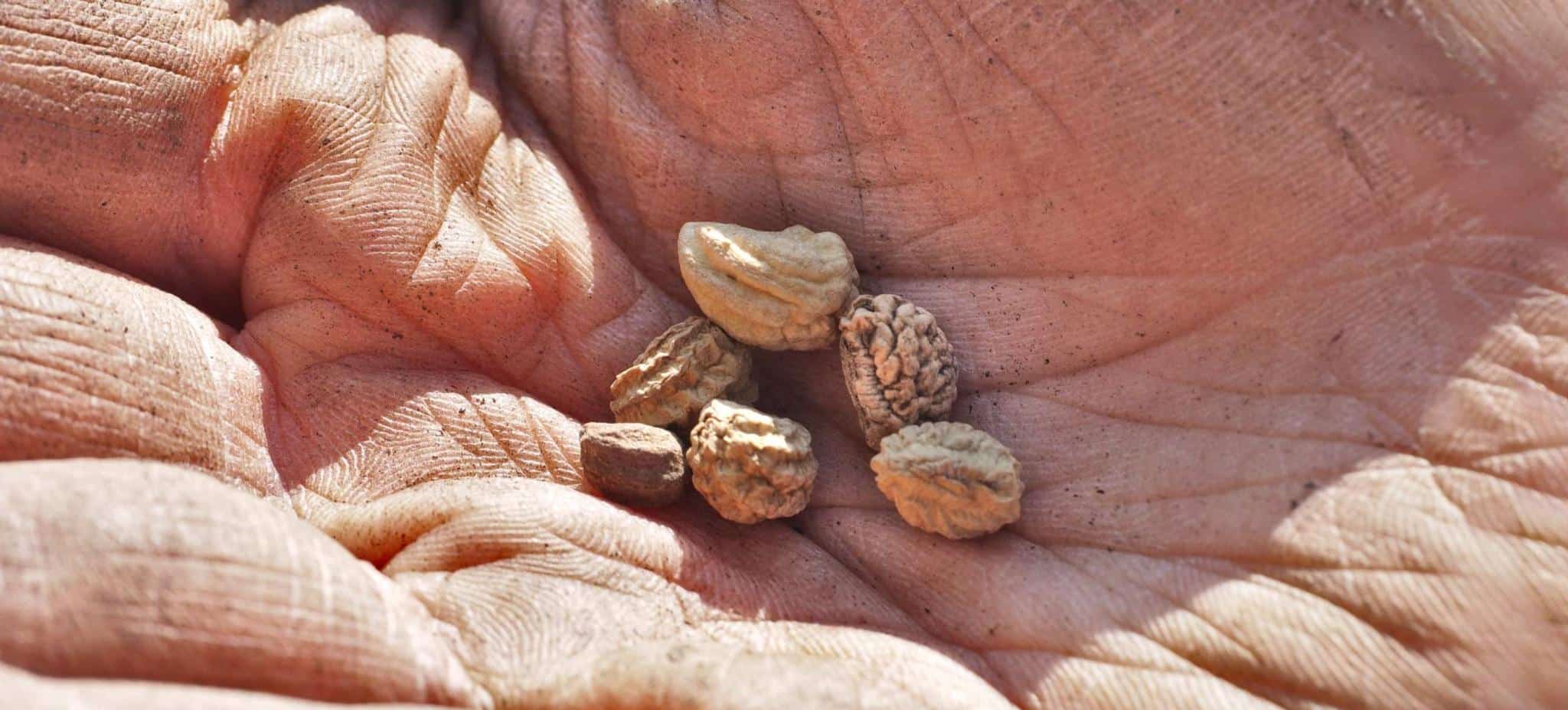
Nasturtium can be started under cover early or sown straight into its final position once frosts have passed. Here is what each option involves.
| Task | When | Where | Key point |
|---|---|---|---|
| Sowing under cover | From early spring | A sheltered place | Gives plants a head start before the frosts end |
| Sowing in place | May, once the last frosts have passed | Straight into the ground where plants are to grow | No transplanting needed |
| Planting a seedling | Once seedlings are to hand | A small hole in ordinary soil | Firm gently; no fertiliser required |
| Watering | Through the summer | At the base of the plants | Regular, but never waterlogged |
Whichever route you take, avoid soil that stays wet all day and the plants will look after themselves.
Nasturtiums are sold as a handful of long-established varieties and seed series, and they differ mainly in flower colour, leaf colour and whether they climb or stay put. Use the table below to pick the one that suits your spot.
| Variety | Flower colour | Foliage | Best use |
|---|---|---|---|
| Black Velvet | Very dark maroon-red | Plain green | Dark accents in pots |
| Empress of India | Deep crimson-scarlet | Dark blue-green | Borders, containers, cutting |
| Alaska Mixed | Yellow, orange, red mix | Cream-splashed variegated | Pots, edging, salad leaves |
| Jewel Mixed | Yellow to scarlet mix | Plain green | Bedding and edible flowers |
| Whirlybird Mixed | Cream to scarlet mix | Plain green | Edging, easy flower picking |
| Peach Melba | Creamy yellow, red blotch | Plain green | Pots and window boxes |
| Golden Gleam | Golden yellow, scented | Plain green | Hanging baskets, low walls |
Nasturtium is edible from top to bottom, and each part is used differently in the kitchen. Here is what to pick and what to do with it.
| Part | Flavour | How to use it |
|---|---|---|
| Leaves | Pepper-spicy | Added to salads and greens |
| Flowers | Sweet and distinctly pepper-flavoured | Spice up dishes; pair with arugula salad |
| Young seeds | Piquant, caper-like | Pickled while young, used like capers or olives on pizza |
Pick a little of each and the same plant supplies leaves, flowers and pickles all summer.
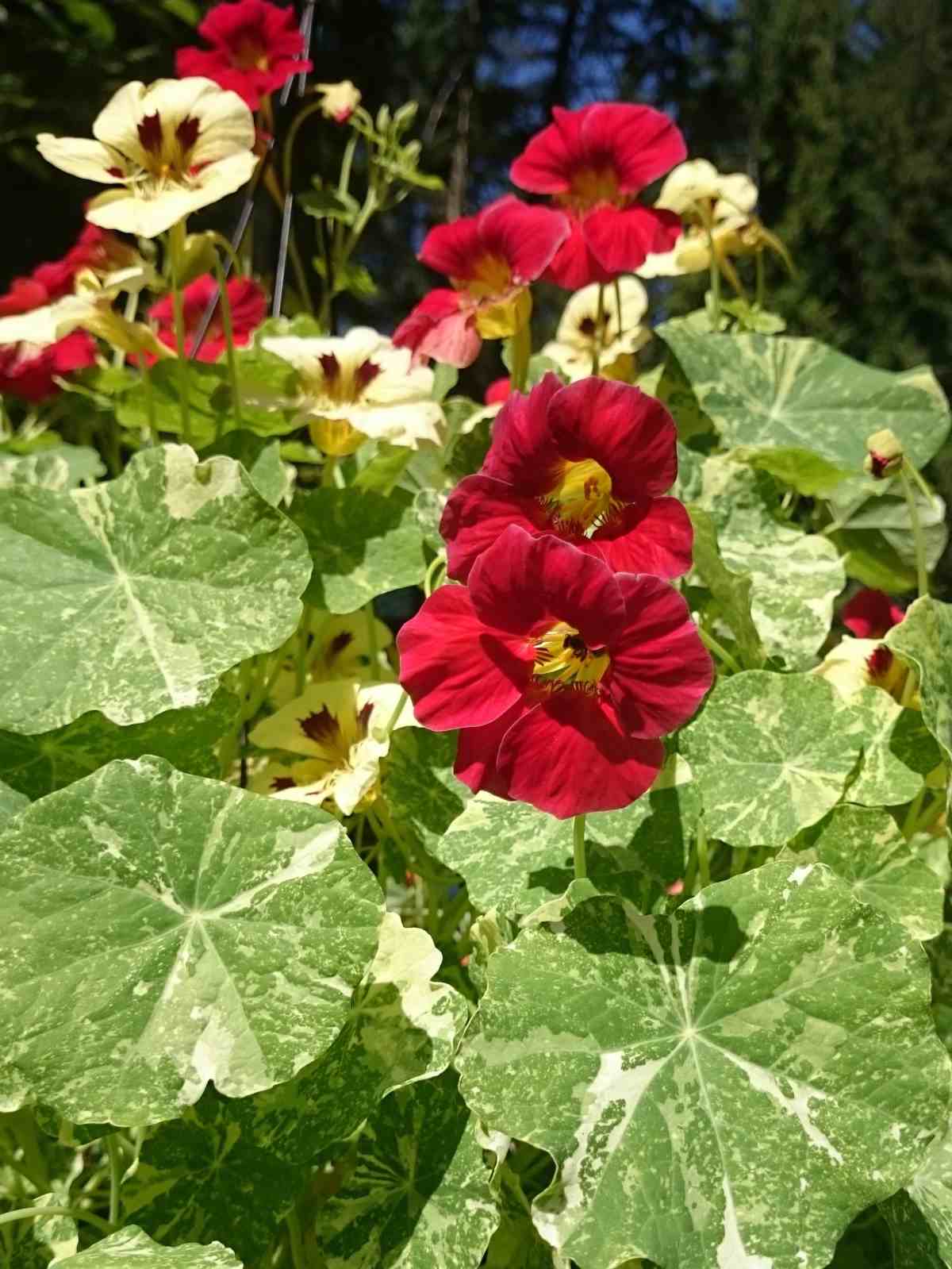
Nasturtium is particularly well-known for its bee-attracting fragrance, and it also has medicinal properties used in many homeopathic treatments.
There are quite a few different varieties, they differ by flower color, leaf color (like the variegated nasturtium shown above/right), and climbing or trailing habit.
Native to North America, its brightly colored flowers will enliven the edges of your garden, and they will also highlight the shrubs you’ll be planting them under.
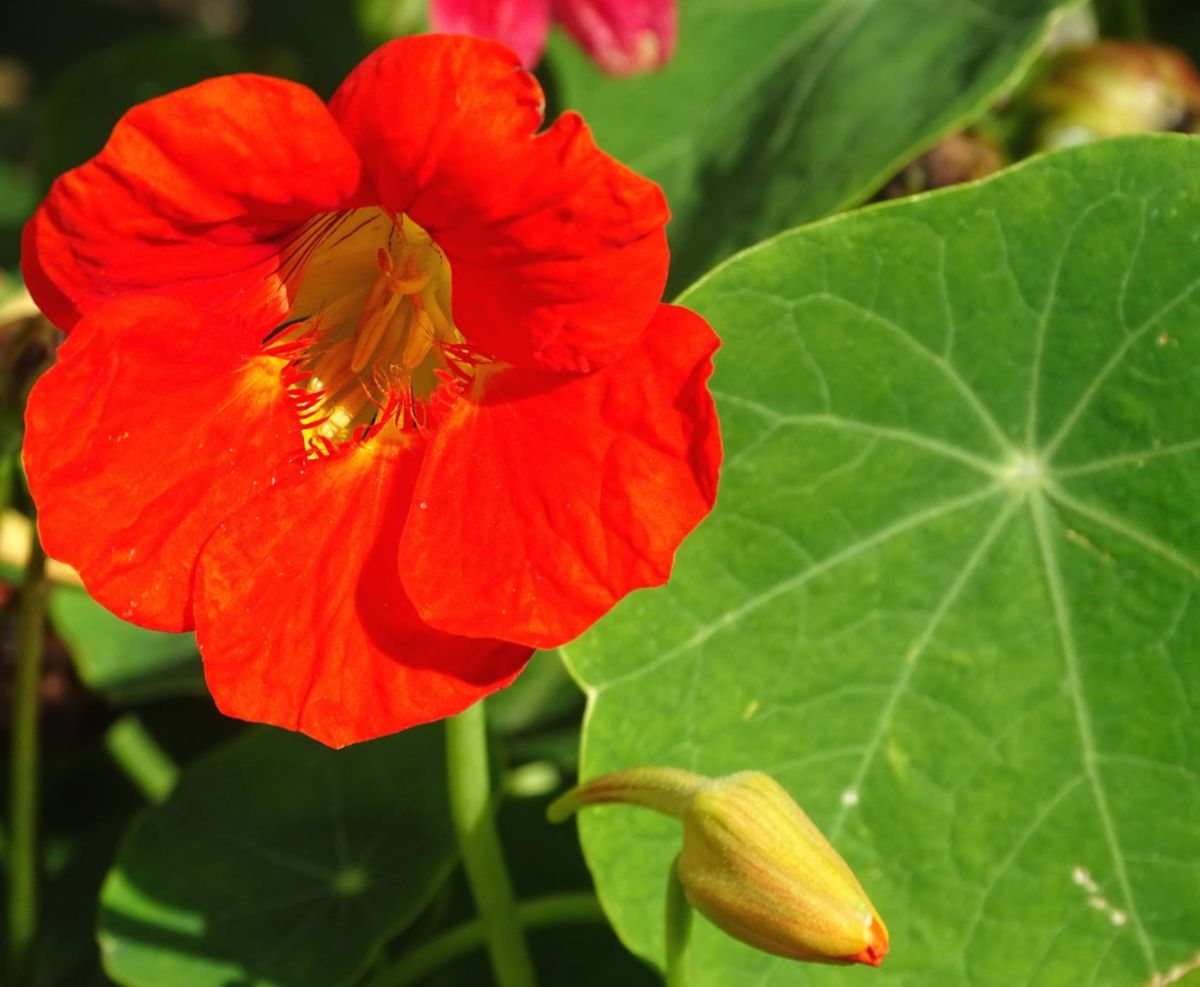
Nasturtium is edible and can be used to spice up certain meals. All parts are great: pepper-spicy leaves for greens, flowers with a little piquant… Even the seeds are delicious when pickled while young (eat like you would capers, on pizza like olives for example).
Some varieties like tuber nasturtium also have edible roots.
It’s both sweet and distinctly pepper-flavored. For example, you can pair them with arugula salad… delicious!