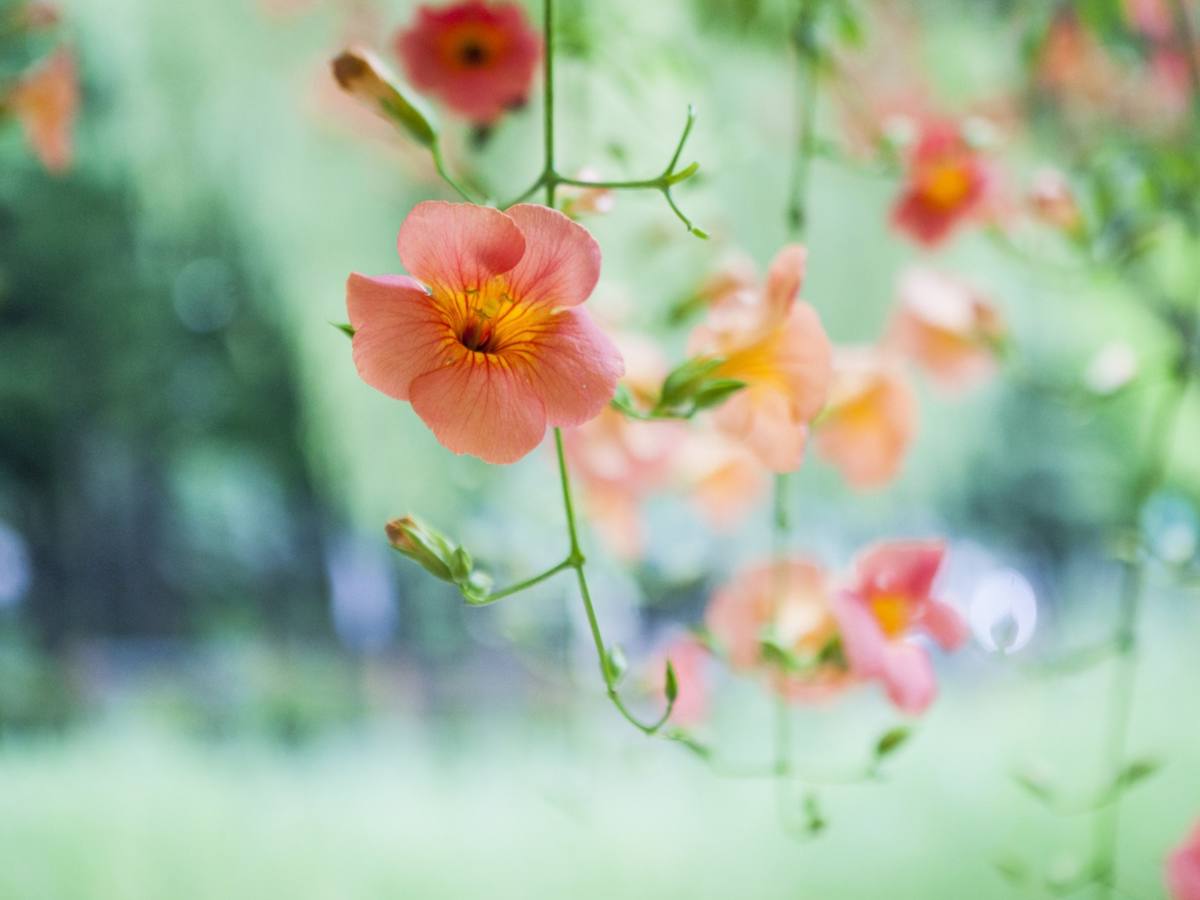
Orange or red trumpets open through summer on a vigorous deciduous climber that can reach thirty feet, the hummingbird vine (Campsis), also known as Virginia jasmine. Its opaque leafage will smother an ugly wall, a tree trunk or a garden shed; give it full sun, and the flowers keep coming right up to the first frost spells.
| Name | Campsis |
|---|---|
| Family | Bignoniaceae |
| Type | climbing vine |
| Height | 16 to 32 feet (5 to 10 m) |
| Exposure | full sun |
| Soil | rather rich, cool and well drained |
| Foliage | deciduous |
| Flowering | summer to mid-fall depending on climate |
Its flowers are shaped like orange or red trumpets, and they’ll decorate your garden up to the first frost spells.
It is recommended to plant hummingbird vine in fall but it can also be planted in spring as long as you remember to water more often at the beginning.
You may also plant in summer if you’re able to water regularly and avoid heat waves.
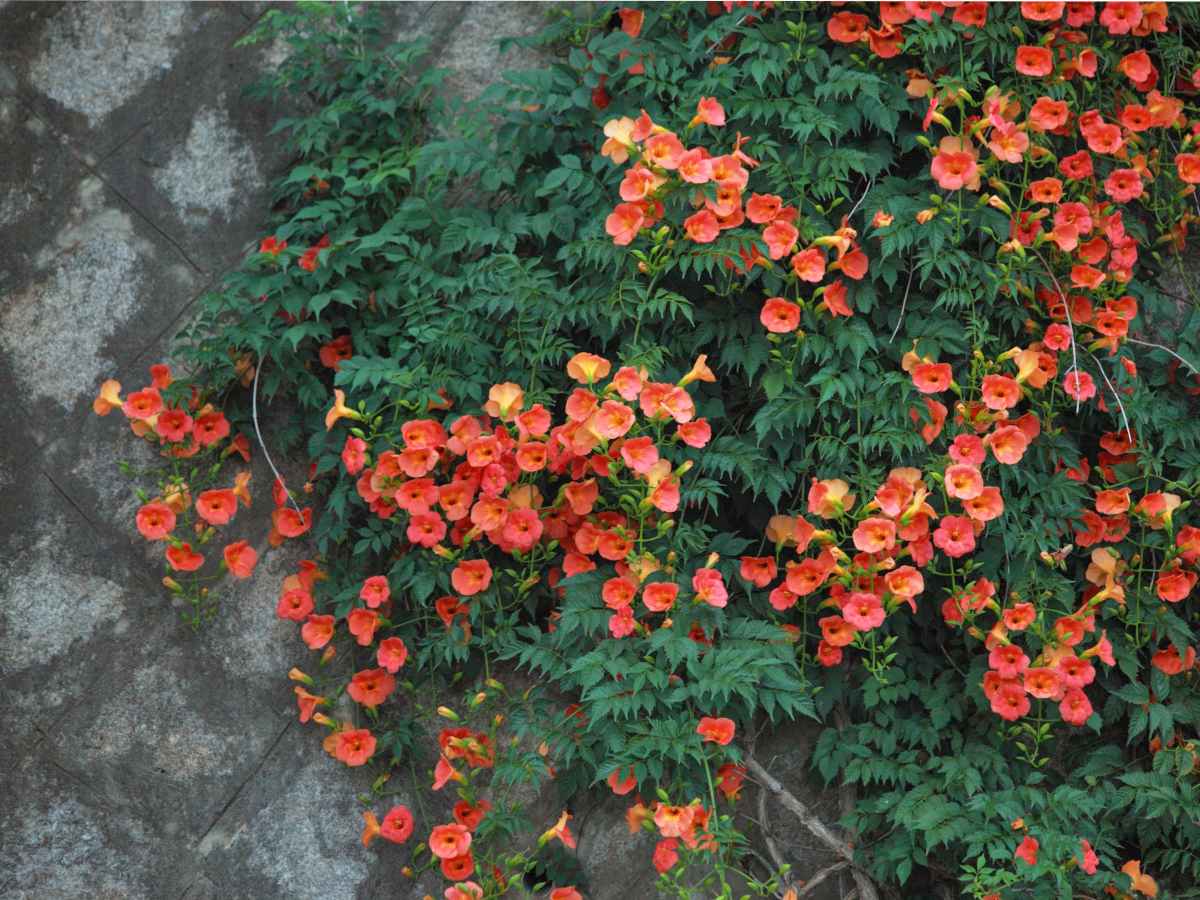
Hummingbird vine can go in the ground at three different times of year, and the only thing that really changes is how much watering you commit to afterwards.
| Planting time | Suitability | Watering after planting |
|---|---|---|
| Fall | Recommended time | Least demanding |
| Spring | Perfectly possible | Water more often at the beginning |
| Summer | Only if you can keep up with it | Water regularly and avoid heat waves |
Whatever the season, pick a sun-covered spot sheltered from cold wind.
Install the trellis, wires or posts before planting any climber, since putting supports in afterwards risks damaging the establishing roots and makes it harder to handle the growing stems.
Pruning isn’t mandatory at all, but it might be needed if your hummingbird vine grows too large.
Indeed, hummingbird vine is a vigorous plant that must sometimes be cut back and restrained.
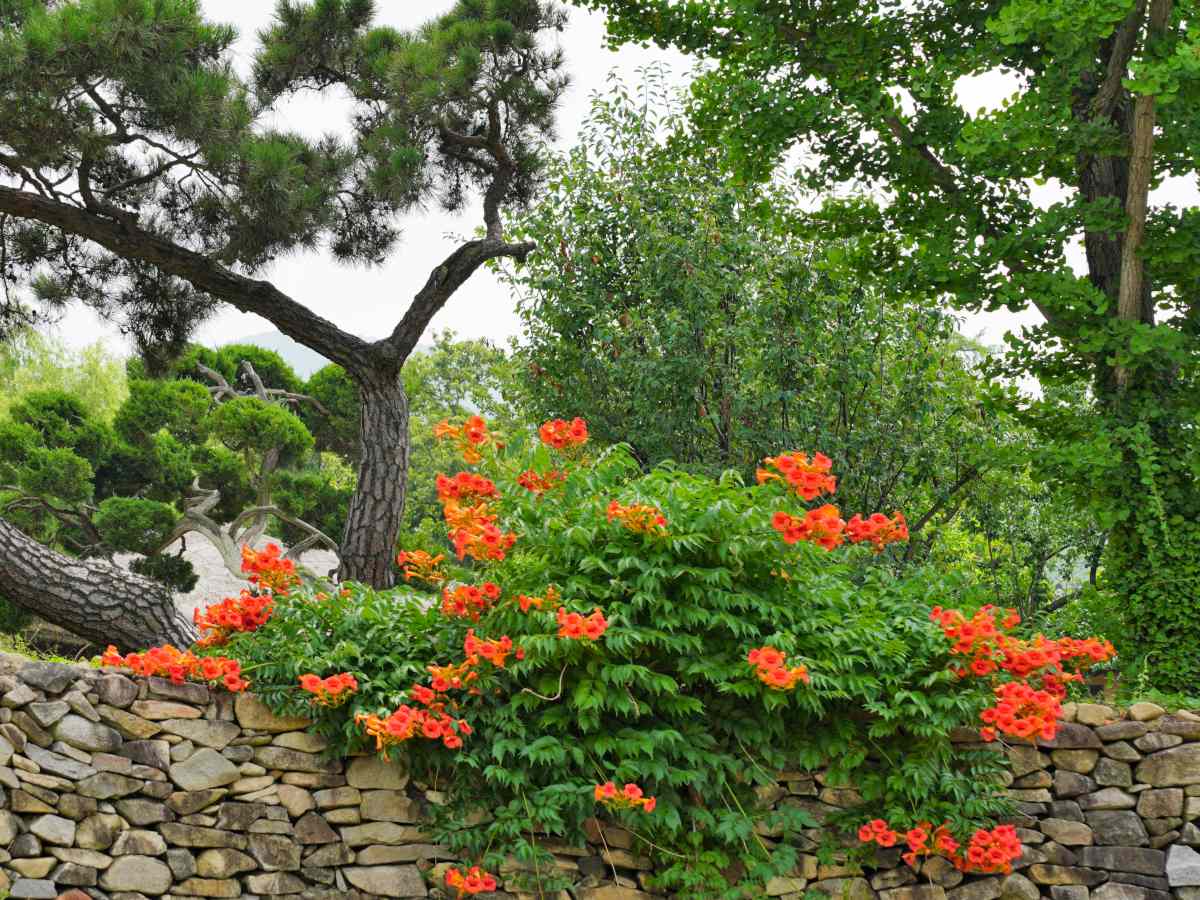
As for maintenance pruning, best to prune the sprigs that have succumbed to frostbite at the end of winter, they won’t grow back. This usually concerns the tip of the branches, about sixteen inches (forty centimeters).
Trumpet vines differ mainly in flower colour and in how far they will run, so it is worth matching the cultivar to the wall or pergola you have in mind. The selection below covers the Campsis most often offered in garden centres and mainstream catalogues.
| Variety | Flower colour | Vigour | Best use |
|---|---|---|---|
| Indian Summer (‘Kudian’) | Apricot-orange, darker throat | Vigorous | Sunny house walls and pergolas |
| ‘Madame Galen’ | Salmon-apricot to orange-red | Very vigorous | Large walls, barns, mature trees |
| ‘Flava’ (Yellow Trumpet) | Clear yellow | Vigorous | Softer schemes, shaded courtyard walls |
| ‘Crimson Trumpet’ | Pure red, no orange | Vigorous | Single-colour red display |
| ‘Flamenco’ | Deep scarlet red | Vigorous | Bold colour against pale masonry |
| ‘Balboa Sunset’ | Rich red-orange | Vigorous | Fences and pergolas in hot sun |
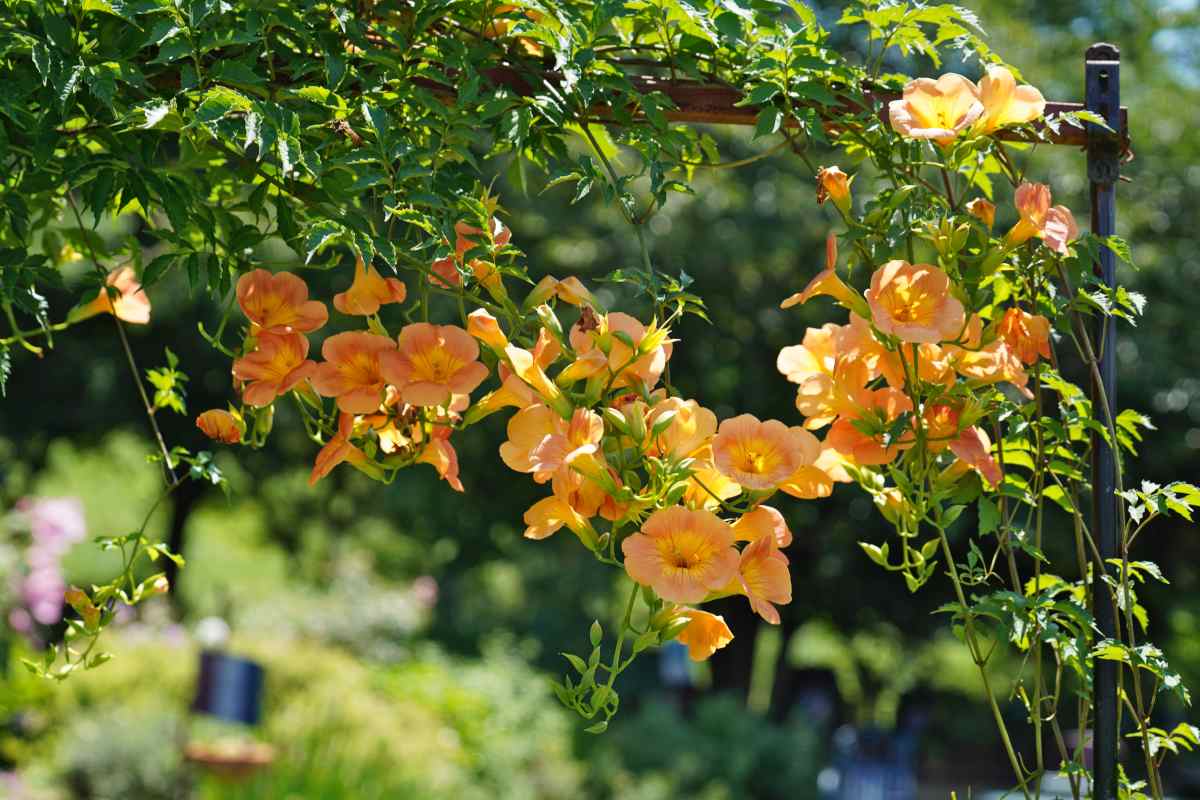
Hummingbird vine is one of the most famous climbing vines. It is known for its beautiful flowers and its extreme hardiness.
Its opaque leafage makes it great solution to cover an ugly old wall of hollow blocks or cement, to decorate a tree trunk or simply make a garden shed, pergola or old barrel look alive.
Hummingbird vine is very hardy since it can survive temperatures down to 14°F (-10°C) or 5°F (-15°C).
Although it generally is very resistant to diseases and parasites, let us mention that aphids and red spider mites occasionally appear on the plant. This rarely leads to devastating damage.
During heat waves, apply water often in small amounts in the evening.