Set up a mixed hedge, different shrubs for year-round wonder
·
0
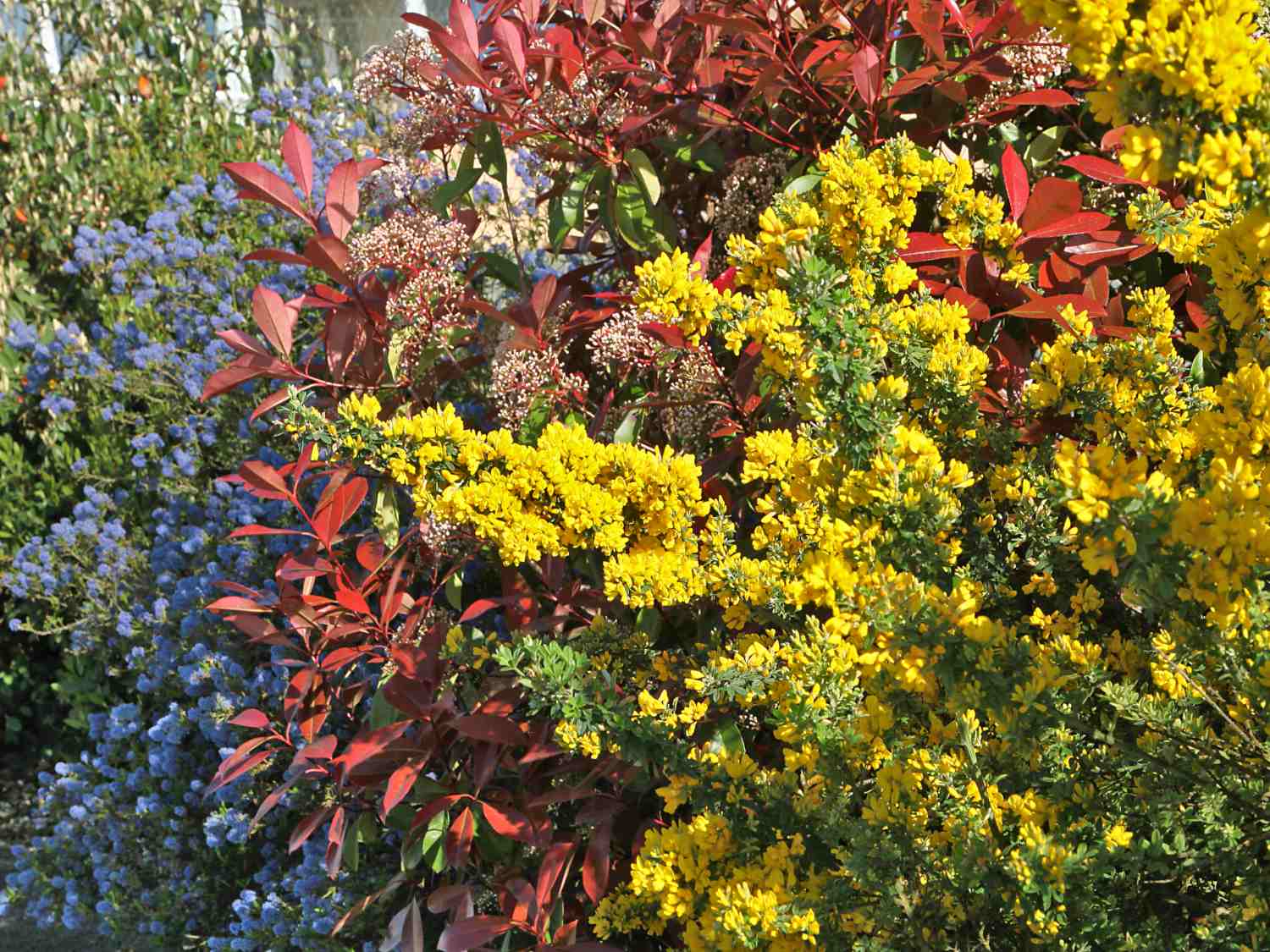
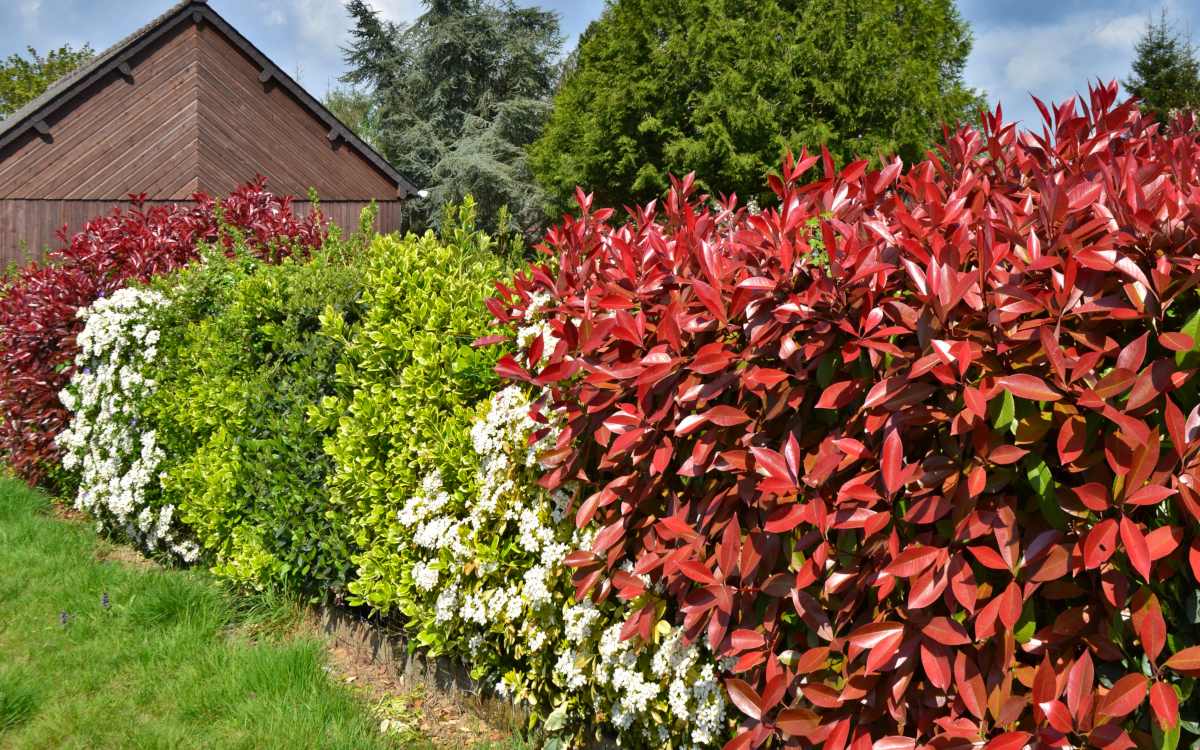
Forsythia shining gold on bare wood, photinia’s flamboyant red young leaves, lilac fragrance drifting from spring into summer: a mixed hedge screens the garden while spreading colour and scent across the seasons. Get the balance right — roughly one third evergreen to two thirds deciduous — and it stays worth looking at in every month of the year.
Unlike conventional single-variety hedges, natural mixed hedges will grant a host of different colors, shades and shapes depending on the species.
Here is how to set up a natural hedge:
How many shrubs for a mixed hedge
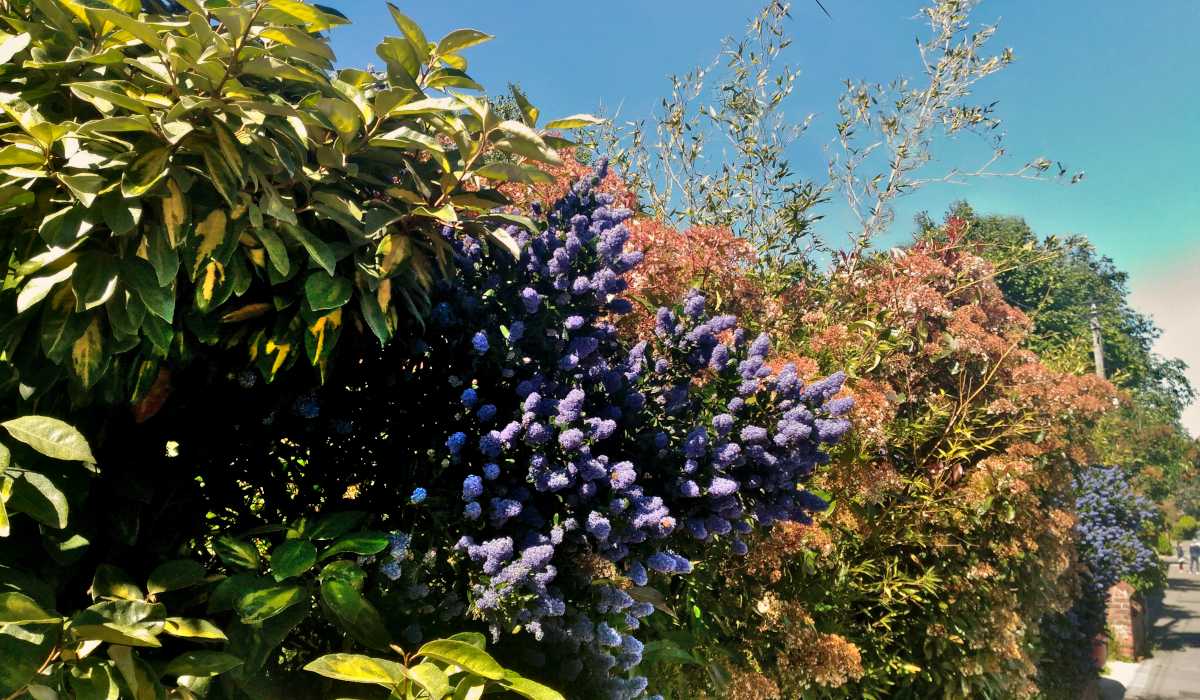
Several species bring different colours, shades and shapes
First of all, measure the length of your hedge to compute how many plants are needed.
A rule of thumb is to plant one shrub more or less every yard (every meter).
Consequently, a 20-yard (20 meter) hedge will need around 20 plants.
Space vigorous shrubs such as lilac, elder and bay laurel more widely than compact ones like Maule’s quince, setting each plant according to its species’ eventual width rather than one uniform spacing.
Best evergreen to deciduous ratio
Generally, a proportion of ⅓ evergreen to ⅔ deciduous is best.
However, if you’re looking to be visually cut off from neighbors and passers-by in winter, reverse this ratio, or even go for 100% evergreen shrubs.
Beech and hornbeam keep their dead brown leaves through winter when they are trimmed regularly, so they screen almost like evergreens while still counting as deciduous.
Number of different species to plant
It makes sense to repeat each species at least twice along the hedge: this will make it seem balanced and homogeneous.
But any single species shouldn’t appear more than 4 times in the hedge.
Hence, each shrub type should appear between 2 and 4 times depending on how long the hedge is.
Many gardening guides recommend sketching a planting plan before digging, because mapping each plant’s mature size, spacing, and light needs on paper first helps avoid crowding and the labor of transplanting later.
One planting option is to distribute each species’ repeats along the run rather than bunching them; growers of mixed native hedges often prefer blocks of three to five of one species instead.
Lilac, photinia and elder all mature considerably wider than a yard, so space these vigorous shrubs more generously than smaller ones rather than planting them at one-yard intervals.
Evergreen shrubs best suited to hedging
Among the most beautiful, common, and easy to care for, one can find:
Berberis, which has nice shades of leaves and a cute spring bloom.
Although they lose their leaves in winter, they are often very ornamental and bear many flowers in the other seasons:
Lilac, with its fragrance and beauty is an enchantment from spring to summer.
Forsythia shines like gold with its bright yellow flowers at the beginning of spring.
Tamarisk will bring you joy and an uplifting atmosphere for most of the year (not for the Americas, however – tamarisk is invasive there).
Meadowsweet is a shrub with delicate white flowers that will make you cry out in wonder.
Weigela, a die-hard classic, deserves a place among the most common shrubs since it is a true marvel.
Maule’s quince will offer magnificent shades of red at the end of the winter.
Flowering currant, which will give you nice flowers although it doesn’t produce any edible fruits.
Creating a mixed hedge also has the incredible advantage of increasing your garden’s biodiversity.
Thanks to this hedge, you’ll reduce the impact of diseases and won’t need as many treatment products that are often bad for the environment.
Which shrub for which season of interest
The shrubs named in this article each bring their own colour, scent or leaf effect, and at different moments of the year. Use the table to spread the interest across the seasons before you settle on your list.
Which shrub for which season of interest
Shrub
Foliage
Main attraction
Season of interest
Berberis
Evergreen
Shades of leaves plus a small bloom
Spring
Photinia
Evergreen
Flamboyant red young leaves
Spring and autumn
Soap bush
Evergreen
Spectacular flowering
Spring
Lilac
Deciduous
Fragrance and flowers
Spring to summer
Forsythia
Deciduous
Bright yellow flowers on bare wood
Early spring
Meadowsweet
Deciduous
Delicate white flowers
Flowering season
Maule’s quince
Deciduous
Magnificent shades of red
End of winter
Mixing evergreen and deciduous shrubs in this way is what keeps a hedge worth looking at in every month of the year.
Edible hedge with berries and herbs
What’s amazing is to turn a hedge into a boon for both neighbors, while still protecting your privacy. Select plants that you can use for cooking, fruits or pastries and jam… neighborhood relationships will never have gotten any better!
Try planting :
An edible hedge screens the garden and feeds it
Red berry hedges (raspberries, gooseberries, red, white and black currant). These might get a bit thin in winter, aim for double or triple rows and accept that their pruning isn’t as stringent as it may be in a normal berry orchard.
Bay laurel, a prime ingredient of bouquet garni, grows abundantly and thickly. Leaves can be picked whenever needed. Prune severely as it can grow to nearly tree-size.
Elder (black elder, for instance) makes for delicious jam. Its growth can be controlled to keep it hedge-sized. Attracts aphids away from the vegetable patch in spring. Also try growing hazel and you’ll have nuts to snack on in fall!
This will maximize your garden for productivity, biodiversity, and sheet pleasure of involving people around you with your special gift in gardening!

I live in Nova Scotia and am looking for blackthorn saplings, for hedgerows. Do you know of anyone that sells them in Canada?