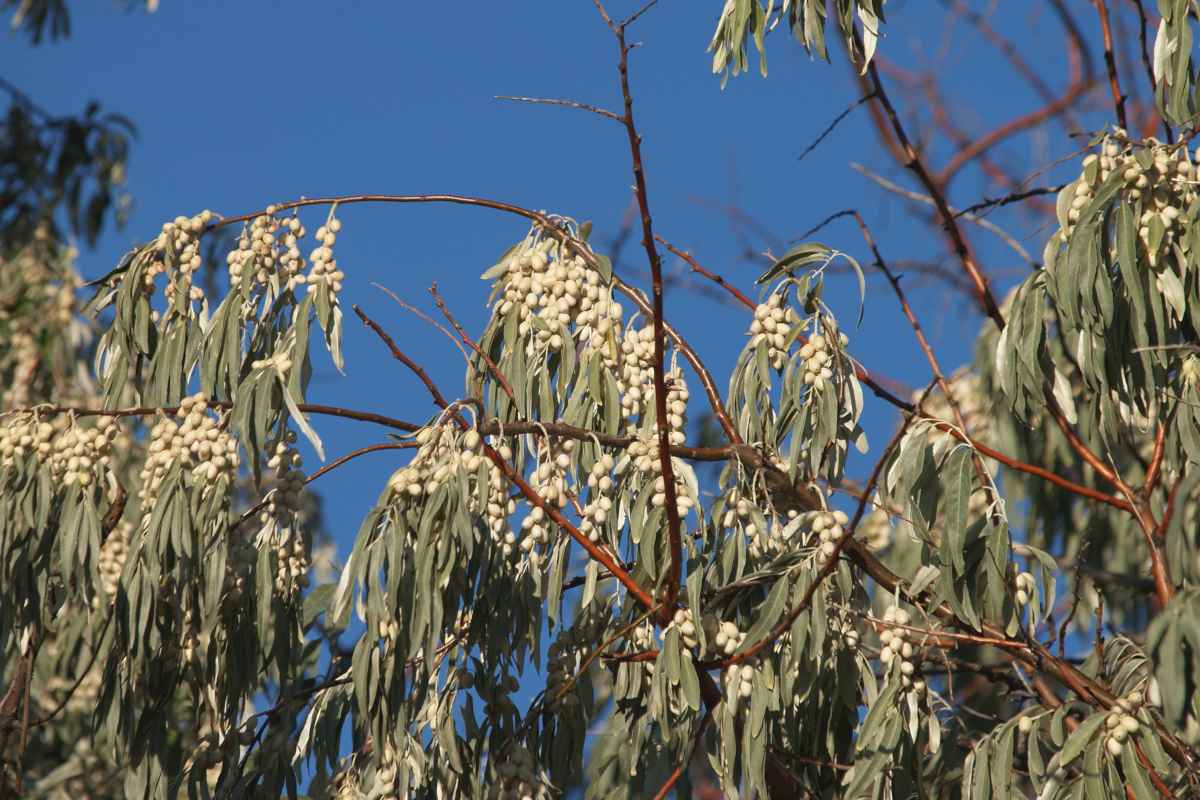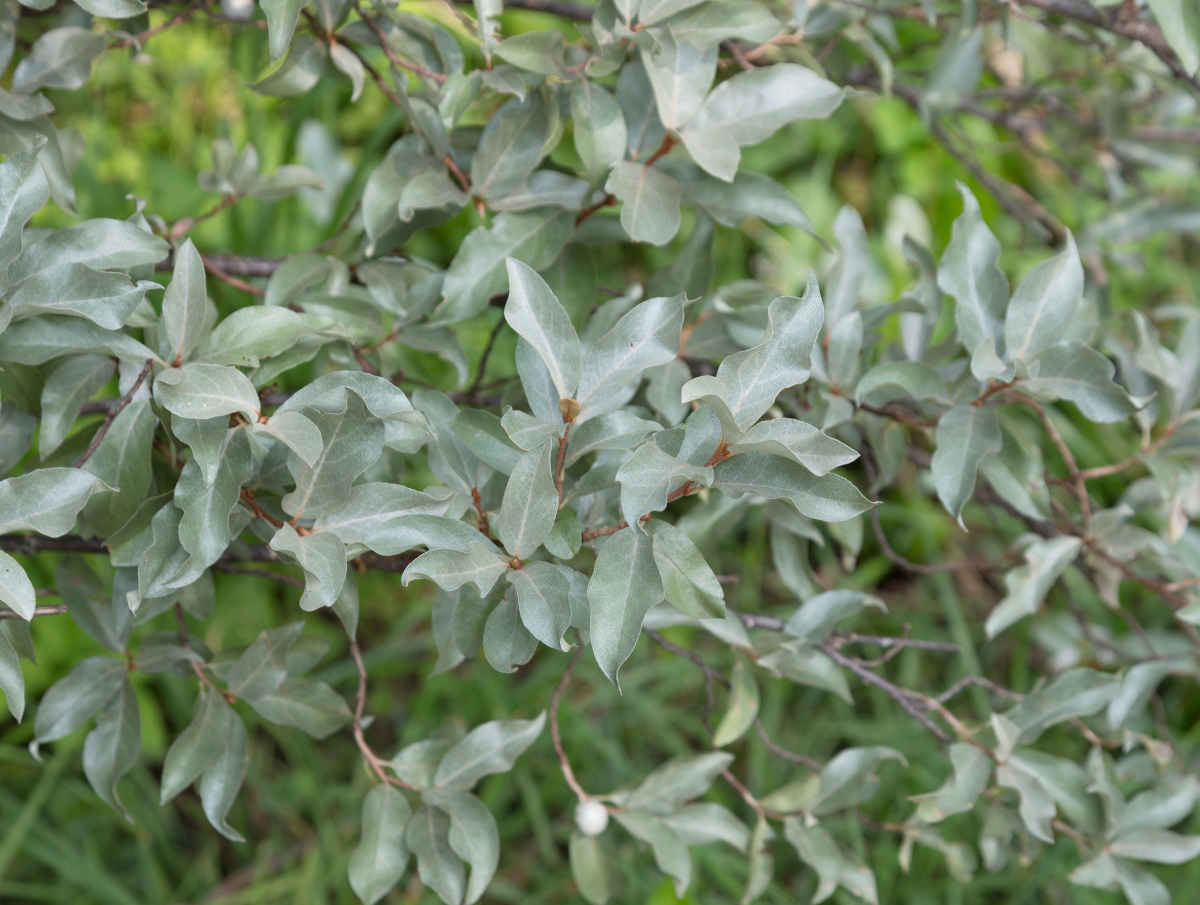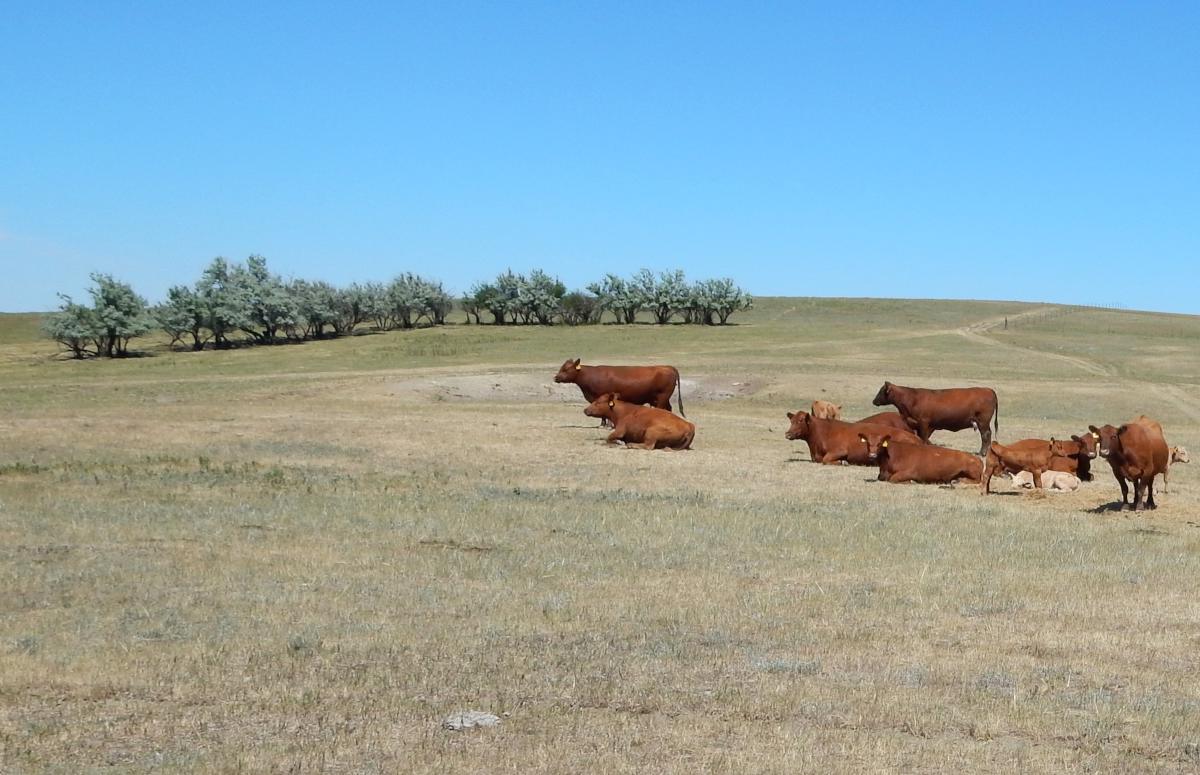
Russian olive (Elaeagnus angustifolia) spreads mainly along riverbeds, crowding native vegetation out, and within two or three decades it can transform a local ecosystem and wipe other native plants from it. Native to Central Asia and Eastern Europe, it is reported as invasive on other continents — so where you garden decides whether it is welcome.
Here are a few maps that show the distribution of Russian olive across the planet. Also included is how to report sightings of this invasive plant.
| Native to | Asia (Afghanistan, Armenia, Azerbaijan, Belarus, China, India, Iran, Kazakhstan, Moldova, Mongolia, Pakistan, Russia, Tajikistan, Turkmenistan, Uzbekistan) |
|---|---|
| Invasive in | Bermuda, Canada, Mexico, New Zealand, United States |
Whether Russian olive is a welcome shrub or a reportable weed depends entirely on where you garden. Here is how its status breaks down across the regions covered by the maps below.
| Region | Status | What the maps and records show |
|---|---|---|
| Central Asia and Eastern Europe | Native | Grows naturally in the wild, spreading mainly along riverbeds |
| United States | Invasive | Reported county by county on EDDMapS; a few states prohibit or restrict sale and planting |
| Canada | Invasive | Sightings in all southernmost provinces; the Plantwise programme lists shrubs to plant instead |
| Bermuda, Mexico, New Zealand | Invasive | Listed among the countries where the plant has escaped its native range |
Outside its native range, the risk is not theoretical: two or three decades are enough for Russian olive to reshape a local ecosystem.
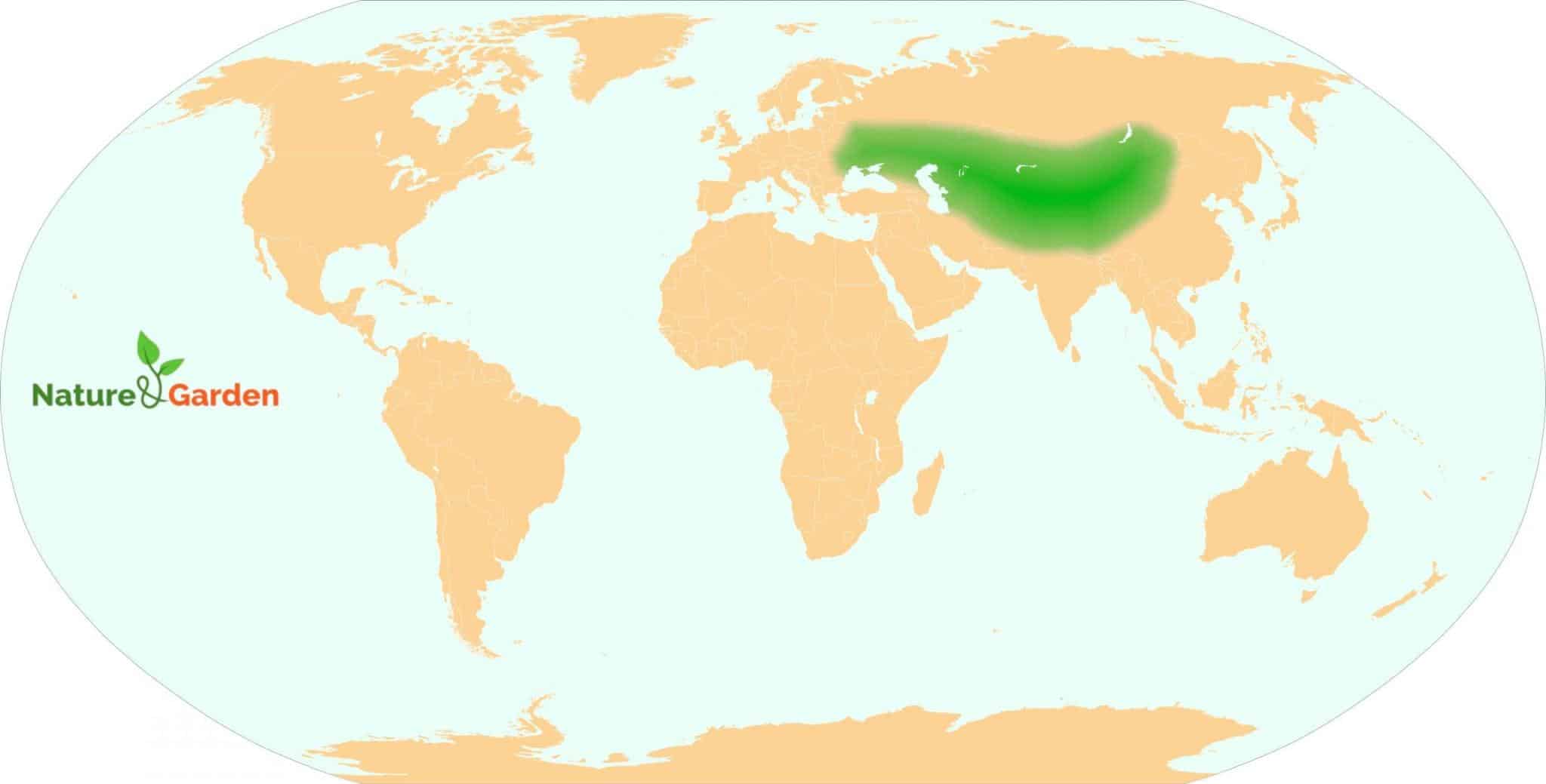
Russian Olive is native to Central Asia and Eastern Europe. It predominantly spreads along riverbeds. Here is a map that shows where it grows naturally in the wild. The green area marks the native growing area of Russian olive.
In all other regions, Russian olive has the potential of being extremely invasive. Within two or three decades, it can transform local ecosystems and wipe other native plants out.
This map shows sightings of Russian olive in the United States. Every county where the plant has been reported is marked in green. It’s updated automatically thanks to the Early Detection and Distribution Mapping System, hosted by the University of Georgia.
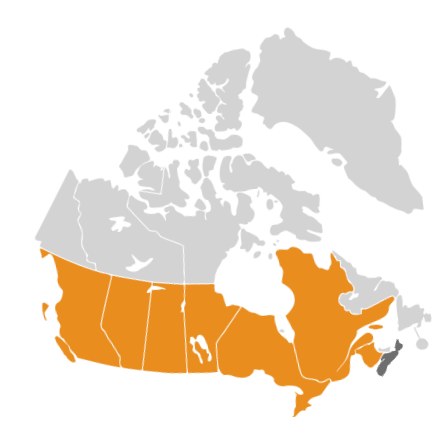
All southernmost provinces have report sightings of Russian olive.
If you notice one as you walk around, report it to Canadian wildlife agencies here.
Canada also set up a good program together with horticulture stores and professional landscapers. It’s called “Plantwise“. Together, they wrote up a list of excellent shrubs that you can plant in your garden in replacement of Russian olive:
Currently, only a few states have laws that prohibit or restrict planting and sale of Russian Olive. Others are currently evaluating the risk that this plant poses. This translates into having the plant on a “watch list” of potentially invasive species.
Here is a map, also updated daily, that shows the current legal status of Russian olive in the United States.
Read also: other trees you wouldn’t think are invasive in the United States:
Sources (maps)
With smartphones, it becomes increasingly easy to report Russian olive when you sight it. The EDDMapS phone app gathers GPS location data and forwards it to the agency that can best help control the weed.