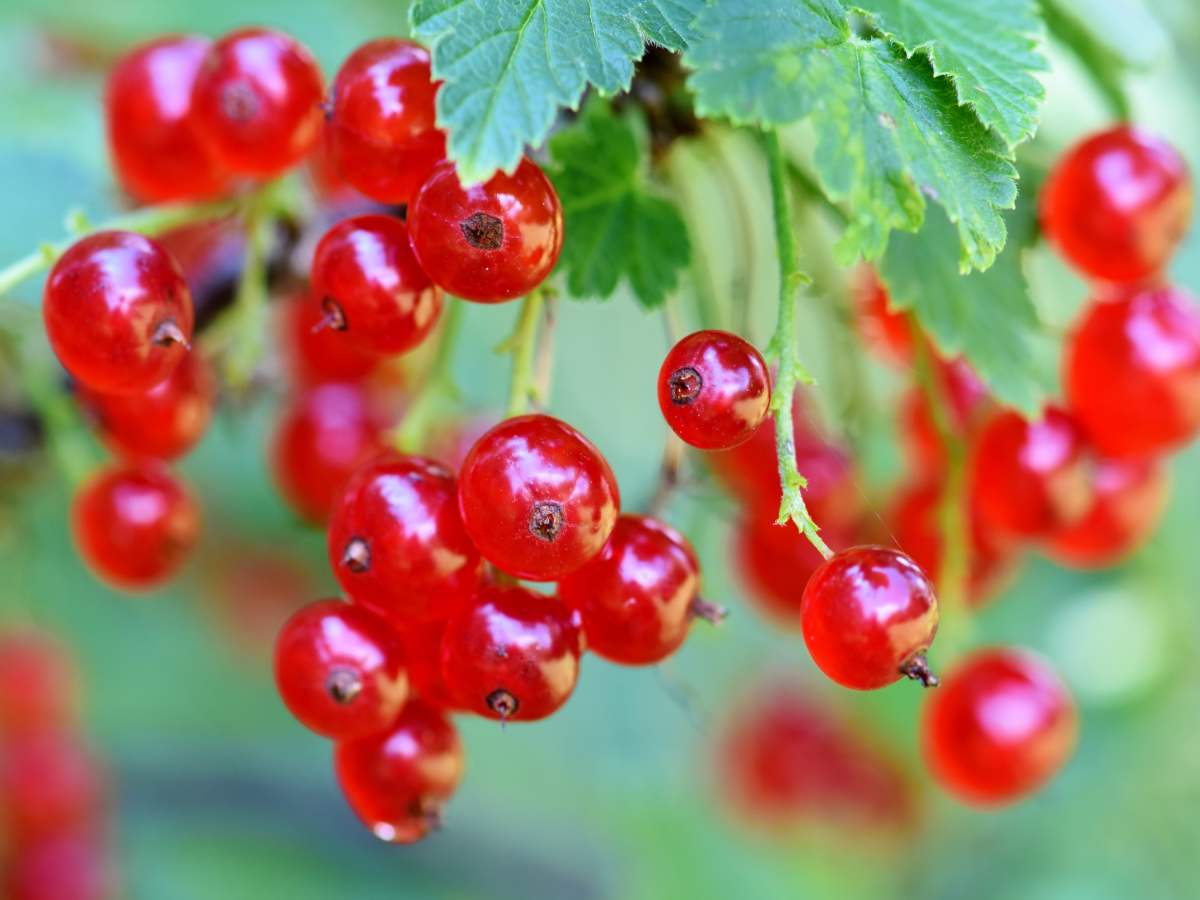
Translucent red berries hang in short strings on a bushy shrub of 40 to 50 inches, ripening between June and August for eating fresh or cooking into clafoutis, jams and jellies. Give it a well-lit spot, rich well-drained soil and regular water, and one bush will hand you 4 to 12 lbs of fruit.
| Name | Ribes grossularia |
|---|---|
| Family | Grossulariaceae |
| Type | fruit tree |
| Height | 40/50 in (100/120 cm) |
| Exposure | full sun |
| Foliage | deciduous |
| Flowering | end spring |
| Harvest | end summer→mid-fall |
Sometimes these are called gooseberries. Planting, pruning and care must all follow good practices to increase the harvest.
It is a good idea to plant currant bushes in fall or until spring, while avoiding frost spells.
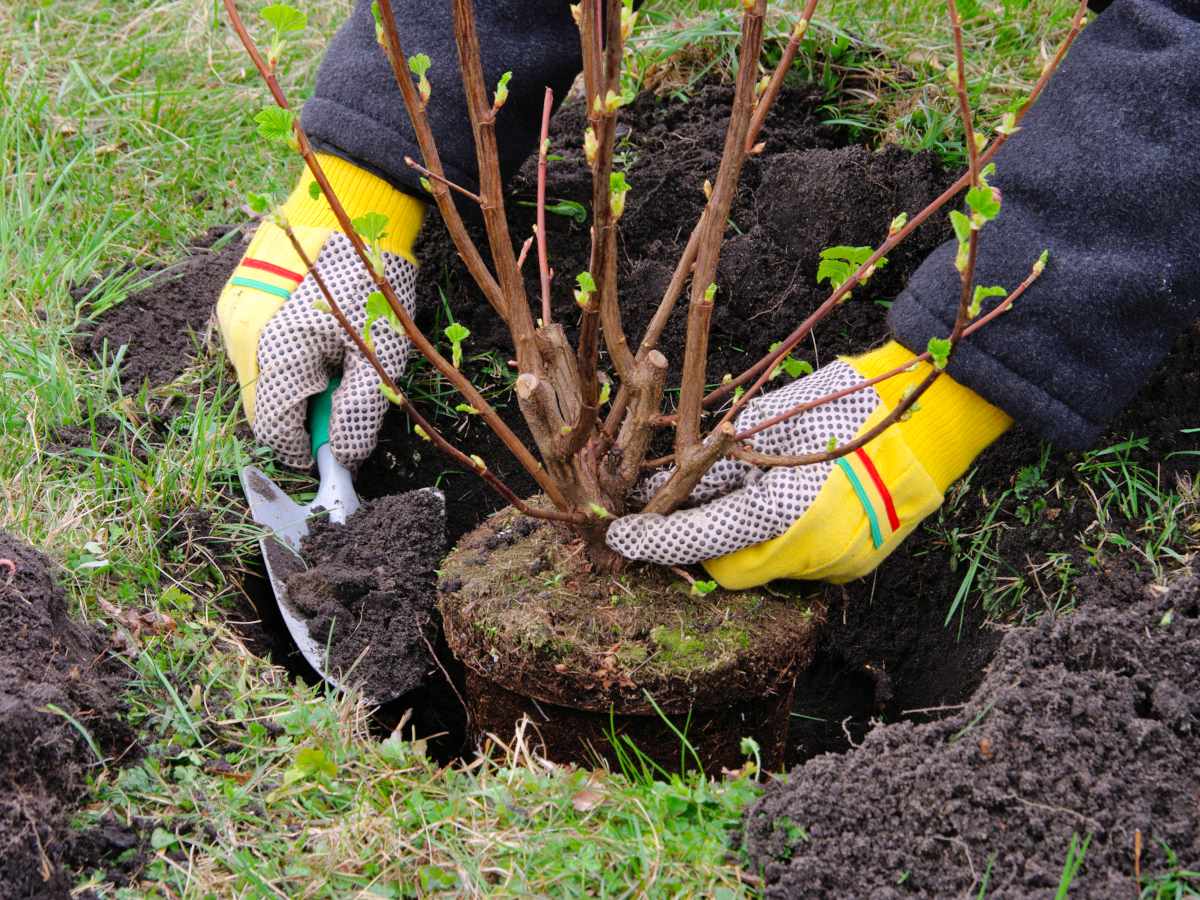
If you’re planting in spring, water more regularly during the first months, because your shrub will need more water to develop its roots over the summer months.
Whatever the exposure, favor rich soil and feel free to add soil conditioner to the ground when planting.
If properly settled in, caring for currant bushes is quite easy.
The right time to prune a red currant bush is towards the end of winter, ideally during the months of February-March. The weather should be rather mild and dry, with no risk of freezing.
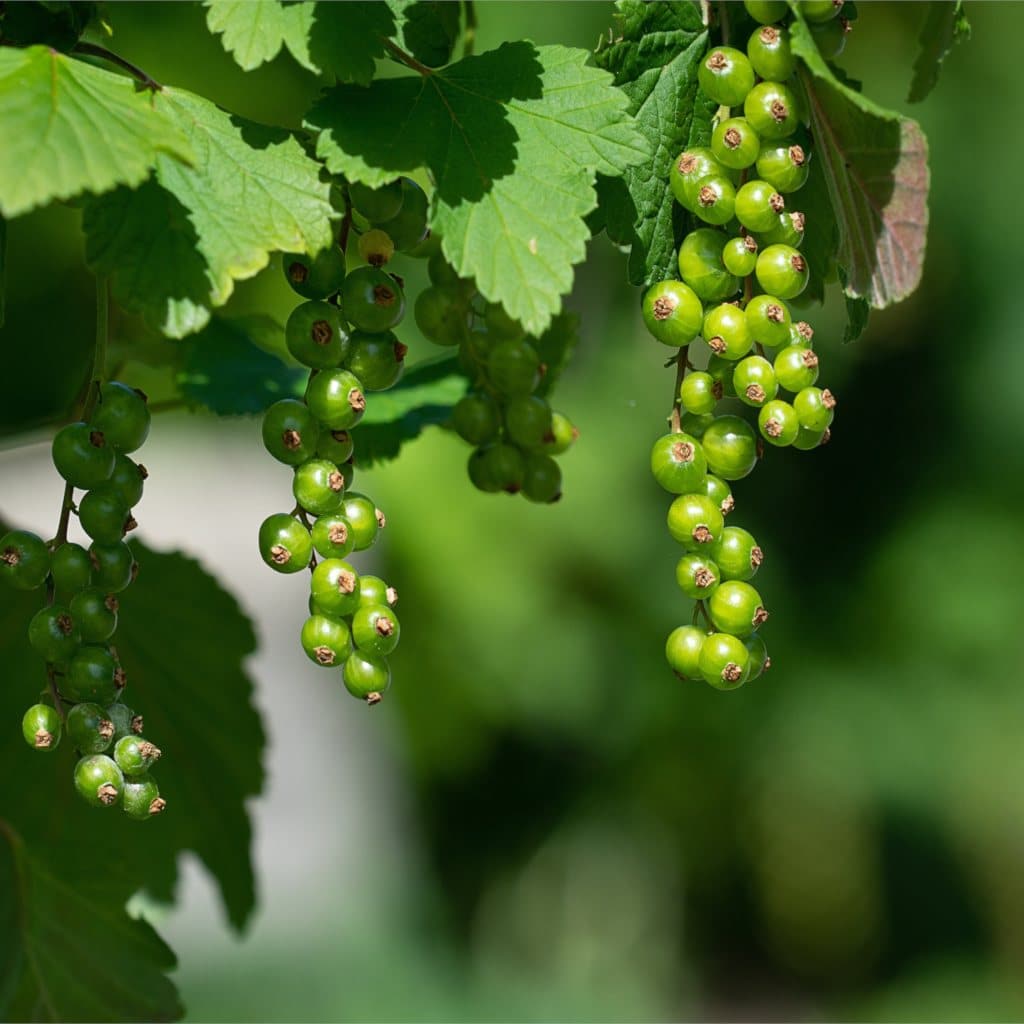
Although one-year old branches or canes might bear fruit, they’ll really bear a lot more in the second and third years.
Try to keep around 9 canes on your currant shrub (give or take a few):
With a little practice, you can easily tell the 2 and 3 year-old canes apart: older ones have more wrinkly bark, and the bark color is different, too. Fresh shoots are hard to miss, of course: they look brand new!
Red currant bushes need water to bear fruit well.
Most relevant is to water regularly and spread a layer of mulch at the foot of the shrub to retain soil moisture in summer.
Although it isn’t mandatory, adding berry tree fertilizer will significantly increase quantity and quality of your currant.
Currants generally resist diseases well, especially if you’ve chosen disease-resistant varieties.
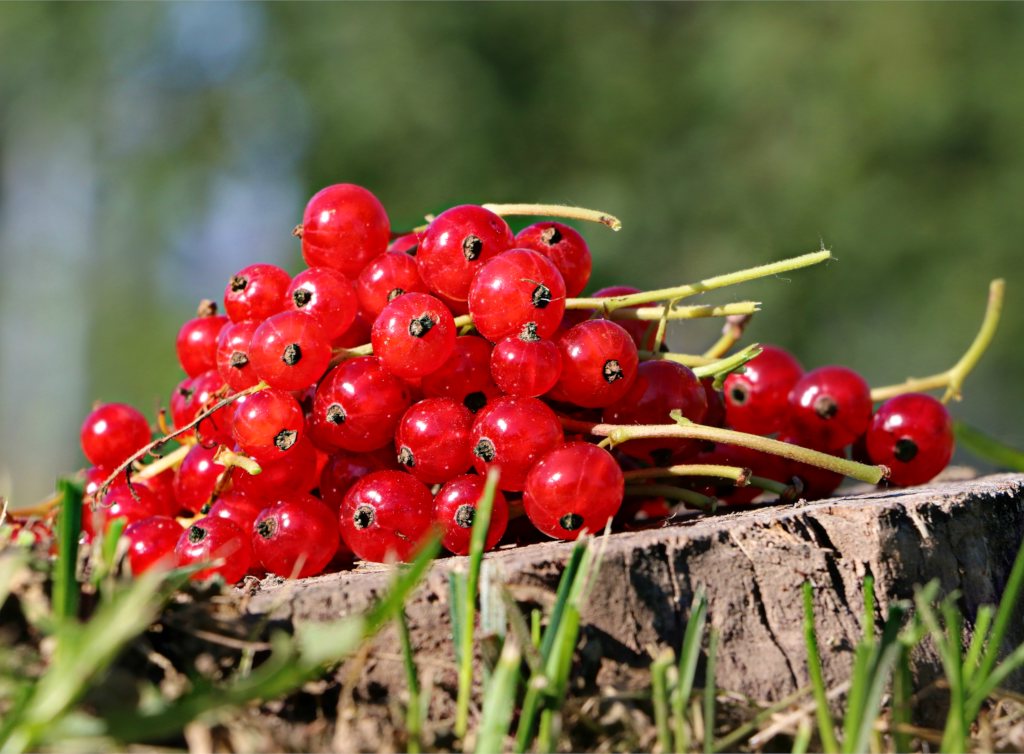
The best way to avoid diseases on your red currant bushes is to provide them with required nutritional needs in spring thanks to compost or soil conditioner such as manure and seaweed.
Preventive treatment with Bordeaux mixture at the end of winter also helps avoid a good deal of fungus.
Currants generally shrug off trouble, but four complaints turn up often enough to be worth recognising on sight. The symptom column is usually all you need to name the culprit.
| Problem | Type | What you see | Response |
|---|---|---|---|
| Powdery mildew | Fungus | White velvet mould on leaves and other plant parts | Bordeaux mixture at the end of winter; organic products only |
| Rust | Fungus | Brownish-orange blisters on the underside of leaves | Bordeaux mixture at the end of winter as prevention |
| Aphids | Sap-sucking insect | Leaves lose their colour and curl into tube shapes | Organic treatment, since the fruit will be eaten |
| Scale insects | Insect | White spots appearing on the shrub | Organic treatments and preventive techniques |
Feeding the bush in spring with compost, manure or seaweed remains the best insurance against all of them.
Red currants all share the same growing needs, but picking time and berry size vary a good deal from one cultivar to the next. Mixing an early with a late variety stretches the harvest over several weeks.
| Variety | Ripening | Berries & flavour | Habit | Best for |
|---|---|---|---|---|
| Rovada | Late | Very long strings, large berries | Vigorous, spreading | Fresh, freezing, show |
| Red Lake | Mid | Long trusses, mild flavour | Vigorous, easy-going | Fresh and preserves |
| Jonkheer van Tets | Early | Long strings, bright red, tangy | Vigorous, upright | Fresh eating, jelly |
| Laxton’s No. 1 | Early to mid | Large, glossy bright red | Moderately vigorous, spreading | Jam and jelly |
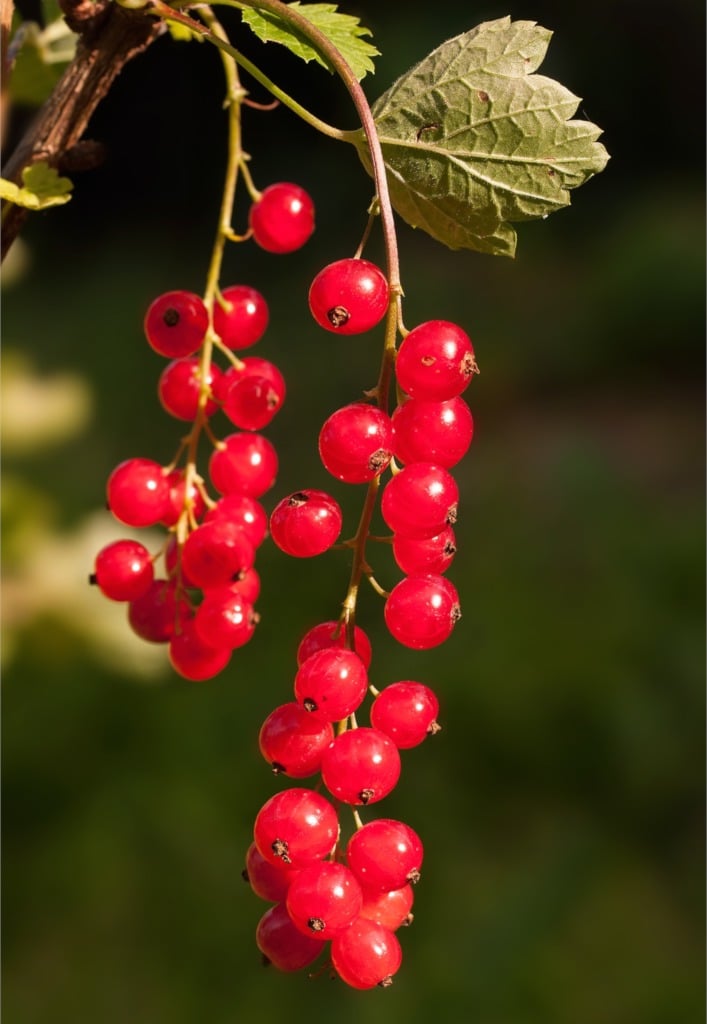
Harvesting currants depends on the variety and can happen between June and August.
The worst enemy of currant is birds, they can consume an entire harvest in minutes. That is why protecting the currant with a net is required.
You can expect around 4 to 12 lbs (2 to 5 kg) per plant.
Fruits that are on the inside of the bush need more time to ripen and can be harvested later.
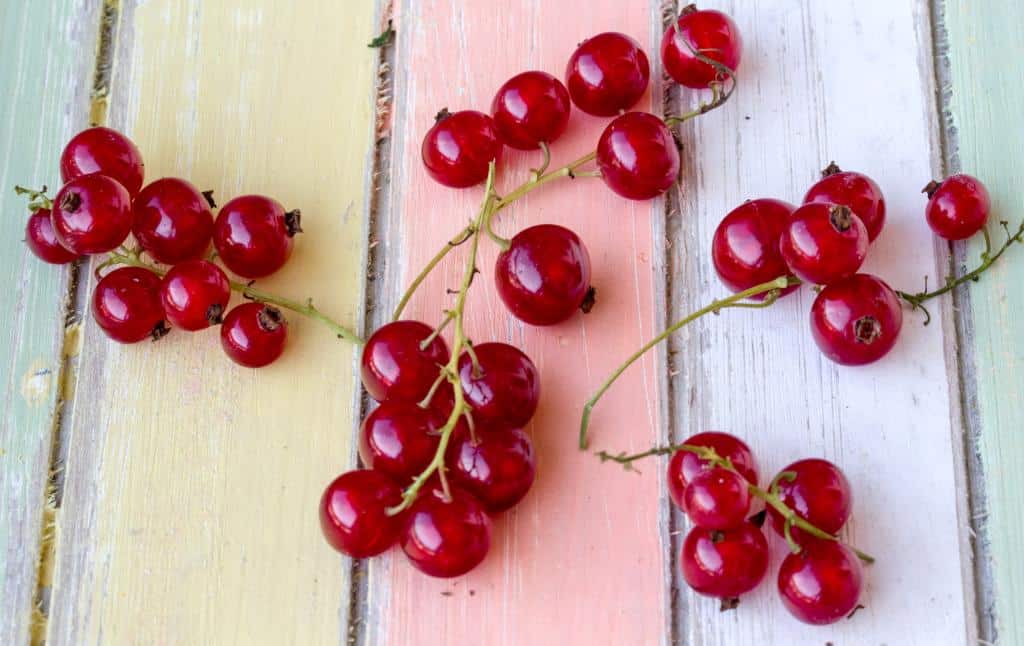
This common fruit shrub is easy to grow.
It is a favorite for its fruits that tickle our tongue buds, eaten fresh or cooked in clafoutis, jams or jellies for breakfast.
Give it the space it needs to grow, plant it in a cool place where the air circulates well.
Thanks to its bushy aspect and the translucent red color of its fruits, it looks very nice and fits in any garden.
Black currant fruits on different wood and is pruned on another rhythm — growing and pruning red and black currants sets the two side by side.
If needed, treat against powdery mildew or black spot disease but be careful to only use organic products, because you’ll be eating the fruits…