Home » Health » Red currant: traditional uses, kitchen ideas and cautions
Red currant: traditional uses, kitchen ideas and cautions
·
0
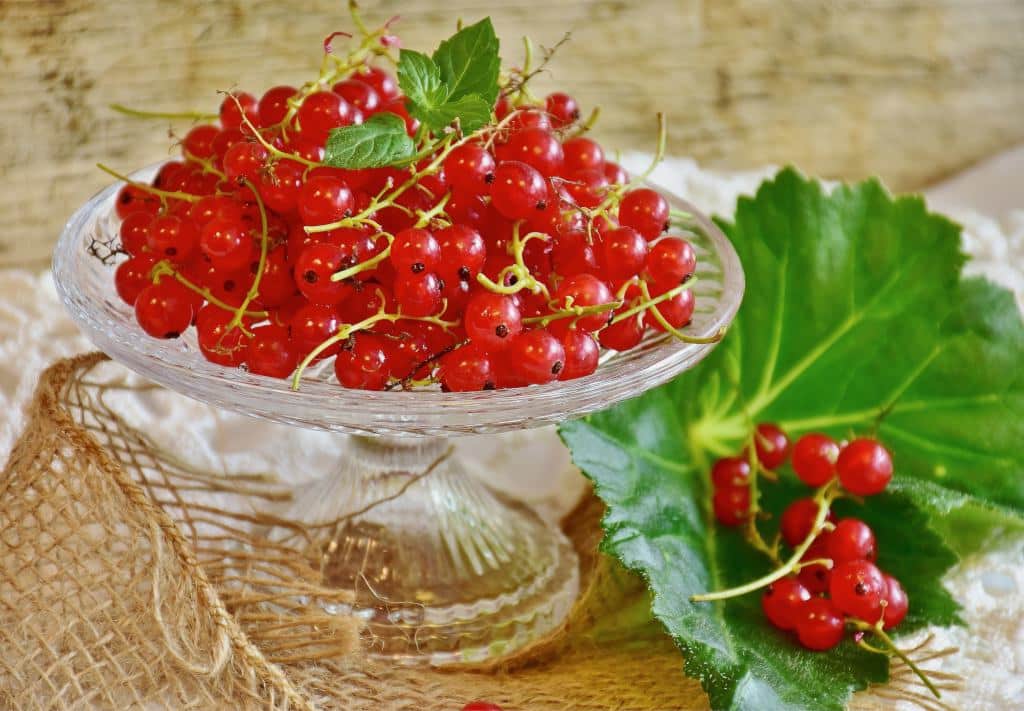
Red currant is the small, tart, translucent berry that hangs in bunches on a shrub barely taller than a garden gate. This page covers what the fruit and its leaves actually contain, what herbalism and country tradition have long made of them, and how to turn a punnet into juice, an infusion, a jelly or a face mask tonight — plus who should go carefully.
Berries midsummer to late summer; leaves late spring to midsummer
Taste
Sharply tart, clean, faintly sweet when fully ripe; leaves grassy and mild
Shrub size
40 to 50 inches (100 to 120 cm) tall
Where it comes from
Currants reached Western Europe in the Middle Ages, with wild relatives spread across Asia, Europe and North America.
Commercial growing today is concentrated in Denmark, Poland and France.
Garden varieties come in three colours: red (‘Jonkheer van Tets’), white (‘White Versailles’) and black (‘Black Giant’).
Gooseberry types were long cooked into sauces for roast goose in England — which is where the name stuck.
What it is credited with
Sluggish digestion — the fruit has a gentle laxative reputation in country herbalism, where it was taken to encourage easier intestinal transit.
Feeling run down — naturopathy values the fruit’s iron and vitamin C content and traditionally suggests it to people describing themselves as tired or depleted.
Winter sniffles — the juice has a long-standing reputation as a fortifying drink through the cold months, and older domestic remedies used it in feverish states.
Water retention — herbalists have classed currant juice among the diuretic fruits, used to flush the urinary tract.
Stiff, aching joints — in traditional European herbalism, infusions of currant leaves were drunk to ease joint stiffness and general aches.
Poor appetite — the sharpness of the juice earned it a place as an aperitif-style tonic to wake up the appetite before a meal.
Coughs — folk practice used currant syrup as a soothing, pleasant-tasting remedy for a tickly throat.
Spring cleansing — naturopathy includes the fruit in seasonal detox routines, with a reputation for supporting the liver.
Skin — cosmetic tradition credits the pulp with cleansing, nourishing and hydrating the skin, and with helping it look fresher.
How to use it
Fresh, by the handful
Rinse the bunches, strip the berries with a fork, eat as they are or scattered over yoghurt.
A small bowl — roughly 3.5 oz (100 g) — is the everyday serving.
Pair with strawberries and raspberries to soften the tartness without adding sugar.
The digestive juice
Blend a generous handful of gooseberry-type currants together with a few of their washed leaves.
Strain through a fine sieve or muslin, pressing the pulp.
Drink a small glass, traditionally taken in the morning, for a few days at a time rather than continuously.
Leaf infusion
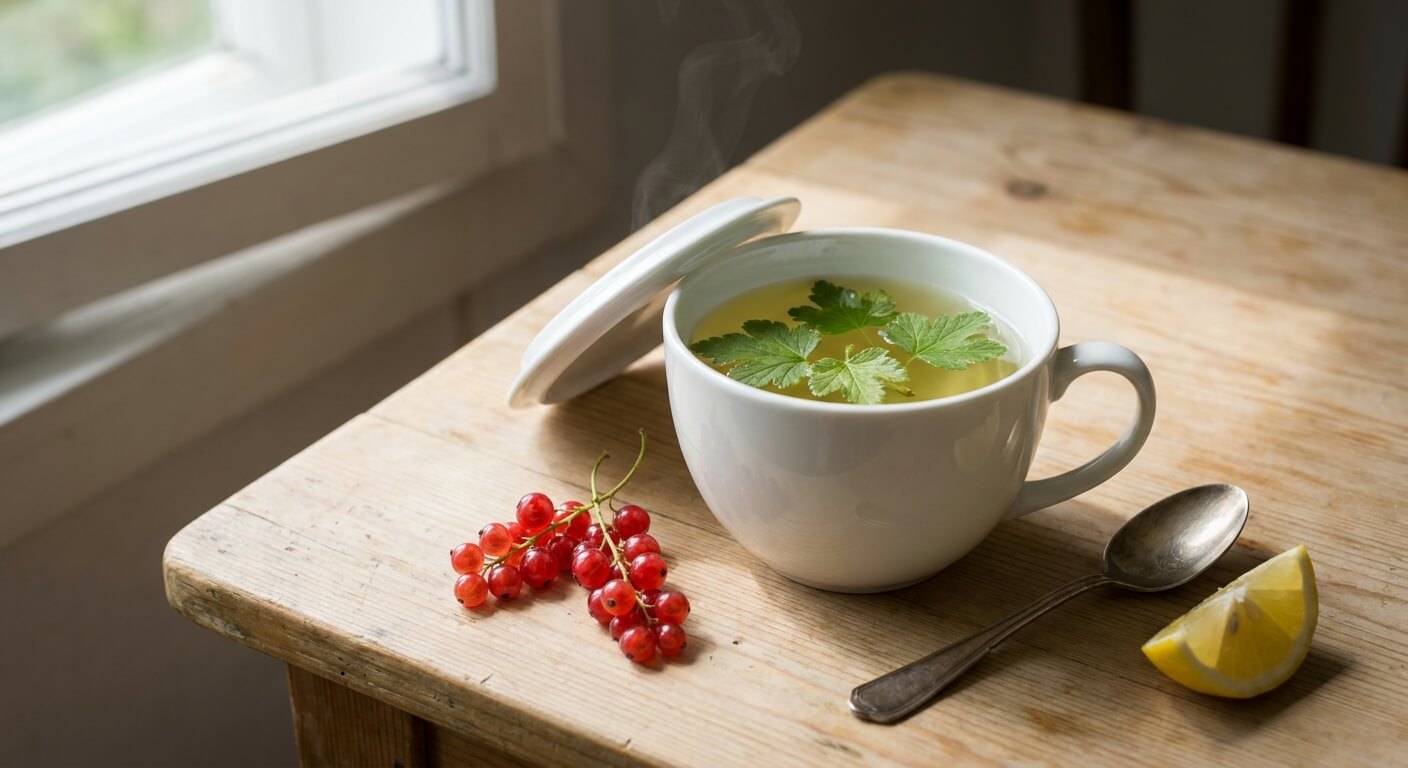
Use a small handful of fresh leaves, or a heaped teaspoon dried, per mug.
Pour on water just off the boil, cover, and leave to steep 8 to 10 minutes.
Tradition has it drunk as two or three cups spread through the day, for a week or so, then a break.
Taste is green and mild; a slice of lemon or a little honey lifts it.
Syrup and coulis
Simmer the berries briefly with a little water, press through a sieve, sweeten to taste.
A spoonful of syrup in hot water makes the classic cold-weather drink.
Coulis goes over cottage cheese, ice cream or a plain sponge.
Savoury: warmed in a pan with duck breast, poultry, roasts or foie gras; whisked into a salad dressing; a few berries on melted cheese toasts.
Jelly is the traditional partner to roast game and strong cheese.
Skin masks
Nourishing mask — blend 3.5 oz (100 g) currants with a little olive oil and powdered oats. Spread on clean, unbroken skin, leave 15 to 20 minutes, rinse with clear water.
Hydrating mask — blend currants with cottage cheese, apply, rinse after 20 minutes.
Patch-test on the inner forearm first; fruit acids can sting sensitive skin.
Which form for which purpose
Form
Preparation
Traditionally used for
Fresh berries
Eaten raw, a small bowl
Everyday vitamin C and iron intake; light eating
Blended juice
Fruit and a few leaves blended, then strained
Herbal reputation as a digestive and diuretic drink
Leaf infusion
Leaves steeped 8–10 minutes, covered
Old remedy for joint stiffness and general aches
Syrup
Berries simmered, sieved, sweetened
Folk soothing drink for a tickly throat
Mask
Pulp blended with oats and oil, or cottage cheese
Cosmetic tradition: cleansing and hydrating the skin
Frequently Asked Questions
The one thing to remember: eat the berries freely as food, and treat the juice and leaf infusion as short herbal routines — a few days or a week, then a break.
A small handful of fresh leaves per mug, covered 8–10 minutes
Which part of the red currant do I actually use?
The ripe berries are the everyday part, eaten raw or cooked. The juice, pressed from blended fruit, is the form country herbalism used as a digestive and diuretic drink. The leaves, picked late spring to midsummer, are the part infused for the old remedy against joint stiffness.
When should I pick them?
Berries ripen from midsummer to late summer, and are at their best when fully coloured and glossy. Cut whole bunches with scissors instead of tugging at individual fruits. Leaves for infusion are gathered earlier, late spring to midsummer, while they are still tender and unblemished.
How much leaf infusion is usual?
Tradition uses a small handful of fresh leaves, or a heaped teaspoon dried, per mug, steeped 8 to 10 minutes under a lid. Two or three cups across the day is the classic pattern, for a week or so at a time. Take a break afterwards rather than drinking it indefinitely.
Can I drink currant juice every day?
As part of a meal, a small glass is simply fruit juice. As a remedy-style routine it is better kept short, because the fruit has a genuine laxative and diuretic reputation. Anyone pregnant, breastfeeding, on medication or living with kidney trouble should check first.
Does the fruit stain?
Badly, and fast. Soak the affected laundry in milk for a couple of hours before washing normally. Wear an apron when you are sieving pulp for jelly or coulis.
This information is provided for general interest and reflects the traditional use of plants. It is not a substitute for medical advice. If you are on medication, pregnant, or in any doubt, ask a healthcare professional.
Written by Gaspard Lorthiois | Loves helping out, especially when it comes to growing things. Worked in herbal medicine, runs a farm, and dabbles in tech. Master's degree and engineer.

A tasty addition to breakfast cornflakes – especially with goat milk.
That’s very true! The stronger taste of goats milk offsets the tartness of the berries. Definitely a good suggestion, thanks for sharing it!