Marjoram is the soft, sweet-scented cousin of oregano, and one of the easiest kitchen herbs to turn into a warm evening infusion. This page covers what the plant is, which part to pick, how to make an infusion and an infused oil at home, what herbalists have long credited it with, and the cautions that matter before you use it.
Marjoram at a glance
Item
Detail
Botanical name
Origanum majorana
Family
Lamiaceae
Other names
Sweet marjoram, knotted marjoram, garden oregano
Parts used
Leaves and flowering tops, fresh or dried
Forms of use
Infusion, infused oil for massage, culinary herb, dried in blends
Harvest season
Early summer to early autumn, best just as the flower buds form
Taste
Sweet, warm and slightly camphorous — milder and rounder than oregano
What it is credited with
Herbal tradition has long treated marjoram as an aromatic digestive, taken as an after-meal infusion for a heavy stomach, bloating and wind.
Naturopathy credits it with a calming effect on nervous digestion — the kind of stomach upset that arrives with stress rather than with food.
It has an old reputation as an antiseptic plant, both for internal use as a tea and externally in washes and oils.
Herbalists have traditionally recommended an evening cup for restlessness and difficulty settling to sleep.
In traditional herbalism, marjoram oil was rubbed into stiff necks, aching backs and tired joints after cold or damp weather.
Folk practice credits warm marjoram infusions with a warming, sweat-promoting action during winter chills.
Country herbalism also used it as a mild diuretic and general tonic in spring cures.
How to use it
The everyday infusion
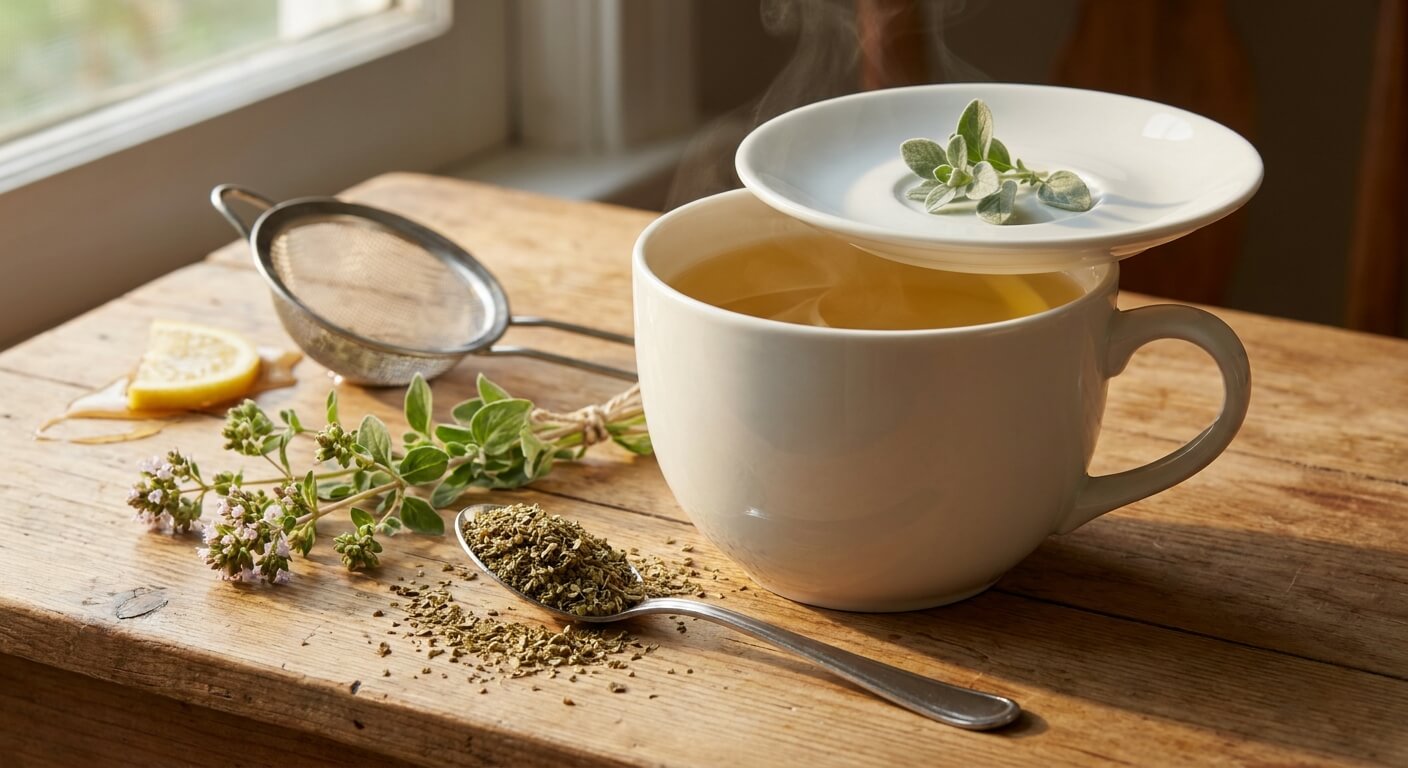
Use a small handful of fresh leaves and flowering tops per large mug, or about a teaspoon of dried leaves — dried marjoram is far more concentrated than fresh.
Pour water that has just come off the boil over the herb.
Cover the cup while it steeps: the aroma is volatile and escapes with the steam.
Steep around 10 minutes, then strain.
Traditionally drunk between meals, and one cup in the evening before bed.
The taste is sweet and gently spicy, pleasant on its own; a little honey and a slice of lemon suit it well.
Marjoram infused oil, for external use
Chop a generous quantity of fresh marjoram — roughly one part herb to four parts oil by volume — into good olive oil.
Warm gently in a double boiler for about an hour, never letting it fry or smoke.
Cool, strain through muslin, and bottle in dark glass.
Used for rubbing into tense shoulders, a stiff neck or aching limbs.
Also used traditionally as a warming chest rub in cold weather.
Keep it in a cool dark cupboard and use it within a few months.
In the kitchen
Marjoram flavours gravies, stews, soups, marinades, tomato sauces and pizza.
Add it late in cooking: long boiling flattens its perfume.
Try swordfish or other firm fish marinated with marjoram, olive oil and lemon.
It pairs happily with thyme, bay, garlic and roast vegetables.
Ways to prepare marjoram, and what each is used for
Form
How it is made
Traditional purpose
Infusion
Leaves and flowering tops steeped 10 minutes in covered hot water
Taken after meals as a digestive; one cup in the evening to unwind
Infused oil
Chopped herb warmed in olive oil in a double boiler, then strained
Massaged into stiff or aching areas; used as a warming chest rub
Dried herb
Bunches air-dried in the shade, then crumbled and jarred
Year-round supply for teas and cooking
Culinary fresh
Leaves stripped and added at the end of cooking
Flavouring sauces, soups, marinades and grilled fish
Essential oil
Steam-distilled commercially
External and aromatic use only — never swallowed
Frequently Asked Questions
The one thing to remember: a covered 10-minute infusion of leaves and flowering tops after dinner is the simplest and safest way to enjoy marjoram — and the distilled essential oil is never swallowed.
A covered ten-minute infusion of leaves and flowering tops
What is the difference between marjoram and oregano?
They are close relatives in the same genus. Oregano (Origanum vulgare) is hardier, sharper and more peppery, while sweet marjoram (Origanum majorana) is softer, greyer and rounder in flavour. They are easily confused in the garden, so check the label when buying plants.
How much marjoram do I use for an infusion?
A small handful of fresh leaves and flowering tops per large mug, or about a teaspoon of the dried herb, since drying concentrates it considerably. Steep about 10 minutes with the cup covered, then strain. Tradition takes it between meals, with a last cup in the evening.
Can I drink marjoram essential oil in water?
No. The essential oil distilled from the plant must not be ingested under any circumstances. It is reserved for external use, always diluted in a carrier oil, and kept out of reach of children.
When should I harvest marjoram?
From early summer to early autumn, ideally just as the knotted flower buds form, when the aroma peaks. Cut in the morning once the dew has dried, then hang small bunches in a warm, shaded, airy spot to dry before jarring the crumbled leaves.
Is marjoram safe during pregnancy?
Using it as a herb in cooking is not the same as taking it medicinally. Concentrated infusions and oils are best avoided during pregnancy and breastfeeding, and the essential oil is best left alone altogether. Ask a healthcare professional if in doubt.
This information is provided for general interest and reflects the traditional use of plants. It is not a substitute for medical advice. If you are on medication, pregnant, or in any doubt, ask a healthcare professional.
Written by Gaspard Lorthiois | Loves helping out, especially when it comes to growing things. Worked in herbal medicine, runs a farm, and dabbles in tech. Master's degree and engineer.