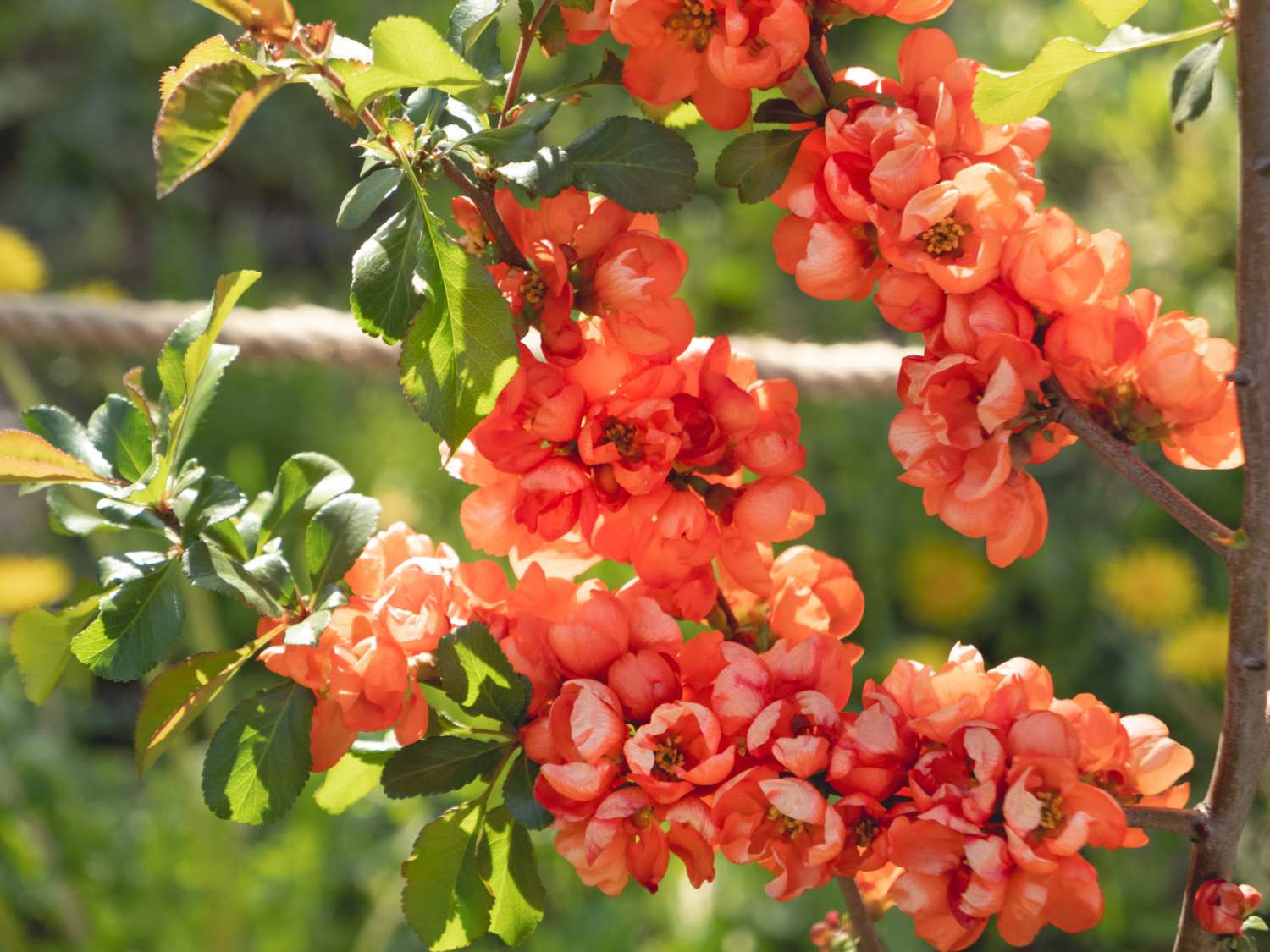
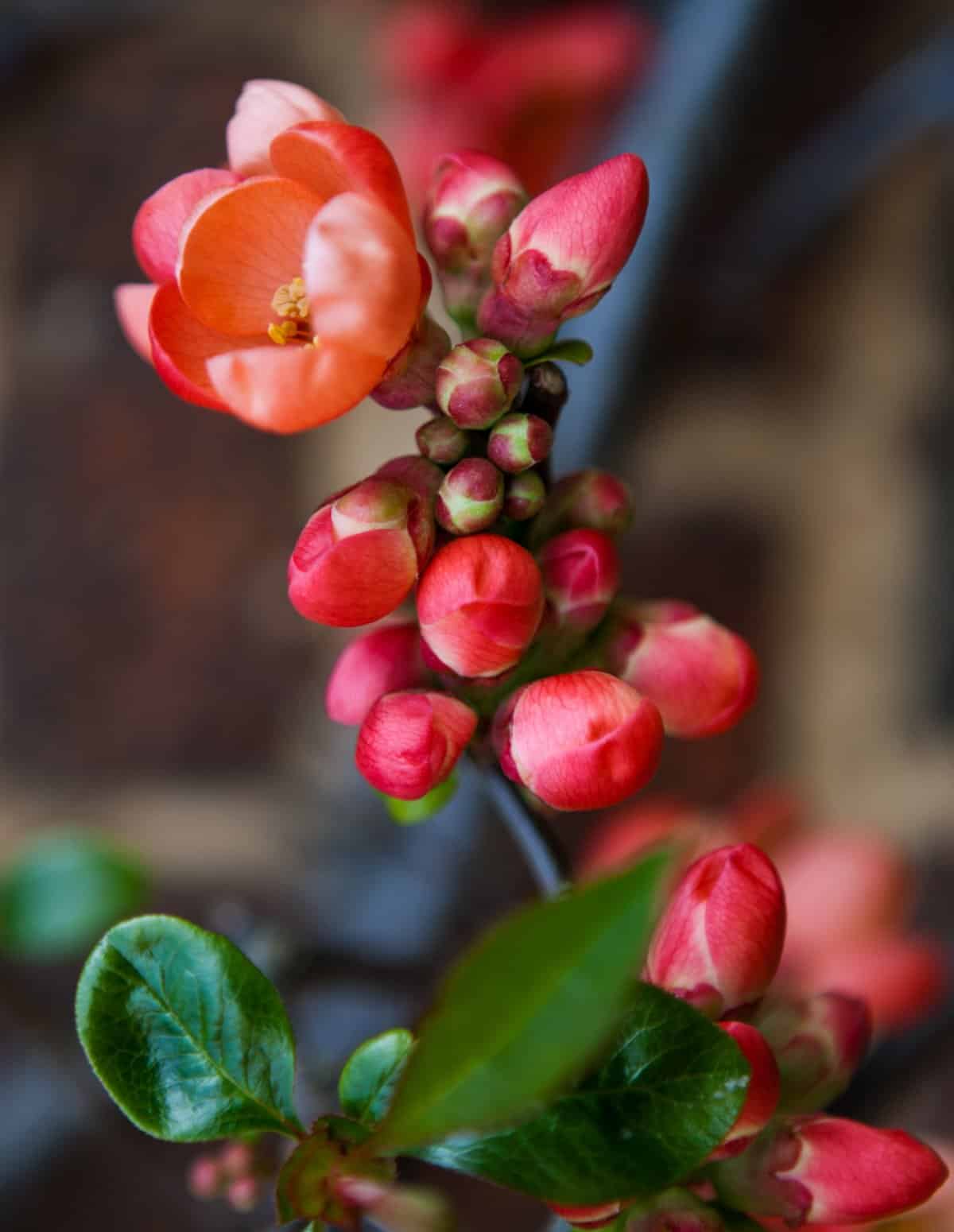
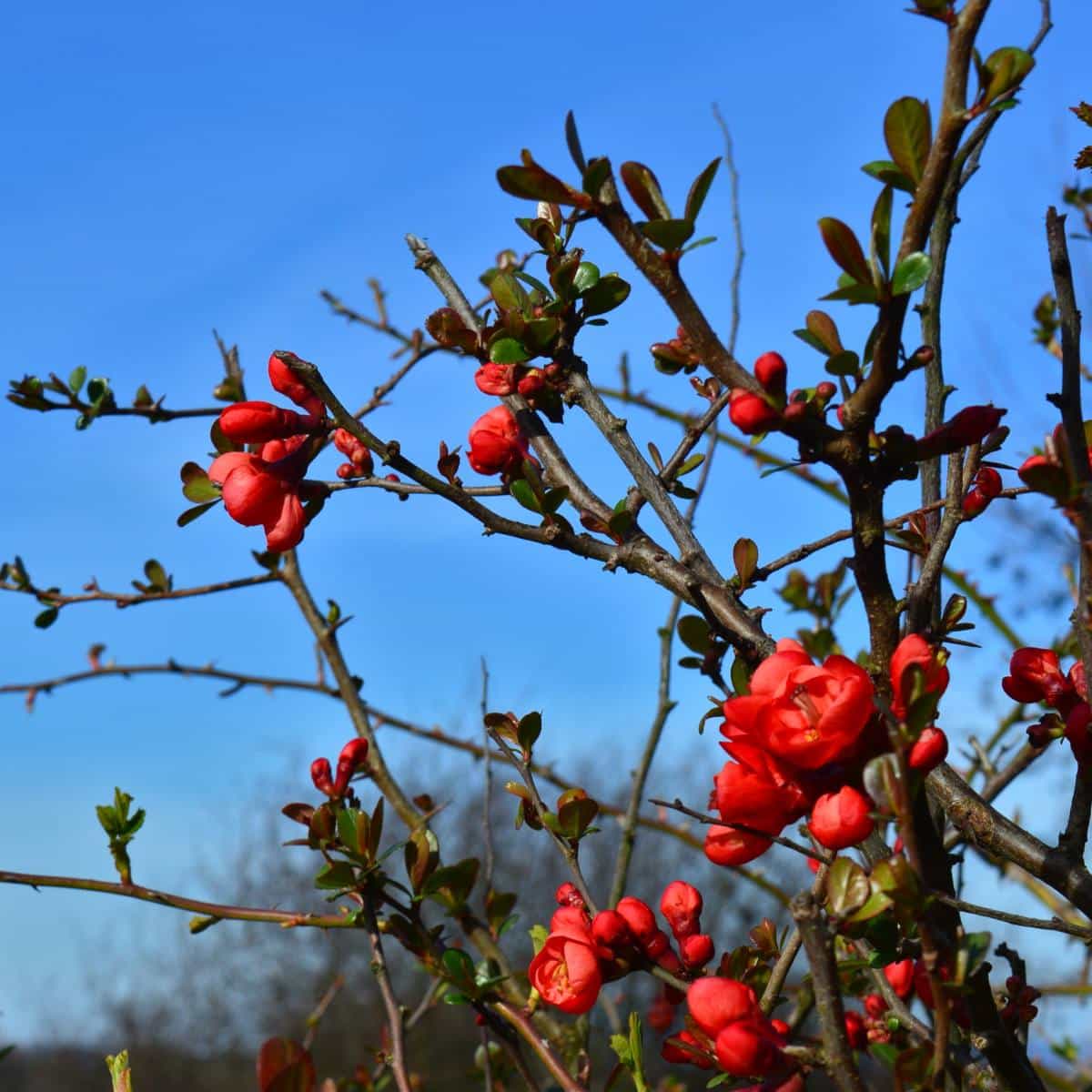
Red and rose-purple flowers crowd the thorny branches at winter’s end, when little else in the garden is in bloom. Maule’s quince (Chaenomeles speciosa) is one of the finest flowering shrubs of that season and doubles as a formidable defensive hedge; prune it only after flowering and those superb blooms return undiminished.
Did you know?
The shrub’s English name commemorates the nineteenth-century Bristol nursery firm of Messrs Maule and Sons, who put the low, spreading Japanese species into wide circulation among British gardeners after it reached Europe from Japan.
The genus name Chaenomeles comes from the Greek for ‘to gape’ and ‘apple’, coined by John Lindley in the mistaken belief that the ripe fruits split open, a description that no species actually fits.
Maule’s quince at a glance
Name
Chaenomeles japonica
Family
Rosaceae
Type
shrub
Height
up to 3 feet (1 meter)
Exposure
full sun, part sun
Soil
ordinary, well drained
Foliage
deciduous
Flowering
spring
Harvest
autumn
Hardiness
USDA zone 5, to -20°F (-29°C)
: Chaenomeles speciosa
Care, from planting to pruning, will enable your Maule’s quince to grow and bloom.
Planting Maule’s quince
Choose a sunny spot that avoids excessive heat For the planting of Maule’s quince, try to choose a place that receives sun but without setting it in a very hot place.
Maule’s quince is an easy shrub that adapts to all types of soil, and to all climates, too.
A blend of garden soil and soil mix planting is perfect for planting.
If part of a hedge, keep a distance of around 5 feet (1.5 meters) between shrubs.
Follow our tips on planting trees here at Nature & Garden.
Bare-root Maule’s quince should go in while the shrub is dormant and leafless , well before the flower buds open .
Set the top of the root ball flush with the surrounding soil, as burying the base of the stems invites collar rot .
Avoid ground that lies wet all winter ; on heavy clay , plant on a low mound to keep the roots out of standing water.
Wear thick gloves : the branches are viciously thorny even on young plants.
Propagating Maule’s quince
There are several ways of propagating your Maule’s quince like grafting, sowing or preparing cuttings.
For sowing , best to start in fall or in spring with seeds that you’ll have extracted from the fruits.
For grafting , shield budding over the summer is the way to go.
Finally, preparing cuttings is the most straightforward and quickest solution to multiply Maule’s quince.
The low, spreading branches layer very easily: peg one down into the soil, keep it damp, and lift the rooted section once it holds firm when tugged.
Pruning and caring for Maule’s quince
Prune only after flowering to protect the blooms Maule’s quince can be pruned on a regular basis but always after the blooming so as to ensure that its superb flowers at the end of winter aren’t compromised.
Whether in a hedge or planted as as a standalone, Maule’s quince growth is rapid, and it will only take the desired shape if you cut it back regularly.
But it is of course great to let it grow following its natural inclination , it will still look marvelous!
After the blooming, best to perform a light pruning to guide the shrub into the shape you’re hoping for it to grow into.
If part of a hedge, you can prune once or twice a year to make your quince more dense.
Eating Maule’s quince fruits
Maule’s quince fruits aren’t very good to eat raw because they are very astringent. They’ll pucker up your lips like nothing!
But just as for the more traditional quinces , they can be cooked and turned into delicious jelly among other ideas.
Pick the fruits once they have turned deep yellow and smell strongly fragrant .They stay rock-hard even when fully ripe, so quarter them on a stable board with a heavy knife rather than a small paring blade.
Skins and cores are rich in pectin and acid , which is why Maule’s quince jelly sets firmly with no added setting agent.
Leave the pips out of your preparations, as they contain cyanogenic compounds like the seeds of other Rosaceae.A few slices dropped in with apples lift the scent and acidity of a pie or a compote.
Learn more about Maule’s quince
Native to Asia, Maule’s quince blooms beautifully in hues of red or rose-purple at the end of winter, which will give many colors to your garden.
It is among the most beautiful flowering shrubs in that part of the season, and also is quite cute during the rest of the year.
Often used in defensive hedges because of its many thorns, its practical purpose is doubled with its ornamental benefit to enhance your garden.
Indeed, after the blooming come fruits which are particularly interesting since their fragrant smell spreads deliciously.
Maule’s quince is a shrub that can hold quite well to the cold and to freezing, since it resists temperatures down to 5°F (-15°C).
Read also:
Smart tip about Maule’s quince
Maule’s quince is perfectly suited to hedging, but it also grows well in garden boxes on a terrace.
Frequently Asked Questions
Can you eat Maule’s quince fruit raw?
Raw fruits are very astringent and will pucker your lips, so cook them instead. Pick them deep yellow and strongly fragrant, quarter them with a heavy knife, and leave out the pips, which hold cyanogenic compounds like other Rosaceae seeds.
When should I prune my Japanese quince?
Always cut back after the blooming, so the superb end-of-winter flowers aren’t compromised. A light prune then guides the shrub into shape; hedges can be trimmed once or twice a year to grow denser, as growth is rapid.
Why is it called Maule’s quince?
The English name honours the nineteenth-century Bristol nursery firm of Messrs Maule and Sons. They brought the low, spreading Japanese species into wide circulation among British gardeners after it arrived in Europe from Japan.
Where is the best place to plant it?
Choose a spot in sun or part sun that avoids excessive heat, with ordinary well-drained soil; a blend of garden soil and planting mix suits it. Avoid ground wet all winter, and on heavy clay plant on a low mound.
Images: 123RF: Konstantin Aksenov; Pixabay: Marisa, Ronald Porter, Karin Henseler