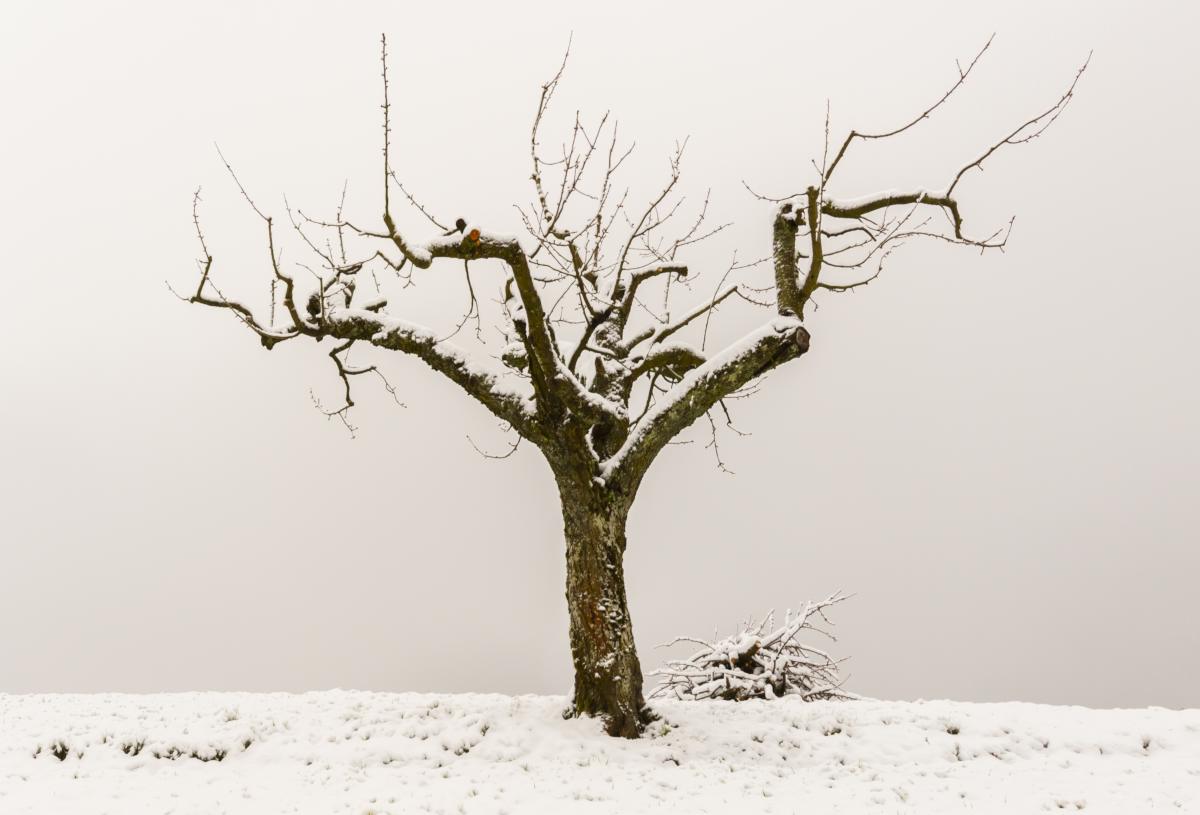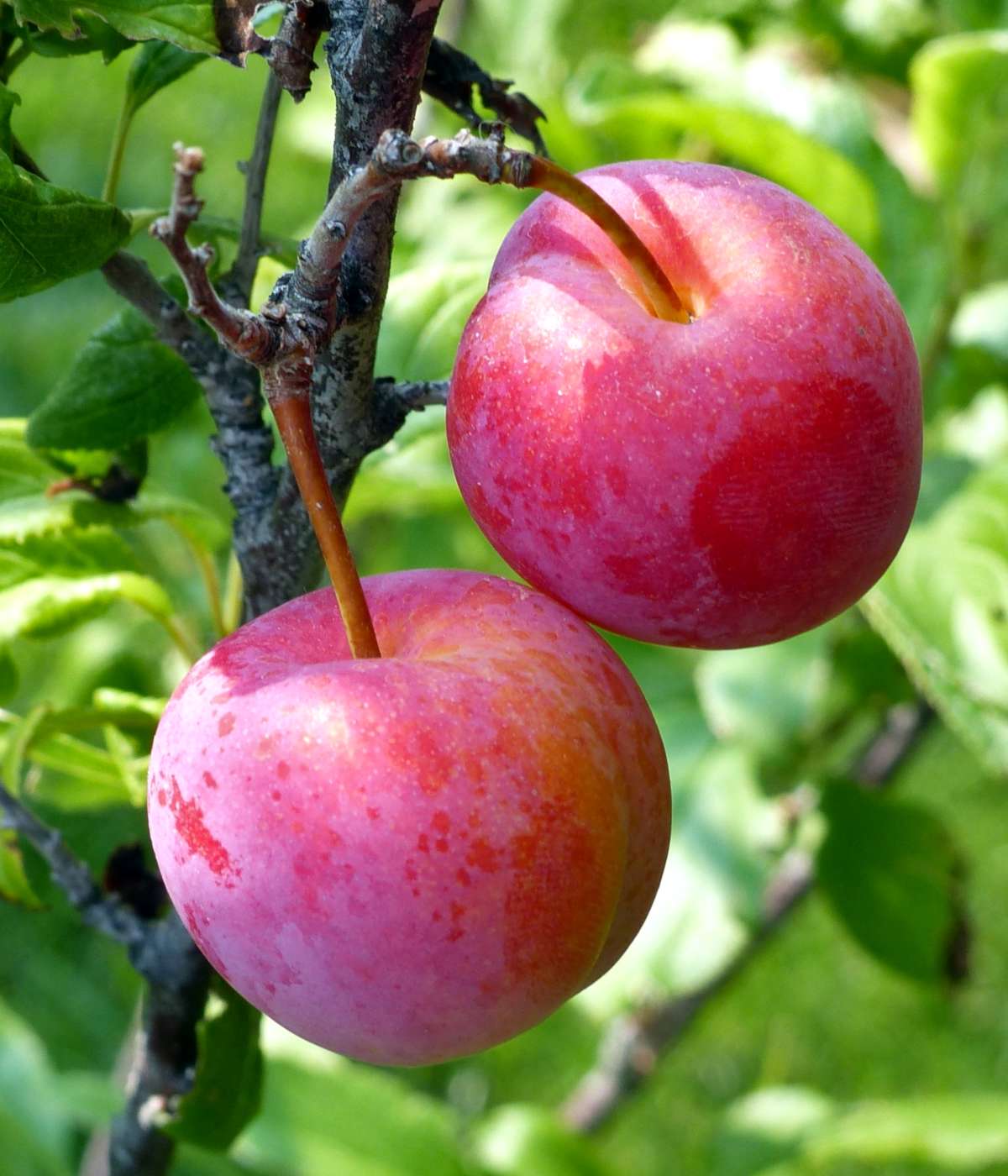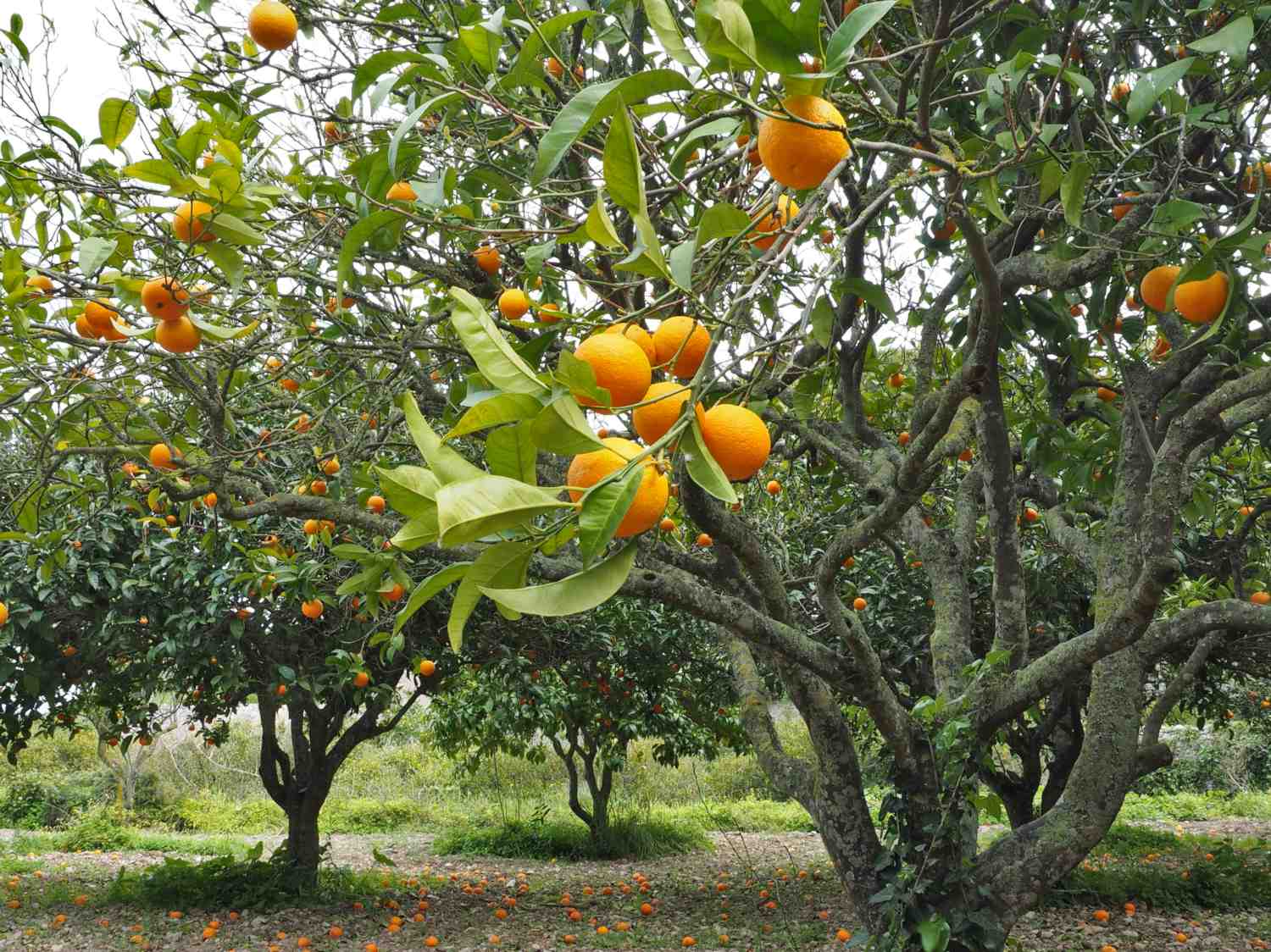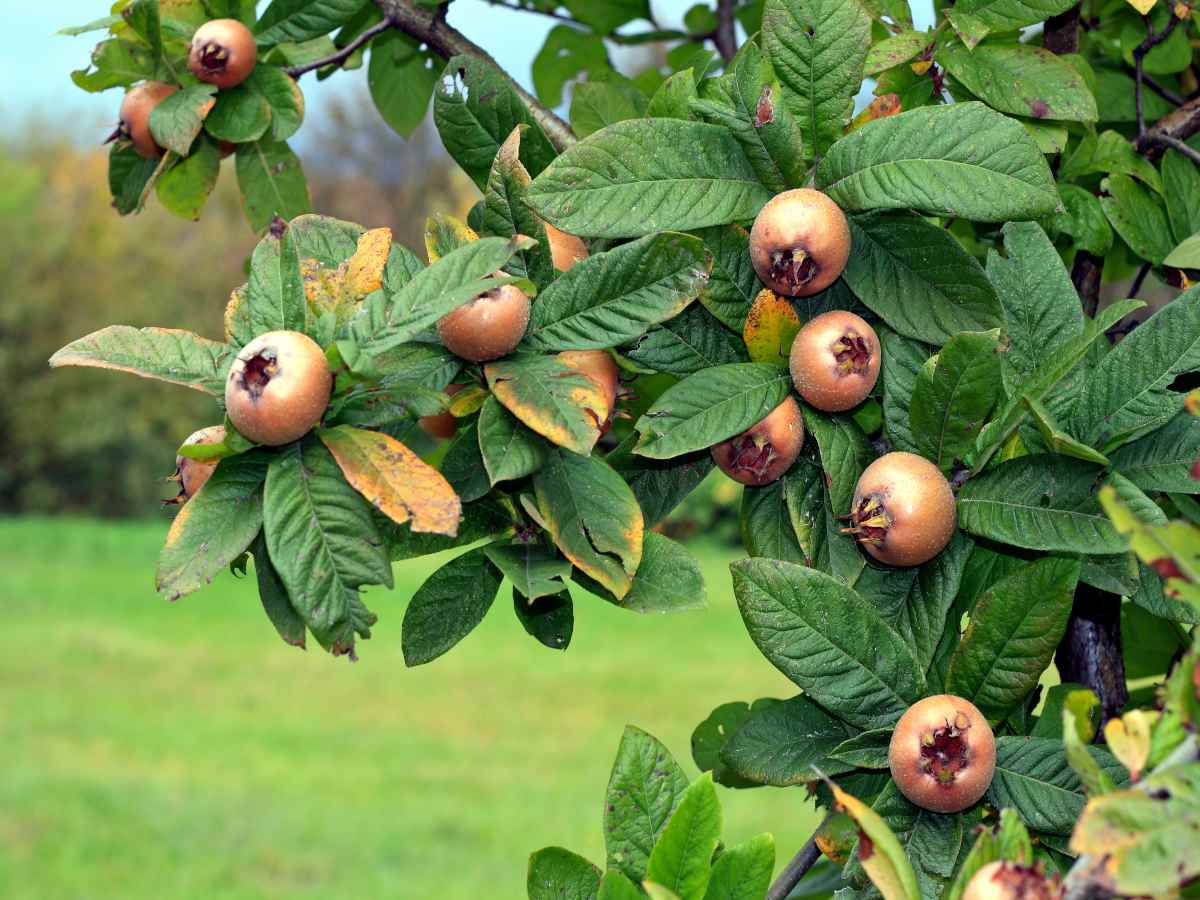
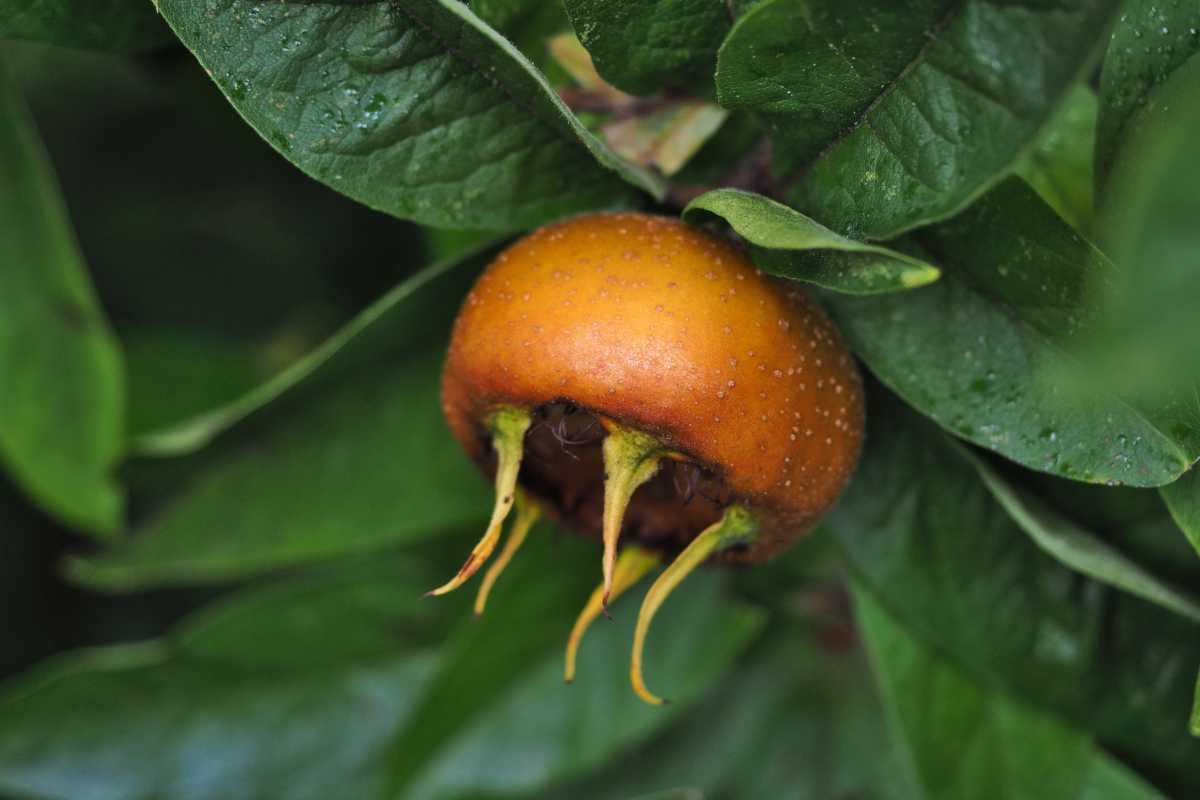
Left hanging until the first frosts, the odd brown fruit of the medlar (Mespilus germanica) softens to a mush that looks spoiled yet tastes surprisingly sweet. This hardy deciduous tree suits harsh climates and the kitchen alike, feeding pies, jelly, liquor and even wine; give it full sun, though, or it may bear nothing at all.
| Name | Mespilus germanica |
|---|---|
| Family | Rosaceae |
| Type | fruit tree |
| Height | 13 to 20 feet (4 to 6 meters) |
| Exposure | full sun |
| Soil | rather rich, well drained |
| Foliage | deciduous |
| Harvest | end fall |
| Flowering | end spring → early summer |
Plant a medlar tree in your garden, and you’ll be the highlight of all neighbors admiring this uncanny but savory fruit-bearing tree.
Like most fruit trees, it is best to plant medlar in fall. This promotes root development before winter, thus enhancing recovery and regrowth in spring.
For specimens purchased in containers, however, you can also plant in spring if you’re able to increase the amount of water you can provide at the beginning.
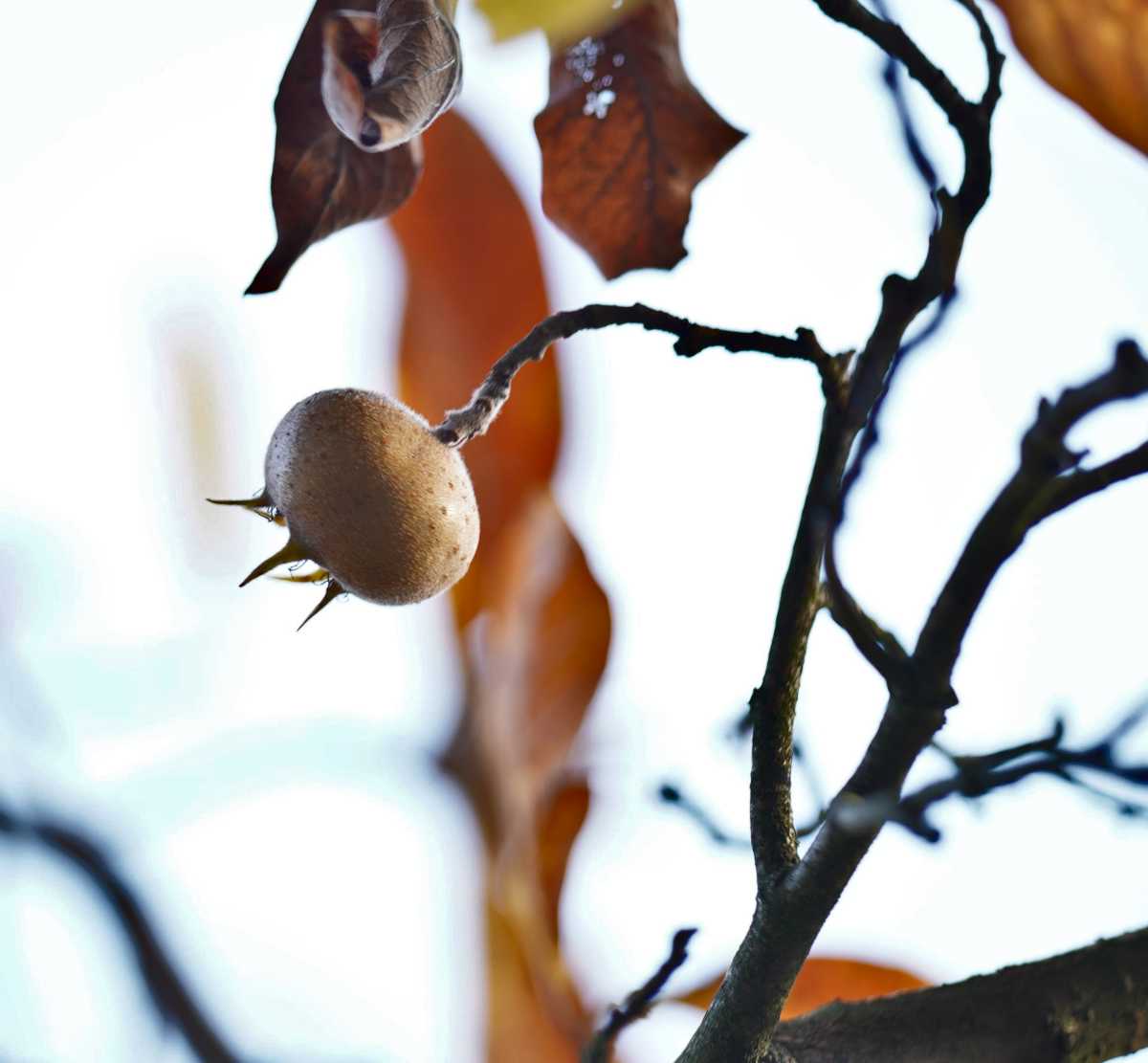
Medlar doesn’t need pruning to grow well and produce nice medlars.
However, pruning it at any stage of its life won’t hurt if you wish to keep its size under control. Pruning will let you ensure it takes up only the space you plan for it in your garden landscape.
Heavy pruning every 5 to 8 years is better than yearly trimming.
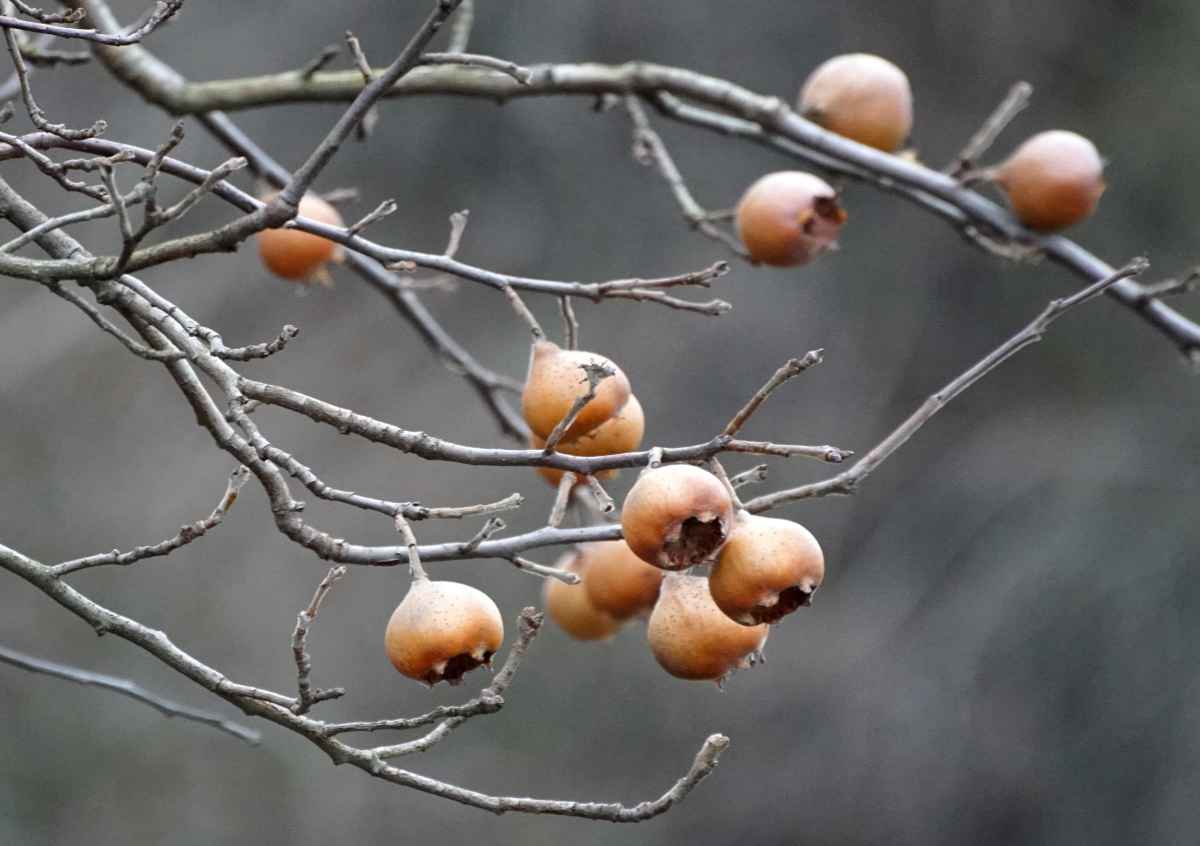
What’s best is to pick them before birds start pecking at them, and bite in them as you tour around your garden.
Pick the fruit by grasping it between thumb, index and forefinger.
The fruit sometimes bursts open, and even though it looks rotten, it is actually at its best with a taste that is surprising and sweet.
Our bird friends know the secret and quickly come to feast on them when the fruits starts bletting. Bletting means the fruit starts maturing to the point of turning mushy. Although for most fruit types this would be over-ripe, for fruits like medlar and blackthorn sloes, this is really the best time to eat them!
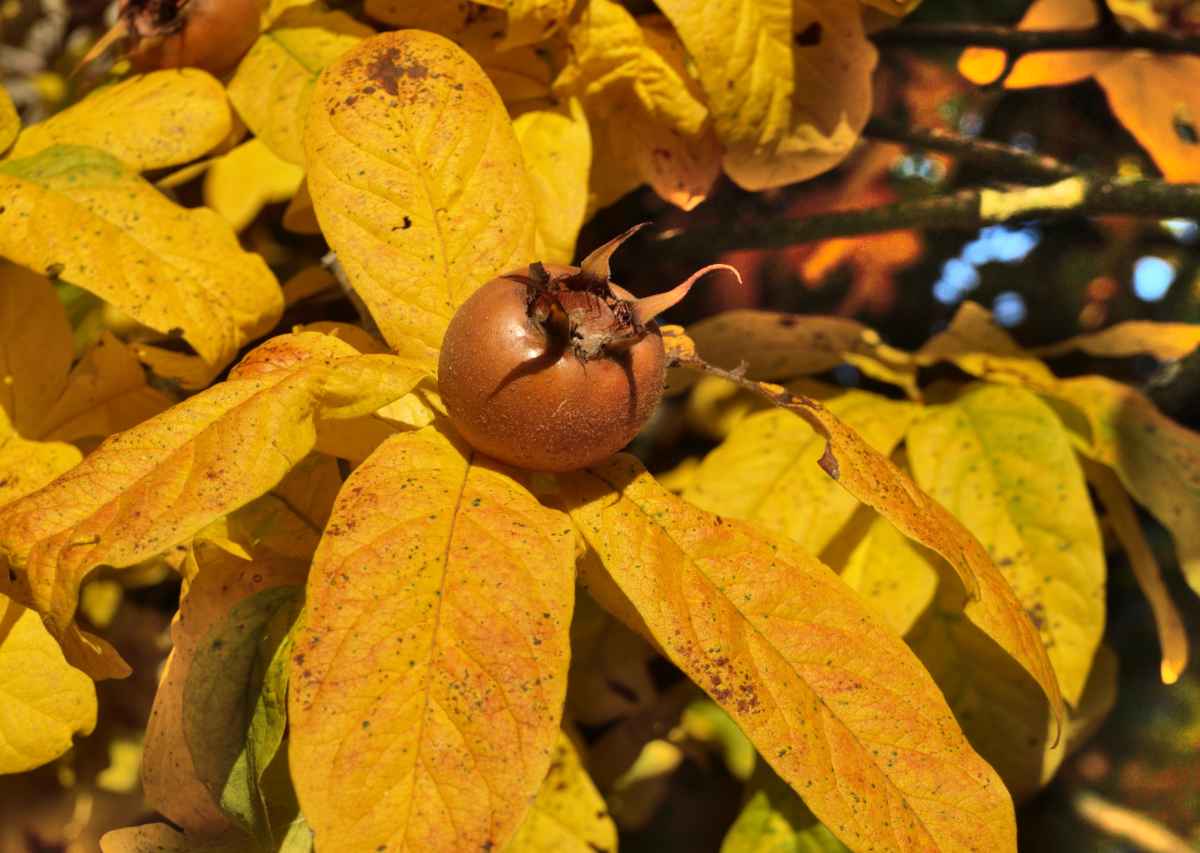
This unique tree is mostly found in Belgium, Germany and Northern France.
This fruit tree is well suited to harsh climates. Only one medlar species exists to date.
Its deciduous foliage is very dense, and the fruits appear early on in the year, in late spring. Harvest of these special fruits should wait until the first frost spells, as the fruit softens when faced with frost. This is called “bletted” fruit.
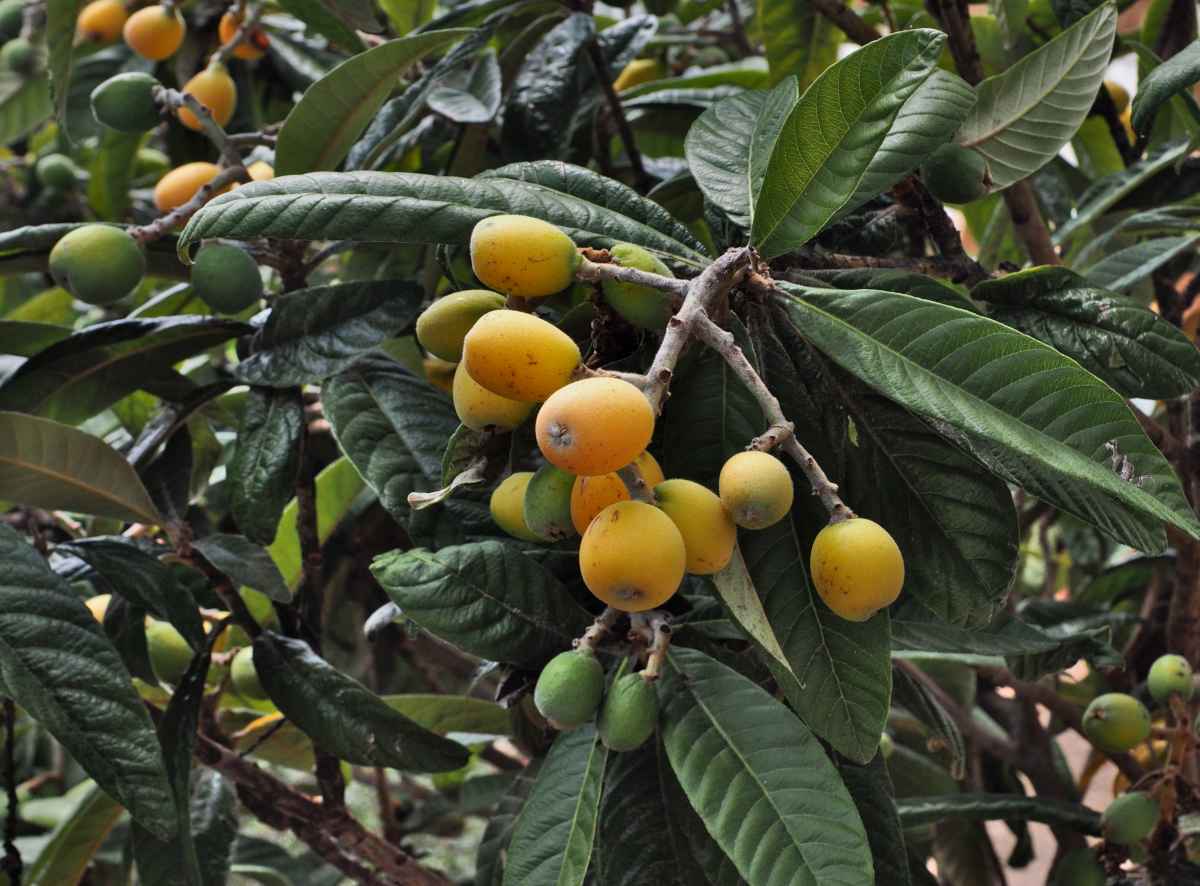
Don’t confuse German Medlar with Japanese medlar. Japanese Medlar is a another species entirely that mostly grows in the Mediterranean area and bears evergreen leafage.
Medlars are typical ingredients for pies, clafoutis, jelly, liquor and even medlar wine.
Only one medlar species is grown, but nurseries offer a handful of named forms that differ mainly in fruit size, tree shape and flavour. The table below sets out the varieties you are most likely to be offered, to help you match one to your garden and your kitchen.
| Variety | Fruit size | Habit | Flavour and use |
|---|---|---|---|
| Large Russian | Large | Spreading, very hardy | Good for jelly and preserves |
| Dutch | Very large | Wide, spreading and weeping | Milder taste, good fresh when bletted |
| Royal | Medium | Neat, rounded | Sweet and reliable, all-round use |
| Nottingham | Small | Compact, fairly upright | Richly flavoured, good for jelly |
| Macrocarpa | Very large | Spreading | Grown mainly for fruit size |
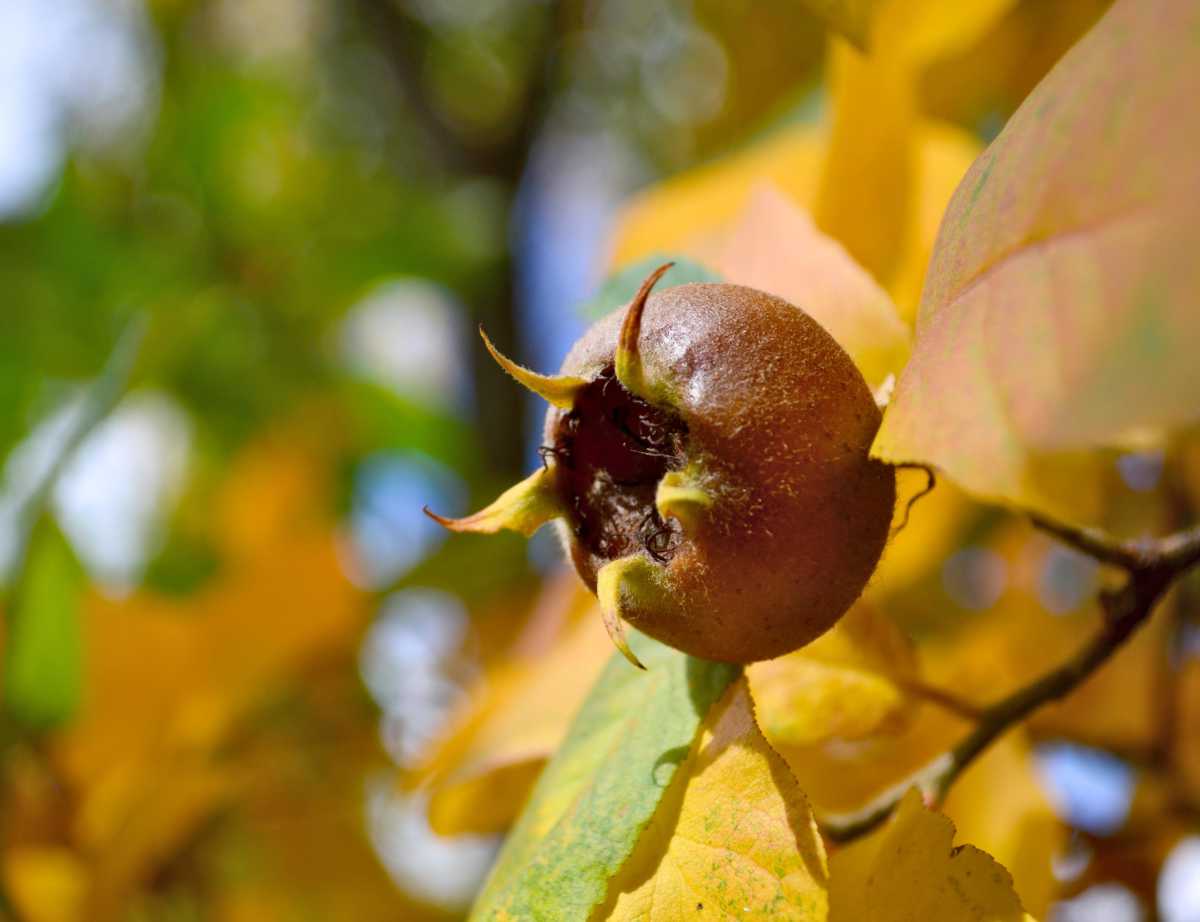
Apart from fire blight that can destroy a medlar within weeds with no hope of treatment, you’ll just have to deal with more common diseases such as European brown rot, also called medlar rot, and powdery mildew.
Most species of fruit trees often fall victim to aphids, and scale insects.
Medlar is a tough tree, but a handful of diseases and pests turn up often enough to be worth recognising. Use the table to tell them apart and know which ones can be headed off.
| Problem | Type | What you see | Response |
|---|---|---|---|
| Fire blight | Bacterial disease | Destroys the tree very quickly | No hope of treatment |
| European brown rot (medlar rot) | Fungal disease | Medlars rot while still hanging on the tree | Regular Bordeaux mixture spraying |
| Powdery mildew | Fungal disease | White velvet on leaves, brown spots on fruits | Regular Bordeaux mixture spraying |
| Aphids and scale insects | Sap-sucking pests | Common on most kinds of fruit tree | Usual fruit-tree pest control |
Only fire blight is beyond help; the fungal problems can largely be prevented with regular treatment.
When harvesting, only harvest fruits that are very ripe on the tree. Once a fruit is detached from the branch, it won’t mature anymore.