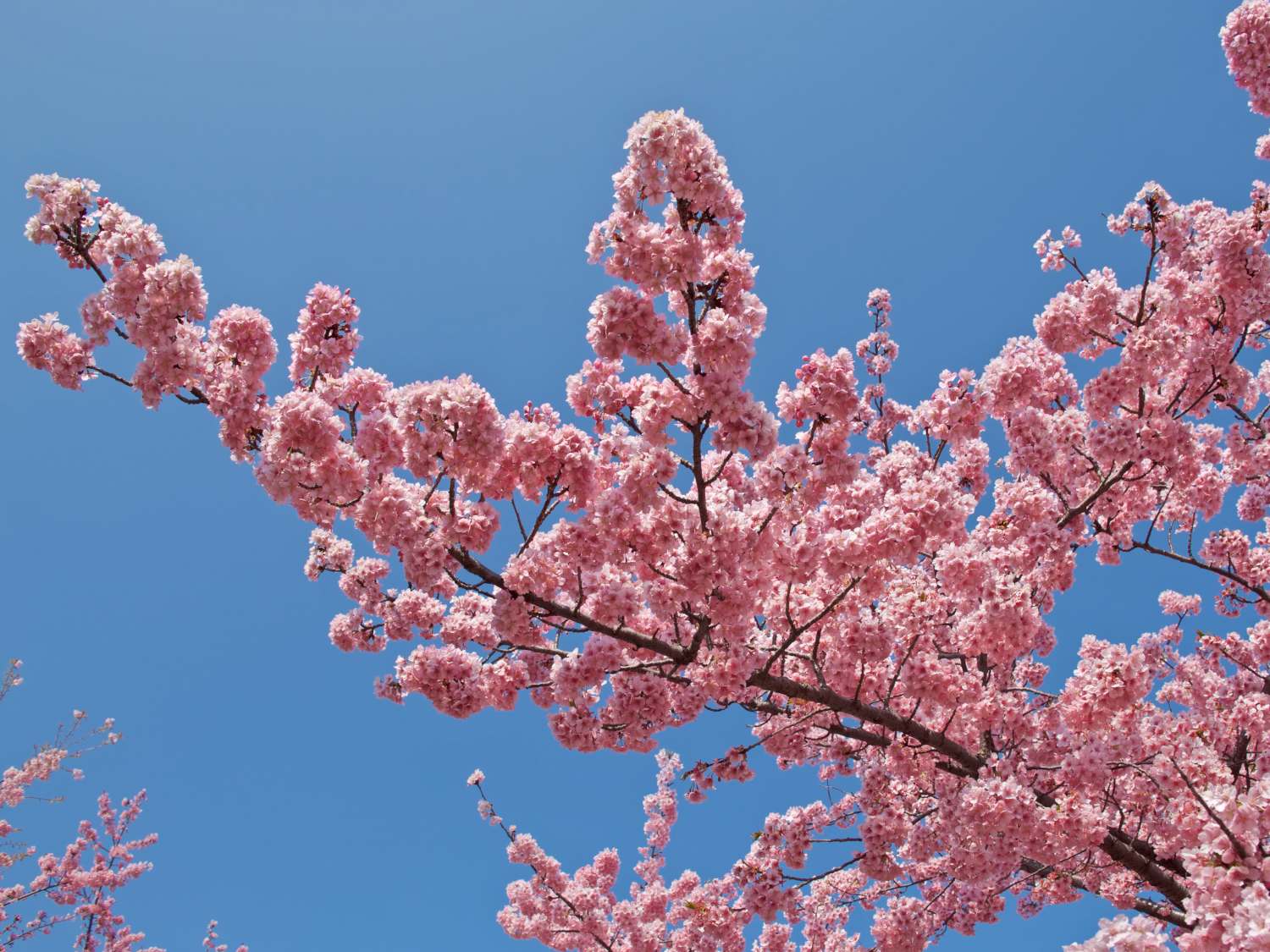
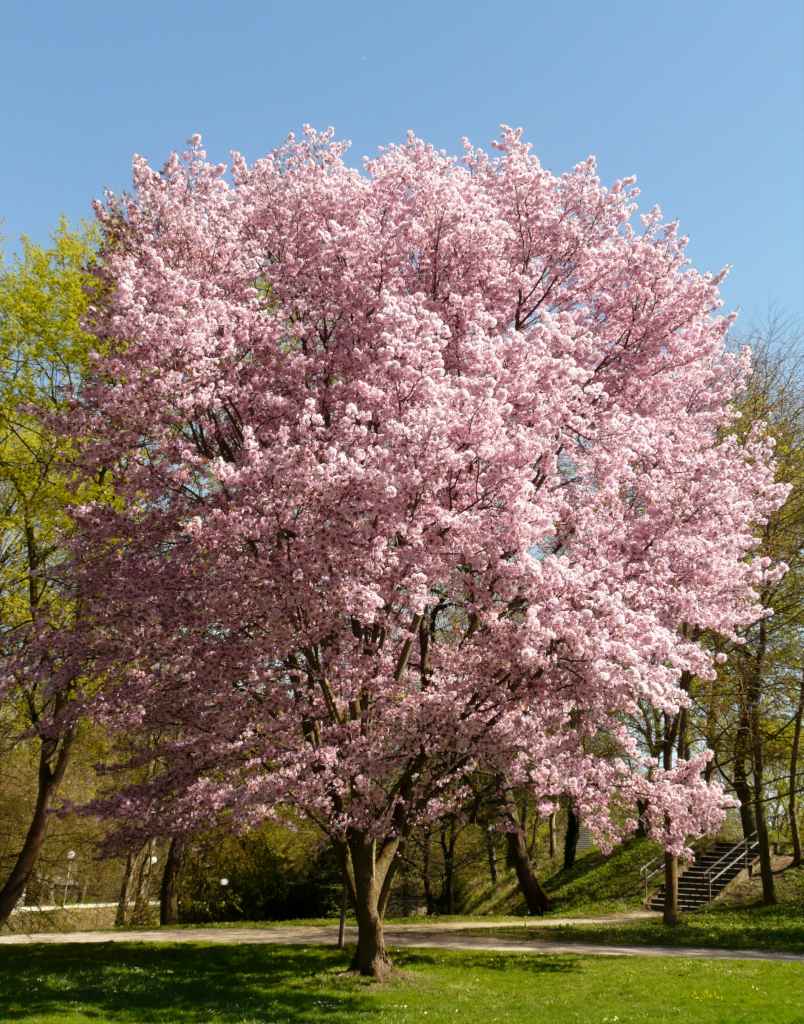
For about a week in early spring, the branches vanish under flowers in hues ranging from white to pink: the ornamental cherry, or Japanese cherry (Prunus serrulata), is grown for that one spectacular burst of colour. Give it full sun, ordinary well-drained soil and shelter from wind, and the fragile blooms will last their full span.
| Name | Prunus serrulata |
|---|---|
| Family | Rosaceae |
| Type | tree |
| Height | 16 to 40 feet (5 to 12 meters) |
| Exposure | full sun |
| Soil | ordinary, well drained |
| Foliage | deciduous |
| Flowering | early spring to mid-spring |
Pruning and care will help it grow and bloom magnificently.
It is recommended to plant in fall, before the first frost spells, to give the roots time to grow.
If you plant your Japanese cherry tree in winter, proceed only if it doesn’t freeze.
Just like most plants that have been purchased in pots or containers, it’s possible to wait for spring and summer to transplant it, if you avoid hot spells.
If this is the case, it will be necessary to water regularly over the first few months after planting.
The only pruning that is really important is the removing of dead wood.
Don’t prune before the blooming, but wait until it is over to reduce tree size or balance the branches, if needed.
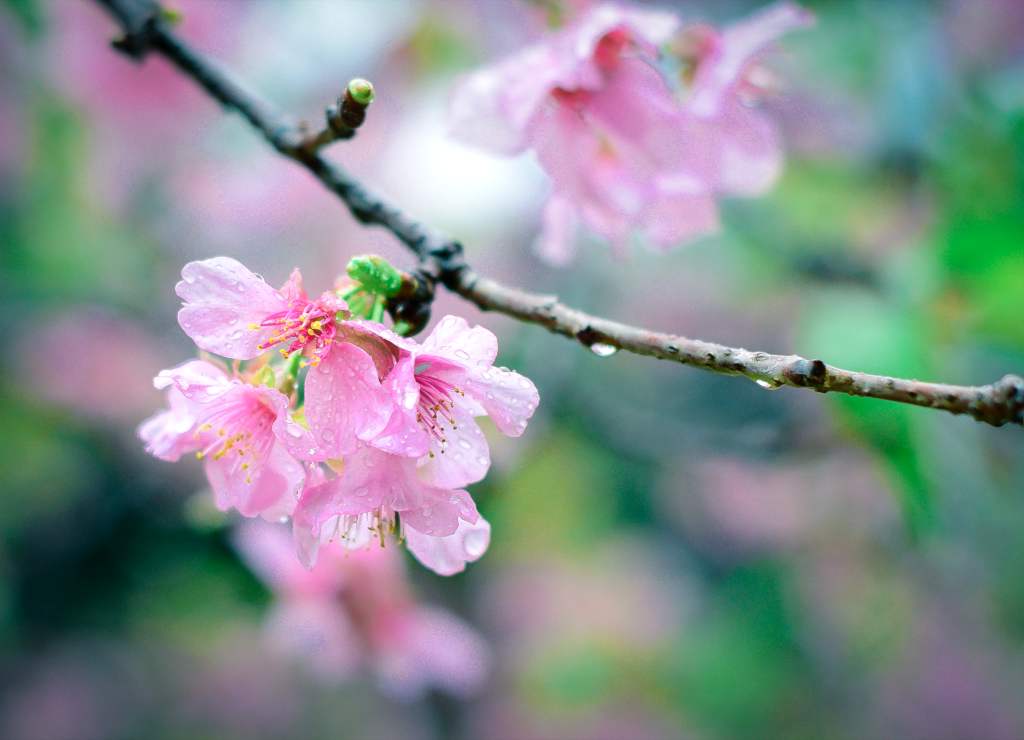
The most common ornamental cherry varieties is the ‘Kanzan’, which in spring bear spectacular blooms.
Other varieties are the ‘Kiku Shidare Sakura’, ‘Hokusai’ and ‘Accolade’. These grow smaller than the ‘Kanzan’, and only reach about 20 to 26 feet (6 to 8 meters) tall. They also are entirely covered in beautiful spring flowers when they bloom.
Lastly, if a dwarf Prunus tree for a smaller garden is what you are looking for, check out the ‘Amanogawa’ variety.
The named forms differ mainly in size, which is what decides where each one fits. Here is how the varieties mentioned above compare.
| Variety | Height | Bloom | Best suited to |
|---|---|---|---|
| ‘Kanzan’ | 16 to 40 feet (5 to 12 meters) | Spectacular spring blooms | The most common choice, for a full-size specimen |
| ‘Kiku Shidare Sakura’ | About 20 to 26 feet (6 to 8 meters) | Entirely covered in spring flowers | Gardens with less room than ‘Kanzan’ needs |
| ‘Hokusai’ | About 20 to 26 feet (6 to 8 meters) | Entirely covered in spring flowers | Gardens with less room than ‘Kanzan’ needs |
| ‘Accolade’ | About 20 to 26 feet (6 to 8 meters) | Entirely covered in spring flowers | Gardens with less room than ‘Kanzan’ needs |
| ‘Amanogawa’ | Dwarf | Spring flowers | A smaller garden |
Whichever you choose, the display is brief but transforms the garden at the very start of spring.
A garden with an ornamental cherry tree is absolutely magnificent in spring. The tree brightens the first days of spring with abundant flowers in hues that range from white to pink.
The blooming only lasts about a week, but it will turn your garden in to a burst of color that signals that warmer weather is just about to come back.
Avoid places that are too exposed to wind so that the fragile blooms aren’t swept away too soon!