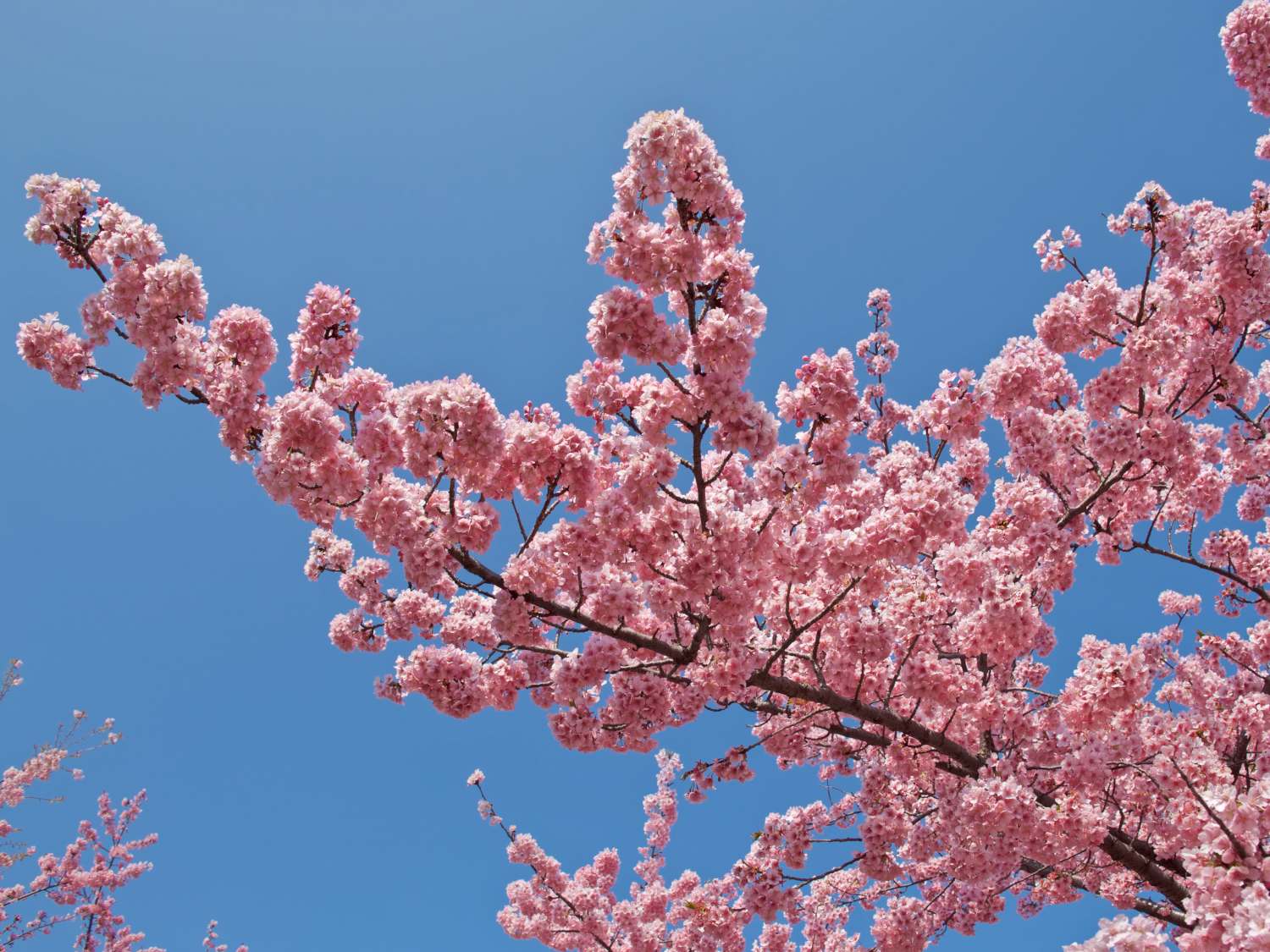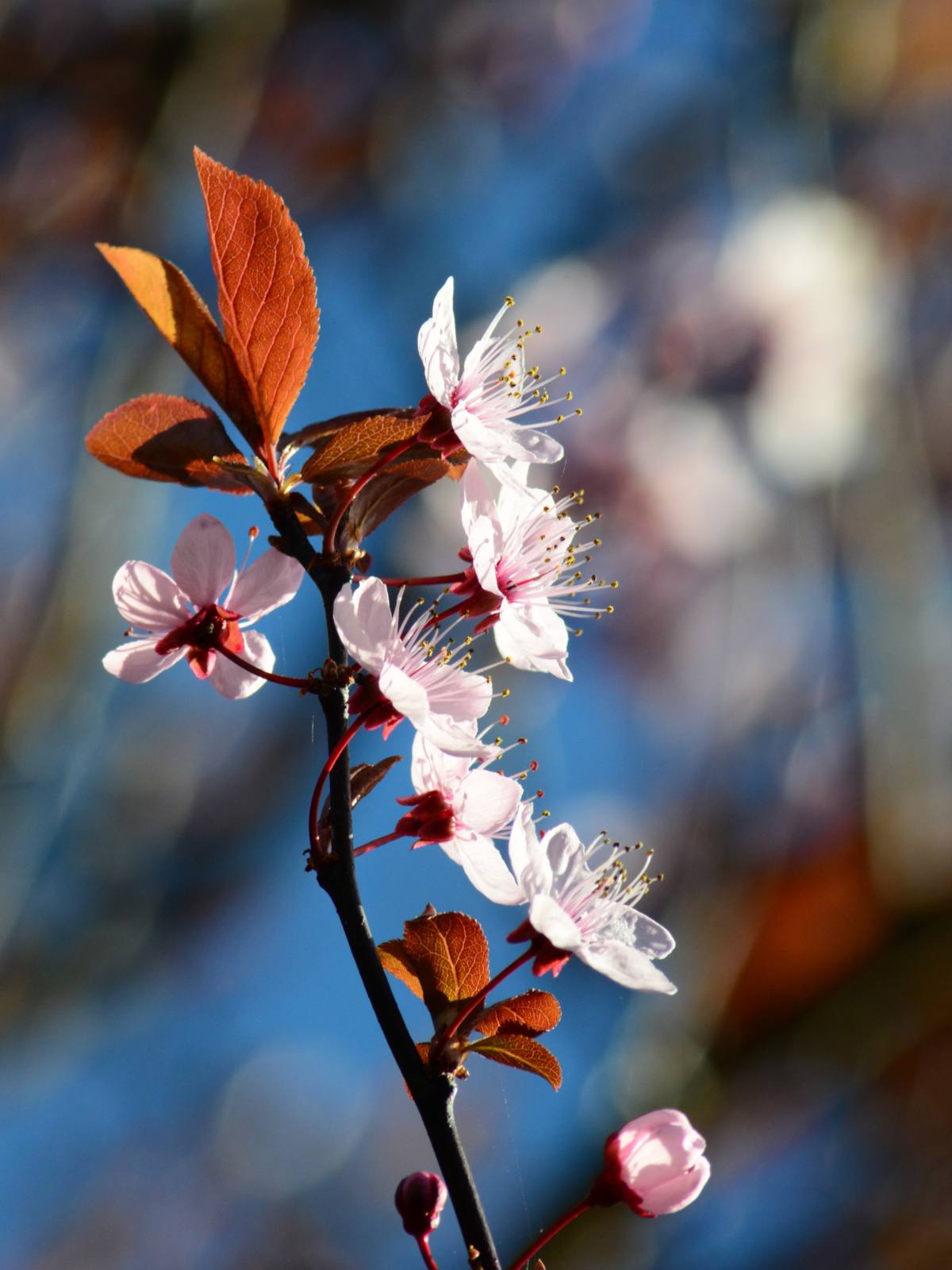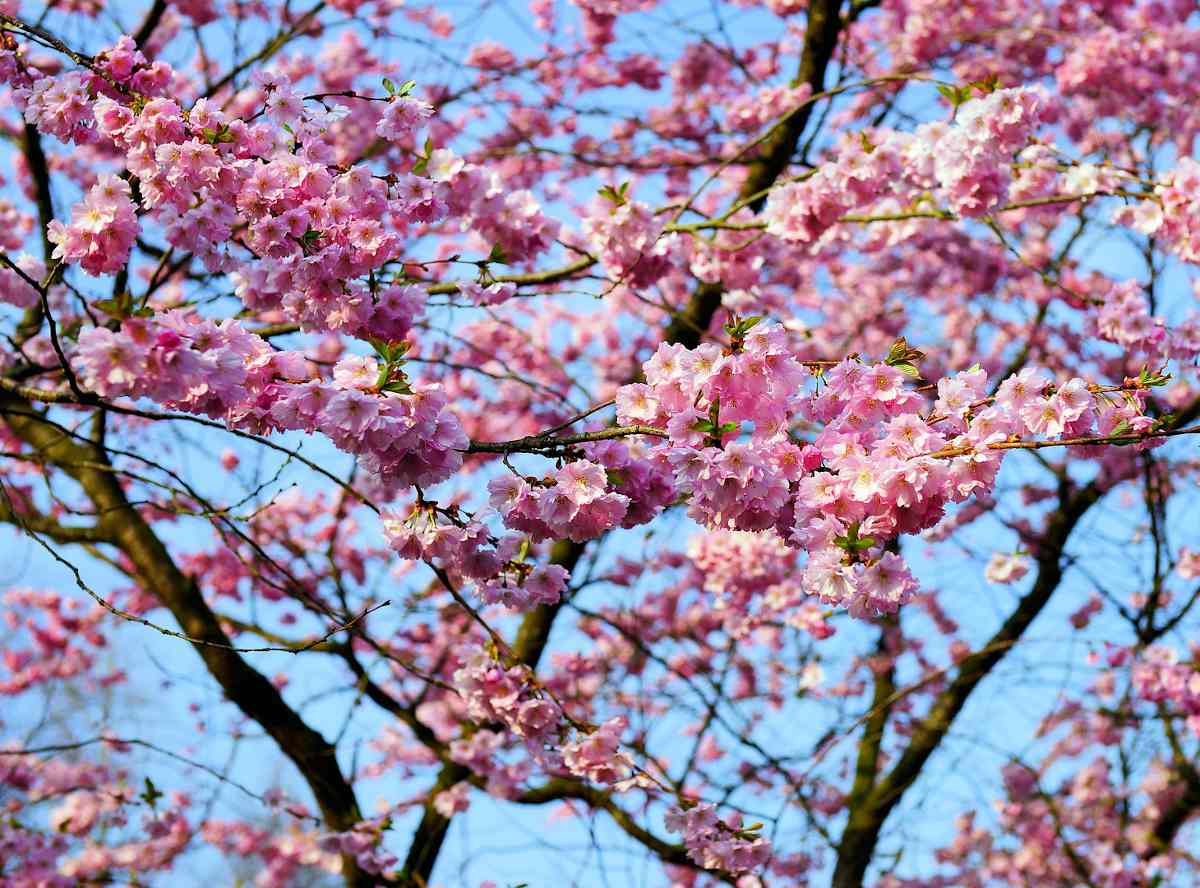
Abundant flowers in hues ranging from white to pink open at the end of winter or the very beginning of spring, on a tree of 16 to 40 feet. The Japanese cherry (Prunus serrulata) is a staple element of Japanese gardens: give it full sun, well drained soil and shelter from wind, and that short display turns the whole garden into a burst of colour.
| Name | Prunus serrulata |
|---|---|
| Family | Rosaceae |
| Type | tree |
| Height | 16 to 40 feet (5 to 12 meters) |
| Exposure | full sun |
| Soil | ordinary, well drained |
| Foliage | deciduous |
| Blooming | late winter to mid-spring |
Very ornamental, it is a staple element of Japanese gardens.
It is recommended to plant your Japanese cherry tree in fall, before the first frost spells, to give it time to develop roots.
If you plant your ornamental cherry in winter, proceed only if it doesn’t freeze.
Just like most plants that have been purchased in pots or containers, it’s possible to wait for spring and even summer to transplant your Japanese cherry tree, if you avoid hot spells.
If this is the case, it will be necessary to water regularly over the first year after planting.
It is perfectly possible to grow a Japanese cherry tree in a pot, on a terrace or on a large balcony.
Like most Prunus trees, the only pruning that is really critical is the removing of dead wood.
Don’t prune before the blooming, but wait for the blooming to end before pruning, if needed, to reduce tree size or balance the branches.
Japanese cherry trees, like all the Prunus trees, are fragile and vulnerable to diseases such as fungus. The less they are pruned, the less they are infected by such diseases.
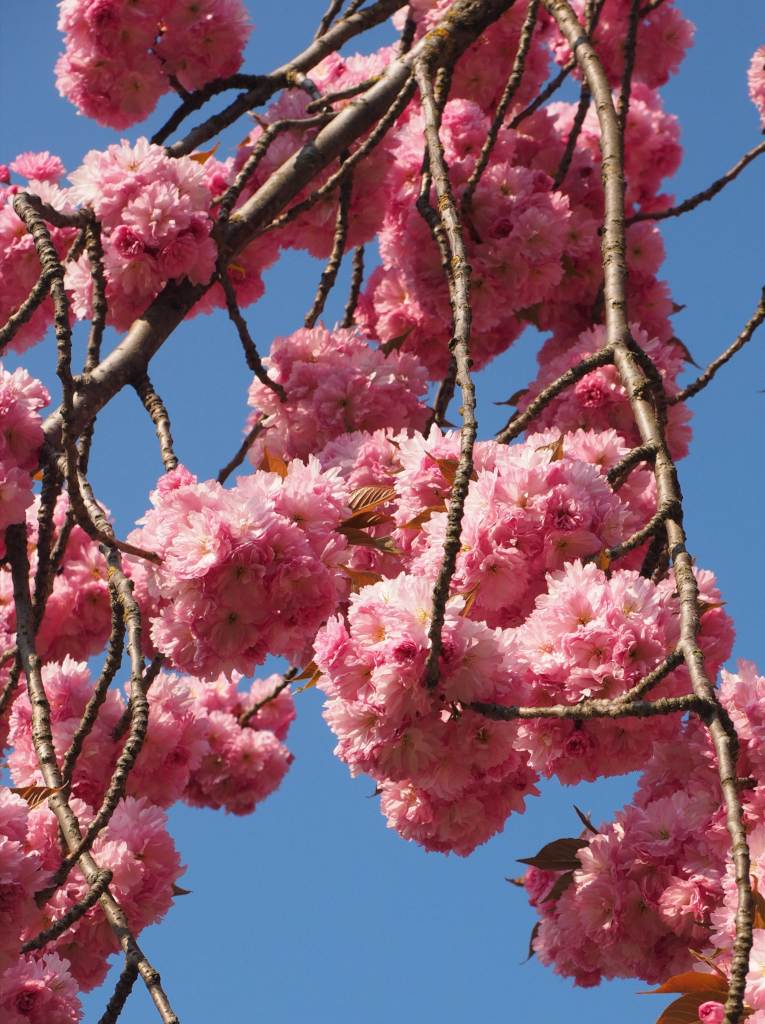
The most common varieties are the great ‘Kanzan’ cherry tree, which has double flower blooms in spring that are most spectacular.
Three more varieties are the ‘Kiku Shidare Sakura’, ‘Hokusai’ and ‘Accolade’. These last ones are smaller than the ‘Kanzan’, and grow to be 20 to 26 feet (6 to 8 meters) tall, and also cover themselves with beautiful spring flowers.
Lastly, if a small Prunus tree for a smaller garden is what you are looking for, check out the ‘Amanogawa’ variety.
All the Japanese cherry tree varieties are very hardy to the cold and to freezing, since they hold to temperatures as low as 5° to -4°F (-15 to -20°C).
The named varieties differ mostly in the size they reach and in how showy the flowers are. Match the tree to the space you have before anything else.
| Variety | Size | Flowers | Suits |
|---|---|---|---|
| ‘Kanzan’ | The largest of the common varieties | Double blooms in spring, most spectacular | Gardens with room for a big tree |
| ‘Kiku Shidare Sakura’ | 20 to 26 feet (6 to 8 meters) | Covered in beautiful spring flowers | Medium-sized gardens |
| ‘Accolade’ | 20 to 26 feet (6 to 8 meters) | Covered in beautiful spring flowers | Medium-sized gardens |
| ‘Amanogawa’ | Small Prunus tree | Spring bloom, timing varies with the variety | Smaller gardens |
Whichever you pick, all of them hold to temperatures as low as 5° to -4°F (-15 to -20°C).
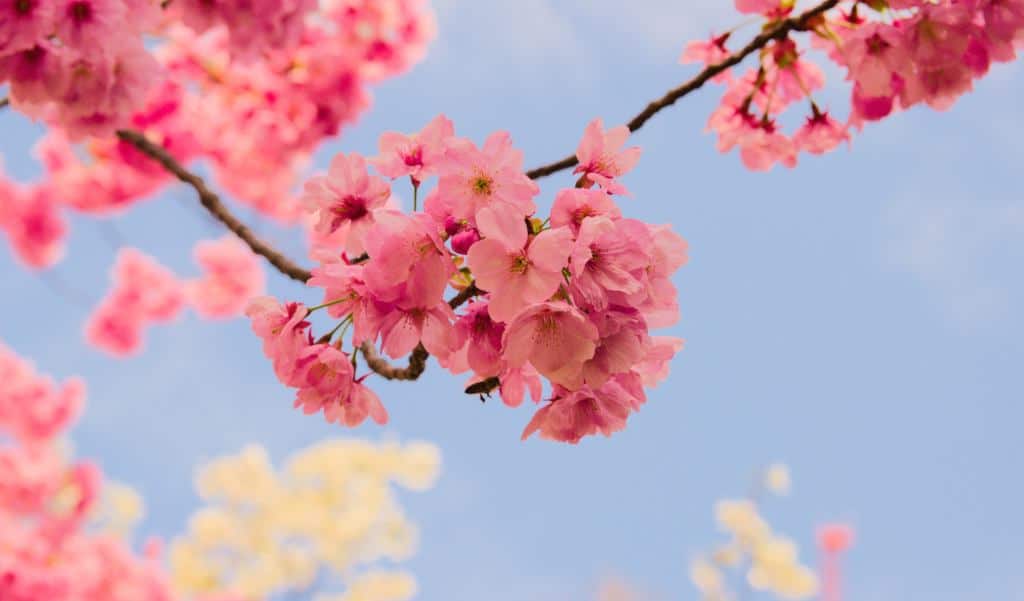
The Japanese cherry tree, also called ornamental cherry tree, boasts spectacular blooming at the end of winter or at the very beginning of spring.
Absolutely magnificent, it brightens our first spring days with abundant flowers in hues that range from white to pink.
This time span, albeit quite short, will turn your garden in to a burst of color that signals that warmer weather is just about to come back.
It belongs to the large Prunus family, just like the cherry tree incidentally, and is native to Asia.
The time of blooming depends on the variety, which is why some bloom in late winter, some in early spring, and the latest varieties bloom in mid-spring.
Avoid places that are too exposed to wind so that the fragile blooms aren’t swept away too soon!
Japanese cherry trees also don’t cope well in spots that are too exposed to the sun and would be scorching hot in summer.
Credits for images shared to Nature & Garden (all edits by Gaspard Lorthiois):
Japanese cherry tree branches by Hans Braxmeier under Pixabay license
Single flower clump by Nhut Tran Minh under Pixabay license