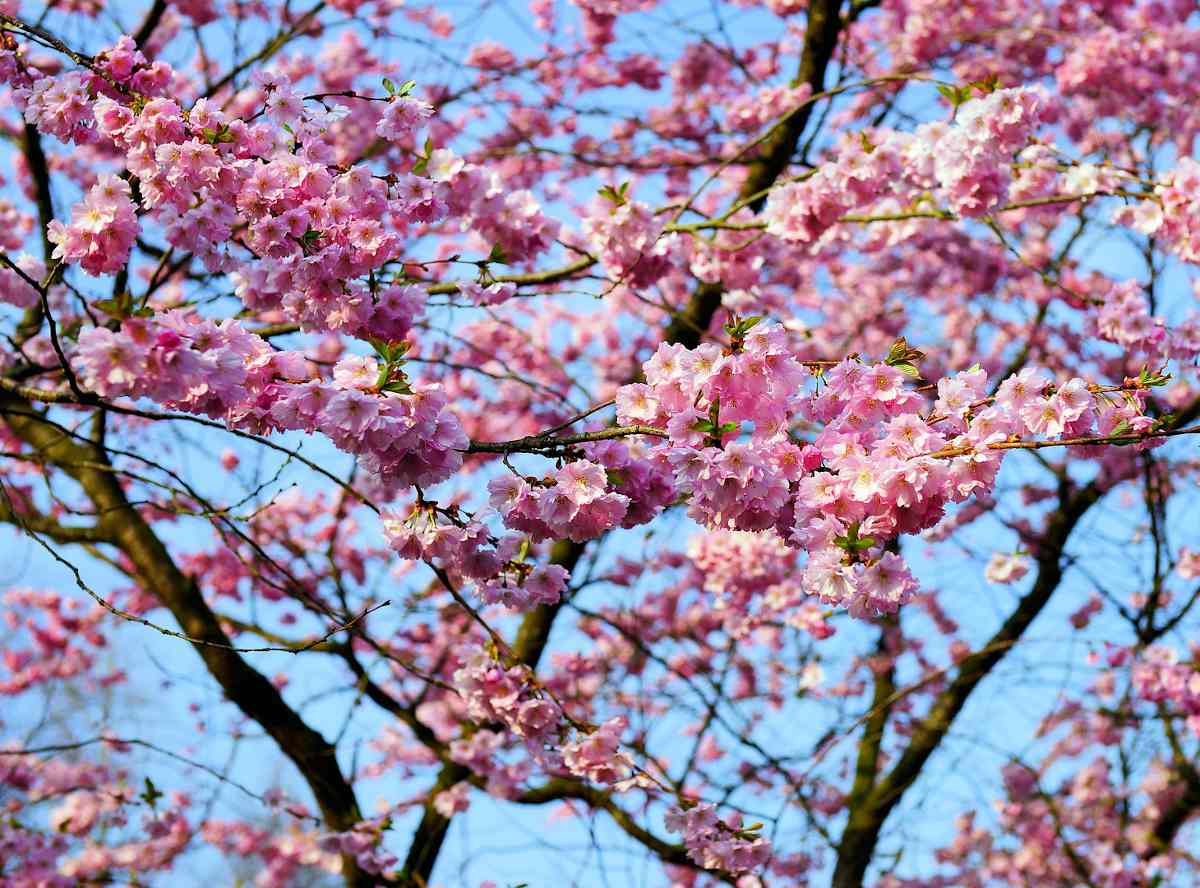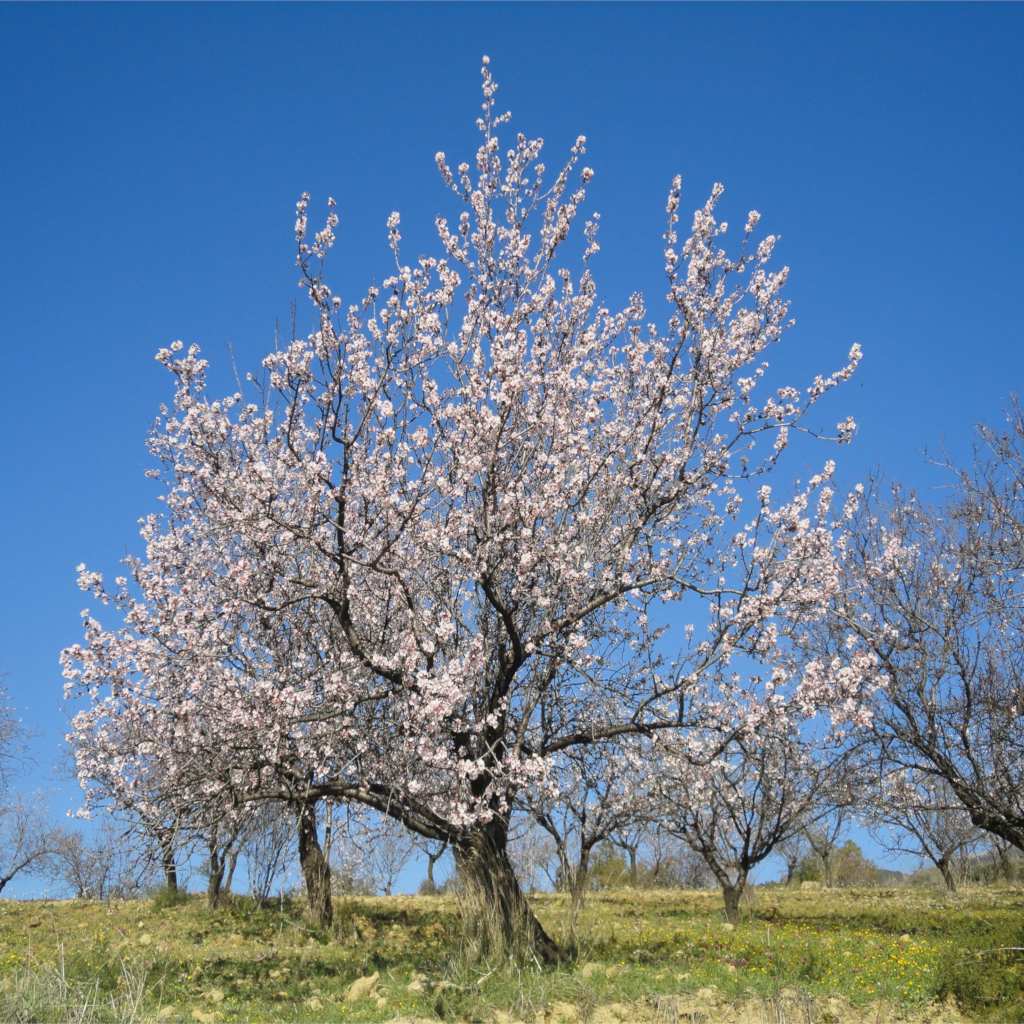
Before a single leaf unfolds, the almond tree (Prunus dulcis) drapes itself in a white robe, the first fruit tree to bloom at the end of winter. Easy to grow and asking for little care, it bears almonds eaten fresh and green in summer or dry in fall, provided its frost-sensitive flowers stand well sheltered from cold winter winds.
| Name | Prunus amygdalus, Prunus dulcis |
|---|---|
| Family | Rosaceae |
| Type | fruit tree |
| Height | 16 to 130 feet (6 to 9 meters) |
| Exposure | full sun |
| Soil | ordinary |
| Foliage | deciduous |
| Flowering | February-March |
| Harvest | July to November |
Caring and pruning it are steps that will lead to a quality harvest of almonds.
Recommended is to plant your almond tree in fall to speed root development up before winter, because this tree has a very early growth phase.
If you must plant during winter, spring or summer, avoid frost and freezing and heat waves, and water regularly in summer.
Although the almond tree itself isn’t vulnerable to the cold, the blooming can be adversely affected and abort in case of late frost spells.
Pruning your almond tree takes place quite early, towards the end of summer and at the beginning of fall.
The almond tree slowly enters its dormant state and this span of time is when pruning avoids excessive sap runoff which often leads to gummosis.
So no point in taking the risk of cutting your almond tree back too severely.
Easy to grow and requiring only limited care, the almond tree also has the advantage of offering a very beautiful blooming at the end of winter and generously bears fruits as early as July.
Often planted as a standalone, its small size makes it possible to set it up in small groups of 3 or 4.
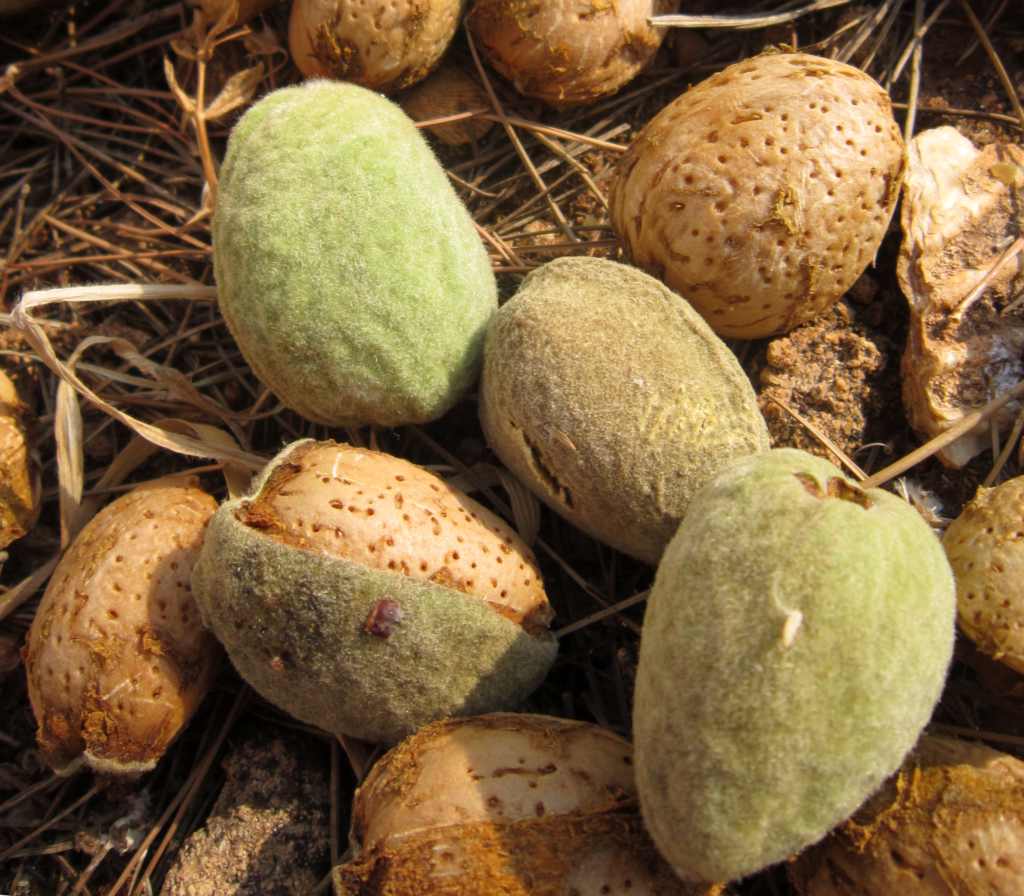
The fruits are about 1 ½ to 2 inches (4-5 cm) large and can be eaten either fresh and green in summer, or dry in fall.
A symbol of love and virginity, the almond tree drapes itself in a white robe in spring before any leaves have even appeared. This white robe is similar to that of a bride on her wedding day.
Almond growing runs on a very early calendar, from autumn planting to a harvest that happens twice over. Here is what to do and when, and the reason behind each date.
| Task | Best timing | Why then |
|---|---|---|
| Planting | Fall | Roots get going before winter, ahead of a very early growth phase |
| Pruning | End of summer to beginning of fall | The tree is entering dormancy, so sap runoff and gummosis are avoided |
| Fresh (green) harvest | May-June | Fruits 1½ to 2 inches across, eaten fresh and green |
| Dry harvest | September | Wait until the husk around the shell has dried and split open |
After picking, hull the almonds and dry them in the sun on well-ventilated mesh trays.
Almond cultivars differ mainly in whether they set fruit on their own, how early they blossom (and so how exposed they are to late frost), and the thickness of the shell. The following varieties are the ones commonly offered by garden centres and mainstream fruit tree catalogues.
| Variety | Pollination | Flowering | Best use |
|---|---|---|---|
| Garden Prince | Self-fertile | Early | Small gardens and large pots |
| Texas (Mission) | Needs a pollinator | Late | Hard shell, baking and marzipan |
| All-in-One | Self-fertile | Mid-season | Soft shell, eating fresh |
| Nonpareil | Needs a pollinator | Early | Thin shell, premium kernels |
| Ferragnès | Needs a pollinator (Ferraduel) | Late | Long kernels for drying |
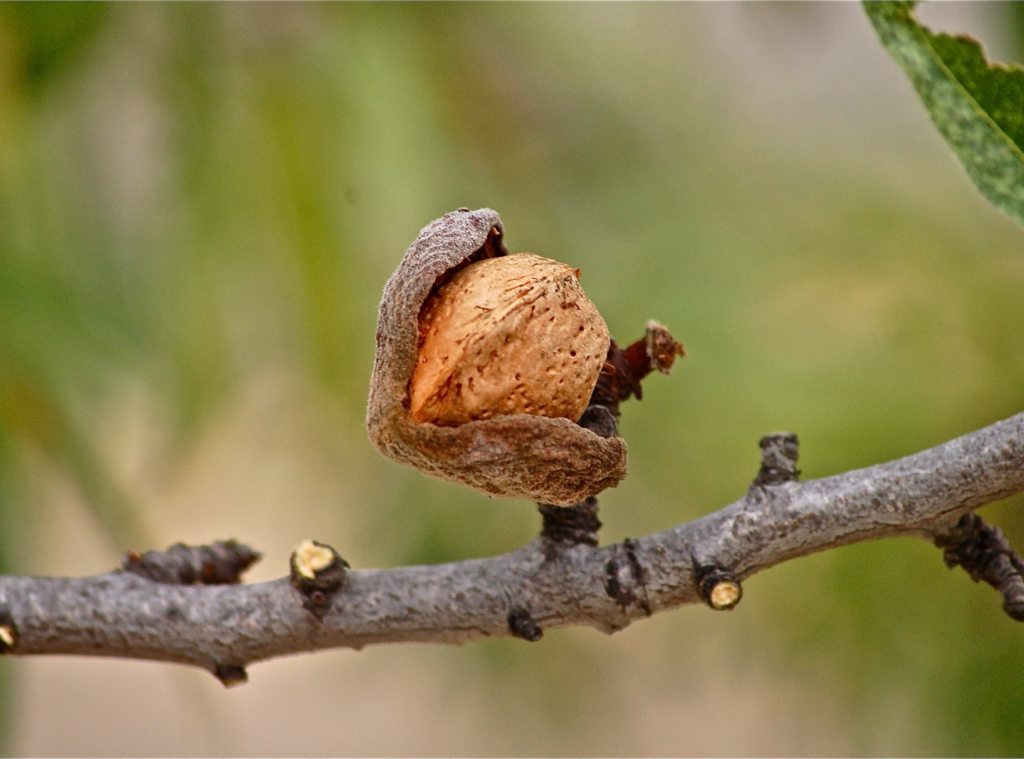
The harvest takes place in either of two distinct time frames in the year, depending on whether you hope to eat fresh almonds or dry ones.
The almonds of the almond tree are harvested at the end of spring, towards May-June if you want them fresh or green, and often towards the month of September at the end of summer if you want them dry.
Watch out though for bitter almond (fruit of the wild almond tree), because it contains hydrogen cyanide which is poisonous to man and can even be fatal if high doses are ingested.
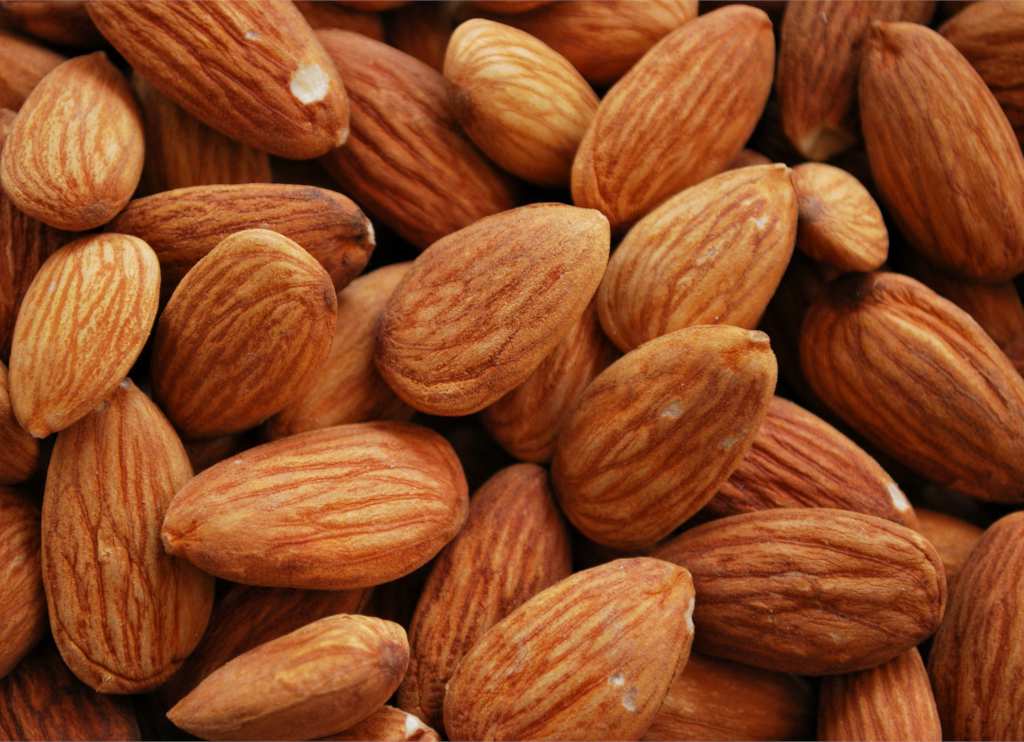
Almond has high oil, protein, carbohydrate and vitamin contents.
It also has cosmetic properties that are softening and hydrating in case of skin inflammation (wound-healing and anti-inflammatory in cosmetology).
Almond both softens and acts as a skin tonic, which gives it uses much appreciated in dermatology.
Lastly, almond tree buds are used in gemmotherapy since they have been said to have anti-sclerosis effects for elderly persons.
Animals also benefit from almond, since veterinarians use it on herds for its laxative properties.
After the harvest, separate the almonds from their hull and dry them in the sun on mesh trays that provide proper ventilation.