Growing space, climate, altitude, soil quality are additional factors to consider when choosing the fruit tree that will enhance your garden.
→ Read also: climate-proof plants
Each of these four trees asks for a different climate, a different soil and a different calendar. Read across the row that matches your garden before you buy.
| Fruit tree | Climate and site | Soil | Planting and pruning |
|---|---|---|---|
| Apple | Holds well to the cold; prefers mild, misty weather below 3,300 ft (1,000 m) | Tolerates alkaline soil types | Planted in late autumn in drier areas; pruned in late autumn every 5 years |
| Pear | Penalised by heat, strong winds, drought and spring frost spells | Heavy, clay-laden; will not grow in waterlogged ground | Pruned in late autumn every 5 years; bears from three years old, with a partner nearby |
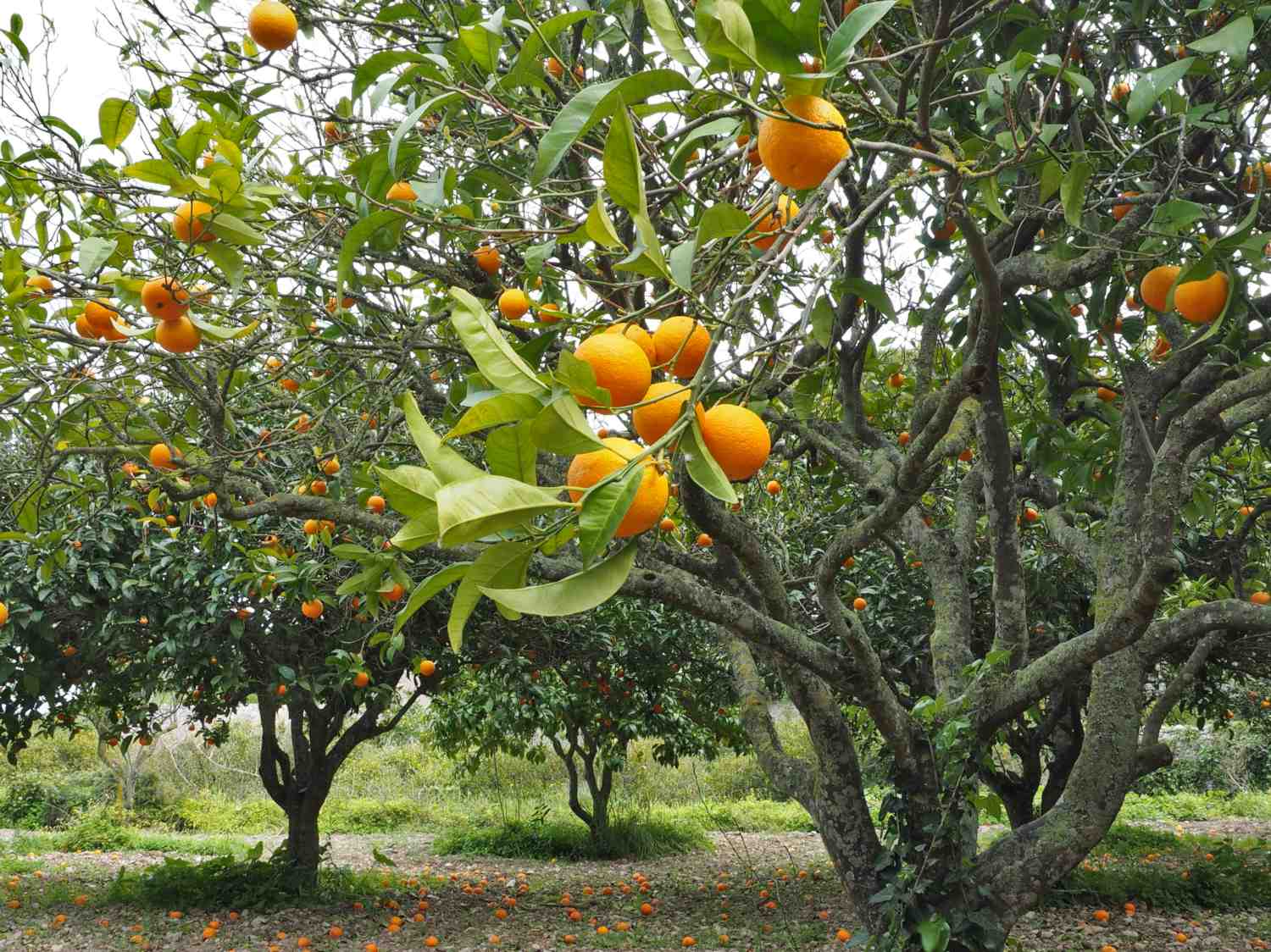
| Orange | Mediterranean sun, sheltered from wind by a hedge or a wall | Sandy, fertile and draining terrain | Planted late autumn to early spring; maintenance pruning after each harvest, usually early spring |
| Peach | Likes southern gardens; vulnerable to wind and freezing while in bloom | Loose, deep and cool earth, kept out of moist soil | Planted late autumn to early spring; pruned in late autumn every two or three years |
Match the row to your ground first, and the variety second.
Harvested from midsummer to mid-autumn, the apple is the favorite fruit of many children. Households in Western countries average around 35 pounds (16 kg) a year!

The apple tree is found appealing by gardeners because it holds well to the cold and to alkaline soil types.
Grown at altitudes lower than 3,300 feet (1,000 meters), it prefers mild, misty weather. In drier areas, it’s planted in late autumn for the flowers it will bear in spring.
From early spring to mid-spring, the branches are covered with pink or white flowers.
Although a cousin to the apple tree, the pear tree is actually much more sensitive to weather patterns and soil quality.

Heat, strong winds, drought or spring frost spells will penalize it dearly. When the soil and ground are too moist and waterlogged, it won’t grow. It prefers heavy, clay-laden soil.
It will live to be a hundred, but won’t bear fruit until it’s three years old. And then again, only if a compatible mating partner, planted nearby, ensures cross-pollination.
Also like its cousin the apple tree, the pear tree will need to be pruned in late autumn every 5 years.
The epitome of the Mediterranean area tree, the orange tree loves sandy, fertile and draining terrain.
It’s planted from late autumn to early spring, surrounded by a hedge or a wall to protect it from wind. In Southernmost regions, it’s grown outdoors until mid-autumn. It’s then brought to shelter over the winter.
Navels, blond oranges and blood oranges are the most sought-after varieties. It’s suggested to perform a maintenance pruning after each harvest. This usually takes place in early spring.
For a healthy peach tree, you’ll have to plant it from late autumn to early spring in loose, deep and cool earth.

It particularly likes gardens in the South. When cultivated further up north, growing requires more care and attention.
Since it’s vulnerable to wind and to freezing during the blooming, the peach tree should be planted along a wall facing to the sun. After a couple years, the first peaches will appear.
To encourage their productivity, the peach tree must be pruned in late autumn every two or three years. It also helps to plant two more pruning sessions every year: once when the first peaches are forming on the tree, and once after the harvest.
M.B.