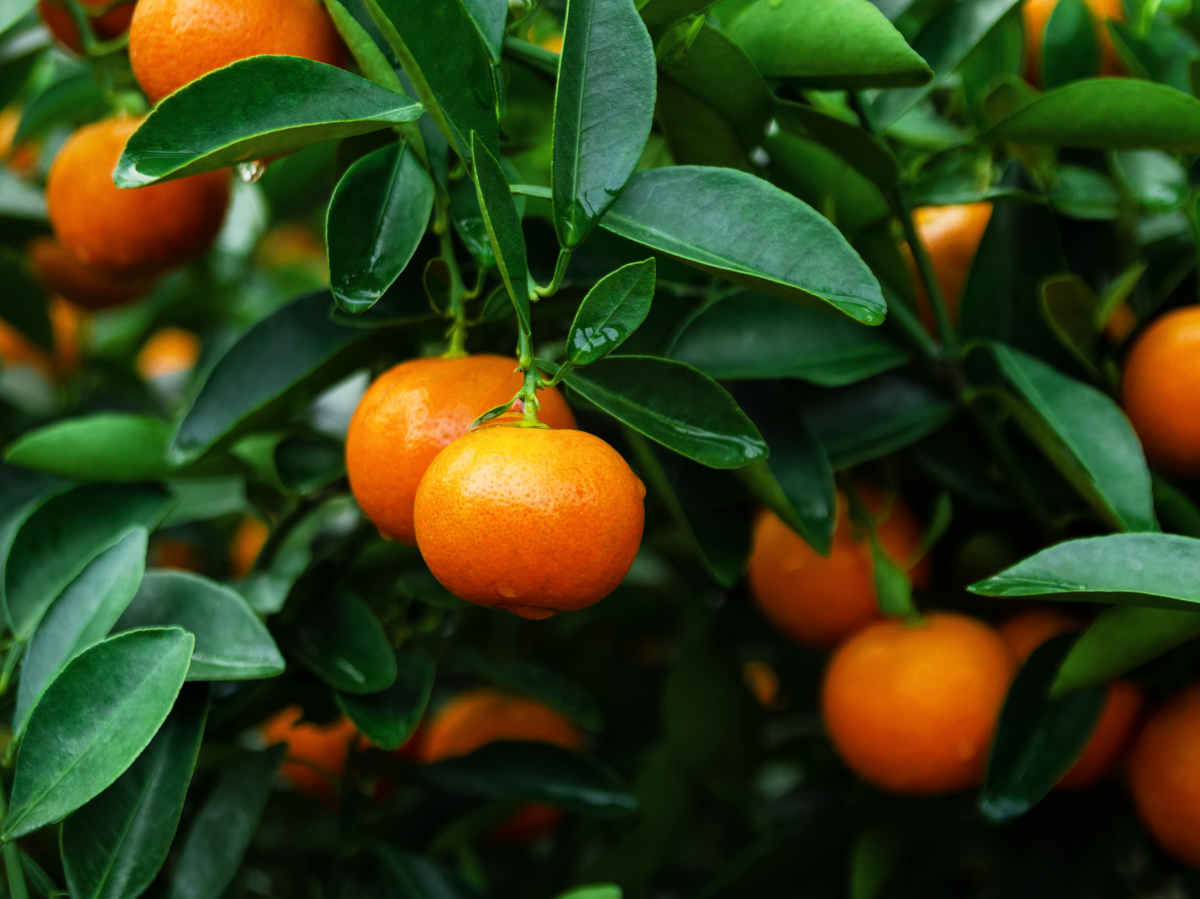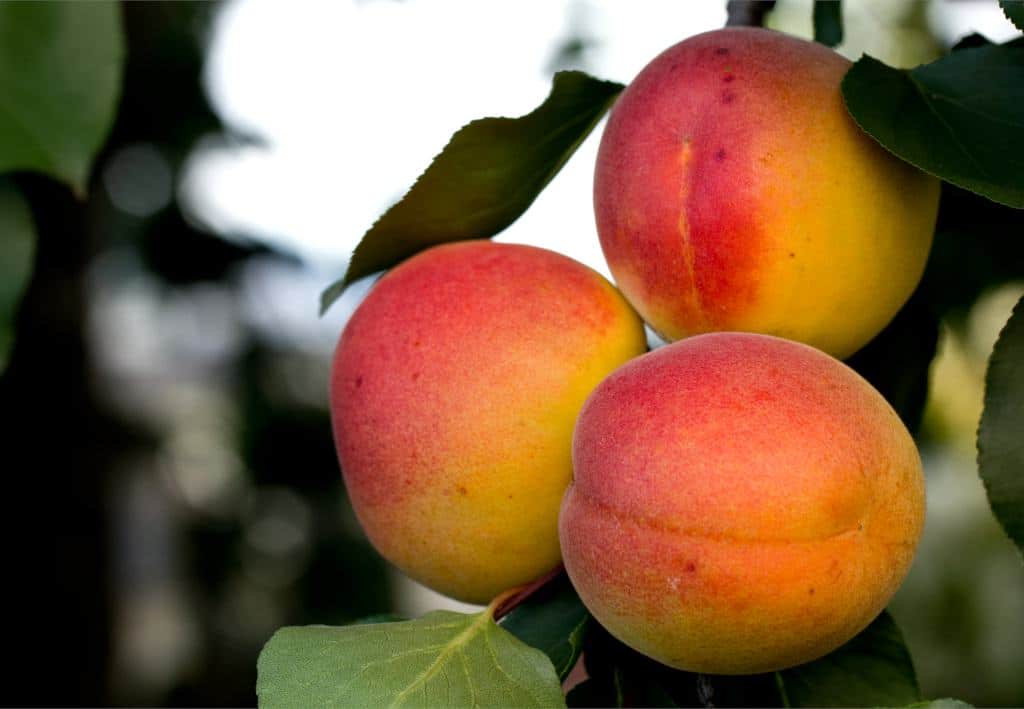
A uniform orange skin is the honest sign of a ripe apricot (Prunus armeniaca); the reddish blush some fruits carry can appear long before they are fit to pick. Brought to Europe from China along the Silk Road, the trees flower in late winter and crop from early summer — if the fragile blossom survives the end of winter.
| Botanical name | Prunus armeniaca |
|---|---|
| Family | Rosaceae |
| Season | early summer to late summer in the northern hemisphere, early winter to late winter in the southern |
| Peak | midsummer |
| Choosing | An even orange skin that gives a little under the thumb; the red blush means nothing |
| Keeping | Two or three days in the fruit bowl, up to a week in the fridge once ripe |
| Freezing | Halve and stone them first: whole apricots turn to mush on thawing |
| Nutrition | About 48 kcal per 100 g, with useful beta-carotene and potassium |
Growing apricot trees that can grow to over 20 feet (6 m) tall requires patience and know-how. Their production is almost impossible when planted out of a geographical area specific to each variety. In France, the ‘Bergeron’ and ‘Orange de Provence’ varieties are the most cultivated. They both have a rather long shape, but their colors are different: the ‘Bergeron’ has a uniform orange color, whereas the ‘Orange de Provence’ is mottled with red. As for the small, round orange-with-red-dots apricots, those are the ‘Rouge de Roussillon’ variety.
Propagation of apricot trees is through grafting on plum trees and almond trees in midsummer, or on apricot trees and peach trees late summer.
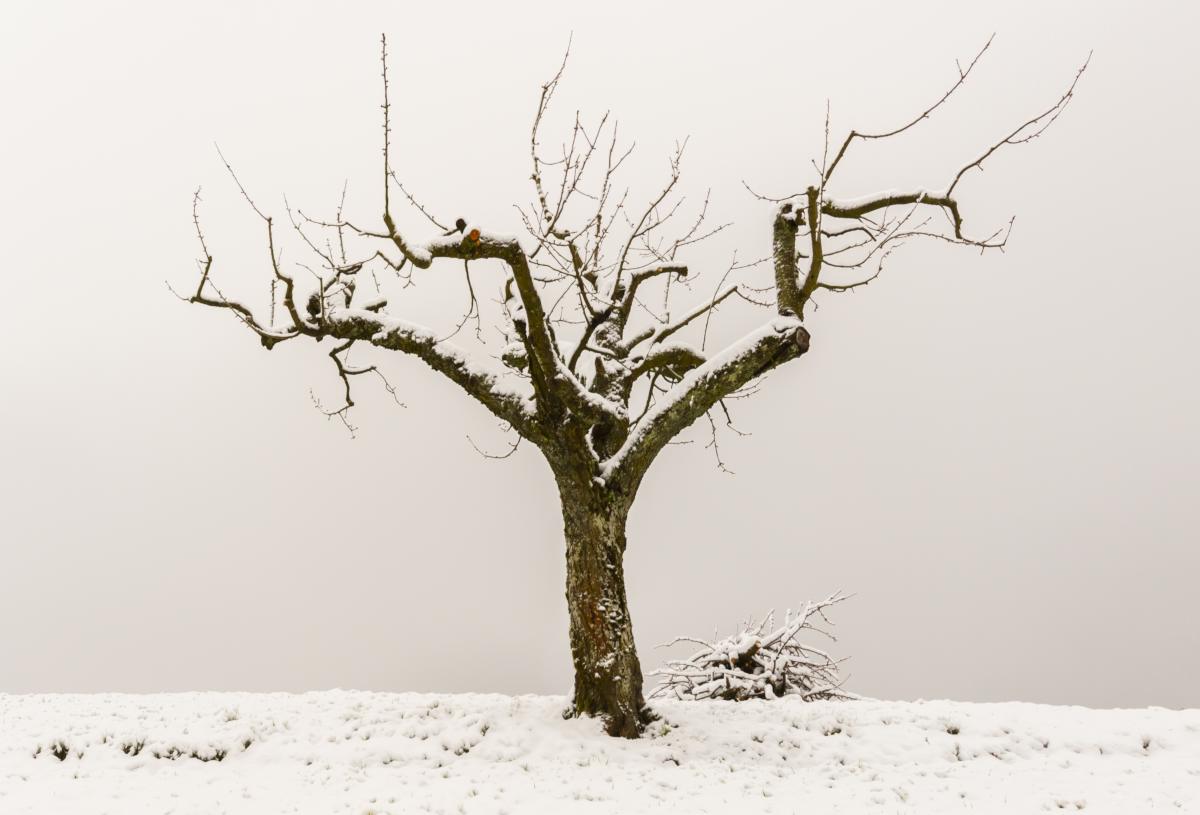
In late winter blooming takes place, always a delicate phase because the fragile flowers can’t stand the climate variations that often are the trademark of the end of winter. Flowers are pollinated either thanks to their self-pollinating properties, or from a neighboring flower in the same tree: apricot trees are self-pollinating.
Summer care (pruning and thinning) can help fruit development, and they are harvested when ripe starting in early summer.
Fruit shape and skin colour are the quickest way to recognise the varieties named here. Use the table to work out which apricot is in the punnet or on the tree.
| Variety | Shape | Skin colour | Status |
|---|---|---|---|
| ‘Bergeron’ | Rather long | Uniform orange | One of the two most cultivated in France |
| ‘Orange de Provence’ | Rather long | Orange mottled with red | One of the two most cultivated in France |
| ‘Rouge de Roussillon’ | Small and round | Orange with red dots | Named variety grown in France |
Each variety is tied to its own growing area, which is why the choice on the market stall changes from one region to another.
Apricot trees are native to Armenia but they came to Europe from China through the Silk Road. Thanks to trees planted in the Versailles gardens, France discovered the fruits under the reign of Louis the XIVth. But cultivation of this fruit only really took off in the following century.
Today, many varieties are grown in France, and each is often grown in few specific regions.
The best fruits to choose are the ripe apricots with sweet, melting flesh. Their orange color guarantees that they are mature. Take care though, because some fruits may boast a reddish spot that doesn’t necessarily mean that it is perfectly ripe yet. This color, called “blush”, can appear much earlier than the appropriate harvest date.
If eating the apricots as is, count 3 apricots per person. Two and a half pounds (one kilogram) of apricots is the right amount for a 6 to 8-person pie or 1 quart (1 liter) of ice cream.
Apricots must be eaten quite quickly after purchase. They can be kept for a few days in the refrigerator or in the open air.
If in the refrigerator, remember to bring them out to room temperature before serving to release all their taste.
Raw or cooked, apricots are suited to many tastes and desires. Traditional pies and jams now are replace with less conventional preparations. Apricots are also prepared in soup, ice cream, syrups or pudding. There are unlimited manners of cooking it, to the point now of even flavoring main dishes. Roasted in a pan, apricots are perfect to side on poultry and white meats. It also matches lamb and rice well, too.
All these options make apricots the king of summer plates and snacks. Eaten as is, it is perfect for a light, tasty snack.