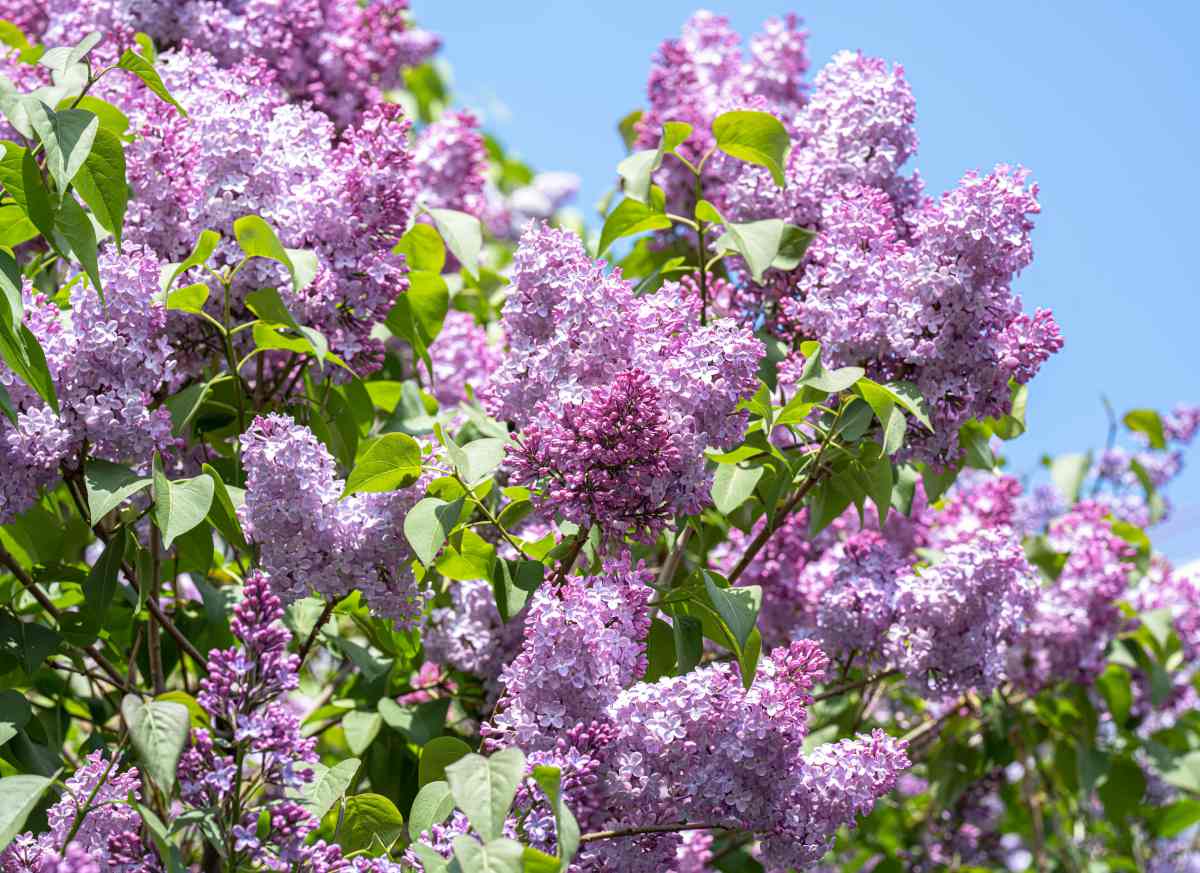
Abundant flowers borne in panicles called thyrses, spreading a delicate fragrance above soft, light green leaves: that is lilac (Syringa vulgaris), a shrub grown for bouquets and for the birds and first honeybees it draws. Give it a sunbathed spot and rich, well drained soil, and it blooms year after year.
| Name | Syringa vulgaris |
|---|---|
| Family | Oleaceae |
| Type | shrub |
| Height | 6 ½ to 16 feet (2 to 5 meters) |
| Exposure | full sun, part sun |
| Soil | rich enough |
| Foliage | deciduous |
| Flowering | April to June |
From planting to care and pruning, follow our advice to grow a magnificent lilac bush, lush and blooming as seasons come and go.
Planting the lilac correctly is a sure way to get a nice shrub and beautiful blooming in spring.
It is best to plant lilac in fall to speed root development up.
But like most shrubs purchased in containers, you can plant it all year long as long as you double down on watering if planting in spring or summer.
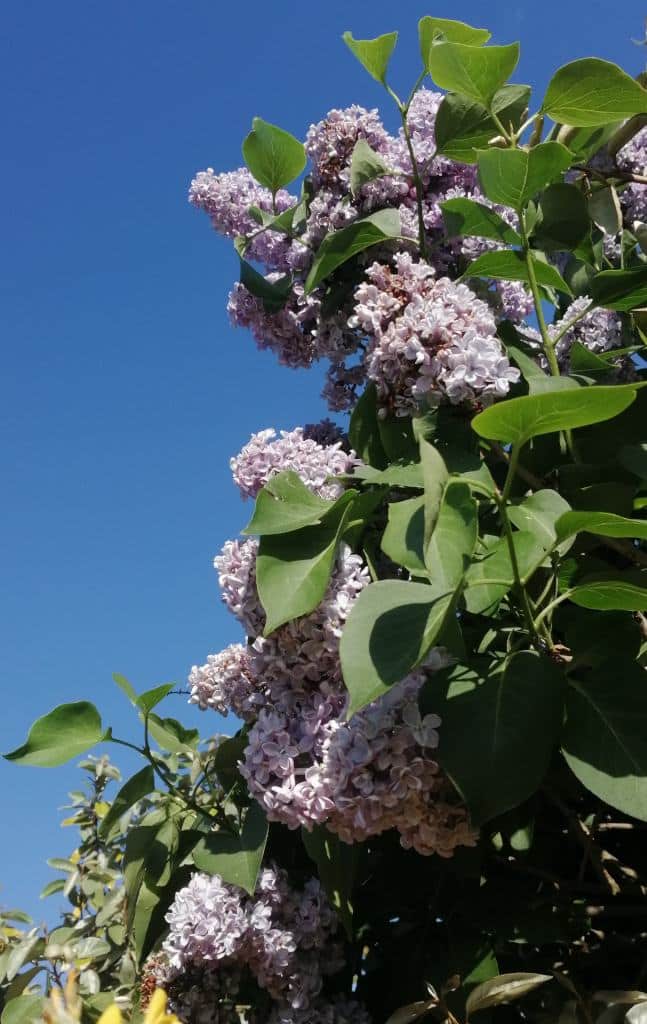
Lilac is not so demanding as regards soil type, but if you want to increase blooming, follow our planting tips.
If you want to try and set up a lilac hedge, set each plant about 6 ½ feet (2 meters) apart, to be sure to let each lilac plant have enough growing space.
Lilac cuttings are the best way to propagate your lilac.
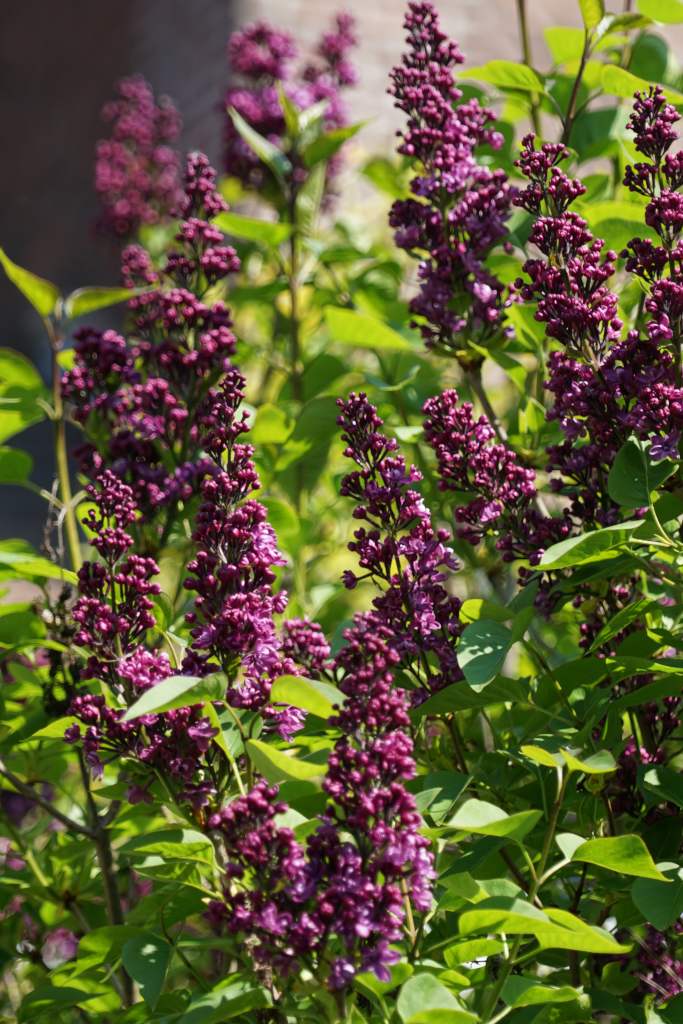
Once properly settled in, lilac only requires little care and flowers year after year, but a few good practices will help extend its magnificent blooming and make it truly stand out.
The pruning of lilac is quite a sensitive topic: some recommend it white others strictly discourage it.
Of course, the solution is often in the middle path, better to not prune the lilac too strictly but to reduce it slightly every year.
This is the best way to ensure that your lilac will bloom year after year, thanks to the pruning and to the few practices shared here.
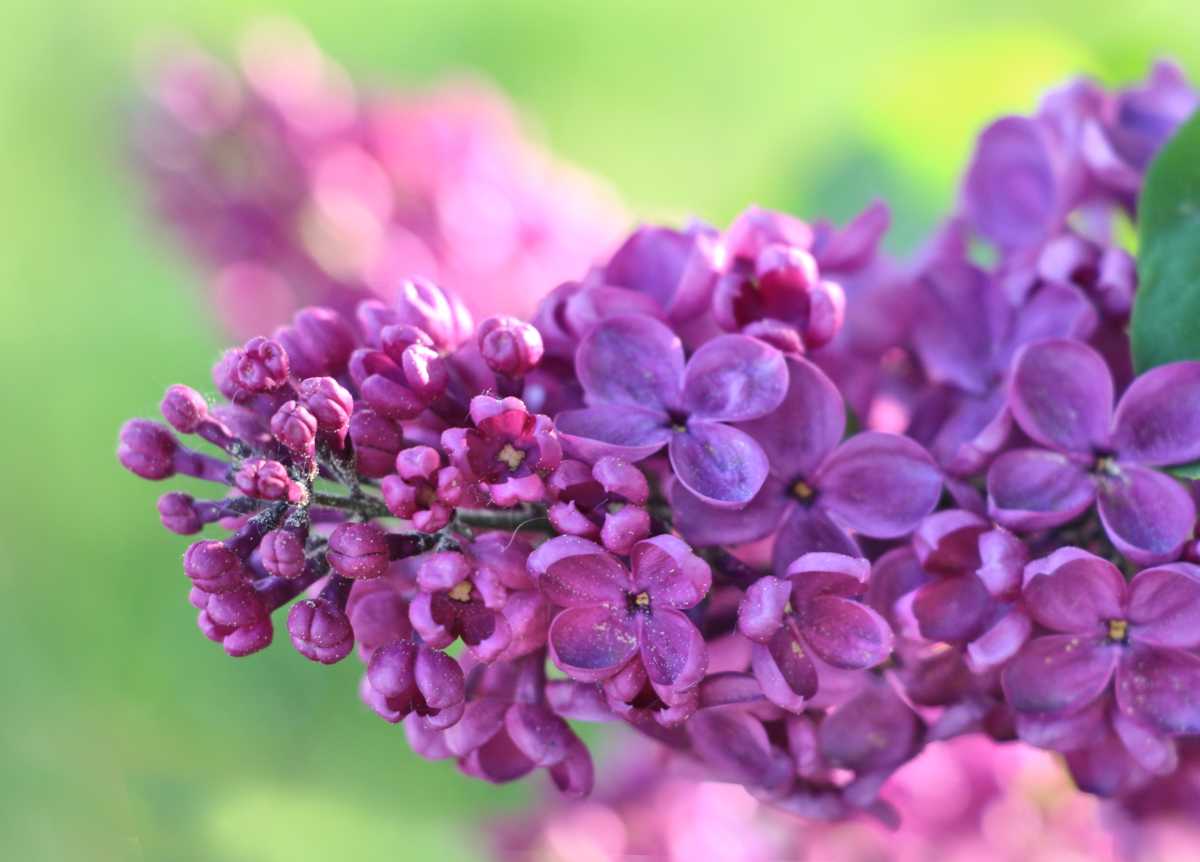
How to trim lilac:
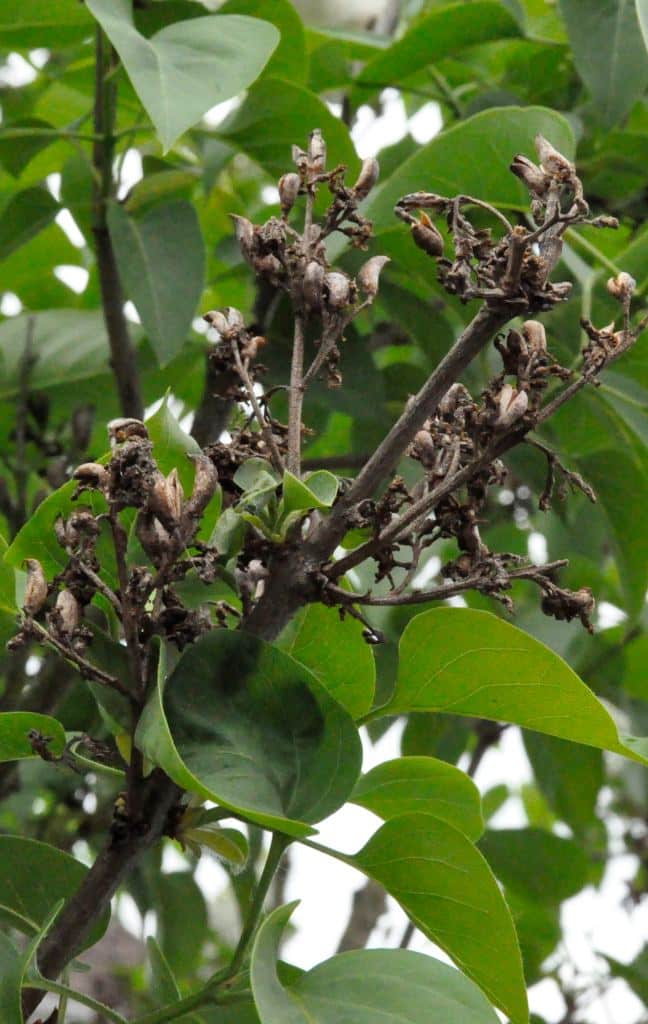
Although it is quite hardy and resists diseases well, there are a few pests and diseases that can occasionally be observed on lilac shrubs.
Some fungus such as mildew or scale insects attack in summer.
Lilac also falls victim to powdery mildew, usually at the end of summer when moisture joins in on the summer hear.
More rarely, this tree is infected by honey fungus. There’s nothing that can save the tree if this is the case.
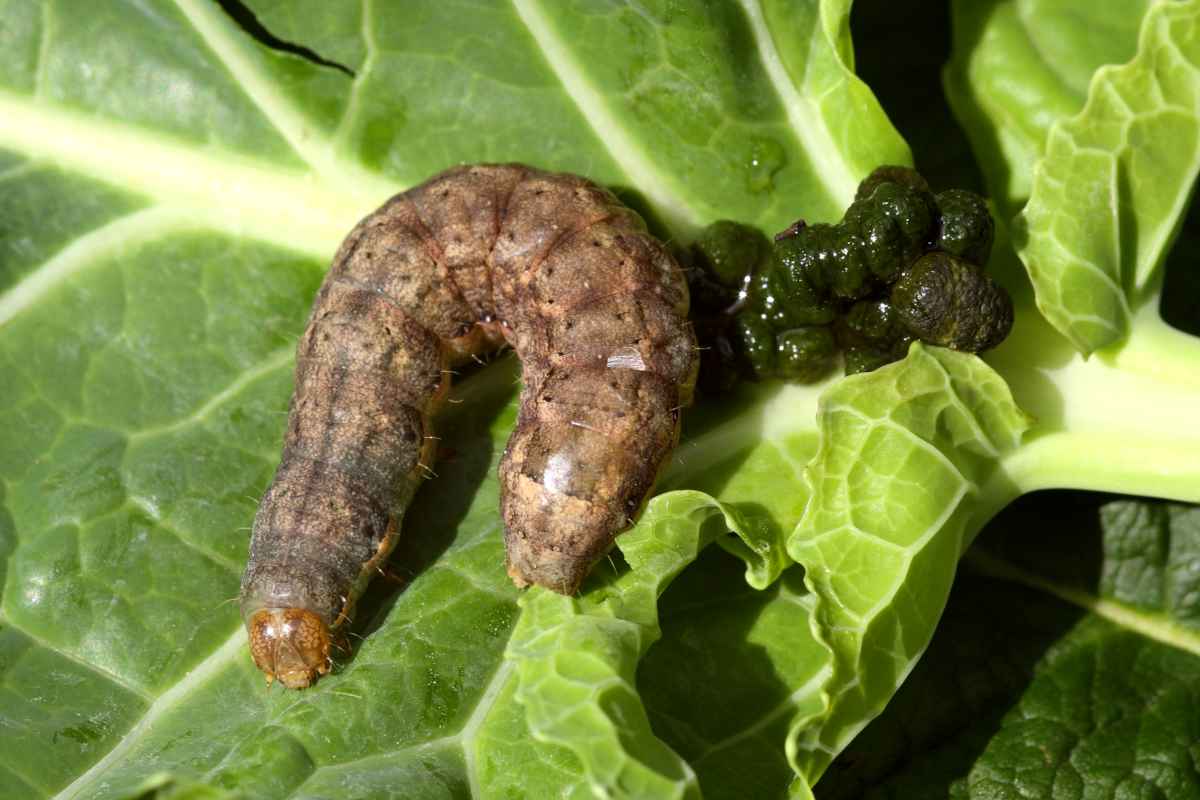
Finally, among the possible pests, moths are the most dangerous threat for lilac.
All common lilacs share the same easy nature, but colour, flower form and eventual size vary a good deal from one cultivar to the next. Use the table below to match a variety to the spot you have in mind.
| Variety | Flower colour | Flower form | Mature height |
|---|---|---|---|
| ‘Primrose’ | Pale creamy yellow | Single | 8–10 ft (2.5–3 m) |
| ‘Madame Lemoine’ | Pure white | Double | 10–13 ft (3–4 m) |
| ‘Charles Joly’ | Deep purple-red | Double | 10–13 ft (3–4 m) |
| ‘Katherine Havemeyer’ | Lavender fading to pink | Double | 10–13 ft (3–4 m) |
| ‘Andenken an Ludwig Späth’ | Dark wine purple | Single | 10–13 ft (3–4 m) |
| ‘Beauty of Moscow’ | Pink buds opening white | Double | 10–13 ft (3–4 m) |
| ‘Sensation’ | Purple, white-edged petals | Single | 8–12 ft (2.5–3.5 m) |
Lilac is hardy and resists diseases well, but a handful of pests and fungus turn up often enough to be worth knowing. Use the table to tell apart what can be treated from what cannot.
| Problem | Type | When it shows up | Outlook |
|---|---|---|---|
| Powdery mildew | Fungus | End of summer, when moisture joins the heat | Can be treated |
| Honey fungus | Fungus | Rarely | Nothing can save the tree |
| Moths | Pest | Occasional | The most dangerous threat for lilac |
Spent seed pods drying and bursting on the shrub are not a disease, simply the end of the flowering cycle.
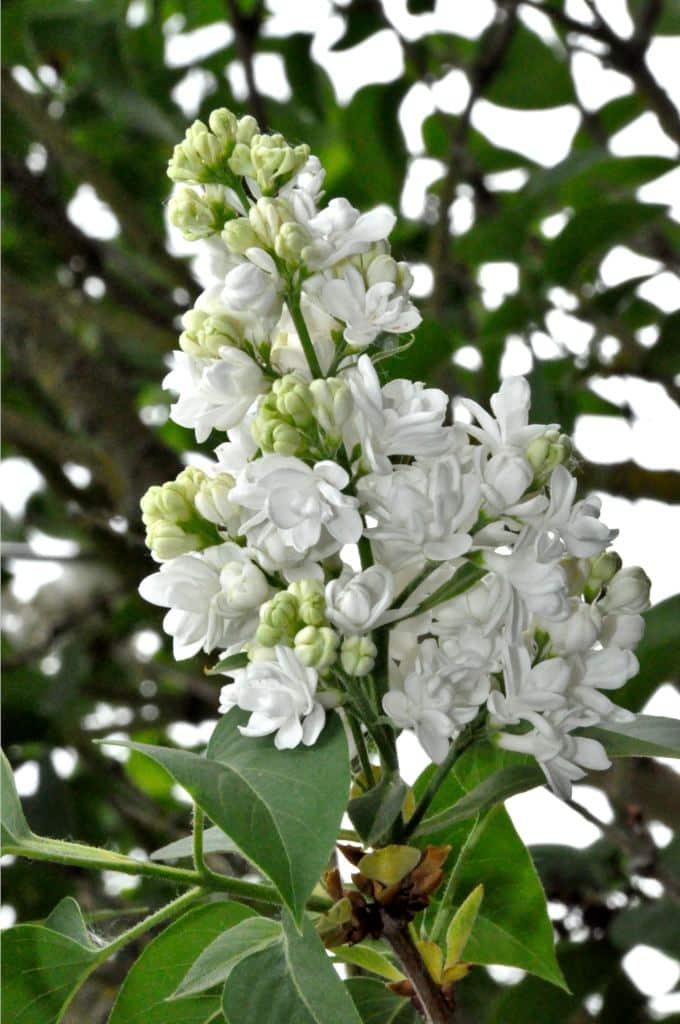
Lilac is a flowering shrub with beautiful and abundant flowers shaped in very fragrant bunches.
It will enchant your gardens by blooming at the beginning of spring, will attract birds and of course the first honeybees of the season.
Lilac can grow to a height of 20 to 23 feet (6 to 7 meters), but generally is seen to stay around 10 to 13 feet (3 to 4 m) tall.
Its leaves are deciduous in all climates and regions, and are cute little light green jewels, soft and not leathery at all.
Its flowers are born in panicles which are called thryses, and spread a delicate fragrance. Their hue is quite distinct, and gave its name to the lilac color. Certain lilac varieties are double-flowered, but they are quite rare. Many often confuse lilac with the less fragrant butterfly bush, or with the similarly large Lagerstroemia.
Lilac is often encountered in our homes, where cut stems form magnificent bouquets.
Lilac is one of the most-planted shrubs in our gardens, due to its fragrance and high ornamental value.
An entry gate to the city of Paris is named after this flower: Porte des Lilas.
To have beautiful flowers, in fall, spread a sac of soil mix blended to flower fertilizer at the base of the tree.
You can also sprinkle cold ashes from your fireplace all winter long nearby, it will increase the blooming in spring.
Read also on the topic of shrubs: