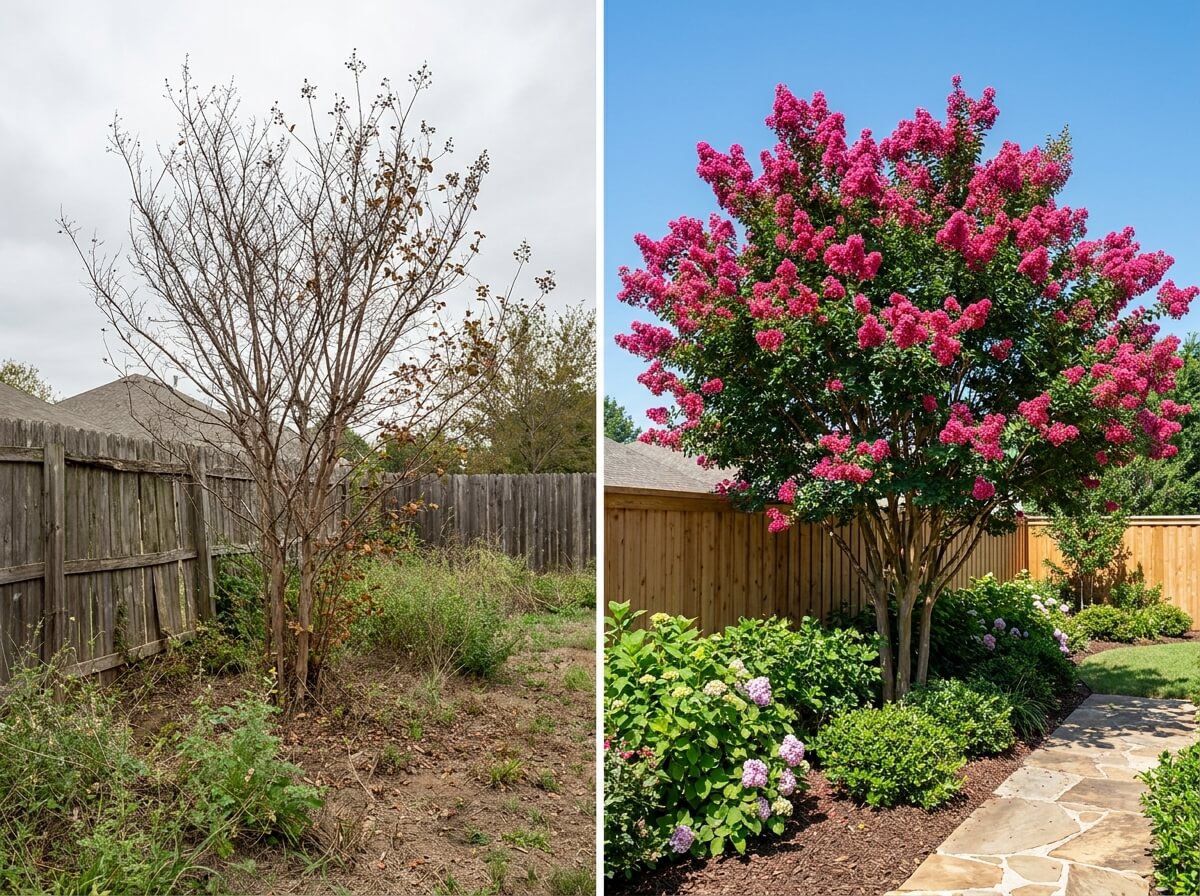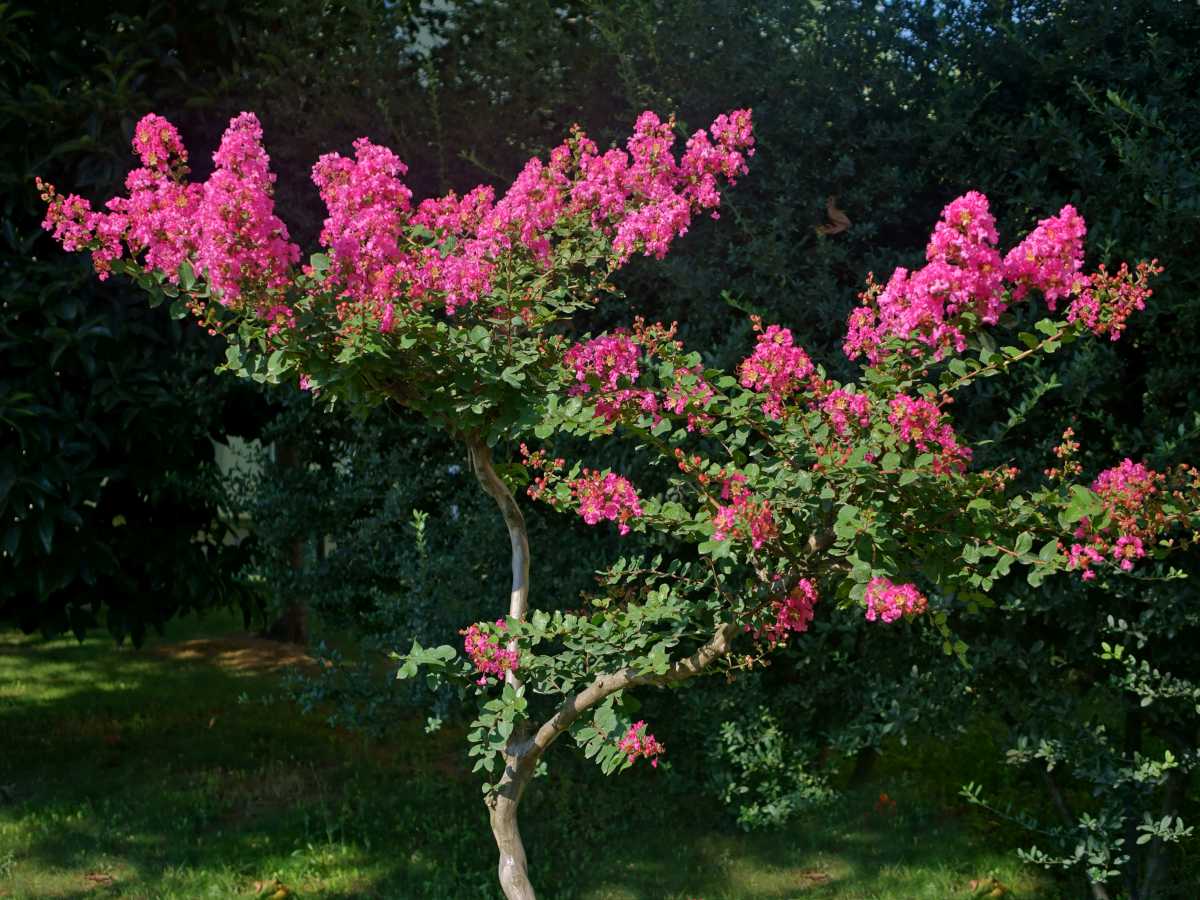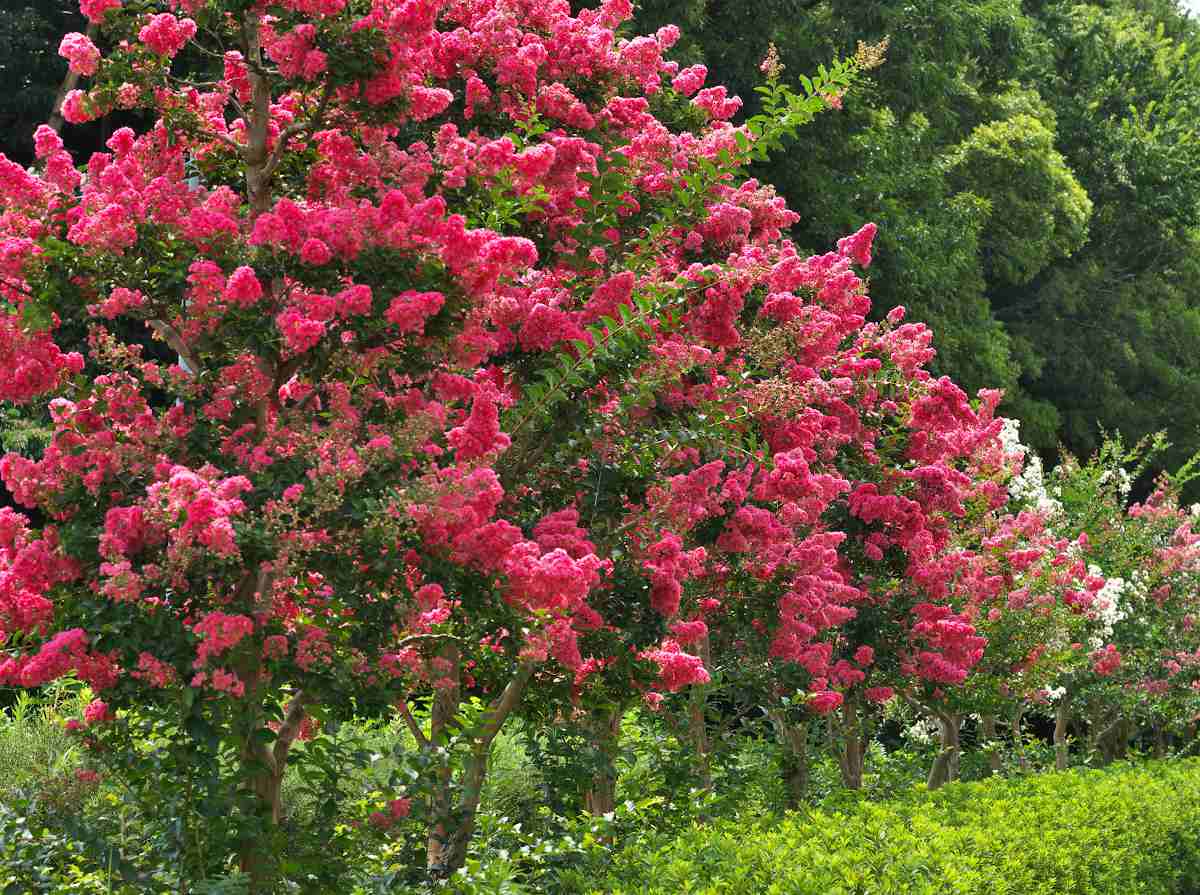
Panicles of brightly coloured flowers open from the end of spring, followed in autumn by red, yellow and orange leaves and a trunk patched blue-grey like a plane tree. Crepe myrtle (Lagerstroemia indica) is a small ornamental tree grown for that long display, which carries on until the first frost spells.
| Name | Lagerstroemia indica |
|---|---|
| Family | Lythraceae |
| Type | tree |
| Height | 10 to 16 feet (3 to 5 meters) |
| Exposure | full sun, part sun |
| Soil | rich enough |
| Foliage | deciduous |
| Flowering | end of spring to fall |
Lagerstroemia, or crepe myrtle, can be found either in shrub form, part-stem and full-stem versions. A full-stem version looks like a little tree, with leafage atop a little trunk.
It is preferable to plant it in fall in order to support root development, however you can also plant it until spring, but only on non-freezing days.
In colder areas, planting in spring is best, whereas in other areas fall is fine, after leaves have fallen off.
Growing Lagerstroemia in a pot is perfectly possible, especially where winters are harsh, so that you can bring them in for protection in winter.
Depending on how large
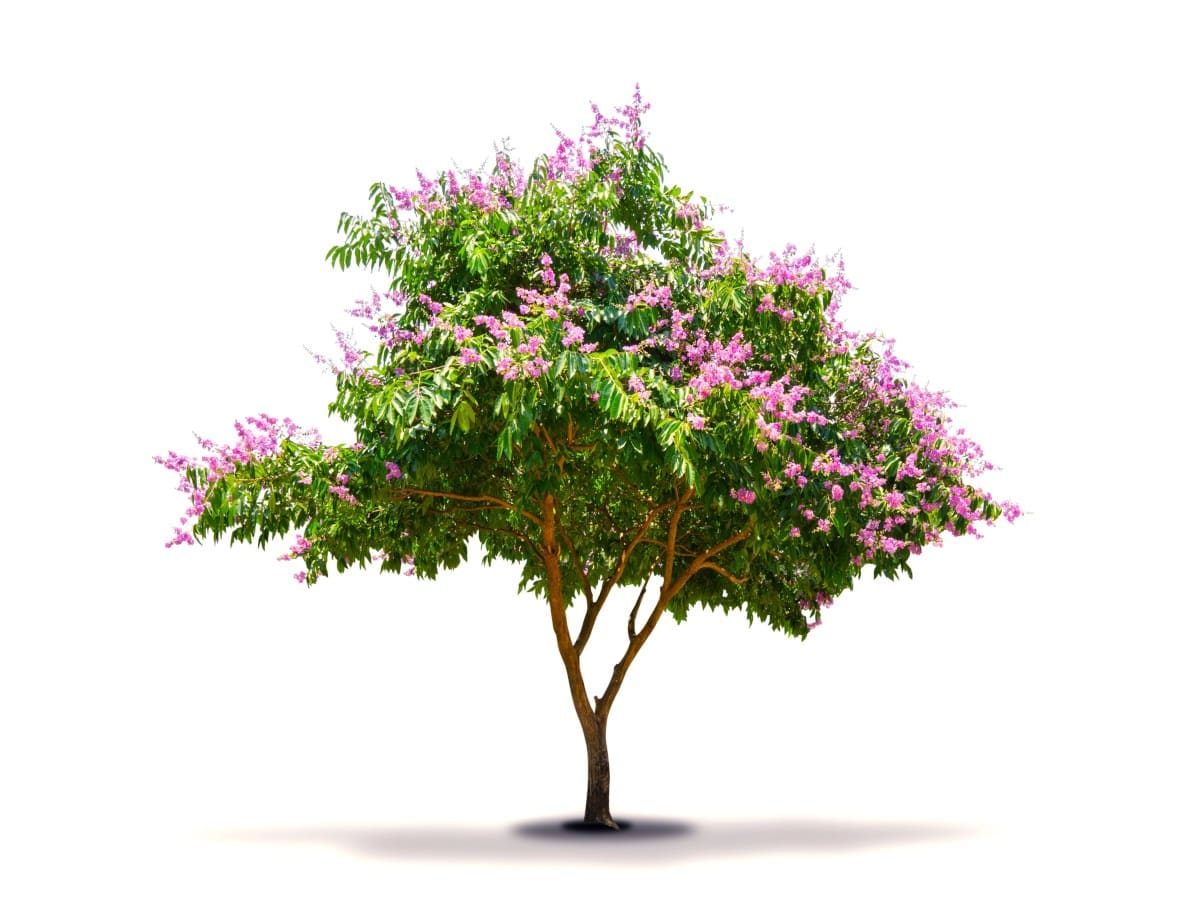
Best performed at the end of winter, preferably during the month of early spring, either a bit earlier or a bit later depending on the climate (after the deeper frost spells of course).
Prune branches that have grown in the previous year, leaving only an inch (a couple centimeters) or so, checking that you’re leaving an eye facing outwards from the shrub.
Cultivars differ enormously in eventual size, from patio dwarfs to small trees, and in flower colour. The table below sets out the ones most often offered by garden centres and mail-order nurseries.
| Variety | Flower colour | Best used as |
|---|---|---|
| ‘Sioux’ | Deep pink | Small gardens, upright habit |
| ‘Natchez’ | Pure white | Specimen tree, peeling cinnamon bark |
| ‘Muskogee’ | Pale lavender | Tall screen or avenue tree |
| ‘Tuscarora’ | Coral pink | Multi-stemmed lawn tree |
| ‘Dynamite’ | True red | Bold colour accent |
| ‘Zuni’ | Mid lavender | Large shrub, borders |
| ‘Pocomoke’ | Deep rose pink | Pots and low edging |
Almost everything this tree asks for, and everything it gives back, is tied to a particular moment in the year. Here is the whole cycle on one page.
| Season | What you do | What the tree does |
|---|---|---|
| Autumn | Plant, once the leaves have dropped | Settles in and puts out roots |
| End of winter (early spring) | Prune last year’s branches back hard | Rests before breaking bud |
| Summer | Water in the evening, without overdoing it | Flowers non-stop in bright panicles |
| Autumn | Leave the display alone | Turns red, yellow and orange before leaf fall |
| Winter | Mulch the base, or bring potted plants under cover | Shows off its blue-grey mottled trunk |
Get the winter pruning and the planting season right and the rest of the year takes care of itself.
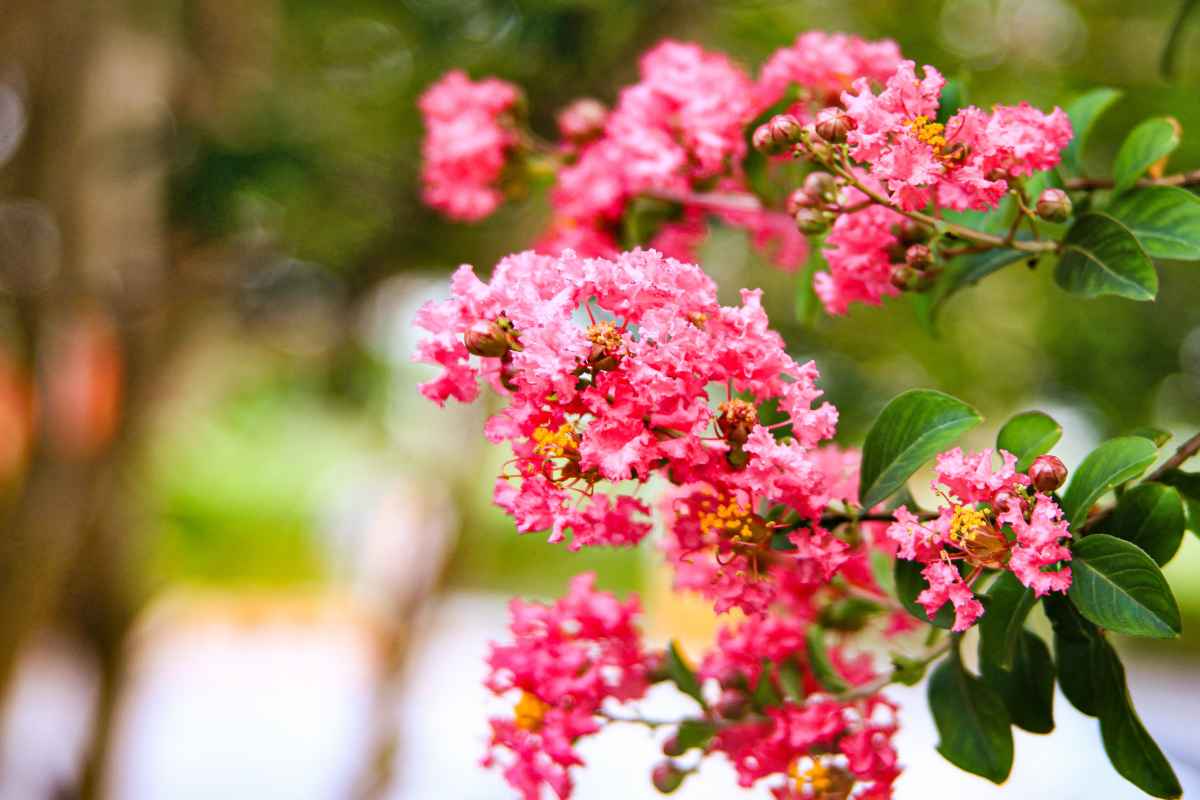
Lagerstroemia is a small ornamental tree with abundant and plentiful blooming. It stands out all summer long thanks to its magnificent brightly-colored panicles.
Its blooming is very long-lasting, and you can rely on your lagerstroemia to keep blooming until the first frost spells.
In fall, this deciduous tree unveils surprising red, yellow and orange leafage.
In winter, once leaves are on the ground, the trunk appears with beautiful blue-gray-veined patches, much like that of a plane tree.
Read also:
During the high summer temperatures, water regularly in the evening but not too much.