
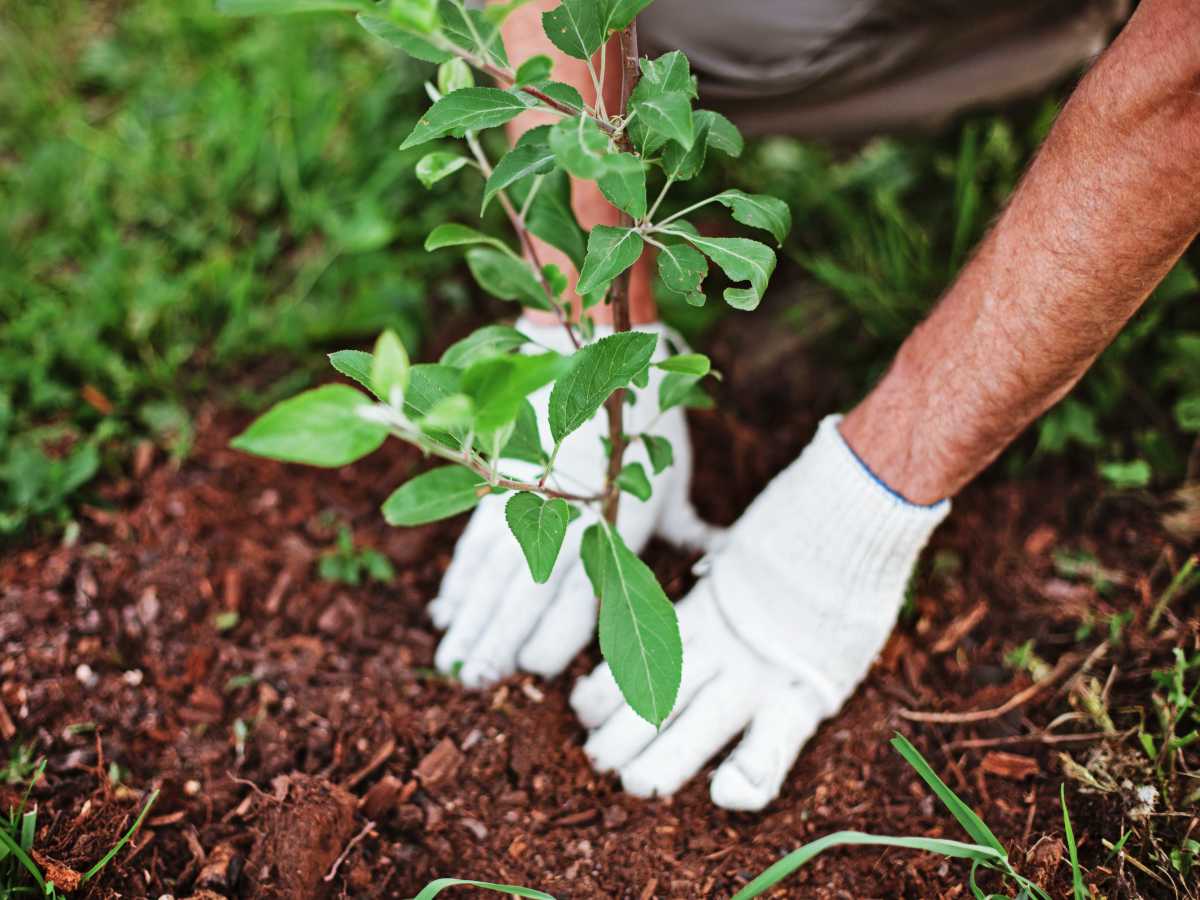
A hole four or five times wider than the root ball, a soil mix enriched with an organic conditioner, and roots spread carefully out along the bottom: that is what a container-grown tree or shrub needs to settle into the garden. Plant in autumn where you can, water generously through the first year, and the move barely checks its growth.
After growing in a container in a nursery or garden store, your plant moves to a new environment to which it must adapt.
Carefully follow each of the steps below, and your shrubs and trees will grow perfectly!
The best season to plant a tree or shrub is fall. But it is still possible to plant in winter, except when it freezes, or in spring before the heavy summer heat.
If you are planting in spring, make sure you can water regularly during the first year after planting.
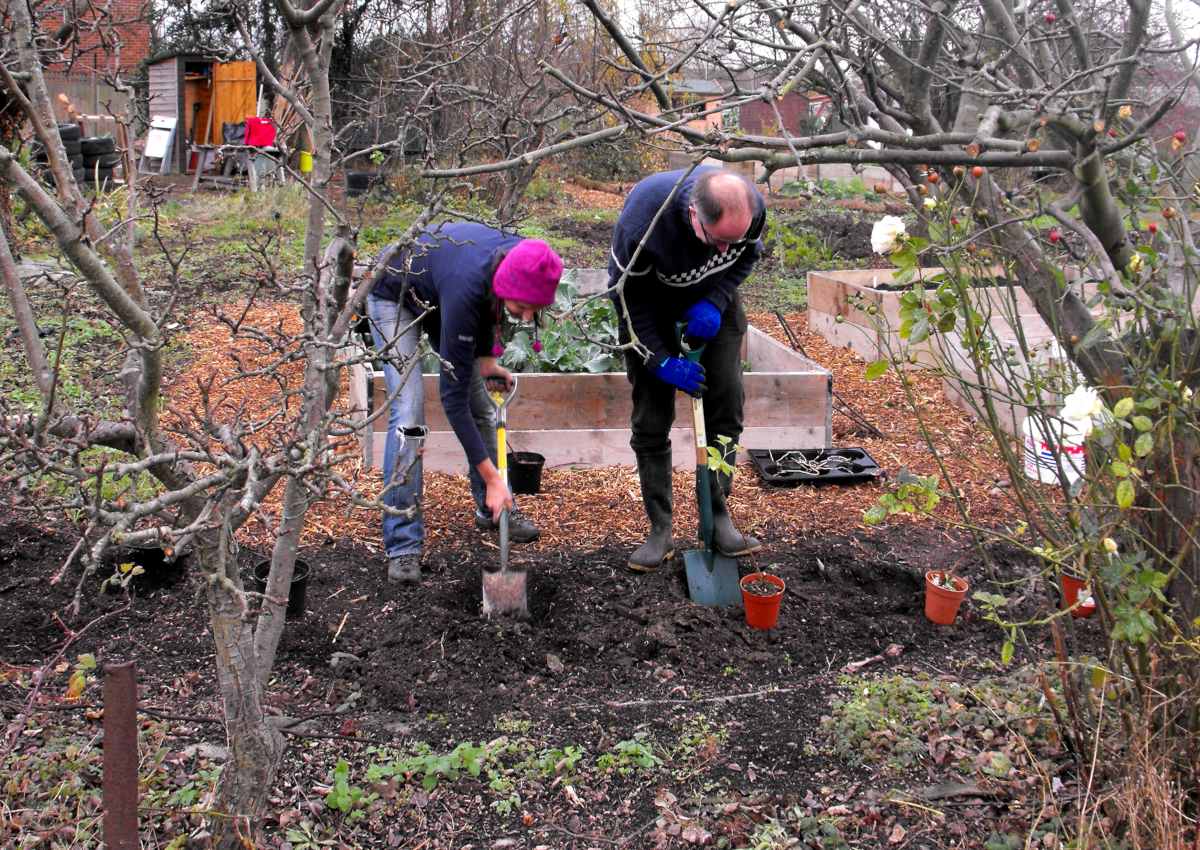
Read also: Soil mix, what is it good for?
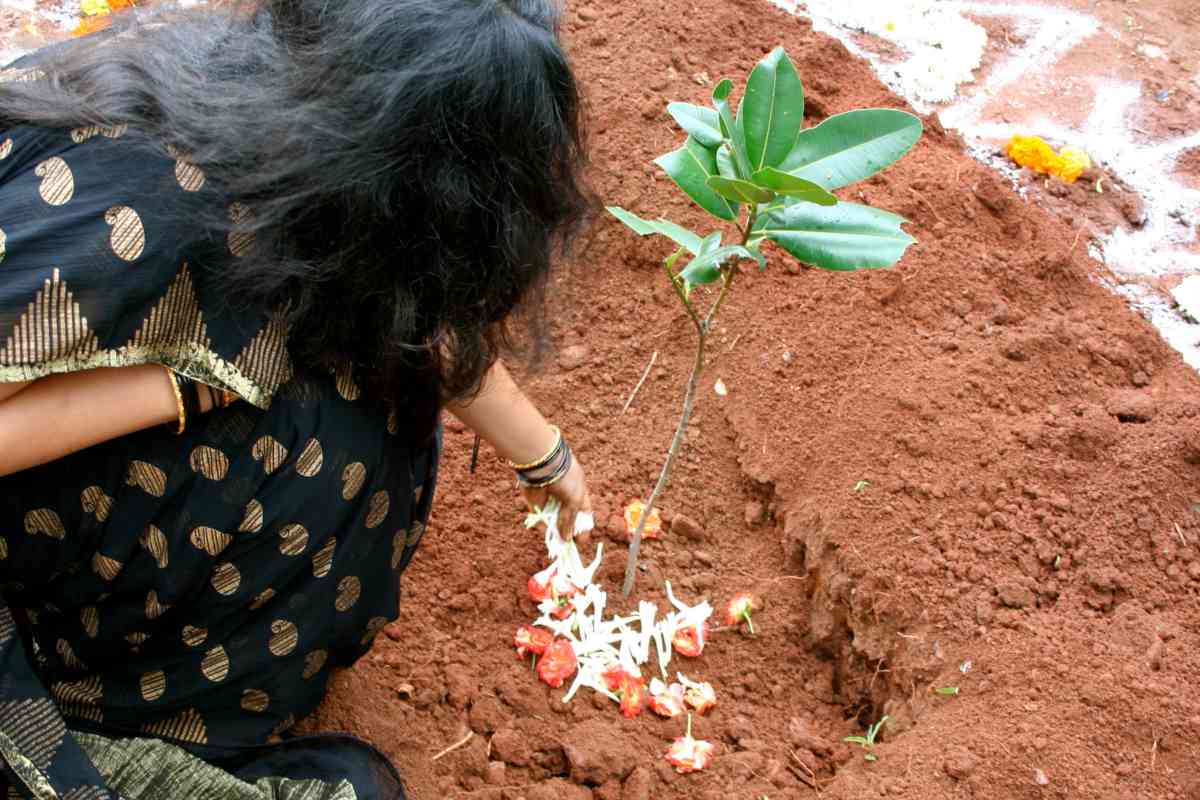
Carefully run your fingers or a tool through the clump
to untangle the roots without wounding them, if they’re too woven into one another.Trees and shrubs can go in over a long stretch of the year, but each planting season asks something different of you. This table sets out what the article says about the three windows.
| Planting season | How well it suits | What it asks of you |
|---|---|---|
| Early to late autumn | The best season of all for a tree or shrub | Regular, abundant watering over the first year after planting |
| Early winter to late winter | Still possible | Hold off whenever the ground is freezing |
| Early to mid-spring, ahead of the summer heat | Workable, but only for those who can keep up the watering | Regular water right through the first year after planting |
Whatever the season, it is the watering in that first year that decides whether the plant takes.
Tie the trunk to the stake with a broad flexible strap in a figure of eight, leaving enough slack for the stem to sway and thicken.
Check tree ties periodically during the growing season, and again after storms, loosening or adjusting any that are cutting into the bark so the trunk can expand freely.
Remove the stake once the shrub stands firm when you rock it gently by hand.
Shape a shallow rim of soil around the base of the shrub so water pools and soaks down to the roots instead of running off.
Water heath plants with rainwater; hard tap water slowly raises soil pH.
Bulbs go in nose upwards, at a depth of about three times their own height.
Choose shrubs whose flowering times differ across early spring, summer and autumn, so the border offers a succession of bloom and interest through the year rather than a single short burst.
Check the mature spread on the label: set each shrub at least half its own spread from a wall or path, and space neighbouring shrubs by the sum of their two half-spreads.
Acid-loving shrubs such as rhododendron, camellia and pieris will yellow and sulk in chalky ground, so test the soil pH before you buy.
With a few easy tips, you can reduce the inevitable: transplant shock. For instance, water once with sugar water to help tree roots settle in!
Keep mulch pulled back a few inches from the trunk of a newly planted tree.
Build a shallow rim of soil around the outside of the planting hole so water pools above the root ball instead of running off across the garden.
If the roots spiral around the inside of the pot, slice through them vertically in three or four places before you set the plant in the hole.
On a grafted tree, keep the knobbly graft union above the finished soil level; with roses, however, UK (RHS) and cold-climate advice is to plant the union about 5cm (2in) below it.
Can I put a Judas tree in a large planter to restrict its size
Hello again LLoyd, yes you can – growing it in a planter will definitely restrict its size. This is because the root system will only have you give it to feed on, and there’s also less water reserves in the soil which also slows growth. The few tips you need to remember, though, are that you have to topdress every 2-3 years to renew the soil a bit, and give it healthy fertilizer during the growing season. If you don’t give it food, it’ll grow fine at the start but then will start getting scrawny and sick with diseases.
I have podocarpus maki planted for hedge I place a dripping system one gallon per feet per hour, how much water I should use with coffe dripping tube.