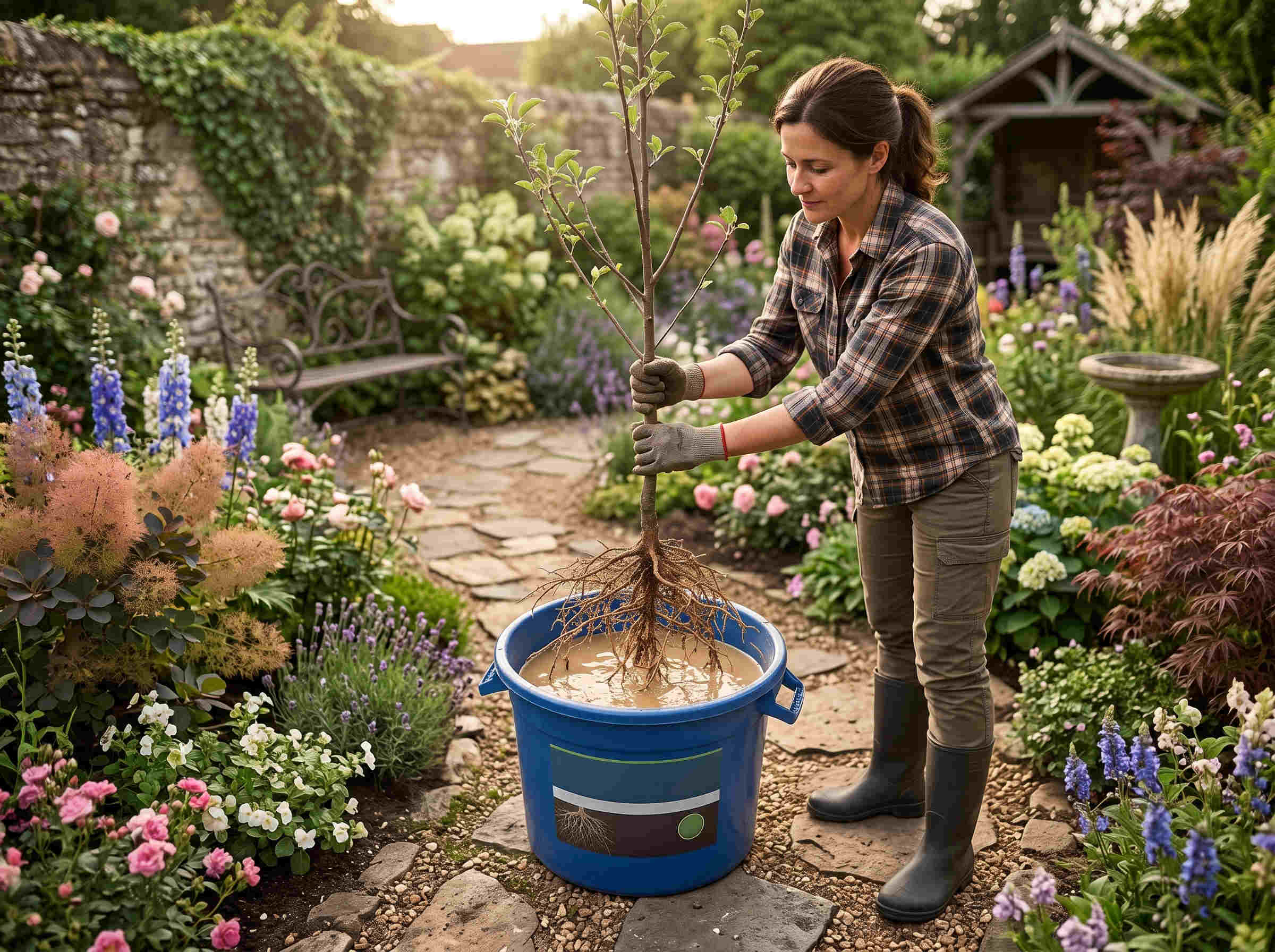
Root-dipping means to bathe and coat the roots of a rose tree, tree or shrub with a special mix – called root dip – that will speed up root growth during the planting.
Perform this step just after purchasing the plant and before it has even prepared buds.
It’s a kind of mud, easily produced through mixing soil mix, horse manure, garden soil and water.
You can also add cow manure, too, it will make your root dip even better.
There are also many other additives that will make your root dip even more effective:
Additionally, you can also purchase ready-made root dip in horticulture stores.
Beyond the basic mud of soil mix, manure, garden soil and water, a few additives each do one specific job. Here is what the article says each one brings to the roots.
| Additive | What it brings | Effect on the plant |
|---|---|---|
| Mycorrhizae | Essential root fungus | Helps the plant start off |
| Fermented tea | Nutrients | Repels basic underground root predators |
| Water crystals | A store of moisture | Soaks up excess water and gives it back when the plant needs it |
| Rooting hormones | Hormones | Trigger root development |
If you would rather not mix your own, ready-made root dip is sold in horticulture stores.
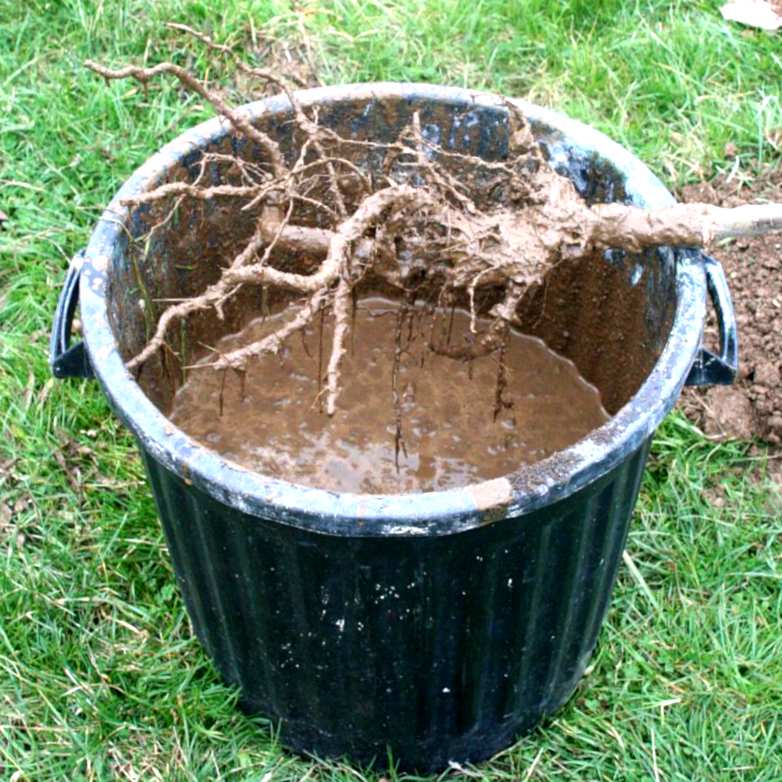
Mix the root dip to the consistency of thick cream or thick paint, the texture usually recommended, so that it coats a finger in an even film rather than running straight off.
Bare roots that arrive dry and papery should soak in plain water for a few hours before they go into the mud, so they rehydrate first.
Make the cuts with clean, sharp secateurs, taking crushed or blackened root ends back to pale, sound tissue, because torn ends tend to rot instead of branching.
Plant immediately after dipping, and keep the treated roots shaded and covered until they go into the ground, since exposure to sun and wind dries out both the coating and the roots.
Root dip is a precious ally in a wide range of circumstances. Every time roots are bare, using root dip will make life easier on the plant and will increase survival and vigor.
First and foremost, root dip is used to plant trees and shrubs.
The world’s most iconic flower shrub, the rose tree, also loves root dip upon planting. Here is how to plant roses.
Although they need a slightly different soil, heath plants can make do with any root dip that you prepare for other plants. Learn how to plant heath plants, along with the most beautiful heath-loving shrubs and plants.
When moving a plant from one place to the next, root dip will help minimize transplant shock.
When finished, spread your root dip around your favorite plants. Make small splotches instead of large puddles so that water can still penetrate around it!
Credits for images shared to Nature & Garden (all edits by Gaspard Lorthiois):
Preparing root dip by Wise Mandarine under © CC BY-SA 2.0