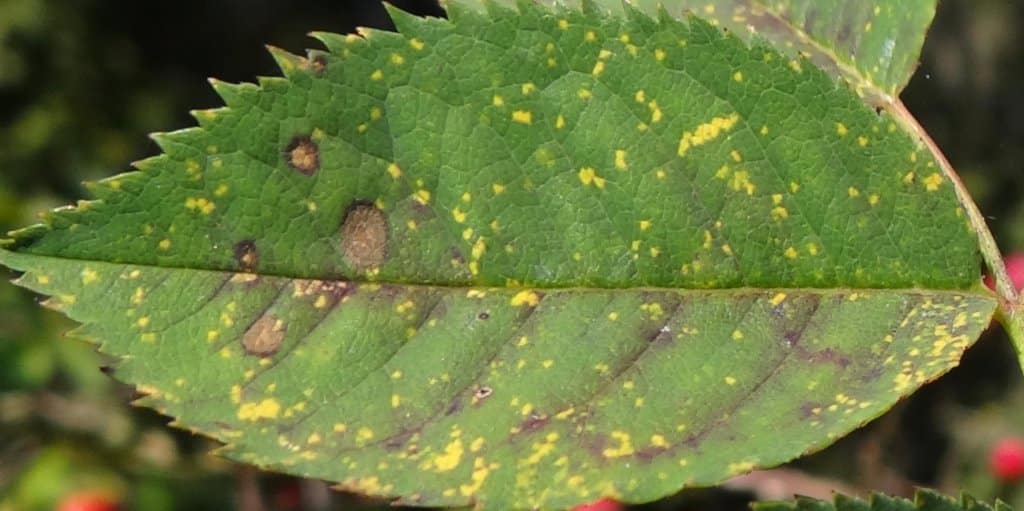
Even though the number of fungal diseases called “rust” is very high, they almost always share the same symptom: brown-orange blisters appear on the underside of leaves with yellow stains on the topside.
Here is the right treatment for this disease.
This disease most often appears during moist weather or excessive watering on leaves.
Wind can spread it to other plants in the garden.
Water at the base of the plant in the morning so leaves dry quickly instead of staying damp overnight.
Crowded, poorly pruned rose shrubs trap still, humid air among their leaves and are infected far more often than open, airy ones.
Fallen infected leaves left on the soil carry spores over to the next growing season, so rake and burn them.
Too much nitrogen fertiliser pushes soft, sappy growth that rust attacks readily.
From the beginning of spring till the end of summer.
Begin inspections on the lowest, shadiest leaves, where many rusts first appear, but also check new growth and upper foliage, since some rusts show their earliest pustules there instead.
During the active months, water at the base in the morning so the foliage is dry before nightfall.

There are a great many species that can develop this disease.
Rose trees are very often contaminated with rust, but many flowers, fruit trees, trees, shrubs and vegetables can be impacted as well.
Hollyhocks and other mallows are hit so reliably that rust is almost unavoidable on them.
Pear rust needs a juniper nearby to complete its life cycle, so look for junipers in neighbouring gardens before treating the pear tree.

In most cases, rust does not fatally endanger the life of the plant.
In the very worst case, all the leaves are lost.
What is especially problematic is contagion, the spread of the disease to other leaves on other plants.
It results in rose shrubs not looking very nice in August.
Although there are many different types of rust, the once most commonly encountered has the latin name Phragmidium mucronatum.
The real damage is cumulative: a rose repeatedly stripped of its leaves flowers less and ripens its canes poorly, which shows up as winter dieback.
Rake up and destroy every fallen leaf under an infected rose, because spores overwinter in that litter and reinfect the plant from below.
Effective treatment products are often sold under the label “rose tree disease” and can be used to treat other plants as well.
Here are a few natural fungicides made from fermented tea, they’re easy to make yourself:
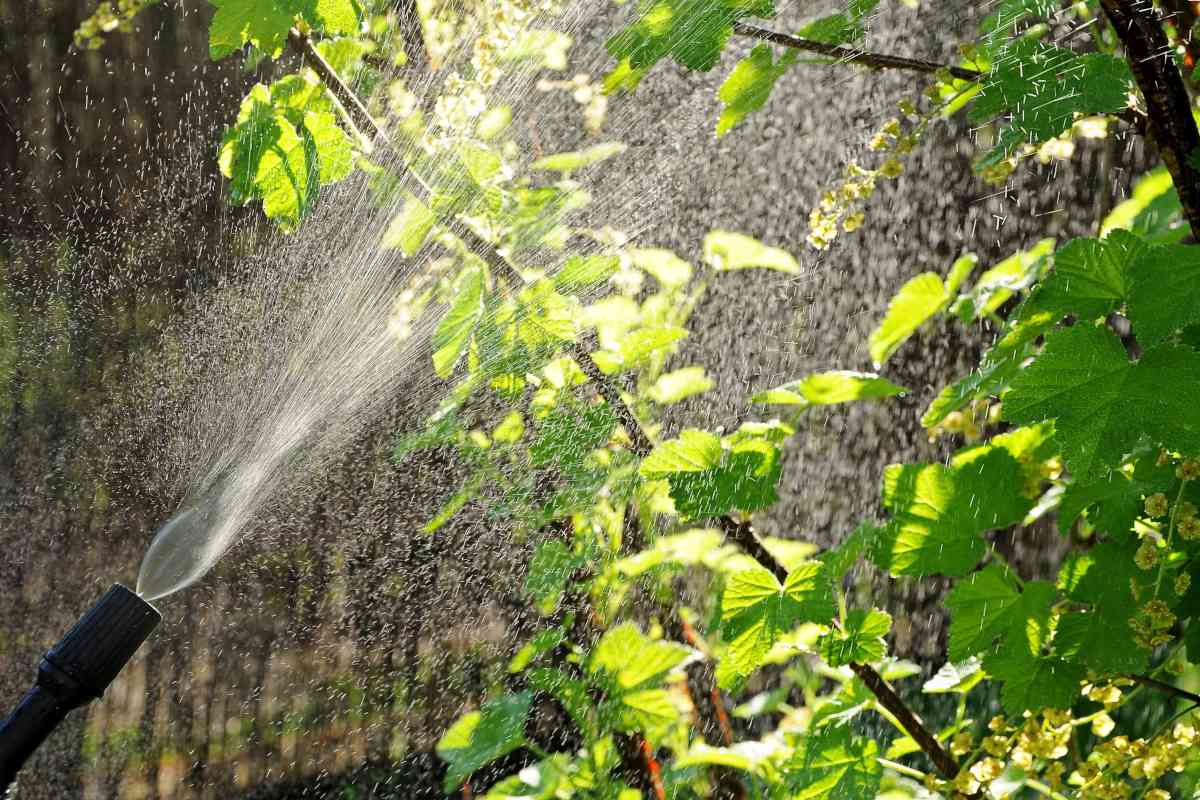
Spray the underside of the leaves as well, since that is where the rust blisters release their spores.
Renew the treatment after heavy rain, because downpours wash the product off the foliage before it can act.
Water at the base of the plant rather than over the leaves, as rust needs a wet leaf surface to take hold.
Rake up and burn fallen leaves under an infected rose or hollyhock, since rust spores overwinter on that debris and reinfect the new growth.
Thin out crowded stems to open the centre of rose bushes, because air moving freely through the branches dries the foliage much faster after rain.
Go easy on nitrogen-rich feed: the soft sappy shoots it produces are the first to catch rust.
Credits for images shared to Nature & Garden (all edits by Gaspard Lorthiois):
Rust on rose tree leaves by Jerzy Opiola under © CC BY-SA 4.0
Orange spots under rose tree leaf by Jerzy Opiola under © CC BY-SA 4.0
Orange powder puff on rose leaf by Teresa Clements ★ under © CC BY-SA 3.0