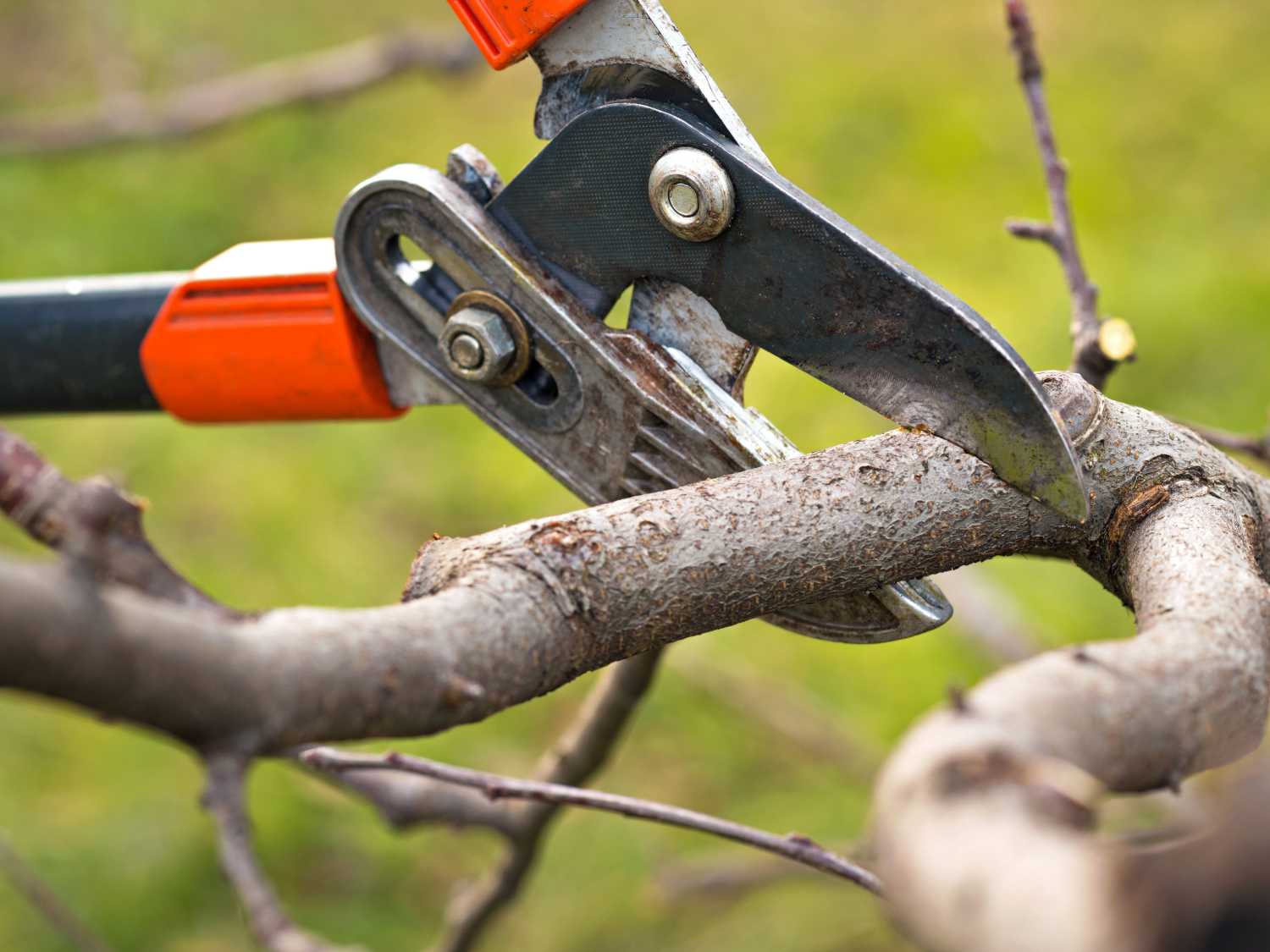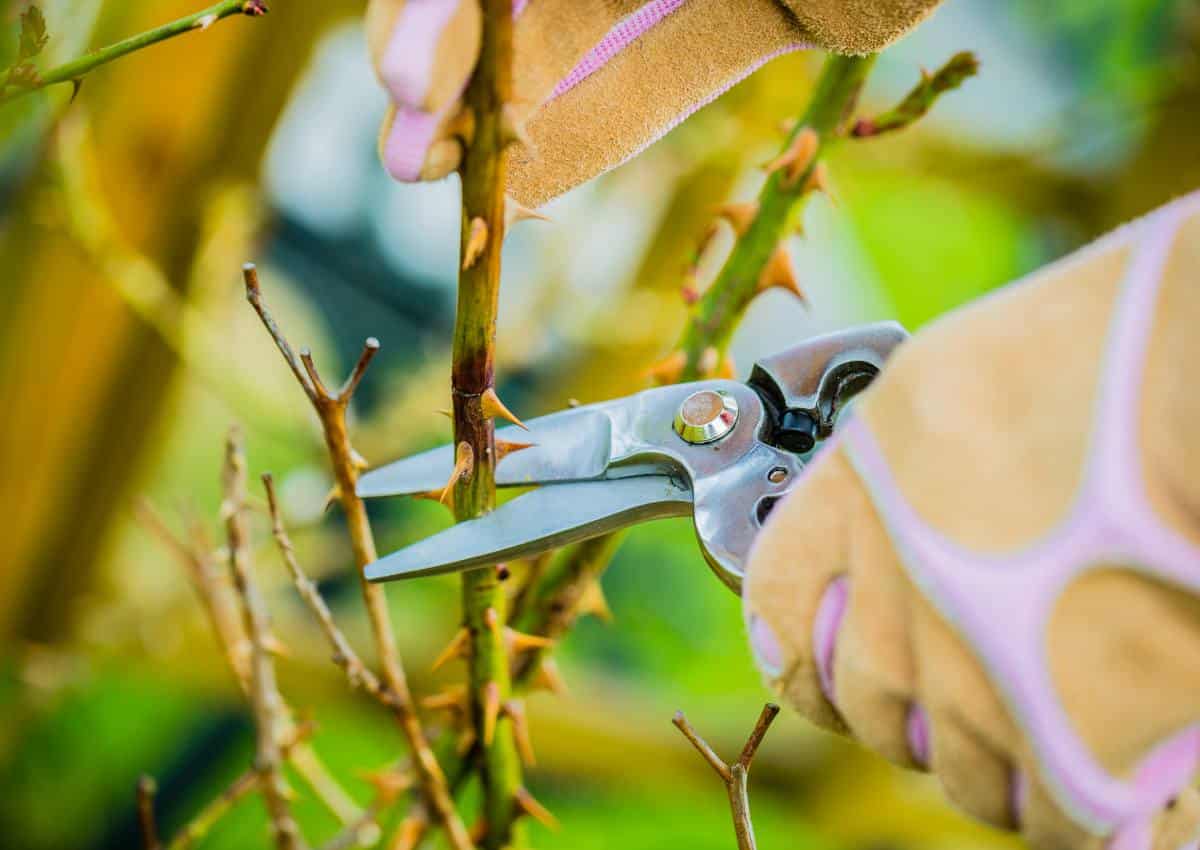
A rose cut back while still leafless and dormant, down to a handful of its most vigorous branches, is a rose that flowers well. Make the cut once hard frost has passed and before growth restarts, and even the trimmings pay their way: the healthiest stems root readily as cuttings.
Perhaps going against a widespread belief, note that pruning rose trees is best done at the end of the winter, in February or March depending on the climate zone, in any case at the very beginning of spring.
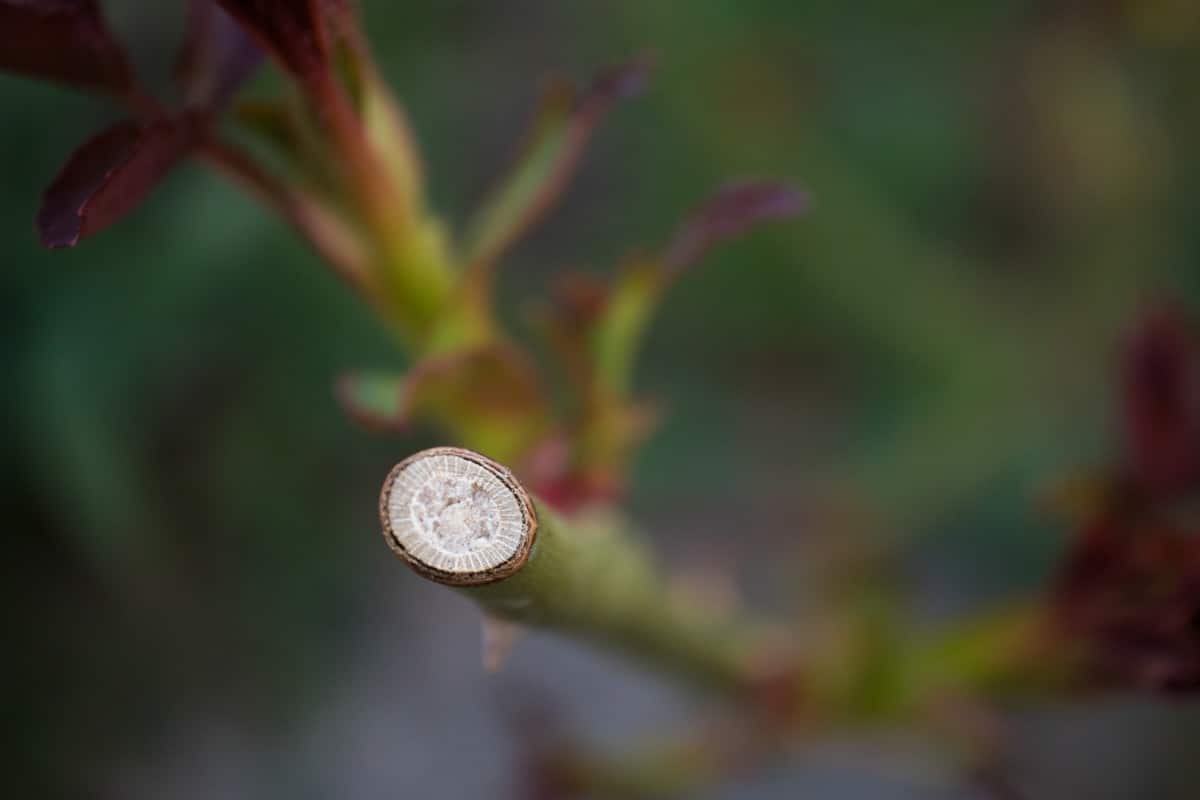
The rose tree should be in a dormant state for it to withstand this “operation” in the best possible manner.
But it is also very important to avoid spells of frost which might hinder your rose tree’s correct development.
That’s why the best time to prune is at the end of the winter while the rose tree is still at rest and there are no more risks of freezing weather anymore.
Pruning rose trees will invigorate them.
It is needed to ensure proper development and blooming of the shrub.
→ Take cuttings from trimmings to propagate them; though not the ideal timing, at least some will grow for sure.
→ Also, grafting can be performed at this time.
Every rose is pruned at the same moment — late winter, once hard frost is past — but not with the same severity. The table below sets the four groups covered in this article side by side, so you can find yours before reading the detail.
| Rose type | Habit and size | How hard to prune | What to keep |
|---|---|---|---|
| Cane, bush or shrub roses | Free-growing, 3 to 5 feet (1 to 1.5 m) high | Light; an annual cut-back is not compulsory | New wood and the most vigorous branches |
| Large-flowered roses (Hybrid Tea) | The most common type, grown for big flowers in many hues | Hard — often down to a couple of inches above the ground | The most vigorous branches; old and dead wood is discarded |
| Climbing and rambler roses | Long stems trained upwards, magnificent when kept in hand | Selective, stem by stem, at the right moment | The scaffold branches, trained to length |
| English roses | Shrubby, close in habit to bush and shrub roses | As for shrub roses, but a bit more severe | The strongest wood, as with bush roses |
Find your group in the table, then follow the matching section below for the cut itself.
Click on the type of rose tree you wish to prune:
Cane roses = bush roses = shrub roses
This rose tree can be left to freely grow up to 3 to 5 feet high (1 to 1.5 meters), and cutting it back every year isn’t mandatory.
It is good to favor growth of new wood, selecting and keeping the most vigorous branches.
For more details, follow the link below:
Rose trees with large flowers = Hybrid Tea roses
This type of rose tree is the most common variety, and it is often cut down to just a couple inches (a few centimeters) above the ground. It is appreciated for its large flowers that come in many hues and colors.
For these hybrid tea roses, again the most vigorous branches are selected and kept, discarding old and dead wood.
For more details, follow the link below:
Climbing rose trees + Rambler roses
When properly cared for and pruned as years go by, climbing rose trees can become magnificent; however, if neglected for several years they can become quite a nuisance.
Selecting the stems to prune, the correct moment to prune, and training the lengths of scaffold branches is important.
For more details, follow the link below:
English roses

The pruning of English roses is similar to that of bush or shrub roses, but is in this case a bit more severe.
For more details, follow the link below:
See also:
Do not throw the prunings away: the healthiest stems root readily, and taking rose cuttings costs nothing but patience.