A well-pruned climbing rose carries its short flowering sprigs along a main stem like the bones of a fish, five or six vigorous branches forming the framework. It cannot be pruned like a conventional rose bush: wait until the plant is three years old, cut side shoots back to three buds, and it will climb further and flower more.
The pruning of a climbing rose tree must help the rose bush climb further on its support structure, while maximizing blooming.
Note, though, that such pruning should only be performed on specimens at least 3 years old.
Repeat-blooming climbing rose trees, those that bloom several times a year, require pruning in February or March.
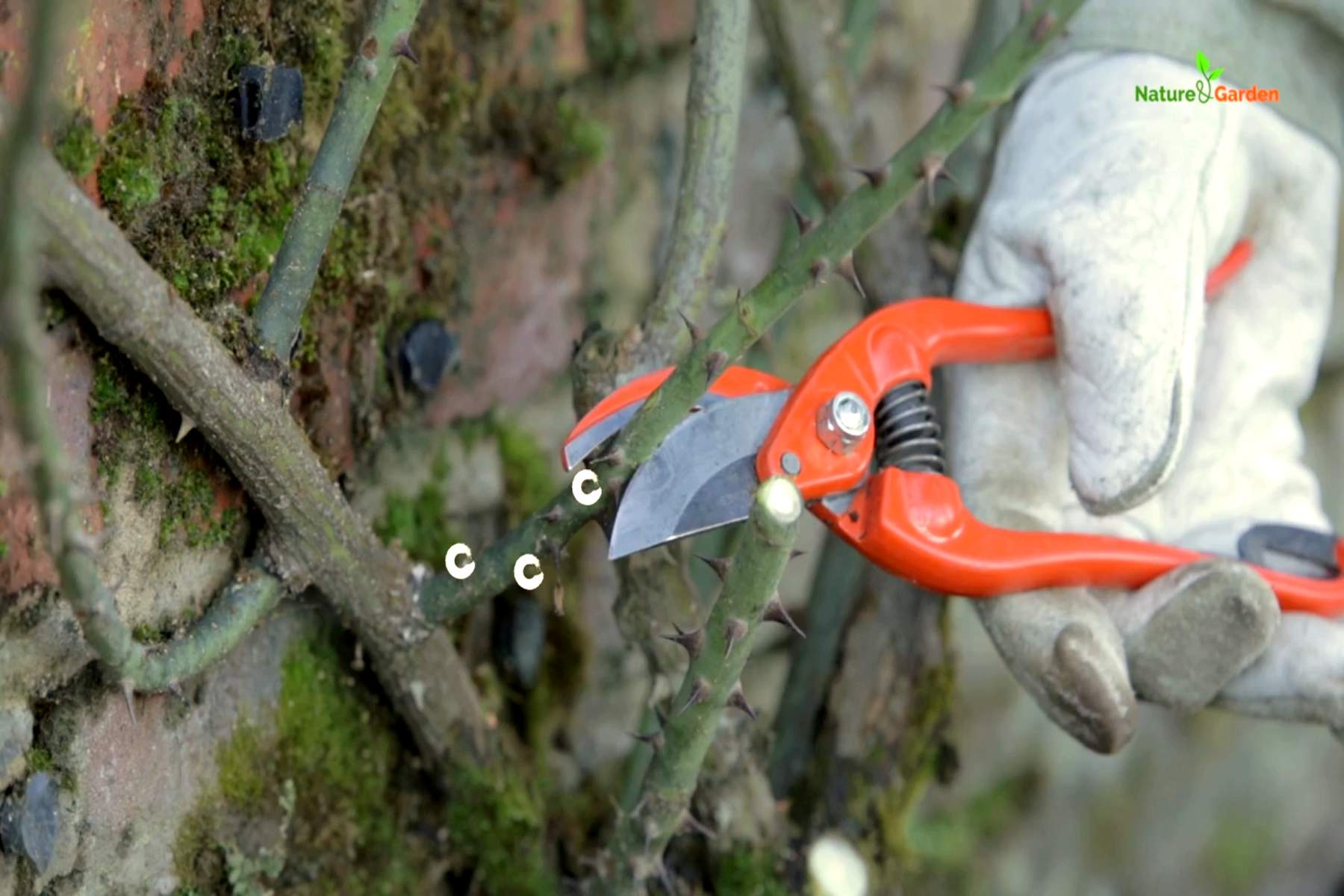
At the end of winter and when freezing is over, prune short sprigs along the main climbing branch, so that they form a shape like a fishbone.
Begin with eliminating dead wood that has dried up.
Remove the oldest branches, the “old wood”. Don’t be afraid of removing these branches, because once they’re gone, young stems become more vigorous and bear more flowers.
Finally, the pruning itself: keep 5 or 6 of the most vigorous branches and prune side shoots to more or less 3 buds. This means pruning every single side shoot to around 8 to 12 inches (20 to 30 cm) from their base on the main stem (the “fishbone”).
Those main branches will form the structure of the bush.
As for once-blooming rose trees, which only flower a single time in the year, follow these same steps but only after the blooming.
Here is a video with advice on how to prune a climbing rose tree
Climbing roses commonly grown, and how each one flowers
Because pruning follows the flowering habit, it helps to know which camp your plant belongs to. Here are climbers and ramblers widely sold in garden centres, with the habit that decides when you cut.
Climbing roses commonly grown, and how each one flowers
Variety
Flower colour and scent
Flowering habit
Approximate height
Climbing ‘Iceberg’
Pure white, faint scent
Repeat-blooming, early summer to autumn
3 m
‘Golden Showers’
Bright yellow, light scent
Repeat-blooming, early summer to early autumn
2–2.5 m
‘New Dawn’
Pale shell pink, lightly scented
Repeat-blooming, early summer to early autumn
3–4 m
‘Zéphirine Drouhin’
Deep cerise pink, strongly fragrant
Repeat-blooming, early summer onwards
2.5–3 m
‘Madame Alfred Carrière’
Blush white, richly scented
Repeat-blooming, early summer to autumn
4–5 m
‘Compassion’
Apricot-pink, very fragrant
Repeat-blooming, midsummer to early autumn
3 m
‘Albertine’
Coppery salmon-pink, sweetly scented
Once-blooming, midsummer only
5 m
‘Rambling Rector’
Clusters of small creamy white flowers, musky scent
Once-blooming, early to midsummer
6 m or more
Smart tip about climbing rose trees
In summer, you can go on “cleaning up” your rose tree, removing twigs and other dead branches that are useless to the shrub’s development.
Credits for images shared toNature&Garden(all edits by Gaspard Lorthiois):
Climbing rose with secateur (also on social media) by Nature & Garden, own work
Written by Gaspard Lorthiois | Loves helping out, especially when it comes to growing things. Worked in herbal medicine, runs a farm, and dabbles in tech. Master's degree and engineer.