Home » Gardening » Roses » Preparing rose tree cuttings, when and how to do it
Preparing rose tree cuttings, when and how to do it
·
0
Preparing cuttings from a rose tree is easy to do, cheap, and begets a well-deserved feeling of pride as the new rose tree grows.
Cuttings are a way to easily propagate the favorite rose trees from your garden or your friends’ gardens.
It is also a great gift to give to your closest friends and family members, because a successful cutting is the fruit of much patience and love for plants.
Without more ado, start your own rose tree cuttings!
Season to prepare rose tree cuttings
Choose a straight, vigorous stem grown this year
The best moment starts at the beginning of summer and extends until late autumn.
But other periods to prepare cuttings over most of the summer season are worth trying as well; although success rates are a bit lower, they still are quite good.
Take your rose cuttings early in the morning, while the stems are still full of water from the night.
Advice on how to prepare rose tree cuttings
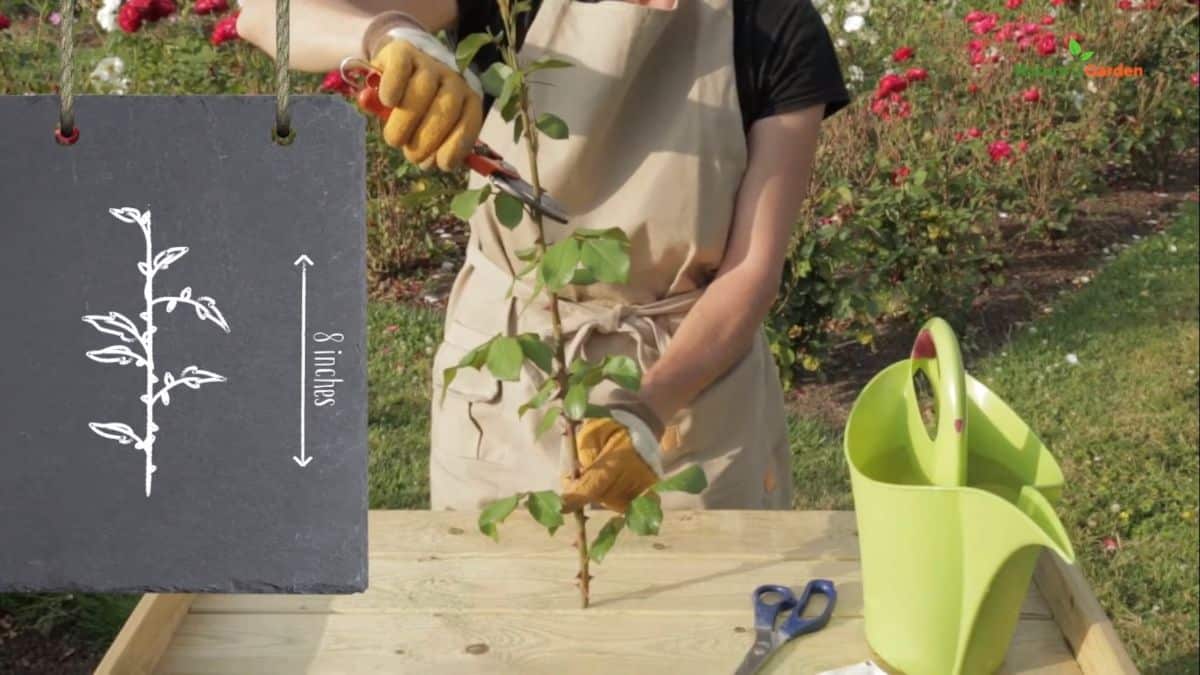
Select a nice stem from your rose tree, straight and vigorous, that has grown over the year. It must have at least 3 eyes and 1 growing bud. You may cut several at once, this will increase your chance of having a successful cutting.
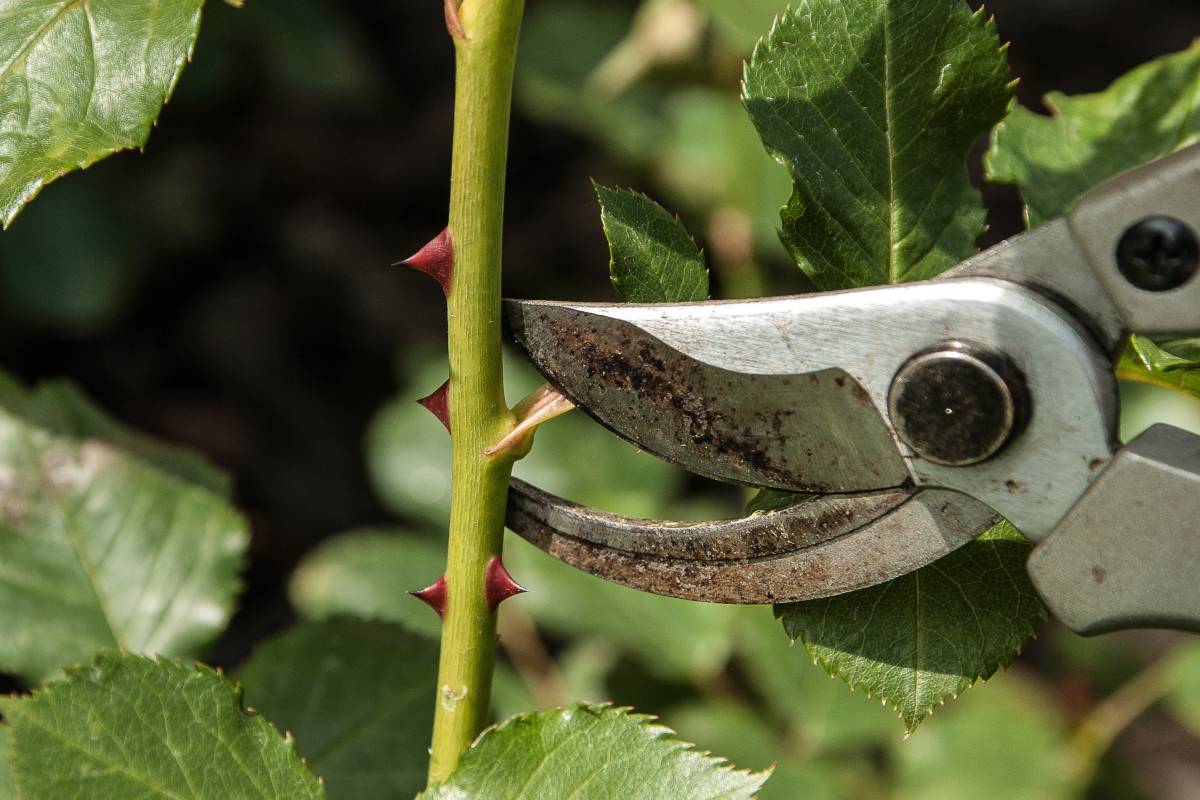
Keep only the center part of the stem – about 6 inches (15 cm) – remove the head and cut just above a pair of leaves.
Delicately remove all the leaves except for the two topmost leaves.
Remove thorns from the portion that will be buried in the ground (about ⅓ of the stem).
Dip this portion in water for a few minutes, and then dip it in a rooting agent mix that can be found in any horticulture store. Although rooting agent powder isn’t required, it does increase your cuttings’ chances of taking.
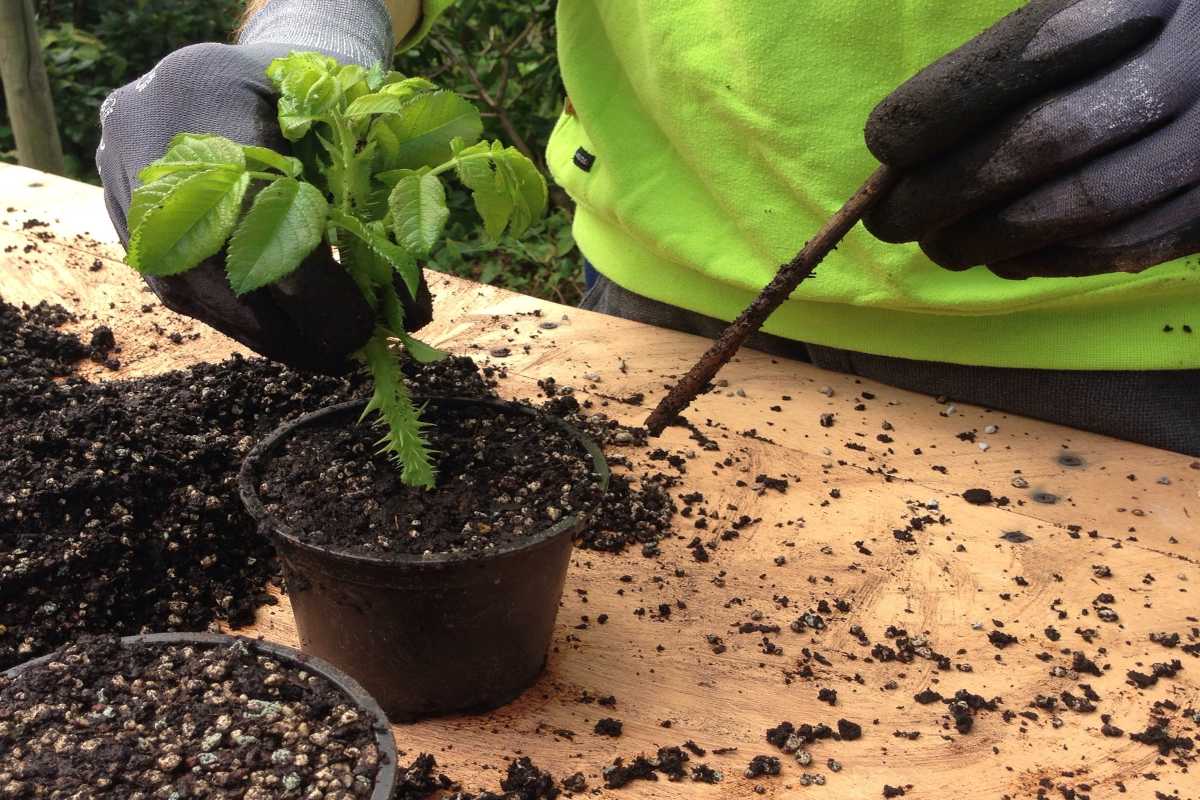
Plant the cutting(s) in special cutting soil mix, or a mix of soil mix and sand.
If there are several, space each cutting around 2 to 4 inches (5 to 10 cm) apart.
Stake each cutting to ensure it stands vertical.
Only the two topmost leaves stay on the cutting
Water regularly, but not too much, so that burgeoning roots don’t get flooded.
Keep your cuttings in a cool, dry and ventilated place.
Avoid direct sun, favor part sun with good light.
You’ll be able to plant them in the ground come the following spring.
Cuttings are usually taken from a rose already growing in your own garden or a friend’s. These are among the roses most often met in gardens and garden centres, with the habit and scent that decide where they are best planted.
Reminder: Most rose tree varieties are patented. They are the fruit of the work that breeders provided, and are then edited for sale.
Preparing cuttings from them is only tolerated for private use.
Take your cutting from growth above the graft union, because a shoot arising from below it belongs to the rootstock and will never flower like the variety you admired.
Selling cuttings of a protected variety, even at a charity plant sale, breaches breeders’ rights.
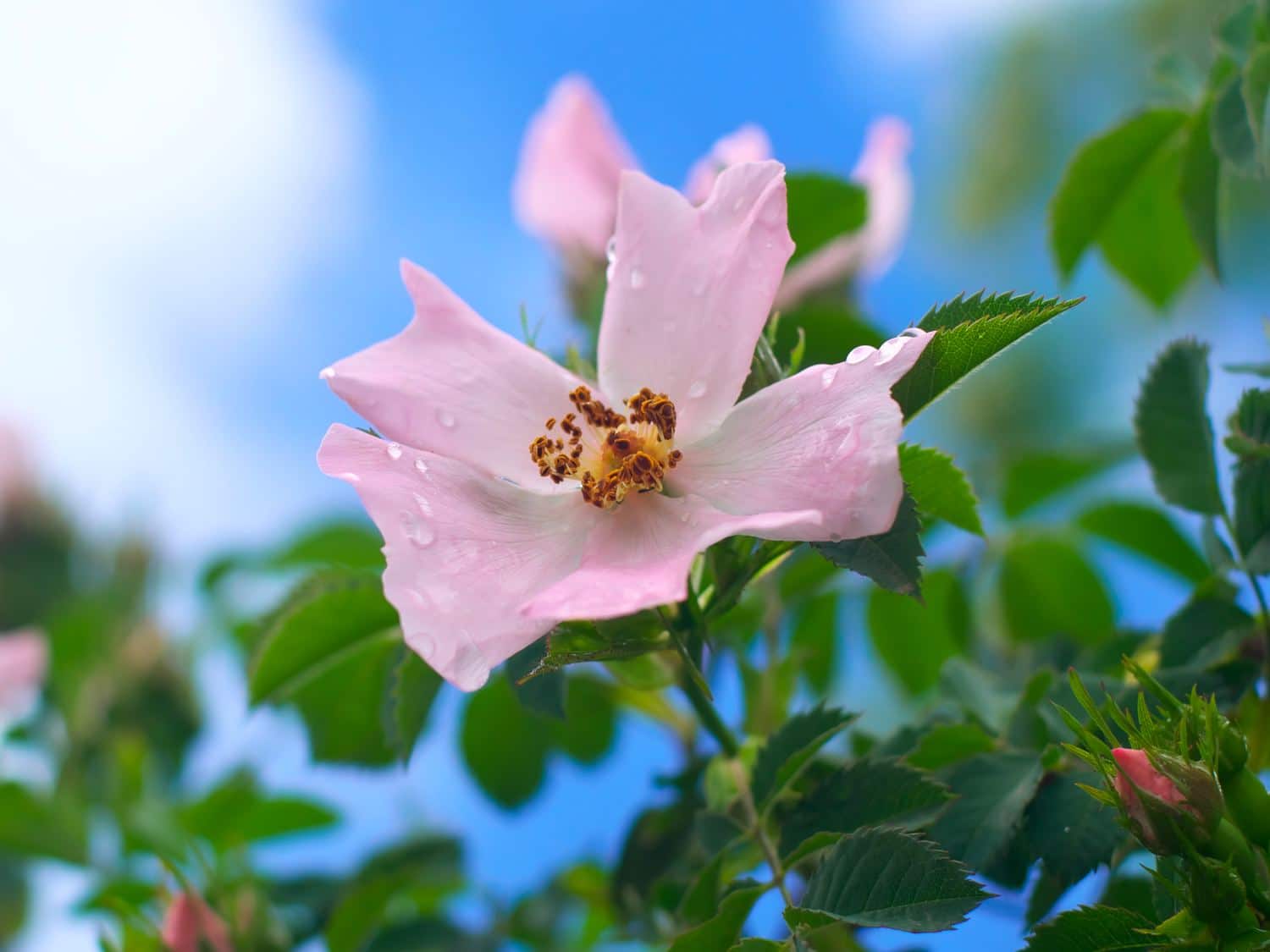
Ramblers and many species roses generally root more readily from cuttings than hybrid teas do, so it is worth starting extra cuttings of the bush varieties that strike less reliably.
A rose raised from a cutting grows on its own roots, so any shoot pushing up from the base flowers true to type and can be left to build the plant.
Images: Nature & Garden; Pixabay: Jacqueline Macou, Kontakt
🌿 Nature & Garden Newsletter
Gardening tips, recipes & seasonal advice, twice a week.