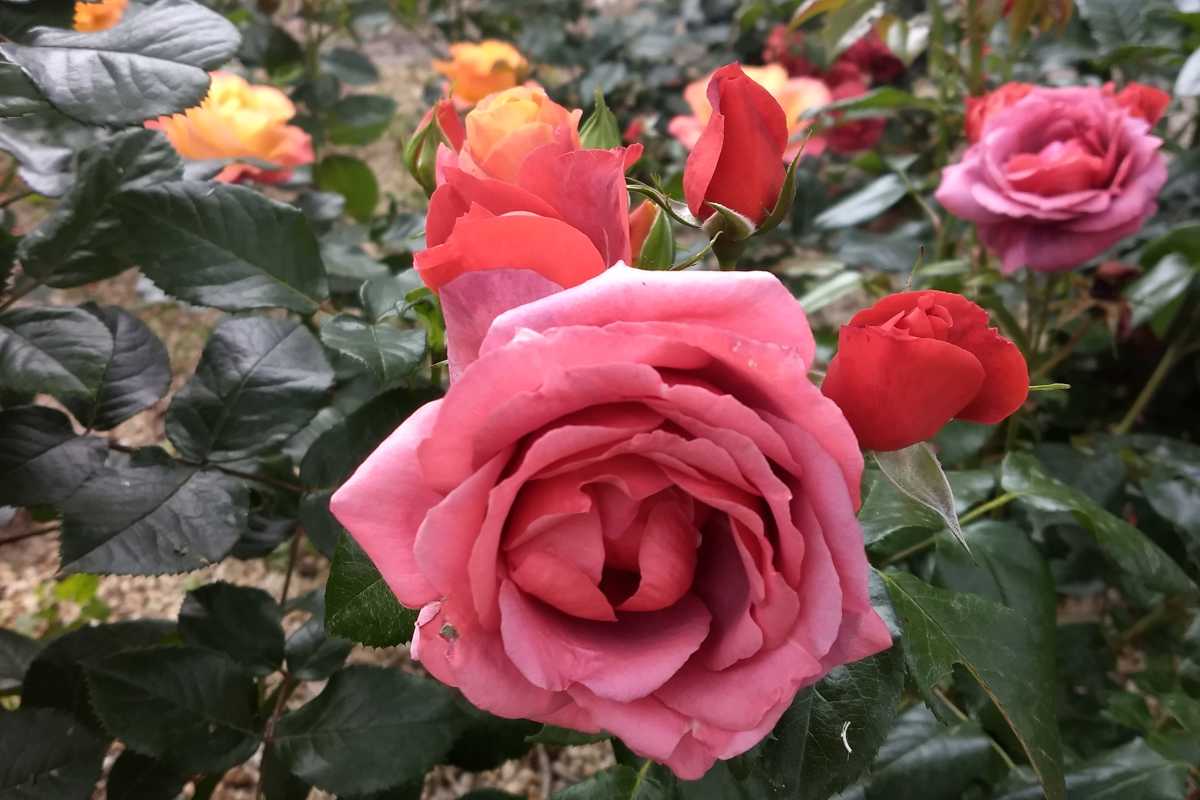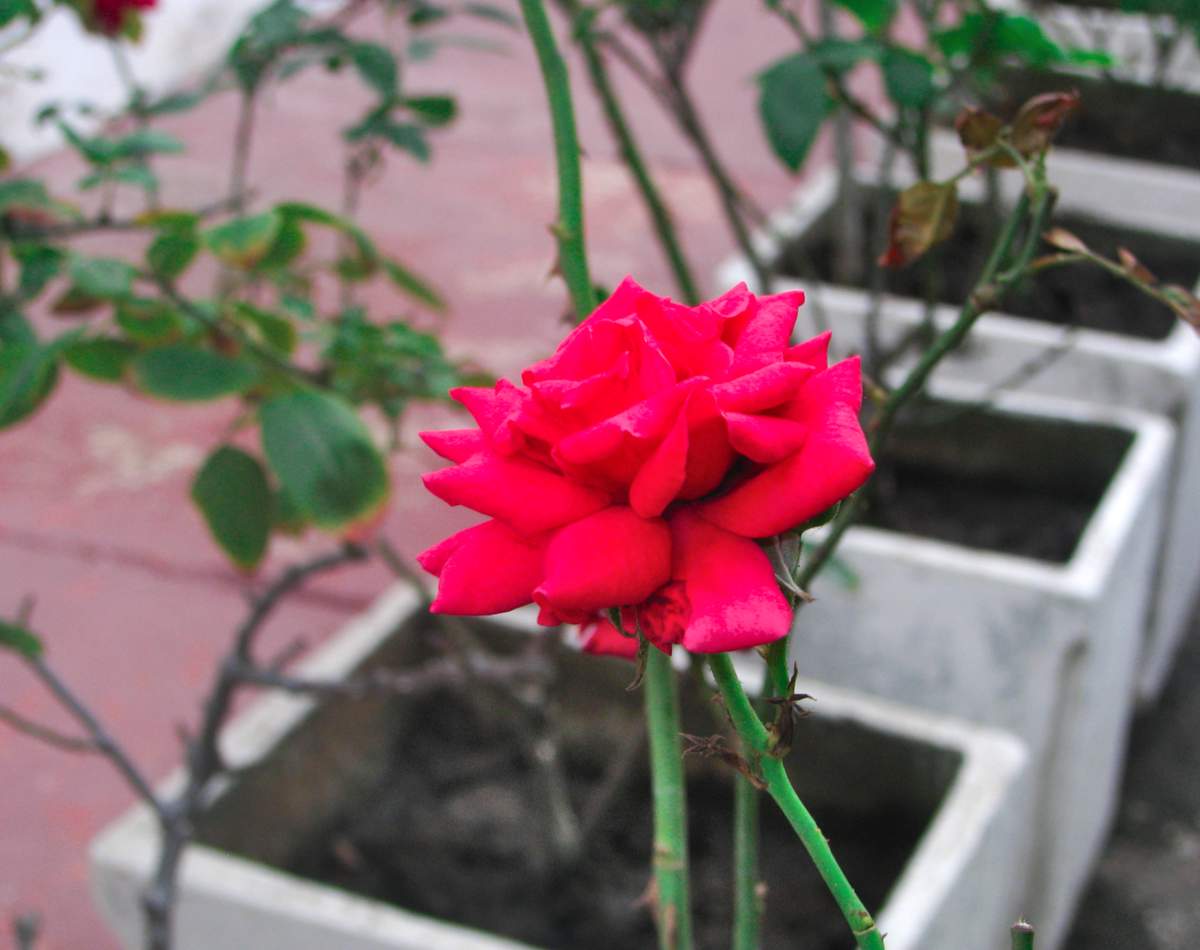
A rose arrives either potted, in the container it was last transplanted into, or as a bundle of bare roots. Hardy to -13°F (-25°C) yet dependent on sun to flower, it asks for a sunny spot sheltered from strong wind; plant it in autumn and the roots get going before spring growth.
Roses can be purchased in containers, often the pot in which it has most recently been transplanted, or with bare roots.
Rose trees resist cold winters particularly well, down to -13°F (-25°C), but need sun to bloom. You would thus do well in choosing a sunny spot with shelter from strong wind.
Ideally, plant roses in fall to speed root development up before spring growth.
Nonetheless, you’ll be able plant them in spring if they are in containers or pots, as long as you water them abundantly for the first months after their transplanting.
Even during winter can your rose trees be planted, if the weather permits and that it isn’t freezing.
Avoid planting in the heat of midsummer if you can, though container-grown roses can be planted then, provided you water them thoroughly and regularly until they are established.
If bare-root roses arrive while the ground is frozen or sodden, heel them into a trench of moist sand or compost in a sheltered corner until conditions improve.
Roses can go in the ground over most of the year, but the season decides whether you can use bare-root plants and how much watering you will owe them. Use the table to match your rose to the moment you are ready to plant.
| Planting time | Suits | Why plant then | Watch out for |
|---|---|---|---|
| Autumn | Bare-root and potted roses | Roots develop ahead of spring growth | Nothing — this is the preferred season |
| Winter | Bare-root and potted roses | The dormant plant settles quietly | Only if the weather permits and it isn’t freezing |
| Spring | Potted or container roses only | Still possible once autumn has passed | Water abundantly for the first months after transplanting |
| Midsummer | Container-grown roses only | Workable if you cannot wait | Water thoroughly and regularly until established |
Whatever the season, firm the soil down well so no airspace is left between roots and soil.
In this case the planting is quite straightforward.
The season doesn’t really matter, even though it is always better to plant in fall, preferable earliest in November.
IMPORTANT: Only plant bare-rooted rose trees during the mid-November to end of February period; additionally, avoid days of freezing.
Follow the same process as for the container-bought rose tree, but this time instead of soaking the clump in water:
When planting, it is important to press down well when the rose tree is planted, so that all the roots are touching your blend of garden soil and soil mix.
Rose trees need a lot of sunlight to bloom abundantly.
Leave space around each rose tree so air moves freely between the branches, since stagnant, humid air favours blackspot and powdery mildew.
Avoid planting a rose where another rose grew before, as the soil often causes poor growth in the replacement.
A spot that catches morning sun dries the dew from the leaves early.
Keep rose trees away from the base of large trees and hedges, where thirsty roots and overhead shade both cut back flowering.
If your ground stays wet, plant the rose on a raised mound of amended soil to lift the roots above the waterlogged layer.
Every year, rose trees should be pruned. This is the only way to ensure beautiful blooming and proper growth for your rose tree.
Carry out the main rose pruning in late winter or early spring, as dormancy ends and the buds just begin to swell, but before they have broken into active growth.
Cut about a centimetre above an outward-facing bud, sloping the cut away from it, so new shoots grow towards the outside of the plant and let air through the centre.
Start by taking out dead, damaged and crossing stems, and thin out spindly, twiggy growth, which is generally weaker and tends to produce smaller, poorer flowers than sturdy shoots.
Disinfect your secateurs before moving from one rose tree to the next.
Pull off any suckers sprouting below the graft union rather than cutting them, because a clean snap at the base discourages regrowth.
Water rose trees at the base rather than over the leaves, since wet foliage encourages black spot and mildew.
Pull suckers off at their point of origin below the graft union instead of cutting them, as cut stubs regrow stronger.
Deadhead faded flowers down to the first leaf bearing five leaflets to trigger a fresh flush on repeat-flowering roses.
Spread a mulch around the base, keeping it clear of the stems.
Try companion planting to get rid of basic pests: nasturtium will attract aphids away, and Allium will repel them without penalizing rose trees in summer.