Mahonia eurybracteata, a yellow-blooming fall shrub
·
0
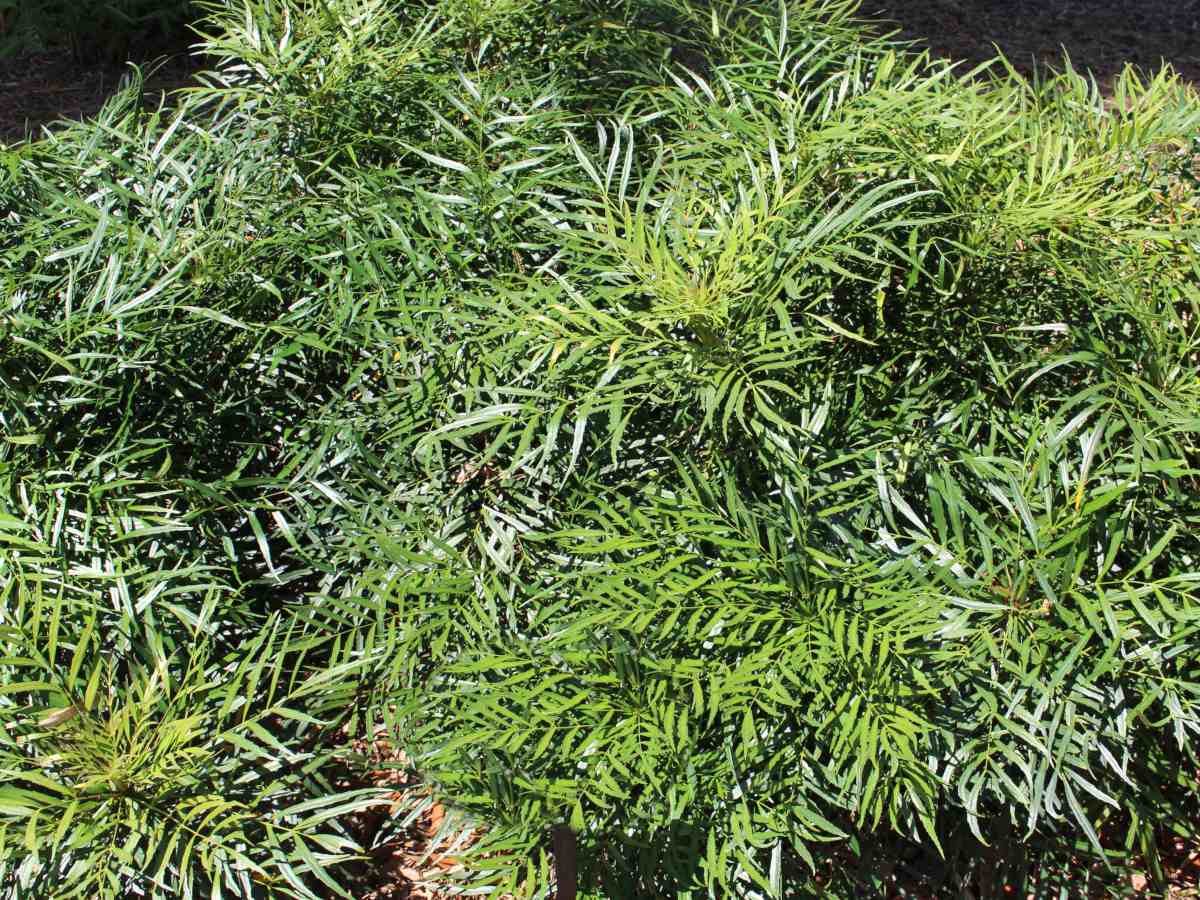
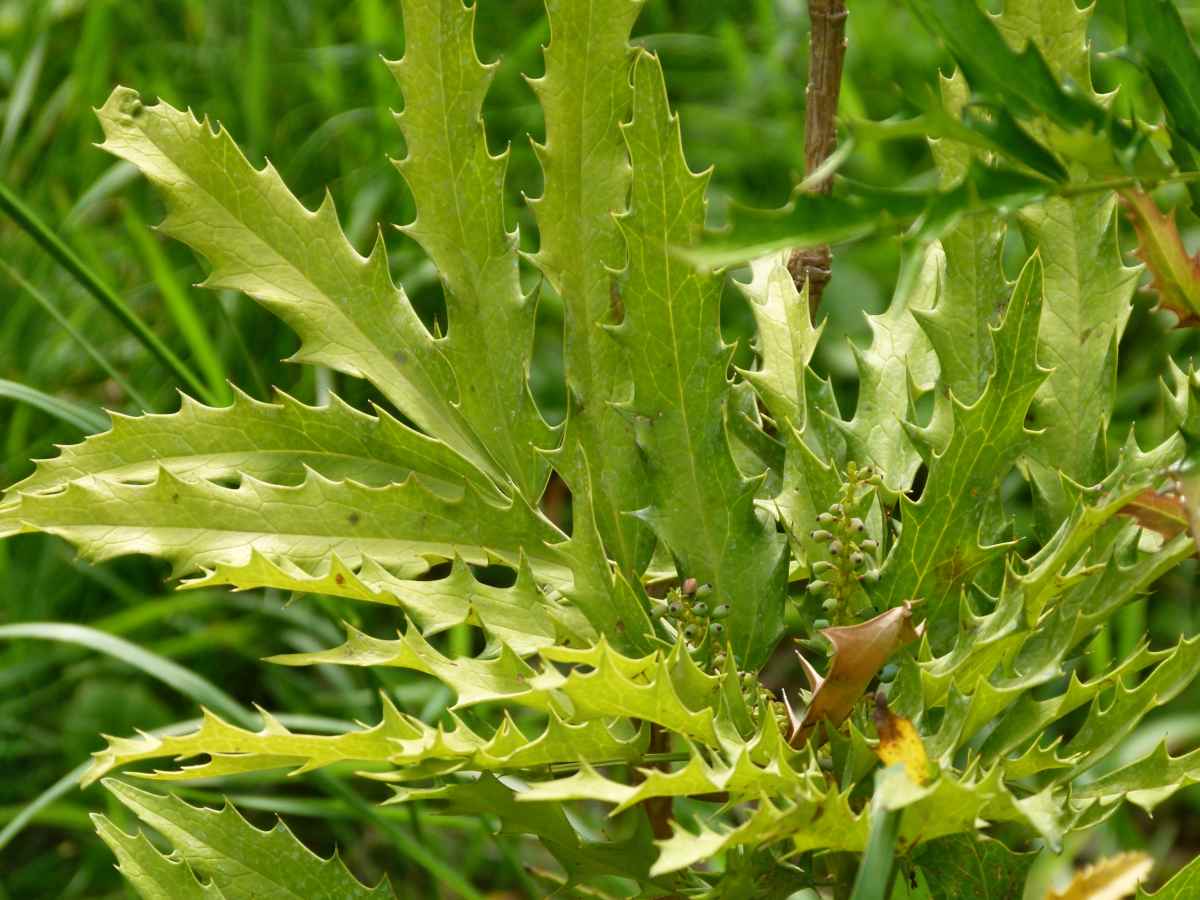
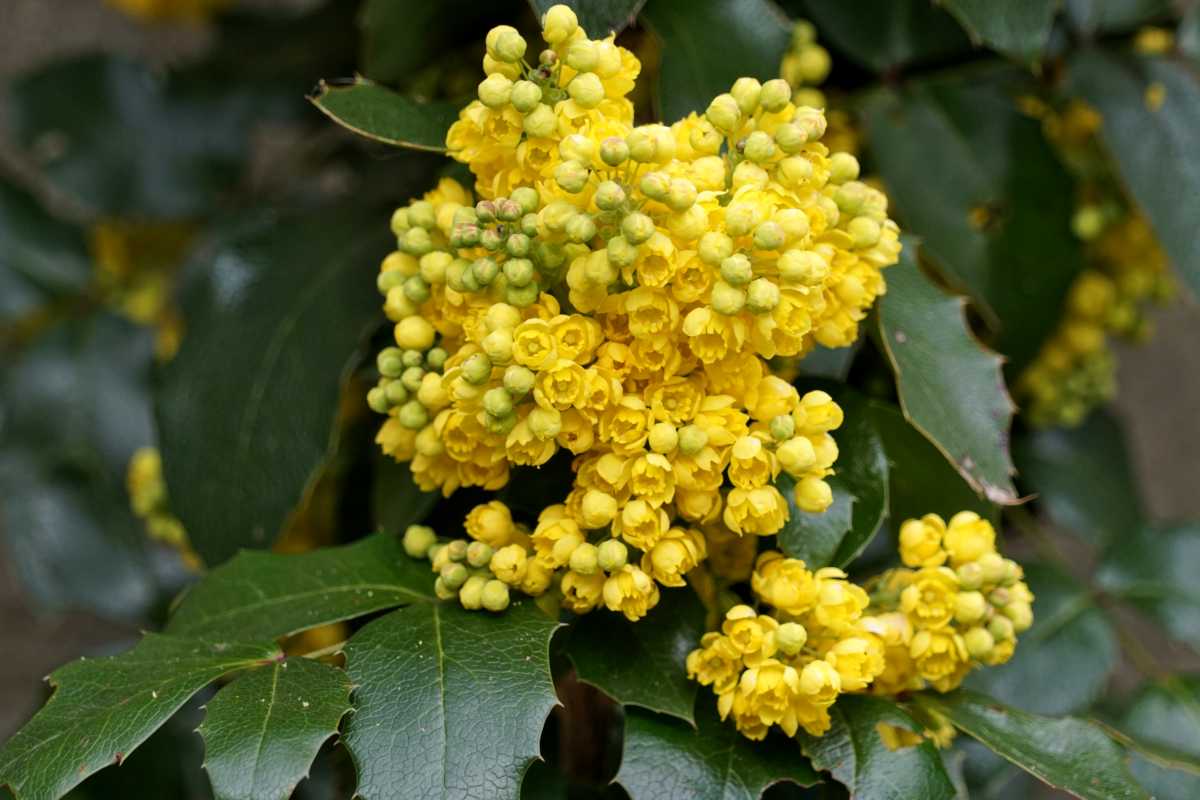
Wispy, bamboo-like leaves sway in the lightest breeze, then in autumn a power-packed yellow bloom opens with a scent close to that of mimosa. Mahonia eurybracteata is an evergreen shade shrub that stands out equally in borders and planters; as long as the soil never lies waterlogged, it will thrive.
Mahonia eurybracteata at a glance
Name
Mahonia eurybracteata
Former name
Mahonia confusa
Family
Berbericaceae (barberry)
Type
evergreen low shrub
Height
about 3′ tall (1m)
Exposure
part sun or shade
Soil
average, better if rich
Blooming
autumn
Growing this plant in your garden will definitely give it an elegant Asian touch! This mahonia plant with wispy, bamboo-like leaves will stand out in both gardens and planters.
When air-layering or marcotting, remember to stake the stem you’re working with.
Reproduction with seeds
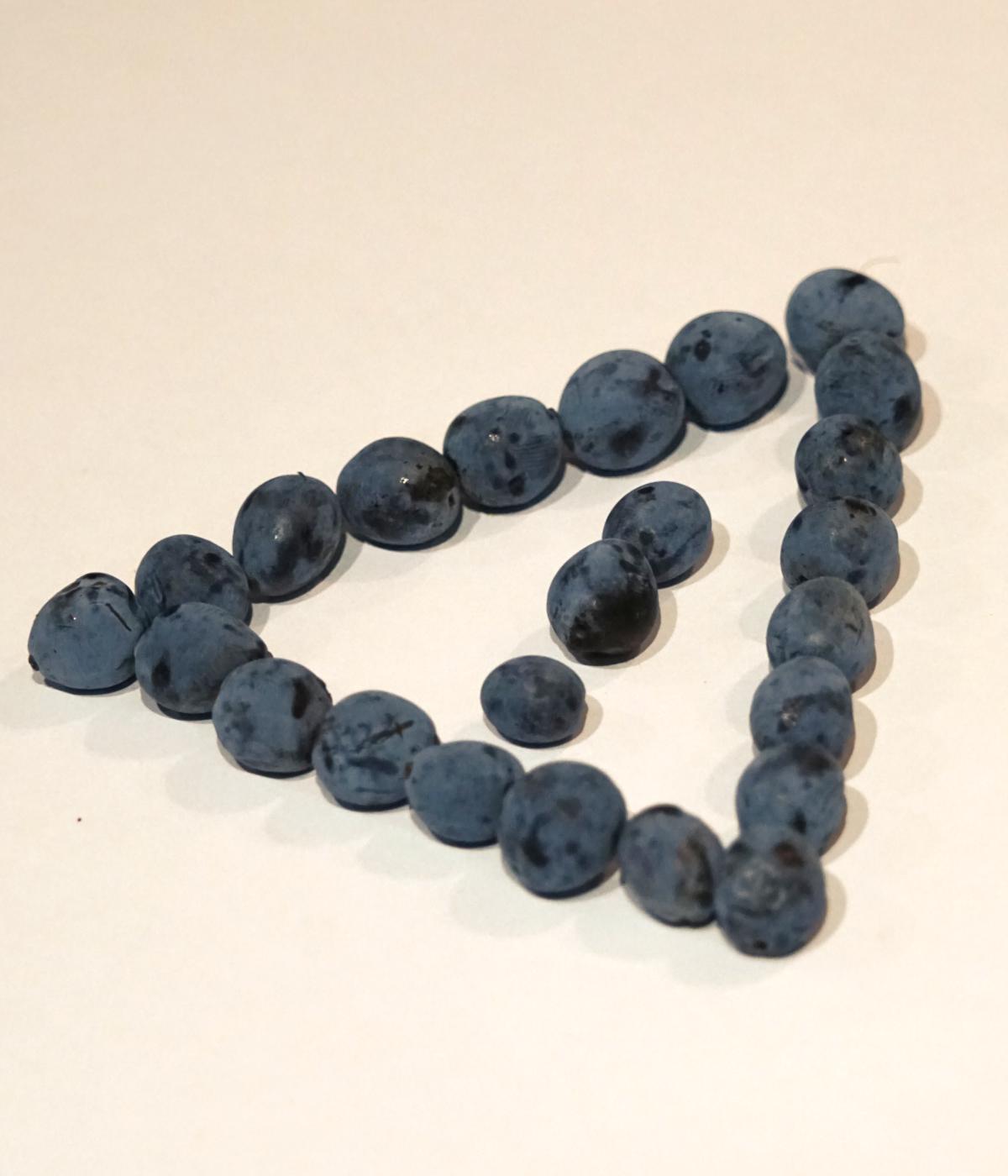
Your Mahonia eurybracteata will bear hundreds of berries, each of which contains from 2 to 5 seeds. That’s a lot of sowing power!
Since Mahonia eurybracteata is still rather rare in our parts, seeds will either appear from self-pollination or from cross-pollination with other species.
Common mahonia is often the “Mahonia aquifolia” species which is different but sometimes cross-fertile with the Mahonia eurybracteataspecies.
Because of cross-pollination, it’s probable that not all flowers go to seed. Also, only few seeds will be fertile and germinate!
This Mahonia will send out shoots from the base. It’s possible to split the plant clump with a sharp spade.
Spring is when to divide this plant.
Three ways to multiply your Mahonia eurybracteata
Cuttings, seed and division all work on this shrub, but they do not happen at the same moment of the year and they do not give the same plant. Here is how the three compare before you commit.
Three ways to multiply your Mahonia eurybracteata
Method
When
What to expect
Cuttings (stems selected from the current growth)
late summer
An exact match of the parent plant, and it comes into bloom earlier
Seed, sown in nursery pots indoors
late winter, potting on until early autumn
Germination in about a month; only a few seeds are fertile, but seedlings live longer
Dividing the clump with a sharp spade
early to late spring
Ready-made plants to keep or give away; only needed once or twice a decade
Whichever route you take, remember these are slow growers, so young plants take their time to fill out.
Mahonia eurybracteata care
This shrub will fend off on its own in the ground, but in pots you must water and give it fertilizer.
Watering & Fertilizer
Watering M. eurybracteata
Only during the first year will you need to water the plant. Indeed, the root system isn’t very developed at the start, and it’s important to help it through the first summer heat waves.
In the following years, only water during long, hot droughts.
Heat won’t kill the plant, but if it doesn’t have any water at all, it will dry out and die.
Drought tolerance only appears once the plant is well established.
M. eurybracteata can develop quite a deep root system if need be, with time.
Fertilizer
Not much fertilizer is needed. It will survive on poor soil, but for it to thrive you must give it some sort of fertilizer at least yearly.
When growing your Mahonia eurybracteata in pots, if it’s too large to repot, then go for topdressing every two or three years.
Pruning Mahonia eurybracteata
Slow growth means this shrub rarely needs the secateurs
Unless it grows too large, you won’t need to trim this slow-growing plant.
Trimming
There usually isn’t any need to prune the plant. All the species and cultivars won’t grow very large for a shrub. Expect it to reach a maximum size of 1 yard or meter tall and wide.
If you do need to trim it smaller, do so in spring
Controlling spread and invasiveness
Usually, these hardy plants are slow growers. They’re easy to keep under control. If, however, they start growing too large for the plot of land you’ve allocated to them, there are several things you can do:
cut dead flowers off when they’ve wilted away. This will deprive you of those edible berries, but it’ll also keep the seeds from sprouting.
If you’ve the time, better harvest the mahonia instead and use the seeds for food!
Divide the clump and gift or discard the portion you remove. You’ll only need to this once or twice a decade, though.
Caring for M. eurybracteata in winter & summer
Winter care
This shrub is rather hardy, coping with cold weather dropping down to 14-15°F (-10°C).
Remember, however, to shelter it from strong winds.
In open ground, it won’t be as hardy.
You can protect the plant in winter if it gets any colder. Depending on the species and cultivar, some leaves might turn red and/or fall off during stark freezing.
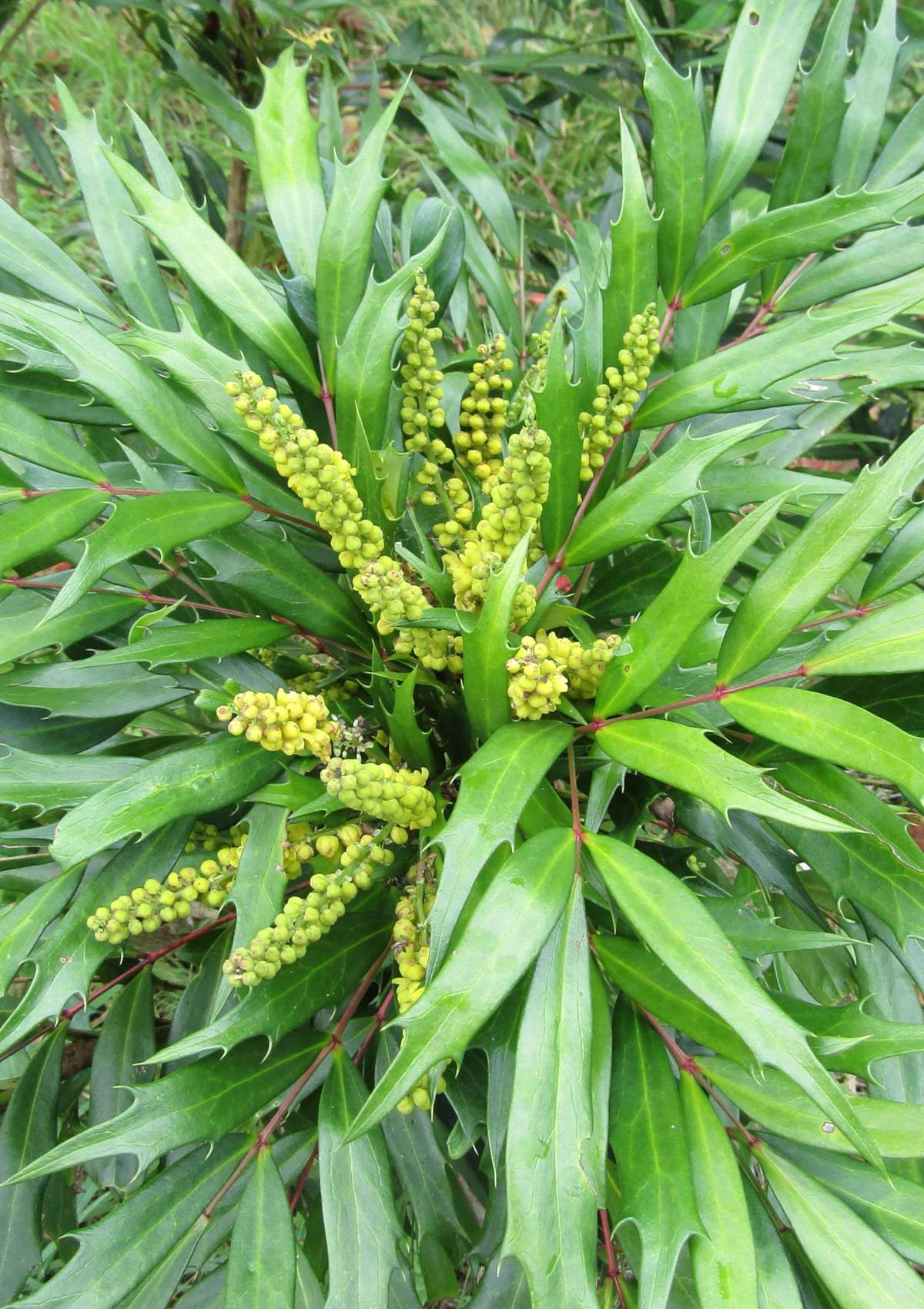
Mahonia eurybracteata ‘Chalingba’ (subspecies ganpinensis) – long, elegant leaves with two to four soft spikes along thick, leathery leaves.
Mahonia eurybracteata ‘Marvel’ – smooth-edged leaves quite unlike any other variety
Mahonia eurybracteata ‘Narihira’ (or ‘Nara hiri’) – also a rather common variety, requires more water than others.
Mahonia eurybracteata ‘Indigo flair’ (or ‘sPg-3-018’ for the specific variety name) – a special variety with deep purple-green leafage.
Botanists distinguish two main types of Mahonia eurybracteata.
Mahonia eurybracteata subspecies eurybracteata which is slightly more widespread in its native range. It has slightly wider leaves, nearly an inch wide (2.5 cm).
Mahonia eurybracteata subspecies ganpinensis which has a more reduced native range, but is now more common since it has started to naturalize in different places across the planet. Leaves are narrower, maxing out at about ½ inch (1.5 cm).
Learn more about the magnificent Mahonia eurybracteata species
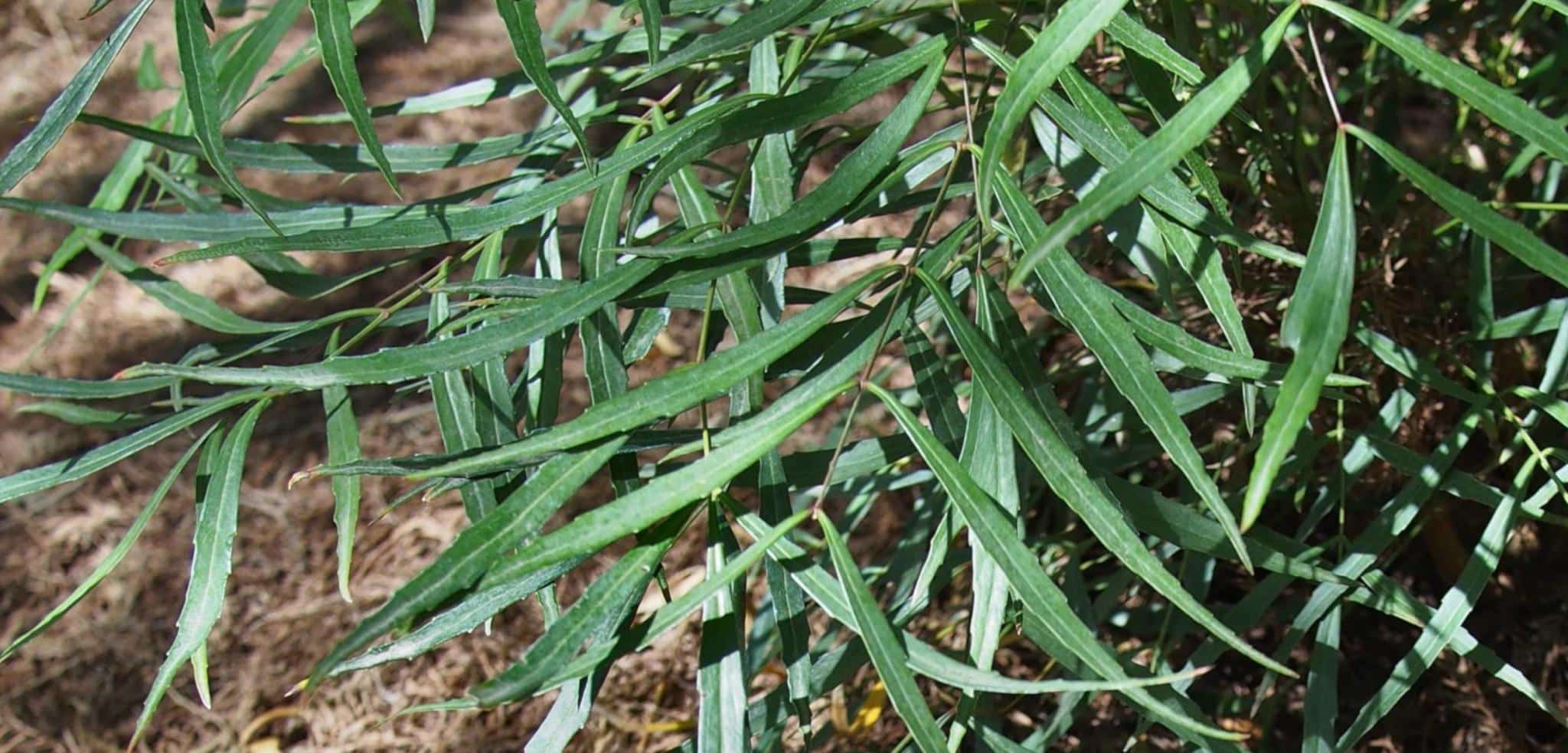
Threadlike leaves that sway in the wind
You’ll be immediately swayed off your feet when you first set your eyes on a wonderful Mahonia eurybracteata plant.
The beautiful thin leaves are soft and don’t have the typical “Mahonia spine” thorns or pricks on them. They’re still quite leathery to the touch, though, which makes them feel smooth (and helps fight drought, too).
Usually, the deep olive-green to silver-blue leafage is evergreen. In only turns red and falls in the coldest of regions.
Brilliant yellow flowers
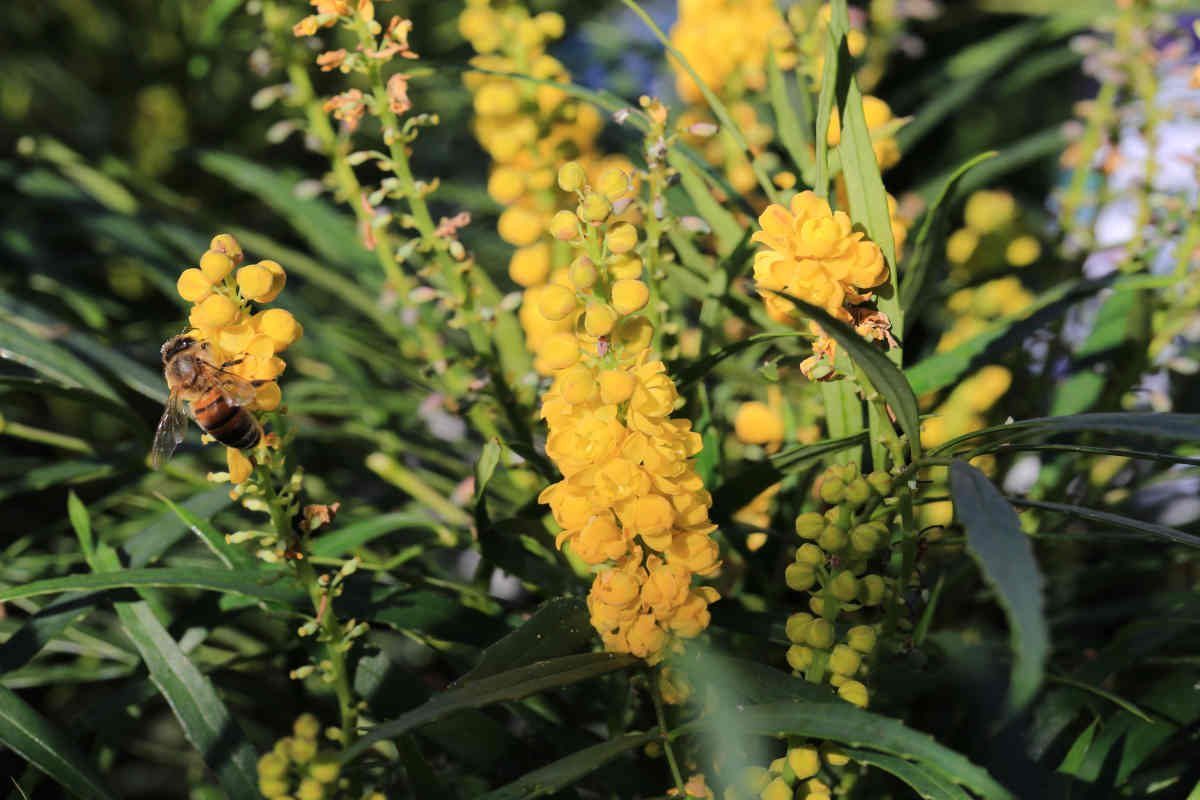
And when the sun starts feeling far away, in fall, a power-packed yellow bloom takes you by surprise with a scent similar to that of the yellow mimosa tree.
Benefits for home & health
Mahonia eurybracteata, like its cousins in the Mahonia genus, has many uses. For example, it can be used to dye food and clothes.
It’s native to Chinese area. Recently, new varieties have been introduced. Almost all varieties available in English-speaking countries are protected by patents.
Specifically, some of the native varieties are endemic to the Sichuan province. As such, they grew up near the famed Sichuan pepper tree!
Smart tip about the Mahonia eurybracteata
These wonderful shrubs look like bamboo without any of the invasive drawbacks – they are excellent for Japanese gardens!
Written by Gaspard Lorthiois | Loves helping out, especially when it comes to growing things. Worked in herbal medicine, runs a farm, and dabbles in tech. Master's degree and engineer.