From the tiny feathery spheres of mimosa in late winter to the pointed petals of the wild tulip (Tulipa sylvestris) in early spring, yellow flowers carry a garden through its dullest weeks. Trees, shrubs and bulbs all offer them, and matching each one to sun or shade keeps the gold coming from late summer right round to mid-spring.
Trees, shrubs and perennials, here is our selection of yellow-blooming flowers that pack a punch of gold!
Trees, shrubs and bulbs each bring their own shade of gold, but they flower at different moments and ask for different spots. Use this table to see which one fits your garden before reading the detail below.
Nine yellow-flowering plants at a glance
Plant
Type
Flowering
Position and use
Mimosa (Acacia dealbata)
Tree
late winter to early spring
Full sun, standalone, hardy to 10°F (-12°C)
Scotch laburnum (Laburnum)
Tree
Long fragrant bunches
Sun or part sun, shrub bed, standalone or hedge
Magnolia x brooklynensis ‘Yellow Bord’
Tree
late spring, sometimes again in summer
Sun or part sun, standalone at 25 feet tall
Forsythia x intermedia
Shrub
late winter, before the leaves
Sun or part shade, hedge, shrub bed or container
Saint John’s wort (Hypericum calycinum)
Shrub
early summer to mid-autumn, continuously
Ground cover, mound tops, rocky terrain, pots
Mahonia aquifolium
Shrub
late summer to mid-spring, depending on variety
Part shade or full shade, bed, hedge or garden box
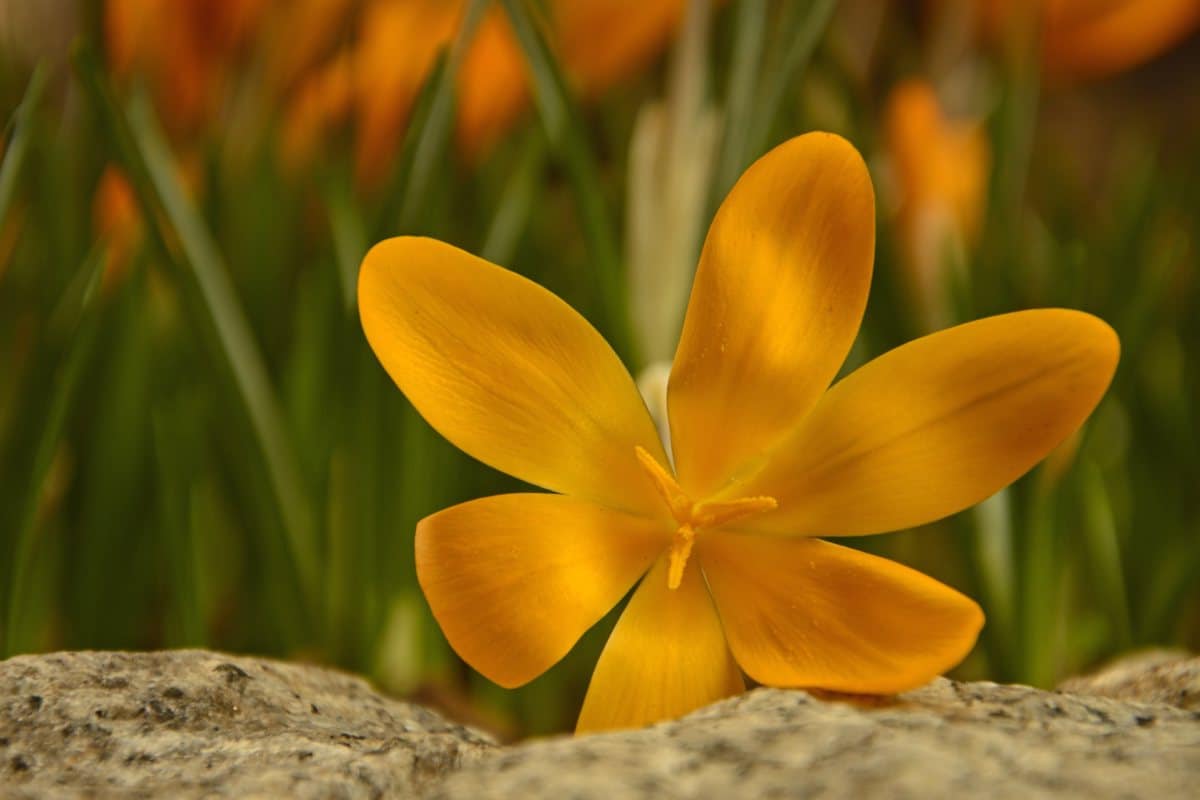
Crocus ancyrensis ‘Golden Bunch’
Bulb
late winter to early spring, opening in bright weather
Sun or part sun, edges, rockery, underbrush, pots
Daffodil (Narcissus jonquilla)
Bulb
early spring to early summer
Sun or part sun, beds, edges, rockery and pots
Forest tulip (Tulipa sylvestris)
Bulb
early spring
Prairie, undergrowth or part shade
Combine an early tree or shrub with a few bulbs and the garden keeps its gold going for months.
Blooming: in late winter to early spring, with tiny feathery spheres that make drab days feel like Spring already.
Leafage: delicate evergreen leaves that are very ornamental.
Planting: in mid-spring to late spring or early autumn to mid-autumn.
Location:Mimosa loves sun (hardy down to 10°F or -12°C). Since this tallish tree can reach 30 to 60 feet (10 to 20 meters) tall, it’s best to plant it as a standalone.
Scotch laburnum
Variety:Laburnum (the type species)
Blooming: flowers form long bunches and are even slightly fragrant.
Foliage: 3 soft green oval folioles per leaf. Deciduous.
Planting: in early spring to mid-spring or in mid-autumn to late autumn.
Location: sun or part sun, resists freezing down to -5°F (-20°C). This elegant, small tree is excellent as part of a shrub bed, a standalone, and can also make for a good hedge.
Magnolia
Variety:Magnolia x brooklynensis ‘Yellow Bord’
Blooming:large bowl-shaped flowers that are pale yellow in color. Blooms appear late spring, and sometimes a repeat blooming occurs during summertime.
Foliage: large elliptical deciduous leaves, shiny dark green in color with a soft underside.
Planting: from early spring to late spring or from early autumn to late autumn.
Location: sun or part sun, can take on cold temperatures down to 5°F (-15°C). At 25 feet tall and 15 wide (8 by 4.5 meters), this fellow deserves to grow as a standalone.
3 yellow-blooming shrubs
Forsythia
Forsythia flowers appear before the leaves do
Variety:Forsythia x intermedia
Blooming:striking golden flowers appear before leaves do in late winter, similar in shape to those of star jasmine.
Foliage: normal green leaves, deciduous and oval in shape.
Planting: from early spring to late spring or in early autumn to mid-autumn.
Location: in the sun or in part shade. Hardiness ranges from -13 to only 5°F (-25°C to -15°C) depending on the variety. Often grown in rows to form hedges, it will also look appealing at the back of a shrub bed, as a standalone, or in large-ish container.
Planting: in mid-spring to late spring or mid-autumn to late autumn.
Location: make the most of its low, bushy bearing and powerful root system to secure the top of a mound. It’s also possible to include it in a shrub bed composition, use it a a knee-high ground cover, or plant it in rocky terrain. Containers and pots are also possible.
Mahonia
Variety: Common mahonia (Mahonia aquifolium)
Blooming: flashy yellow flowers form nectar-rich clusters that smell delicious, too. Depending on the variety, these would bloom anytime from late summer to mid-spring. Perfect for shaded portions of the garden.
Foliage: look uncannily similar to those of holly! Deep green, they’re a lovely bronze-orange hue while still young.
Planting: Between late winter and early spring.
Location: part shade or full shade, in flower beds, as a hedge, standalone or garden box.
Written by Gaspard Lorthiois | Loves helping out, especially when it comes to growing things. Worked in herbal medicine, runs a farm, and dabbles in tech. Master's degree and engineer.