
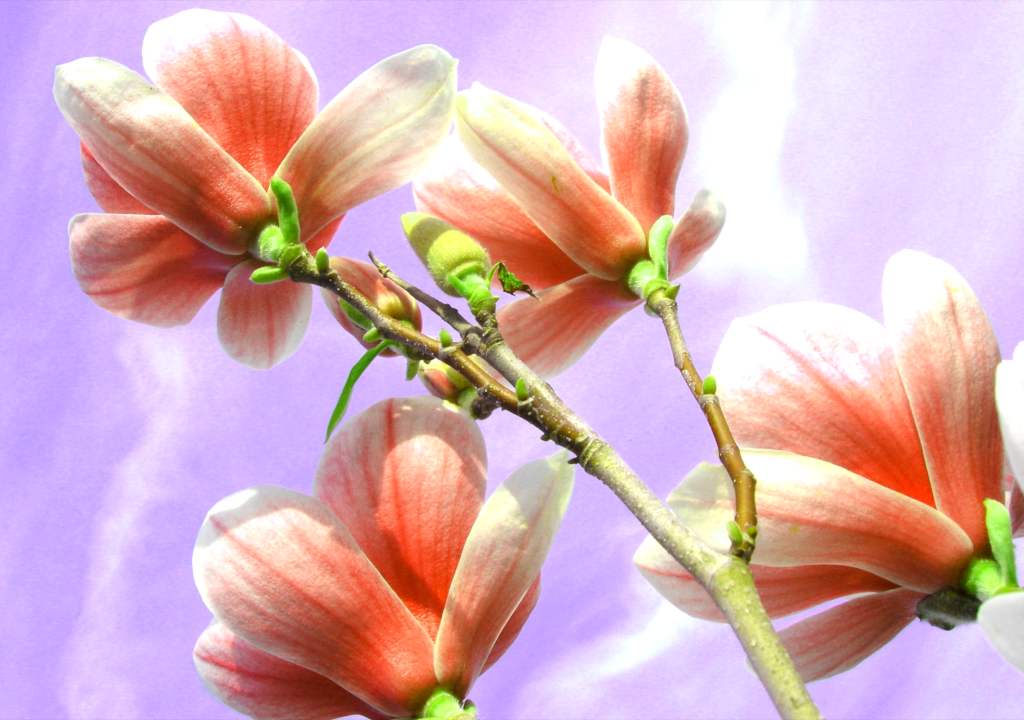
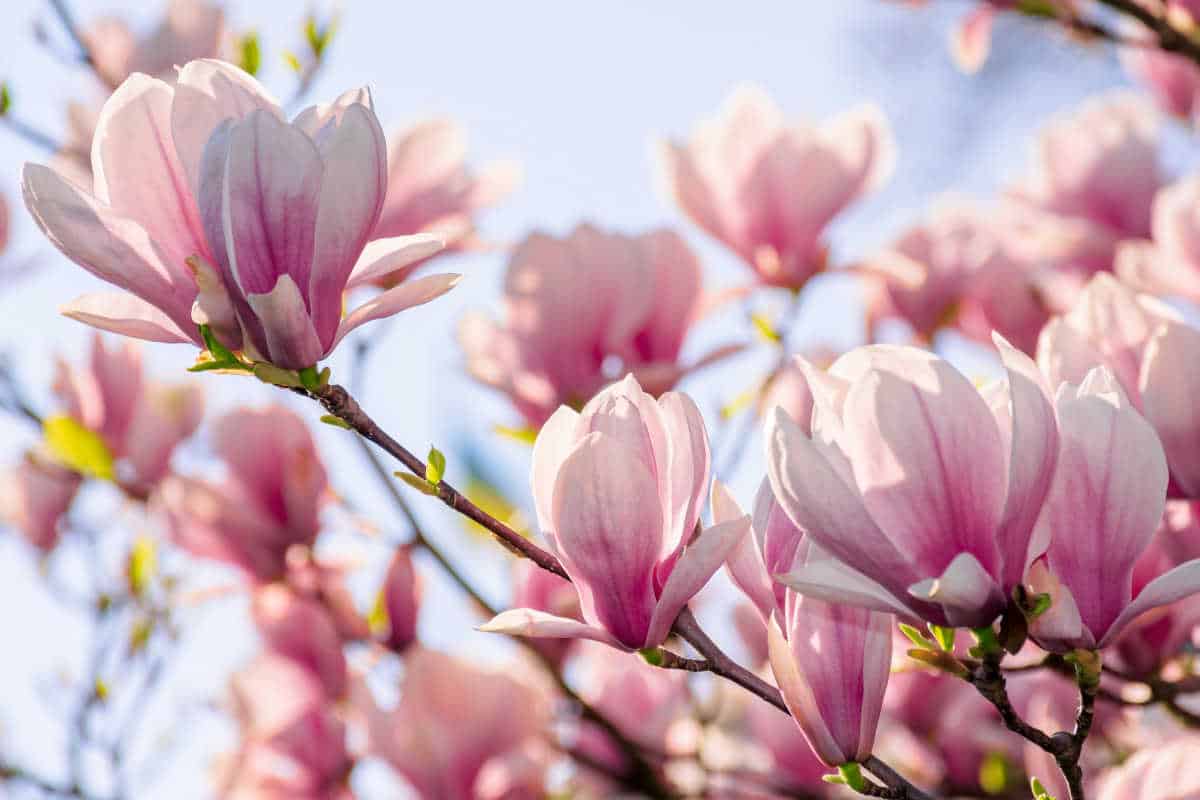
Huge tepalled blooms — up to 10 to 14 inches (25 to 35 cm) across on ‘Iolanthe’ — open on bare, leafless branches in white, pink or golden yellow. Magnolia (Magnolia spp.) is grown for this spectacular spring display; give it rich, cool, acidic and well drained soil in part sun, sheltered from wind, and it asks little else.
Their blooming in spring is spectacular: don’t miss it!
Native to China, Nepal, and Japan, deciduous magnolias are covered with flowers in spring. Rather easy to care for, they can be planted directly in the ground or in garden boxes (provide a container that is at least 16 inches (40 cm) across) in rich, cool, acidic and well drained soil.
In the garden, fill in the planting hole with a mix of garden soil, soil mix and organic soil conditioner. In garden boxes, mix ⅔ rose tree soil mix to ⅓ heath. Place your magnolia in part sun, sheltered from strong wind.
Care is rather light: no pruning and few chances of diseases. Water your magnolia during dry summers, and mulch its base to retain soil moisture.
Its roots spread in the topsoil, take care to weed around its base and place it away from thirsty plants. In garden boxes, add fertilizer in spring and summer.
Colour is only half the choice: the same flower can come on a 3 m shrub or a spreading tree. This table compares widely sold magnolias by their eventual size and shape, so you can match one to the space you actually have.
| Variety | Flower colour | Mature height | Habit | Best use |
|---|---|---|---|---|
| ‘Nigra’ | Deep purple | 8–10 ft (2.5–3 m) | Bushy shrub | Back of a border |
| ‘Susan’ | Reddish-purple | 10–12 ft (3–3.5 m) | Upright shrub | Late bloom, dodges frost |
| ‘Leonard Messel’ | Lilac-pink | 20 ft (6 m) | Spreading small tree | Frost-prone gardens |
| ‘Royal Star’ | White, starry | 8–10 ft (2.5–3 m) | Rounded shrub | Small gardens, large pots |
| ‘Bracken’s Brown Beauty’ | Creamy white | 30 ft (9 m) | Evergreen, pyramidal | Screening, mild areas |
| ‘Betty’ | Purple-pink, white inside | 10–12 ft (3–3.5 m) | Broad shrub | Mixed shrub border |
| ‘Alexandrina’ | Pink outside, white inside | 20–25 ft (6–8 m) | Wide-spreading tree | Lawn specimen |
| ‘Genie’ | Dark maroon-red | 10–13 ft (3–4 m) | Narrow, upright | Tight spaces, containers |
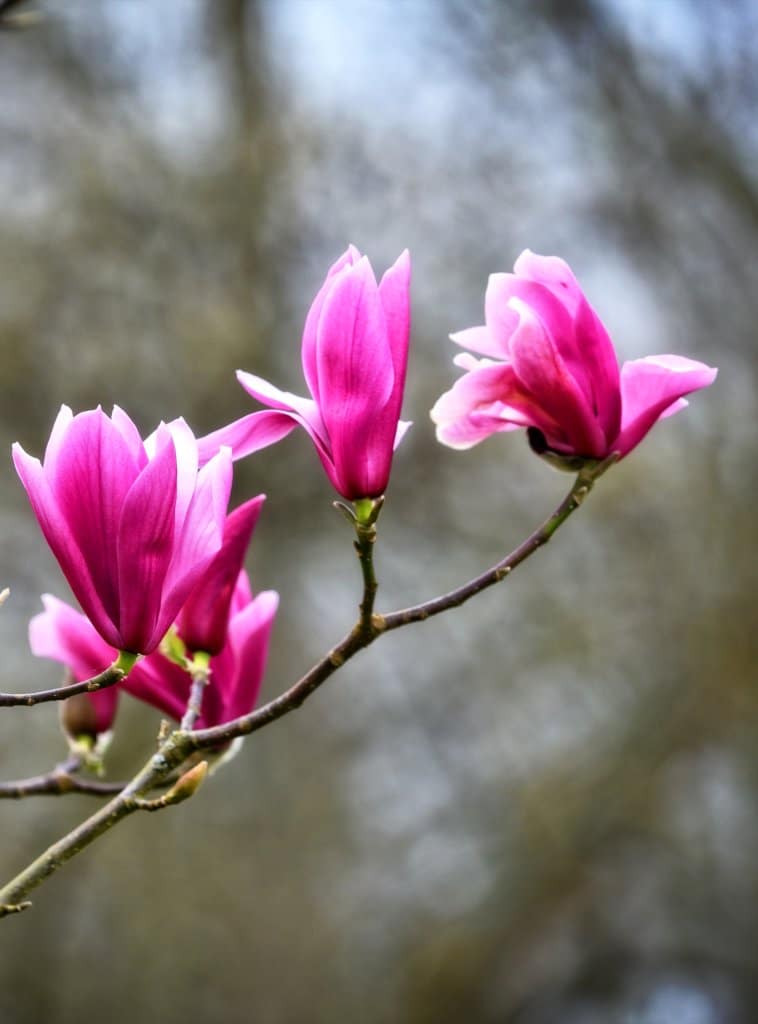
The many hybrids make for as many shapes and colors. Yellow flowers can be found on such magnolias as the very hardy ‘Elisabeth’, or the golden-petaled ‘yellow bird’.
If you’re more attracted to romantic pink flowers, test the ‘heaven scent’ variety which blooms late – May – and spreads a divine fragrance. It is well suited to harsh winters.
For an explosion of pink hues, ‘Apollo’ blooms profusely and ‘Iolanthe’ has enormous flowers: they span 10 to 14 inches (25 to 35 cm) across!
If white flowers are what you want, plant ‘Encore’, a variety that blooms spectacularly over several weeks from March to April.
The many hybrids make for as many shapes and colours. Here are the named cultivars mentioned in this article, side by side, so you can pick the flower colour and the flowering habit that suit your garden.
| Cultivar | Flower colour | Flowering | What sets it apart |
|---|---|---|---|
| ‘Elisabeth’ | Yellow | Spring | Very hardy |
| ‘Yellow bird’ | Yellow | Spring | Golden petals |
| ‘Heaven scent’ | Pink | Late – May | Divine fragrance, well suited to harsh winters |
| ‘Apollo’ | Pink hues | Spring | Blooms profusely |
| ‘Iolanthe’ | Pink hues | Spring | Enormous flowers, 10 to 14 inches (25 to 35 cm) across |
| ‘Encore’ | White | March to April | Blooms spectacularly over several weeks |
Whatever the colour, all of them flower in spring, so plan the display against a green background to make the most of it.
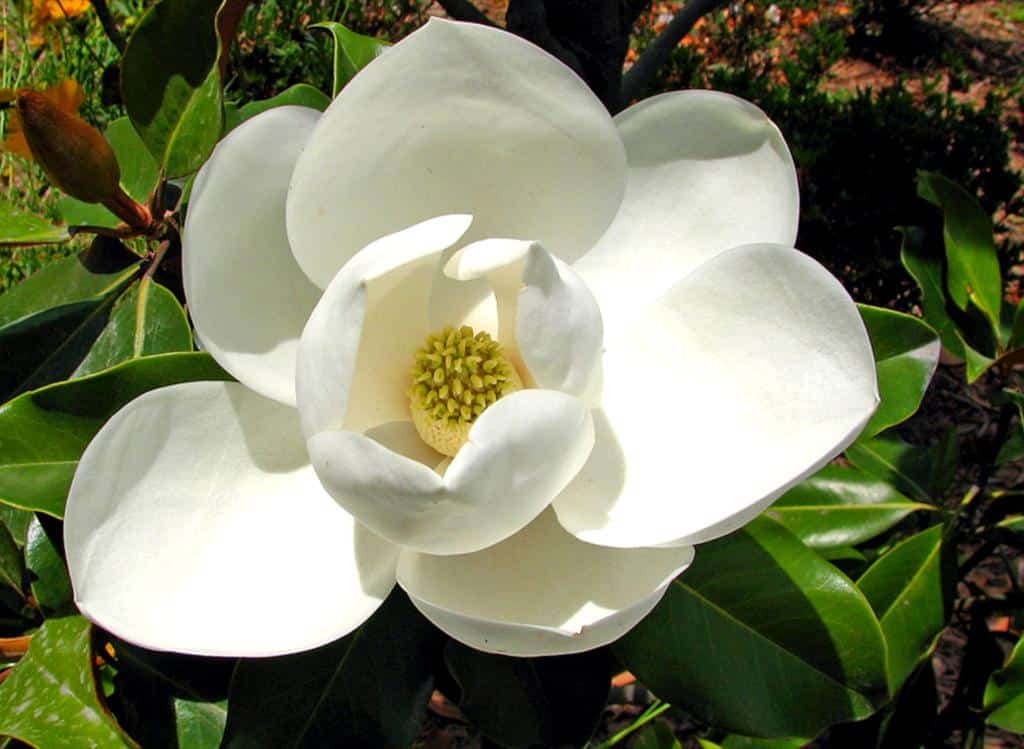
Magnolia flowers appear on leafless branches. To highlight their bloom, place your shrub in front of a green-hued background: evergreen trees or early trees.
To compose a magnificent flowered view, set it near other trees that bloom in spring – azalea, Japanese cherry tree, ornamental apple tree, camellia, etc. – or berry shrubs such as purple-fruited Callicarpa.
by Mathilde Dubois
I have seen a deep orange Mongolia tree,but can’t seem to find one to buy can you help please ?
Hi Susan, they aren’t easy to find. There are two I can think of: Magnolia champaca is a species in itself, it’s starting to appear in garden stores. Another orange-flowered magnolia is a cultivar called the “Judy Zuk” magnolia.