Branches covered with pale pink to red buds open to hundreds of white, pink or red flowers, followed by fiery autumn foliage and small fruits that feed the birds in winter. The ornamental apple (Malus) gives all the spectacle of a fruiting apple tree, without the cumbersome pruning and treatments its edible cousins demand.
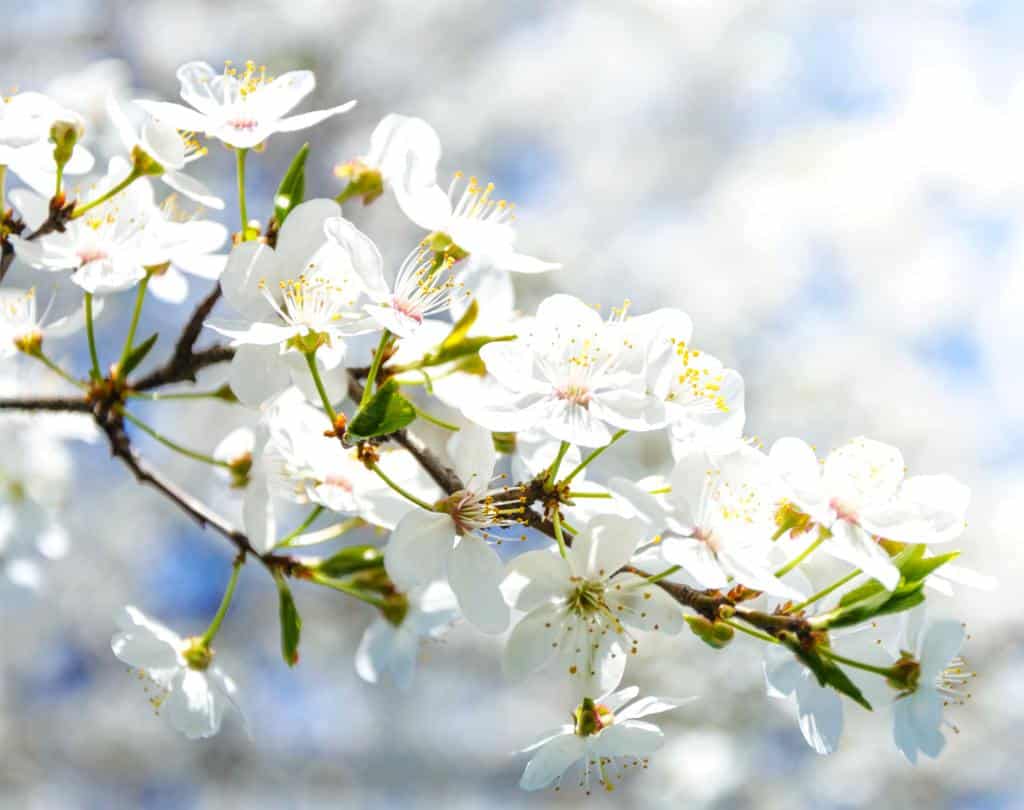
Branches covered with pale pink to red flower buds that open to reveal hundreds of white, pink or red flowers: the sumptuous blooming of fruit trees, from pear trees to cherry trees, is a heart-warming moment of spring for any gardener – and aesthete – that takes pride in work well done. Quite resilient and easygoing, ornamental apple trees make it possible to benefit from this spectacular show without all the cumbersome care, pruning and treatments of their edible fruit-bearing apple tree cousins.
Moreover, they change their dark green leaves for shimmering hues of fire in fall, and in winter, their small fruits are a boon to the birds: the stage is set for every season!
Hardy ornamental apple trees adapt to any type of garden soil, even chalky ones, and can be planted either in full sun or in part shade. It is hardy to the cold and doesn’t care for pollution, and doesn’t require any pruning except for the occasional light pruning for upkeep and harmony of its shape. As for specific care, mulch in summer if the weather is warm and dry and add a bit of fertilizer in spring.
Planting is performed in fall. To boost fruit formation, plant two different cultivars.
Ornamental apple trees come in several habits, and the one you choose depends on how much room you have and where the tree will stand. Here are the forms and named cultivars mentioned in this article.
| Form | Examples | Where it fits best | Why choose it |
|---|---|---|---|
| Bushy | Malus sargentii | Shrub bed or hedge | A species native to Japan |
| Weeping | ‘Red Jade’, ‘Cheal’s weeping’ | Standalone in a small garden | Cascading silhouette |
| Dwarf | Malus sargentii ‘Tina’, ‘Red Sentinel’ | Pots and garden boxes | Ideal where there is no open ground |
| INRA selections | Malus ‘Everest’ Perpetu®, ‘Coccinella’ Courtarou® | Cold or disease-prone gardens | Among the best for cold and disease resistance |
Whichever form you pick, planting two different cultivars will improve fruit formation.
With its small size – 16 to 20 feet (5 to 6 m) on average – ornamental apple tree is perfectly suited to small gardens as as a standalone, and it can also enter in a shrub bed arrangement or a hedge. Different forms exist: bushy (like the Malus sargentii native to Japan), weeping (‘Red Jade’ or ‘Cheal’s weeping’) or dwarf, which is ideal for growing in pots or garden boxes (Malus sargentii ‘Tina’ or ‘Red Sentinel’). Developed by the French INRA agronomic research center, Malus ‘Everest’ Perpetu® and ‘Coccinella’ Courtarou® are among the varieties that best resist the cold and disease.
Apples from ornamental apple trees are generally edible but their taste is somewhat wanting. Their high pectin content makes them very suitable to cooking jelly, though.
Laure Hamann
Credits for images shared to Nature & Garden (all edits by Gaspard Lorthiois):
White flower apple tree by Andrzej Siwiec under Pixabay license