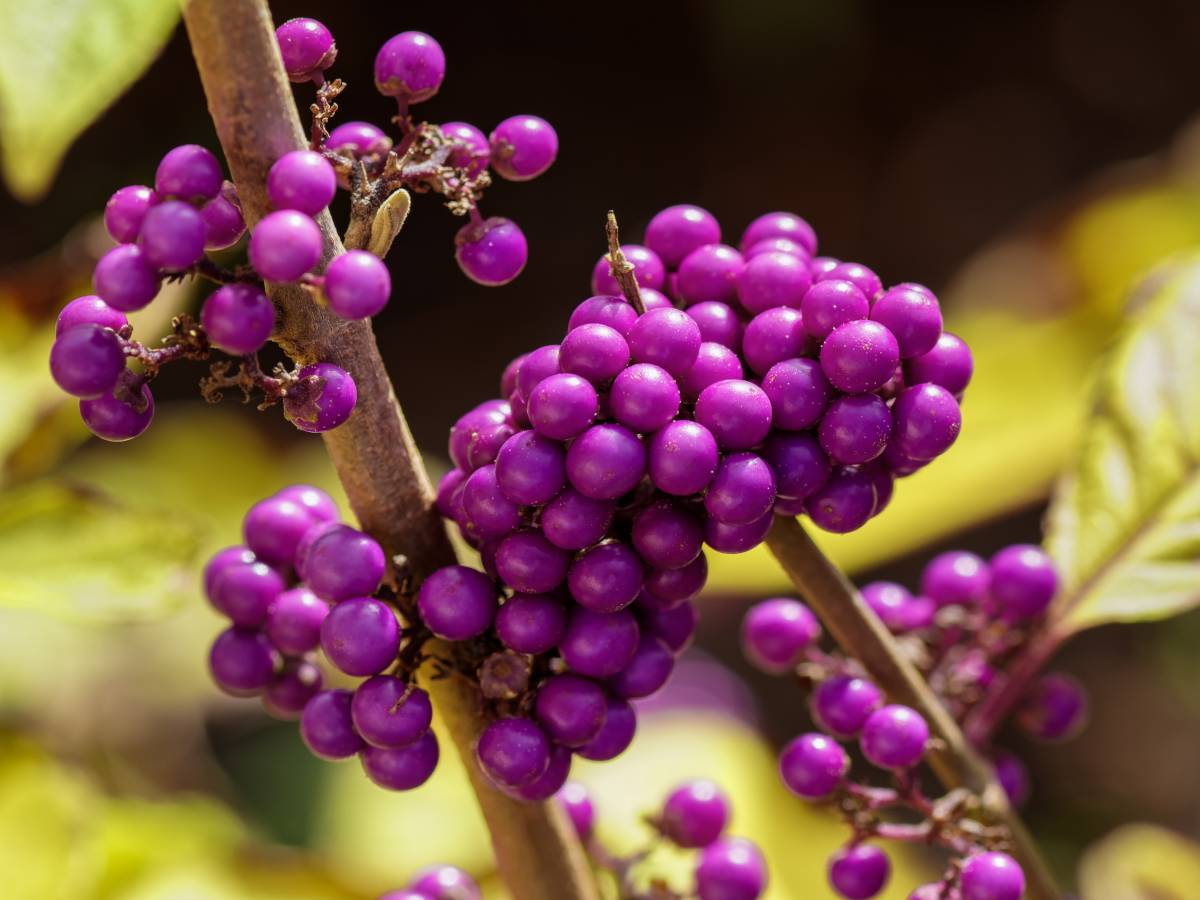
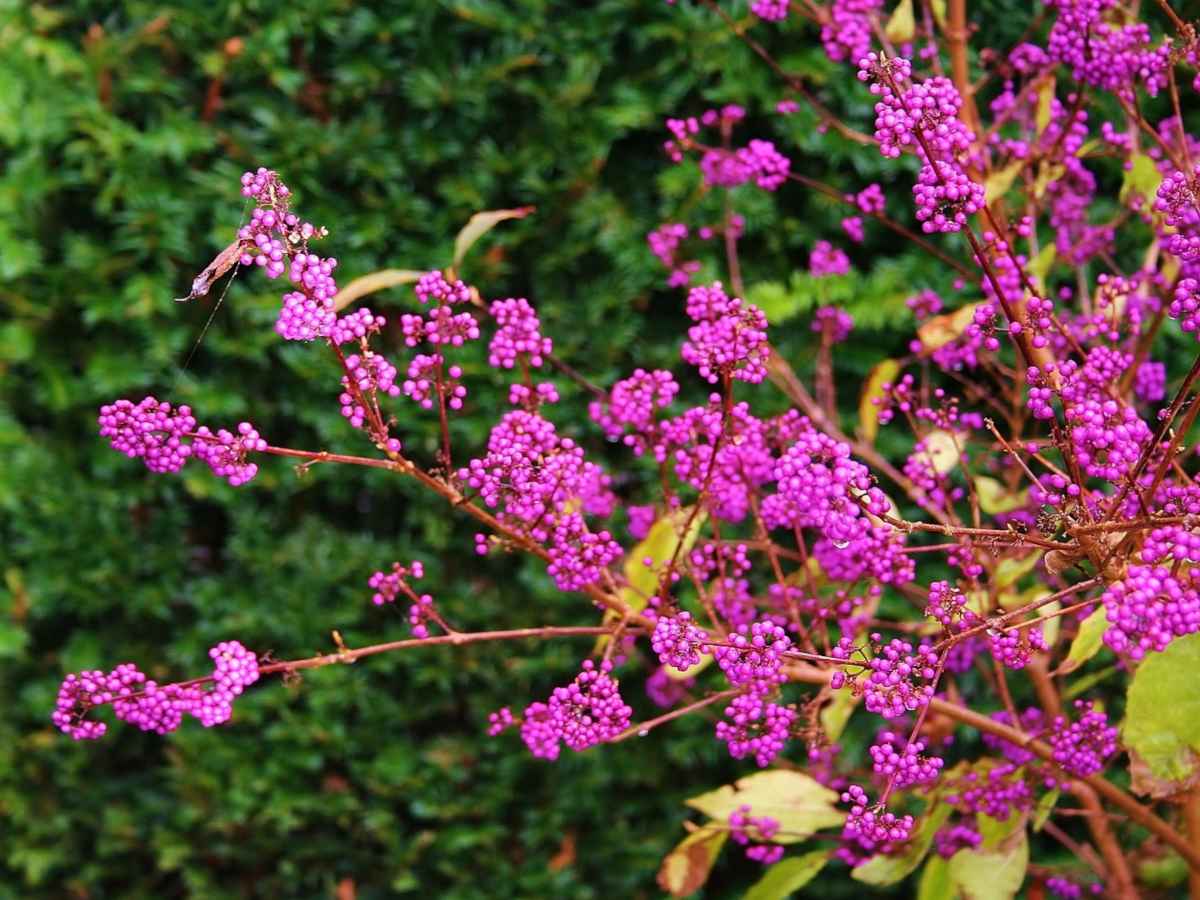
Bright violet berries cluster along the bare branches of callicarpa (Callicarpa bodinieri) long after the leaves have dropped, which is why this deciduous shrub is grown for autumn and winter colour rather than its forgettable summer flowers. Give it full sun or light shade and ordinary soil, and the fruits hang on until late winter.
| Name | Callicarpa bodinieri |
|---|---|
| Family | Lamiaceae (old: Verbenaceae) |
| Type | shrub |
| Height | 6 ½ feet (2 meters) |
| Exposure | full sun, light shade |
| Soil | ordinary |
| Foliage | deciduous |
| Flowering | early summer |
Easy to care for, it will fill you with childish glee thanks to its cute berries that appear in the middle of summer and last until the end of winter.
Indifferently either in spring or fall.
Take note, however, of the following:
Follow our advice on planting shrubs.
Most garden callicarpas are grown for one thing: the beads of berries left on bare branches once the leaves have gone. The choice comes down to how much room you have and what colour you want those berries to be.
| Variety | Height | Berry colour | Fruit display |
|---|---|---|---|
| ‘Early Amethyst’ | 3–4 ft (1–1.2 m) | Lilac-violet | Colours early, from late summer to late autumn |
| ‘Profusion’ | 6–10 ft (2–3 m) | Bright violet-purple, very freely borne | Mid-autumn into midwinter |
| ‘Issai’ | 3–4 ft (1–1.2 m) | Lilac-purple, heavy crop on young plants | Early autumn to early winter |
It isn’t really a requirement to prune, but maintenance pruning helps keep a compact bearing.
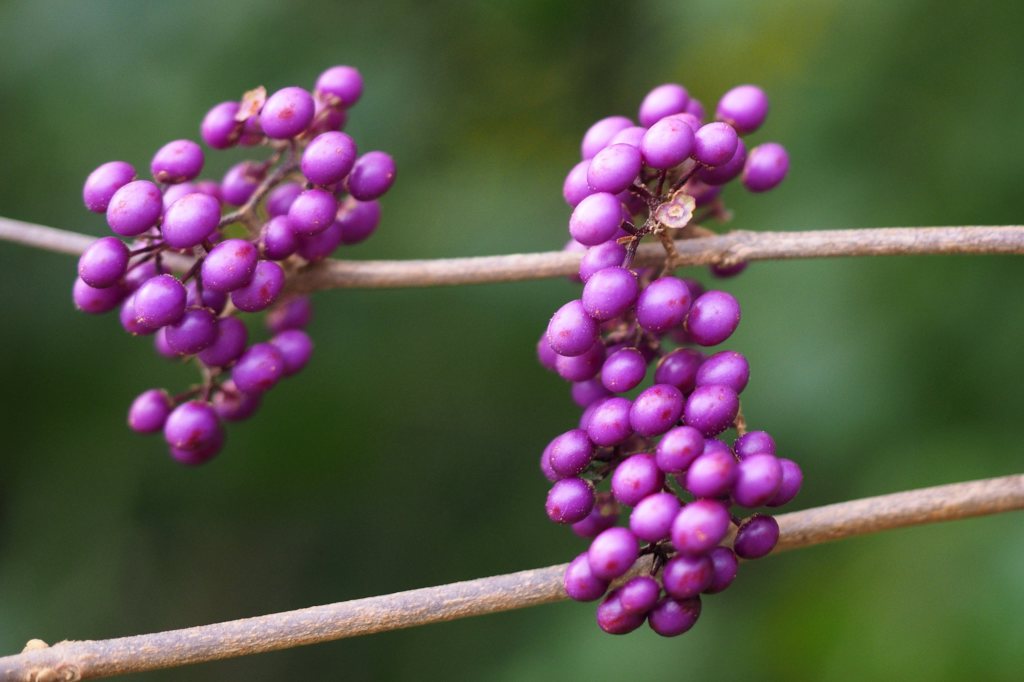
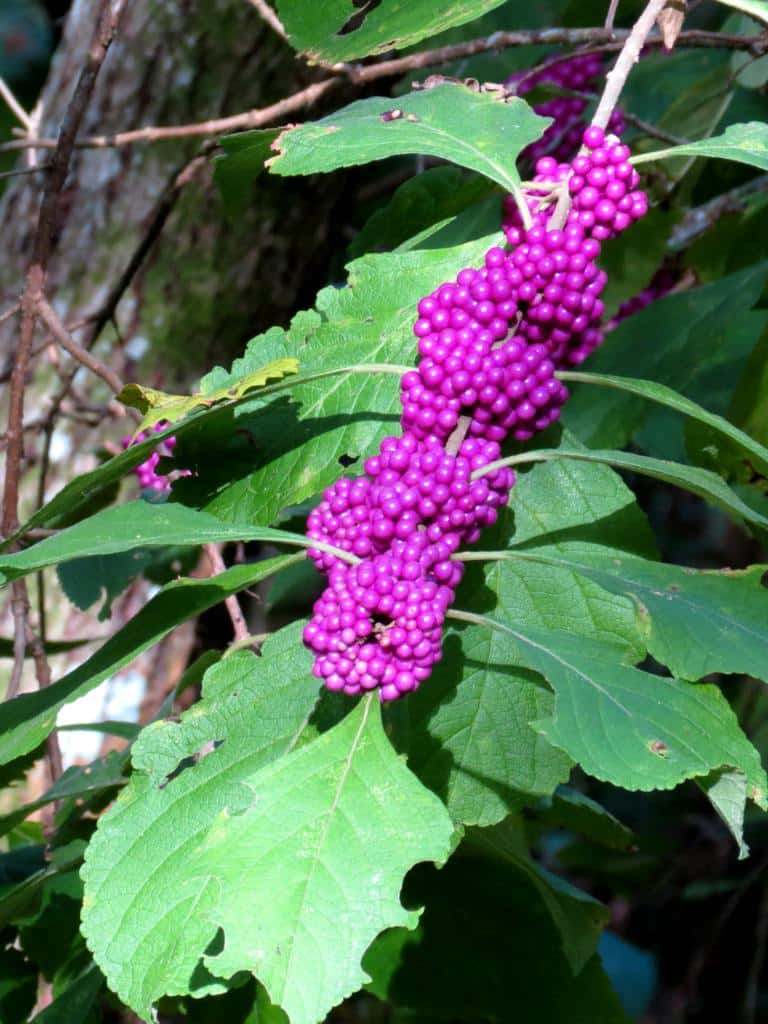
Although the summer blooming can literally be disregarded, this shrub is much more famous for its fruits that appear in fall and hang to the tree for the most part of winter.
Even if the leaves fall off come autumn, the berries remain and thus decorate the garden or terrace over the coldest months of the year. Callicarpa berries are edible, even though they don’t taste very good. This means the shrub isn’t dangerous for toddlers to play around of.
Very much suited to growing in pots, it also can stand alone in a yard, or be part of a shrub bed.
If your area hosts particularly strong freezing in winter, grow it potted and bring it indoors to shelter it from freezing in a cool spot.