Home » Health » Mahonia Berries (Oregon Grape): How to Use Them and Who Should Avoid Them
Mahonia Berries (Oregon Grape): How to Use Them and Who Should Avoid Them
·
0
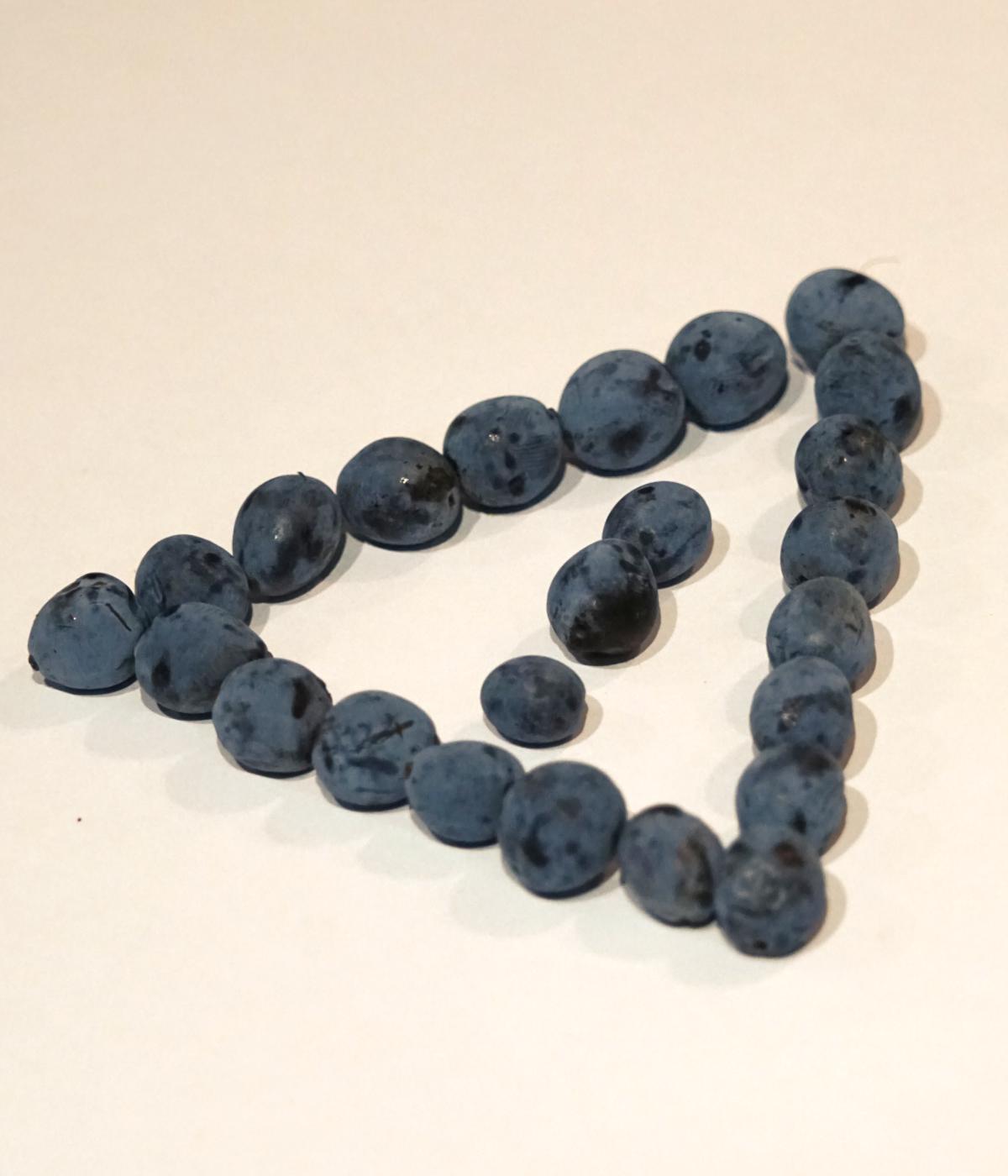
Mahonia, or Oregon grape, hangs dusty-blue berries in tight clusters after its late-winter flowers fade. They are sharp, seedy and far too tart to eat by the fistful, which is exactly why they end up in jelly, syrup and cordial. This page covers which part to use, how to prepare it tonight, and the people who should leave the berries alone entirely.
Mahonia at a glance
Item
Detail
Botanical name
Mahonia aquifolium and related species
Common names
Oregon grape, holly-leaved barberry
Family
Berberidaceae
Parts used
Ripe berries (kitchen); root and stem bark in traditional herbalism
Forms of use
Jelly, jam, syrup, cordial, vinegar, liqueur; a few berries raw
Harvest season
Early to midsummer, when berries turn deep blue and soften slightly
Taste
Very tart, grape-like, with a bitter note from the seeds
What it is credited with
Bitter tonic reputation. In North American folk herbalism, Oregon grape root was classed among the bitters and taken before meals for sluggish digestion.
Digestive support. Herbalists have long grouped mahonia with barberry and other berberine-bearing plants used to encourage appetite and the flow of digestive juices.
Skin traditions. Preparations of the root have a long-standing reputation in traditional Western herbalism as a remedy applied to rough, flaky or blemished skin.
Spring cleanse thinking. Naturopathy tends to place bitter-tasting plants like mahonia in the category of “spring tonics”, taken in short courses rather than daily for months.
Kitchen use first. Most home use today is culinary: the berries are valued for their tartness and colour, in the same way as redcurrants or sloes.
How to use it
The berries are almost never eaten in quantity raw. Cooking, straining and sweetening are what make them pleasant — and straining also removes the seeds, where the berberine concentrates.
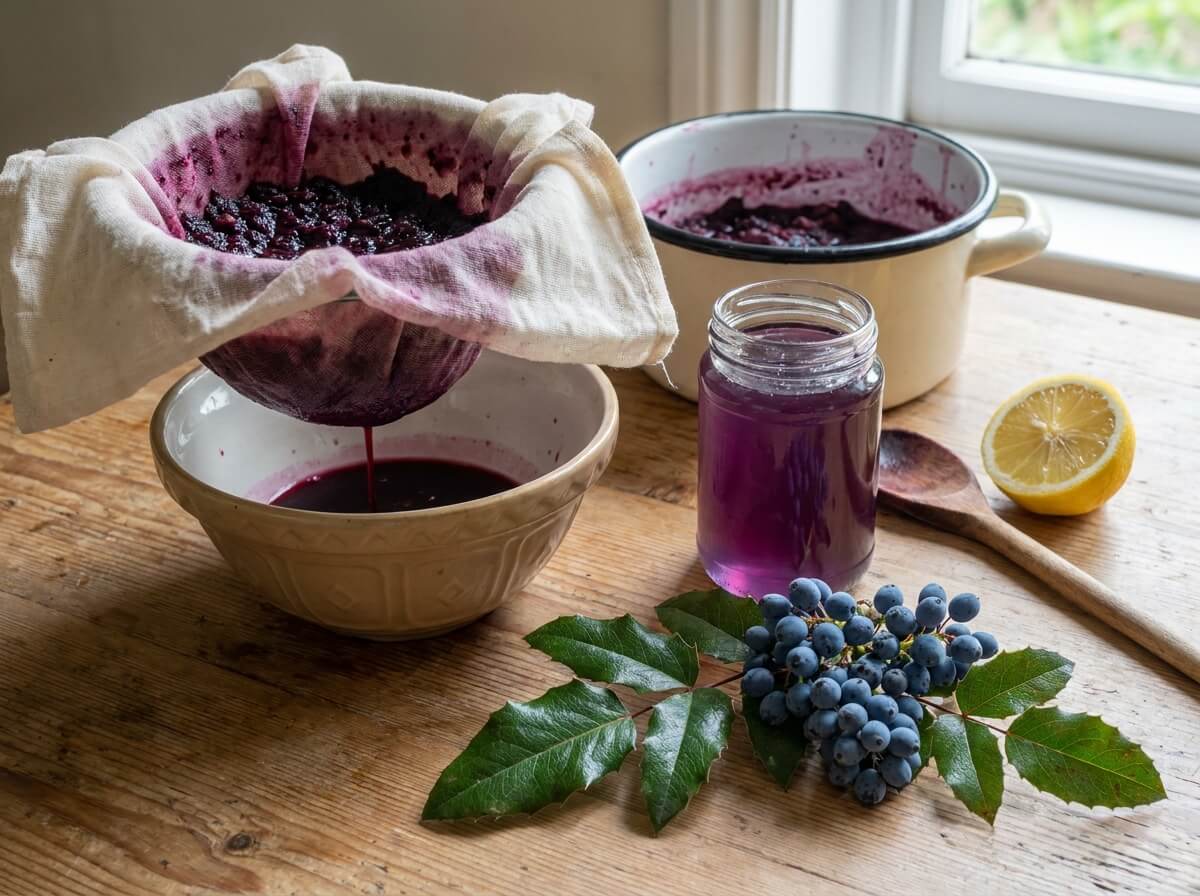
Cooked and strained, mahonia berries become a tart table jelly
Picking and preparing
Harvest in early to midsummer, once the berries are fully blue-black and give slightly under the thumb.
Snip whole clusters with scissors, then strip the berries off over a bowl.
Rinse thoroughly under running water before anything else, especially if the shrub grows near a road, drive or car park.
Discard shrivelled, mouldy or still-green fruit.
Jelly (the classic)
Simmer the rinsed berries in just enough water to cover, about 20 minutes, until they collapse.
Pour into a jelly bag or fine sieve and let the juice drip through — do not squeeze, or you push seed bitterness into the jar.
Sweeten the strained juice to taste, add the juice of a lemon, and boil to setting point.
A spoonful serves like redcurrant jelly: with cheese, cold meat, or on toast.
Syrup or cordial
Crush the berries, cover with water, simmer 15 minutes, then strain through cloth.
Sweeten the juice, bring briefly back to the boil, and bottle hot into sterilised bottles.
Dilute a tablespoon in a glass of still or sparkling water; keep opened bottles in the fridge and use within a fortnight.
Raw, vinegar and liqueur
Raw: a few berries at a time only, as a trail nibble — see the cautions box for the limit.
Vinegar: half-fill a jar with berries, top with cider vinegar, steep two to three weeks in a dark cupboard, strain. Good in dressings.
Liqueur: steep berries and sugar in spirit for six weeks, shaking weekly, then strain off the seeds and bottle.
Forms of use compared
Form
Preparation
What it is for
Jelly
Berries simmered, juice dripped through a bag, sweetened, boiled to set
Table condiment; seeds fully removed
Syrup / cordial
Crushed berries simmered, strained, sweetened, bottled hot
Tart drink base; keeps the colour
Vinegar
Berries steeped in cider vinegar two to three weeks, strained
Dressings and marinades
Liqueur
Berries and sugar steeped in spirit about six weeks, strained
After-dinner sipping
Raw berries
Rinsed, eaten straight from the bush
A taste only, never a helping
Frequently Asked Questions
The one thing to remember: rinse the berries, cook and strain them to leave the seeds behind, and keep mahonia away from pregnancy, breastfeeding and young children.
Can you eat mahonia berries straight off the bush?
Yes, a few at a time, once they are fully blue and rinsed. They are very tart and seedy, so most people stop quickly anyway. Keep to no more than a handful — 15 to 20 berries — at one sitting, or you can expect light digestive trouble and loose stools.
Why should pregnant and breastfeeding women avoid them?
Mahonia contains berberine, an alkaloid also found in barberry. Berberine taken in by the mother can travel to the child through both the placenta and breastmilk, so the settled advice is to avoid mahonia berries during pregnancy and while breastfeeding. The same caution applies to giving them to young children.
Do I need to remove the seeds?
Whenever you can. The seeds hold the highest concentration of berberine and most of the bitterness. Straining the cooked pulp through a jelly bag or fine sieve for jam, jelly, syrup or liqueur removes them completely — and resist squeezing the bag, which pushes bitterness through.
When is the right time to pick them?
Early to midsummer, after the late-winter and early-spring flowers have set fruit. Wait until the berries are deep blue-black with their pale bloom and give slightly when pressed. Snip whole clusters with scissors and strip the berries off over a bowl.
Are berries from a roadside hedge safe?
Berries grown close to traffic have been found with tiny surface deposits of lead from brake dust and exhaust. The good news is that rinsing the fruit under running water removes those trace amounts straight away. Even so, picking from shrubs set well back from roads is the better habit, particularly if children will eat the jelly.
This information is provided for general interest and reflects the traditional use of plants. It is not a substitute for medical advice. If you are on medication, pregnant, or in any doubt, ask a healthcare professional.
Written by Gaspard Lorthiois | Loves helping out, especially when it comes to growing things. Worked in herbal medicine, runs a farm, and dabbles in tech. Master's degree and engineer.