Home » Health » Common vervain: traditional uses, infusions and everyday cautions
Common vervain: traditional uses, infusions and everyday cautions
·
0
Common vervain (Verbena officinalis) is a plain, scentless perennial of European and Asian roadsides, picked since Greek and Roman times. Its bitter leaves and thin flowering spikes make a distinctly bitter tea, and herbalists have long reached for it after heavy meals or at the end of a wound-up day. Here is which part to use, in what form, and what should hold you back.
Common vervain at a glance
Item
Detail
Botanical name
Verbena officinalis
Family
Verbenaceae
Part used
Leaves and flowering tops, fresh or dried
Forms of use
Infusion, cooled decoction for compresses, mouth rinse, culinary herb
Harvest season
Midsummer to early autumn, as the spikes come into flower
Taste
Frankly bitter, slightly grassy, no aroma at all
What it is credited with
After-dinner comfort. European folk herbalism treats the bitter infusion as a digestive tea, taken to sharpen a flagging appetite before eating and to ease that heavy, sleepy feeling after a rich meal.
Winding down. Naturopathy credits vervain with a calming, relaxing character, and it is traditionally drunk in the evening by people who feel wound up or find sleep slow to come.
Tense heads and stiff joints. In traditional herbalism, vervain was used to ease tension headaches and aching, stiff joints, both as a tea and as a warm compress.
Mouth rinses. Because of its tannins, a cooled infusion has a long reputation as a soothing, astringent mouth rinse for minor everyday irritation of the gums and mouth.
Skin compresses. Country practice used a cooled decoction on compresses for chapped skin and lips, reddened patches, insect bites and the bruising of a small knock.
Bach flower tradition. Vervain is one of the original Bach flower remedies, where it is associated with over-enthusiasm and the inability to switch off.
How to use it
Everything below uses ordinary kitchen measures. Vervain is bitter, so make it weaker than you think you want the first time.
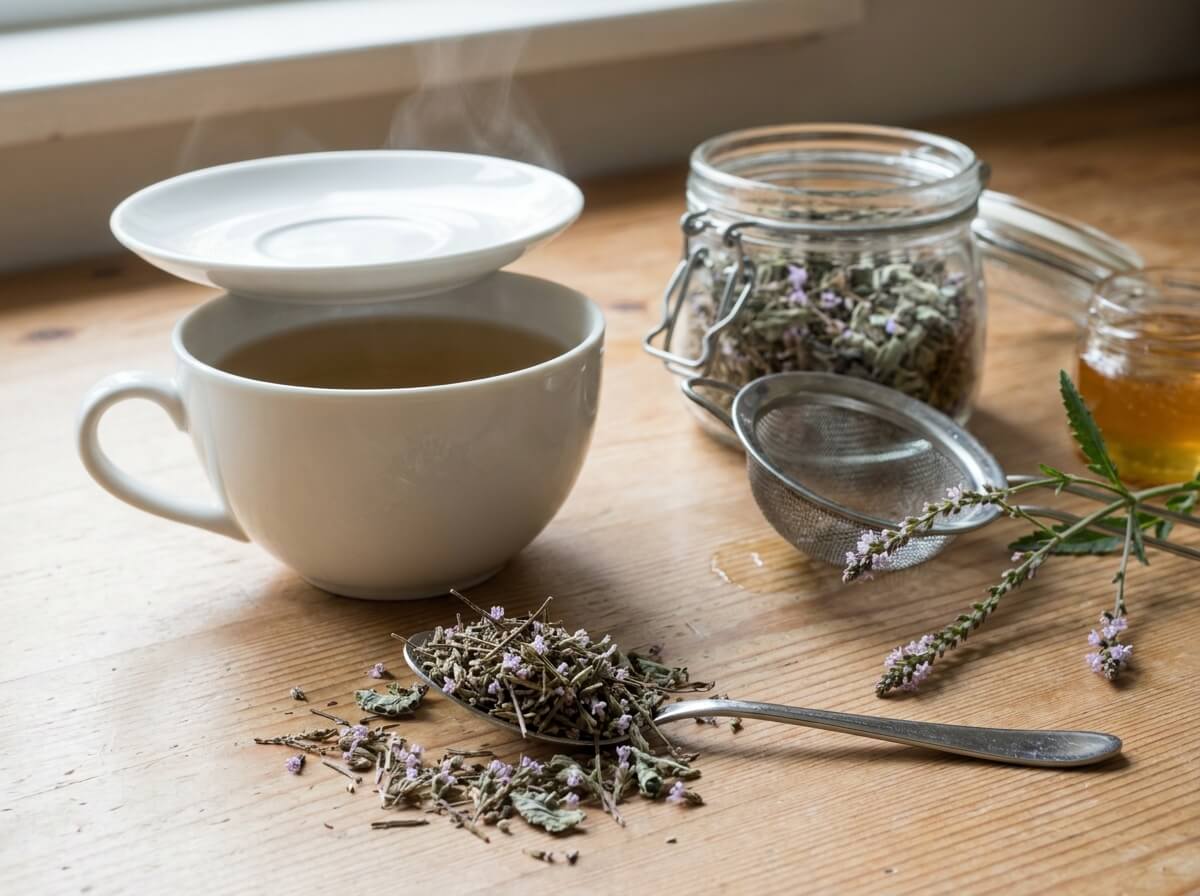
One heaped teaspoon of dried flowering tops per cup
Digestive infusion: one heaped teaspoon of dried leaves and flowering tops per cup of just-boiled water. Cover, steep 5 to 10 minutes, strain. Drink after a meal, or a small cup half an hour before eating to wake up the appetite.
Evening infusion: the same tea, made a little lighter, sipped slowly an hour before bed. Many people blend it half and half with lime blossom or chamomile to soften the bitterness.
Sweetening it: honey, a strip of orange peel or a couple of mint leaves in the pot all take the edge off. Sugar alone does not — the bitterness comes back through.
Compress decoction: a generous handful of dried plant in a saucepan of water, brought to the boil, simmered 10 minutes, then left to cool. Soak a clean cloth, wring it out, apply for 10 to 15 minutes, twice a day at most.
Mouth rinse: make the infusion as above, let it cool completely, swill around the mouth and spit it out. Make a fresh batch daily and keep it in the fridge.
How long: traditional practice is short courses — a week or two of daily tea, then a break — rather than drinking it every day indefinitely.
In the kitchen: tuck fresh leaves into a marinade for lamb or chicken, add a few to roasting vegetables, or infuse them in warm cream for a custard or panna cotta. Use a light hand: the bitterness carries.
Choosing a form of vervain
Form
How it is made
Traditionally used for
Infusion (tea)
Dried tops steeped 5–10 minutes in covered just-boiled water
Digestive comfort after meals; an evening cup to unwind
Decoction
Simmered 10 minutes, then cooled
Compresses for chapped skin, insect bites, small knocks
Cooled mouth rinse
Standard infusion, cooled, not swallowed
Soothing, astringent rinse for minor mouth irritation
Fresh leaves in cooking
Chopped into marinades, roasts, infused creams
A bitter digestive note in food rather than a remedy
Growing it for the tea cupboard
Hardy and undemanding; it wants a hot, sunny spot.
Happy on light, rather poor soil that stays a little cool in summer.
Slugs are its one real enemy, and they are worst in spring — protect young plants.
The one thing to remember: one heaped teaspoon of dried flowering tops per cup, covered and steeped 5 to 10 minutes, taken after a meal or an hour before bed — in short courses, not forever.
Is common vervain the same as the lemon verbena in my tea box?
No. Common vervain is Verbena officinalis, a scentless wayside perennial with a frankly bitter taste. Lemon verbena is Aloysia citrodora, a shrub whose leaves smell strongly of lemon sherbet. They are used quite differently, so read the Latin name on the packet.
Why does my vervain tea taste so bitter?
That bitterness is the plant — it comes from its iridoid compounds, and it is the very thing herbalism associates with appetite and digestive comfort. Use less dried plant, keep the steeping to five minutes, and blend it with lime blossom, chamomile or a strip of orange peel.
Can I use it as a mouth rinse?
A cooled infusion has a long tradition as a soothing, astringent rinse for minor everyday mouth irritation. Swill it round and spit it out, and make a fresh batch each day. Anything in the mouth that does not settle down quickly needs a dentist or doctor, not a herbal rinse.
When should I pick it, and how do I keep it?
Cut the flowering tops on a dry morning from midsummer to early autumn, before they set seed. Hang them in loose bundles in the shade until the stems snap cleanly, then strip the leaves and flowers into an airtight jar kept away from light and use them within the year.
Can I drink it every day?
Traditional practice favours short courses — a week or two of a daily cup, then a pause — rather than open-ended use. Skip it altogether if you are pregnant or breastfeeding, and speak to your doctor or pharmacist first if you are on any regular medication.
This information is provided for general interest and reflects the traditional use of plants. It is not a substitute for medical advice. If you are on medication, pregnant, or in any doubt, ask a healthcare professional.
Images: Pixabay: Peter Hod
Written by Gaspard Lorthiois | Loves helping out, especially when it comes to growing things. Worked in herbal medicine, runs a farm, and dabbles in tech. Master's degree and engineer.