Home » Health » Quince: how to use the fruit, seeds and leaves, and what to watch for
Quince: how to use the fruit, seeds and leaves, and what to watch for
·
1
Quince is the fruit almost nobody eats raw. Rock-hard, tart and fuzzy, it turns honey-scented and pink once cooked, and every part of it has a use: the flesh for compotes and jellies, the seeds for their slippery mucilage, the leaves and flowers for infusions. Here is what quince actually is, what tradition makes of it, and how to handle it at home.
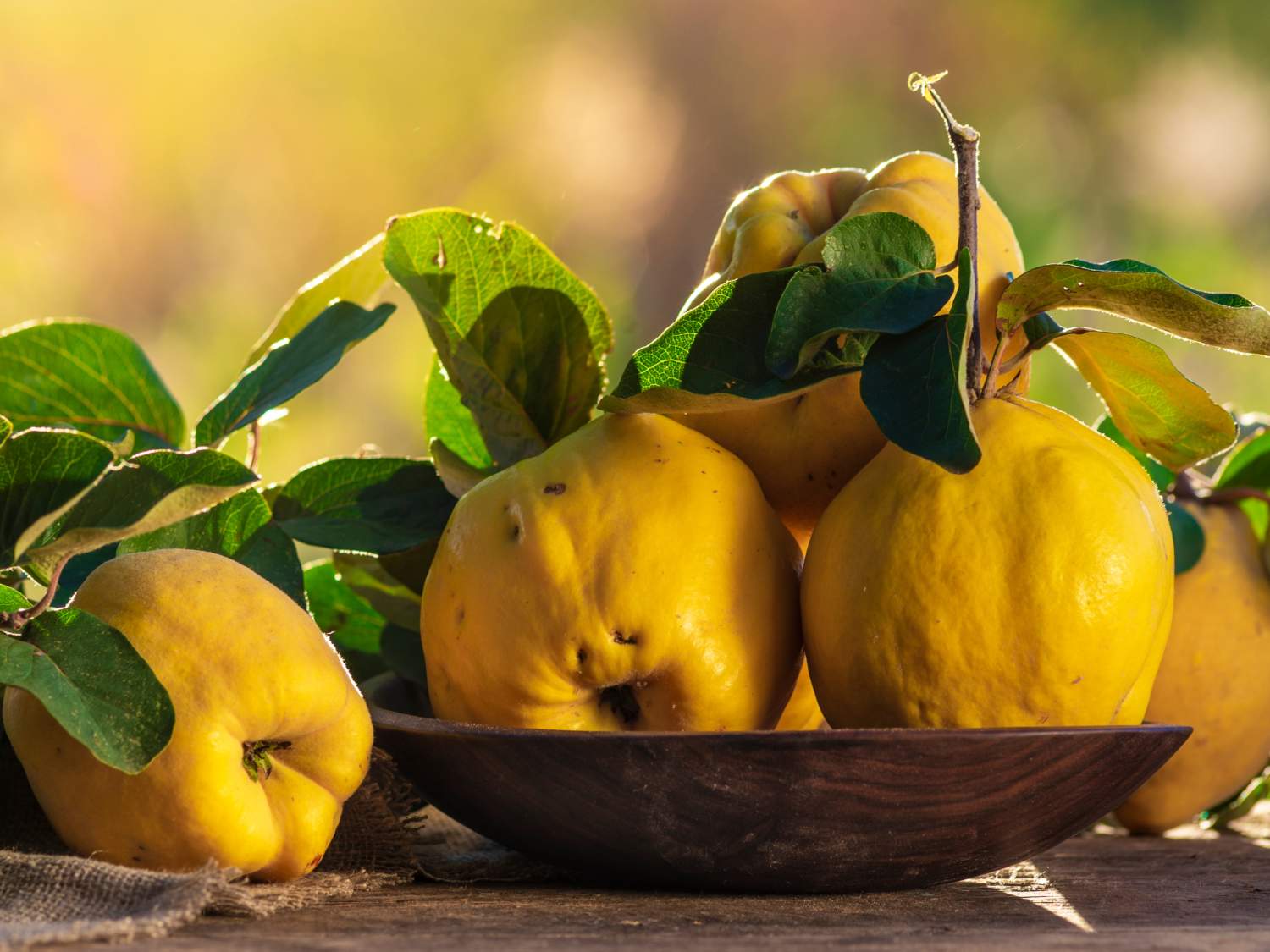
Deep yellow skin and light fuzz: quince ready for the kitchen
What it is credited with
Digestive comfort. Traditional herbalism has long used cooked quince and quince jelly to settle the gut. The reputation rests on its pectin, which holds water, and its tannins, which are astringent: combined, fibres and tannin compounds are the reason quince is traditionally turned to when transit is loose and unsettled, and why it is credited with helping regulate intestinal transit.
Soothing the stomach. Naturopathy credits the cooked fruit and its jelly with a coating, calming effect on the digestive lining, and it has an old reputation for easing the burning feeling after a heavy meal.
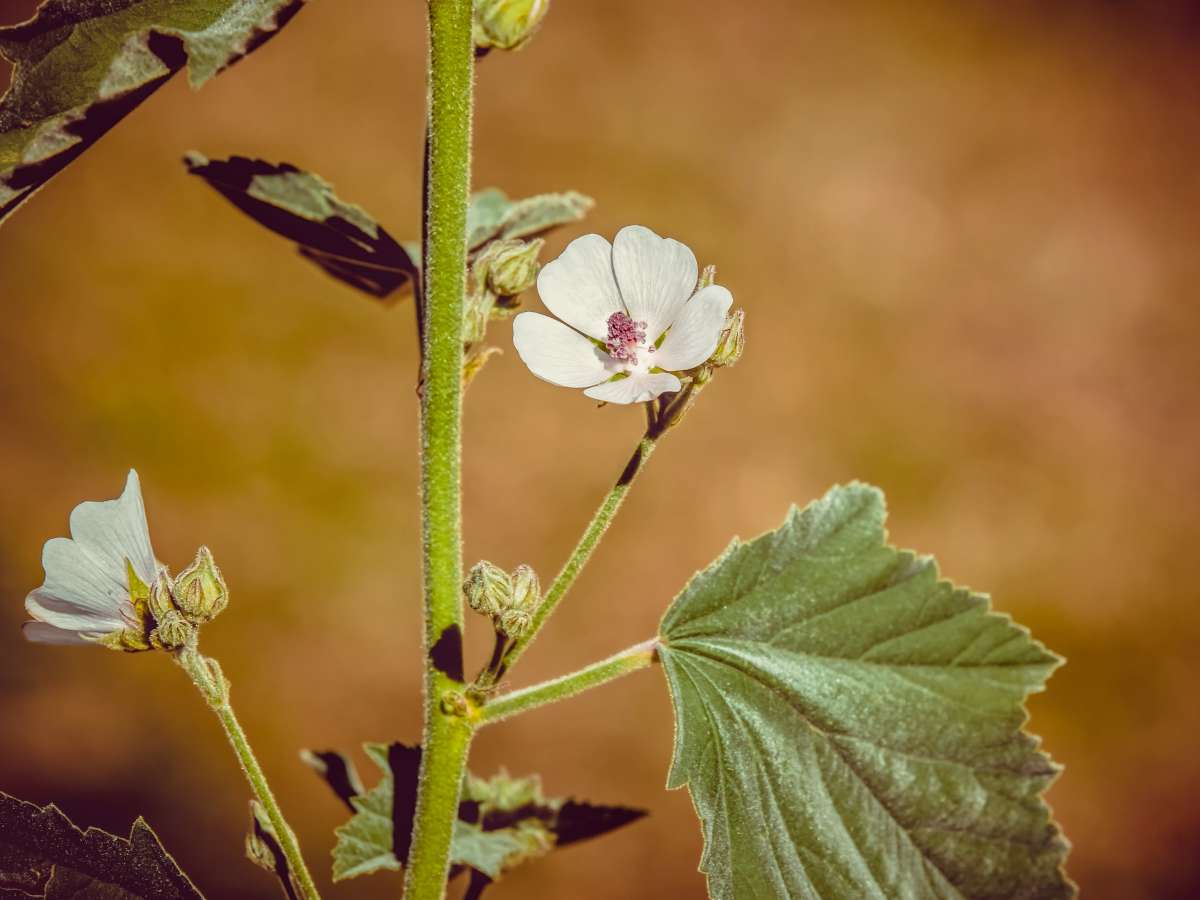
Throat and chest. Infusions of quince leaves and flowers are traditionally taken for a scratchy, tickly throat, and the mucilage-rich seeds have a long-standing reputation in folk practice for loosening a dry, unproductive cough.
Skin and lips. Herbalists have always used quince seed gel and quince juice on chapped lips, rough hands, weather-cracked skin and small everyday grazes, for its softening, film-forming quality.
Cosmetic use. Quince seed mucilage is still valued in cosmetics as a natural gel and skin-smoothing agent.
Everyday nourishment. Because it is soft and mild once cooked, quince compote is traditionally offered to children and to older people as an easy, gentle fruit.
How to use it
Quince is the one fruit that must be cooked. Raw, the flesh is hard and mouth-puckeringly tart.
Leaf and flower infusion
Use a small handful of dried leaves and flowers per large cup of just-boiled water.
Cover and steep 10 minutes, then strain.
Traditionally sipped warm, up to two or three cups spread through the day, for a short spell only.
Taste: green, faintly bitter, pleasant with honey.
Seed macerate (cold gel)
Mash a handful of quince seeds into half a glass of lukewarm water.
Leave to stand until the water thickens into a clear, slippery gel, usually under an hour.
Strain and use externally on chapped lips, dry patches and rough skin.
For a smoothing face gel, use the same method with more water, apply, leave a short while and rinse.
Make it fresh each time; it does not keep.
Compresses
Dip a clean compress in fresh quince juice and lay it on chapped or irritated skin.
For tired eyes, rest thin slices of quince on closed lids for a few minutes.
Quince jelly, spread thinly on a dressing, is a traditional country remedy for pressure-worn, fragile skin.
In the kitchen
Compote or sauce: 10 to 15 g of sugar per 100 g of quince, simmered until the flesh gives way.
Jam: half as much sugar as fruit, by weight.
Jelly: made from the pectin-rich cores and peel; sets without added pectin.
Baked: superb in a tarte tatin, or roasted in wedges alongside the Sunday joint.
Sweet and savoury: lamb and quince tagine, duck sausage and quince pie, or a quince purée as a side dish.
Note that cooking drives off much of the vitamin C, and added sugar changes the calorie count considerably.
Which part of the quince, and what for
Part
Preparation
Traditionally used for
Cooked flesh
Compote, jam, jelly, purée, baked
Gentle everyday eating; digestive comfort in folk practice
Juice
Pressed from ripe fruit, used on a compress
Softening chapped lips and dry, cracked skin
Seeds
Mashed in lukewarm water into a gel, external use only
Skin-smoothing gel; a folk remedy for a dry, tickly cough
Leaves and flowers
Infusion, 10 minutes, covered
Scratchy throats and coughs in traditional herbalism
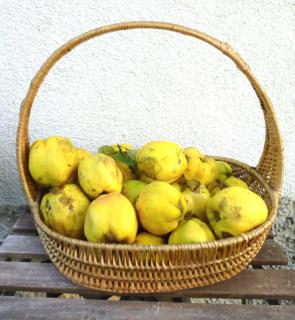
Freshly picked and tempting, but quince must always be cooked
Frequently Asked Questions
The one thing to remember: cook the flesh and use the seeds cold in water — those two moves cover almost every traditional use of quince.
Can you eat quince raw?
In practice, no. The flesh is rock-hard and the taste is sharp and astringent. Cooking transforms it: the colour turns pink, the texture softens and the perfume comes out. A handful of ornamental varieties are marginally edible raw, but nobody enjoys them.
When should quince be picked?
Quince ripens in mid to late autumn, after the tree has flowered in mid to late spring. Pick when the skin has gone from green to a deep, even yellow and the fruit smells strongly. Handle gently — bruises spread fast in stored quince.
What do you do with the seeds?
Mash a handful in half a glass of lukewarm water and let them stand until the water thickens into a clear gel. That mucilage is what herbalists and cosmetics makers use, applied to chapped lips, dry skin and rough patches. Make it fresh and use it externally.
Is quince safe during pregnancy?
Quince is contra-indicated for pregnant women, as its high mucilage content causes bloating. The same applies to seed and leaf preparations while breastfeeding. If you are pregnant, nursing or on medication, check with a healthcare professional before using quince as anything other than an occasional food.
How long does quince keep?
Several weeks in a cool, airy place, which is unusually generous for an autumn fruit. Store it apart from other produce, because its fragrance transfers easily — a trait you can turn to your advantage by leaving one on a shelf as a natural air freshener.
This information is provided for general interest and reflects the traditional use of plants. It is not a substitute for medical advice. If you are on medication, pregnant, or in any doubt, ask a healthcare professional.
🌿 Nature & Garden Newsletter
Gardening tips, recipes & seasonal advice, twice a week.