Home » Health » Corn salad: what it brings to the plate, and how to use it
Corn salad: what it brings to the plate, and how to use it
·
0
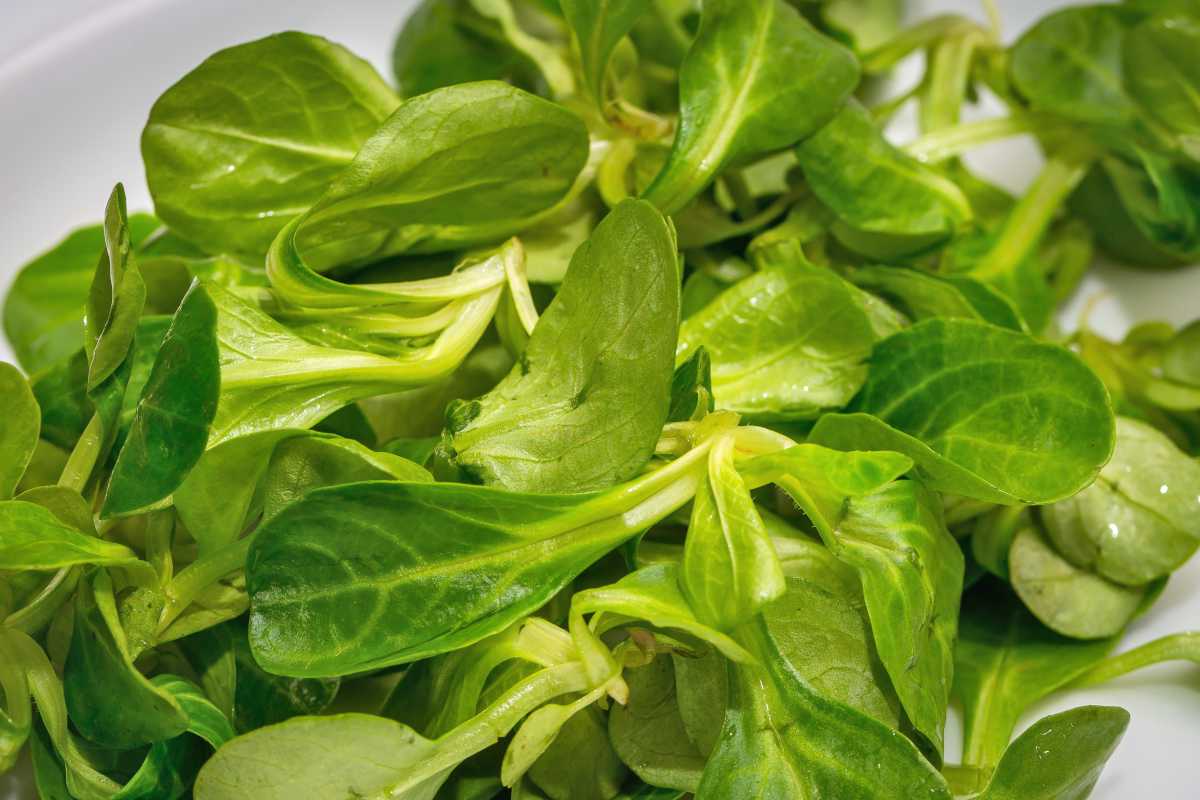
Corn salad — lamb’s lettuce, mache, doucette — is the tender green rosette that fills the salad bowl when everything else in the vegetable patch has stopped. It is mild, faintly nutty, almost all water, and it asks for nothing more than a bowl and a spoonful of dressing. Here is what it contains, what herbalists and cooks credit it with, and how to eat it tonight.
Corn salad at a glance
Item
Detail
Botanical name
Valerianella locusta (syn. Valerianella olitoria)
Family
Caprifoliaceae (formerly classed in Valerianaceae)
Other names
Lamb’s lettuce, mache, nut salad, doucette, field salad
Part used
The whole leaf rosette, picked young
Forms of use
Raw in salad, briefly wilted, blended into soup, green smoothie
Harvest season
Mid-autumn through winter to early spring, about three months after sowing
Taste
Mild, sweet, nutty, buttery texture, never bitter
Height
8 to 12 inches (20 to 30 cm)
What it is credited with
A calm, good-mood green. Naturopathy counts corn salad among the folate-rich leaves it recommends to people who feel frayed and sleep poorly, on the strength of its vitamin B9 content.
Gentle digestive help. Its fibre gives it a long-standing reputation as a mildly laxative salad, traditionally eaten to keep things moving without harshness.
A restorative for tired appetites. Old kitchen-garden lore treated the winter rosettes as a tonic food for the dull end of the year, when fresh green leaves were scarce.
Support for the body’s defences. Herbalists group it with the vitamin C foods they suggest during the cold months.
A slimming-diet staple. Because it is filling, watery and very low in calories, naturopaths routinely build light meals around it.
A “cleansing” green. Its deep chlorophyll colour earned it a place in the detox-style spring and autumn regimes popular in naturopathy.
A mineral top-up. Traditional dietetics values it for iron and calcium, alongside potassium and sodium.
How to use it
Raw, the everyday way
Count a generous handful, about 1.5 to 2 oz (40 to 60 g), per person as a starter.
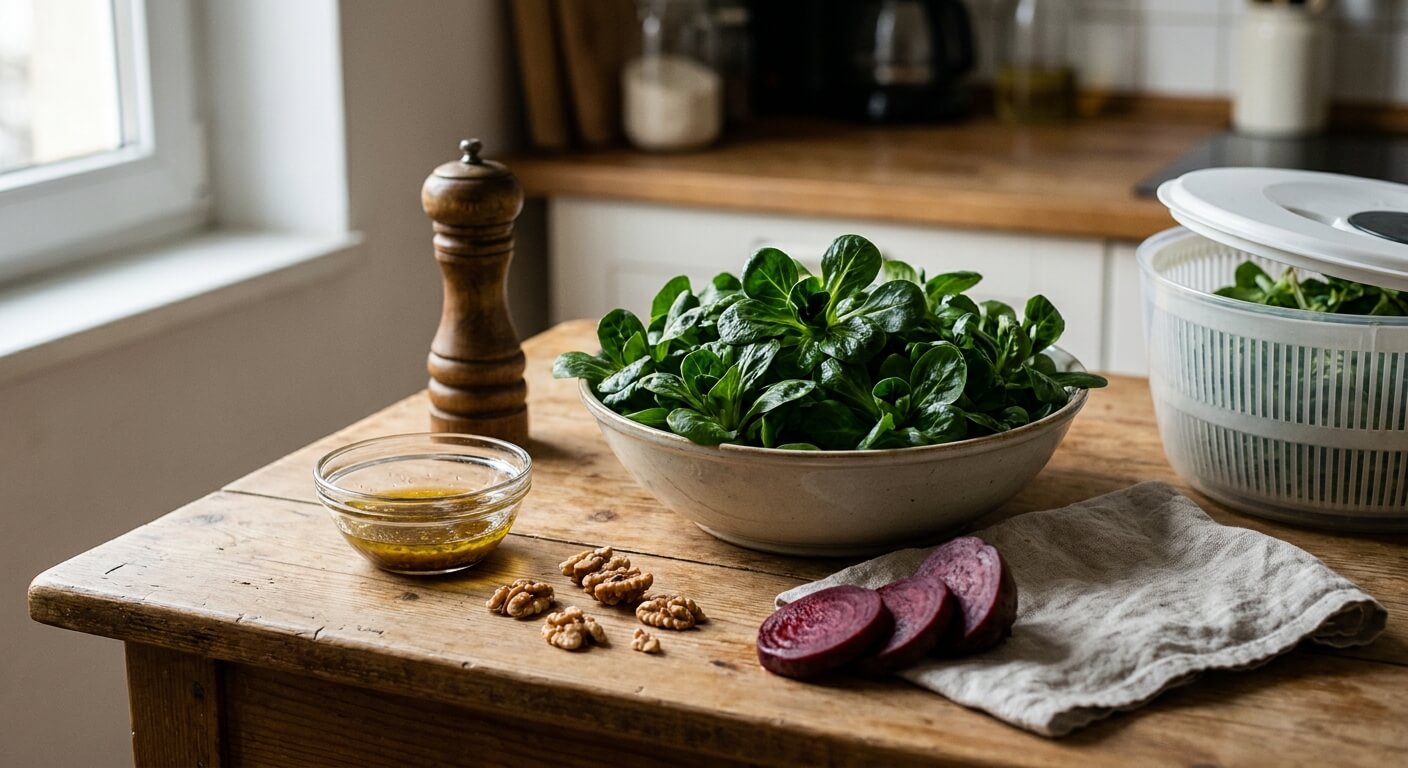
Wash, spin or pat dry, and dress at the very last moment — the leaves collapse within minutes under vinaigrette.
Dress lightly: 3 parts olive or walnut oil to 1 part mild vinegar, salt, pepper. Toss with your hands, not tongs.
Pair it with pecans or walnuts, avocado, beetroot, soft goat cheese, or strawberries.
Warm and wilted
Melt a knob of butter in a hot pan, throw in the dry leaves, and turn them for 30 to 60 seconds only — just until they slump.
Serve at once, under a fried egg, beside scallops, or with cheese melted on toast. A few sprigs of arugula added raw give it bite.
Corn salad cream soup
Soften 3.5 oz (100 g) corn salad with one chopped potato and a minced shallot in a thimbleful of butter.
Finish off the heat with one tablespoon of cream. Serve the same day for the brightest colour.
Strawberry dressing, for sweet-leaning salads
Blend 4.5 oz (125 g) strawberries, 1 tablespoon sugar, 1 teaspoon sherry vinegar, 1 teaspoon balsamic vinegar, 3 tablespoons olive oil, salt and pepper.
Spoon over the leaves just before serving; keep the rest in a jar in the fridge for two days.
In a green smoothie
A double handful of leaves with an apple, half a banana and water blends without bitterness — the mildest of the green leaves for anyone starting out.
Drink it fresh rather than keeping it, and treat it as an occasional glass rather than a daily habit.
Ways to use corn salad, and what each is for
Form
Preparation
Traditionally used for
Raw salad
A handful per person, dressed at the last second
The everyday way naturopathy suggests keeping vitamin C and folate intact
Briefly wilted
30 to 60 seconds in butter, served immediately
Easier on sensitive stomachs than a big raw bowl, in traditional kitchen dietetics
Cream soup
3.5 oz (100 g) with potato and shallot, simmered 20 minutes, blended
The comforting winter form, valued as a light restorative supper
Green smoothie
Two handfuls blended with fruit and water
The chlorophyll-rich “cleansing” drinks favoured in naturopathy
Frequently Asked Questions
The one thing to remember: wash the rosettes in several changes of cold water, dry them well, and dress them only at the moment you sit down.
A generous handful per person, dressed only at the table
Is corn salad safe for everyone to eat?
Eaten as a salad green in normal food quantities, corn salad has no known contraindication. Wash it very thoroughly, since it grows close to the soil. If you are pregnant, on blood thinners or on regular medication, check with a healthcare professional before making large amounts of raw leaves a daily fixture.
How long does corn salad keep?
Three to four days in the fridge at most, and only if it stays wrapped. After that the leaves wither and turn unappetising. Buy or pick it in small amounts and eat it quickly.
When is corn salad harvested?
It is sown from late summer to mid-autumn and cut about three months later, which puts the harvest through autumn, winter and into early spring. That off-season timing is exactly why it has always been the cold-weather salad.
Can corn salad be cooked?
Yes. Wilt it in butter for under a minute, or simmer it with potato and shallot and blend it into a cream soup. Cooking softens the leaf and makes a large serving easier on a delicate stomach.
What does corn salad taste like, and what goes with it?
Mild, sweet and nutty, with a buttery texture and no bitterness. It takes well to walnut oil, pecans, avocado, beetroot, goat cheese, strawberries, and richer plates such as scallops or foie gras.
This information is provided for general interest and reflects the traditional use of plants. It is not a substitute for medical advice. If you are on medication, pregnant, or in any doubt, ask a healthcare professional.
Written by Gaspard Lorthiois | Loves helping out, especially when it comes to growing things. Worked in herbal medicine, runs a farm, and dabbles in tech. Master's degree and engineer.