Home » Health » Nutmeg: how to use this warming spice, and where to stop
Nutmeg: how to use this warming spice, and where to stop
·
0
One hard brown kernel, a fine grater, and a pinch that changes a whole dish. Nutmeg is the seed of a tropical tree, warm and sweet on the tongue, and it has carried a long kitchen-and-remedy reputation for digestion, comfort and warmth. Here is which part to use, in what form, how much is normal, and the limits nobody should cross.
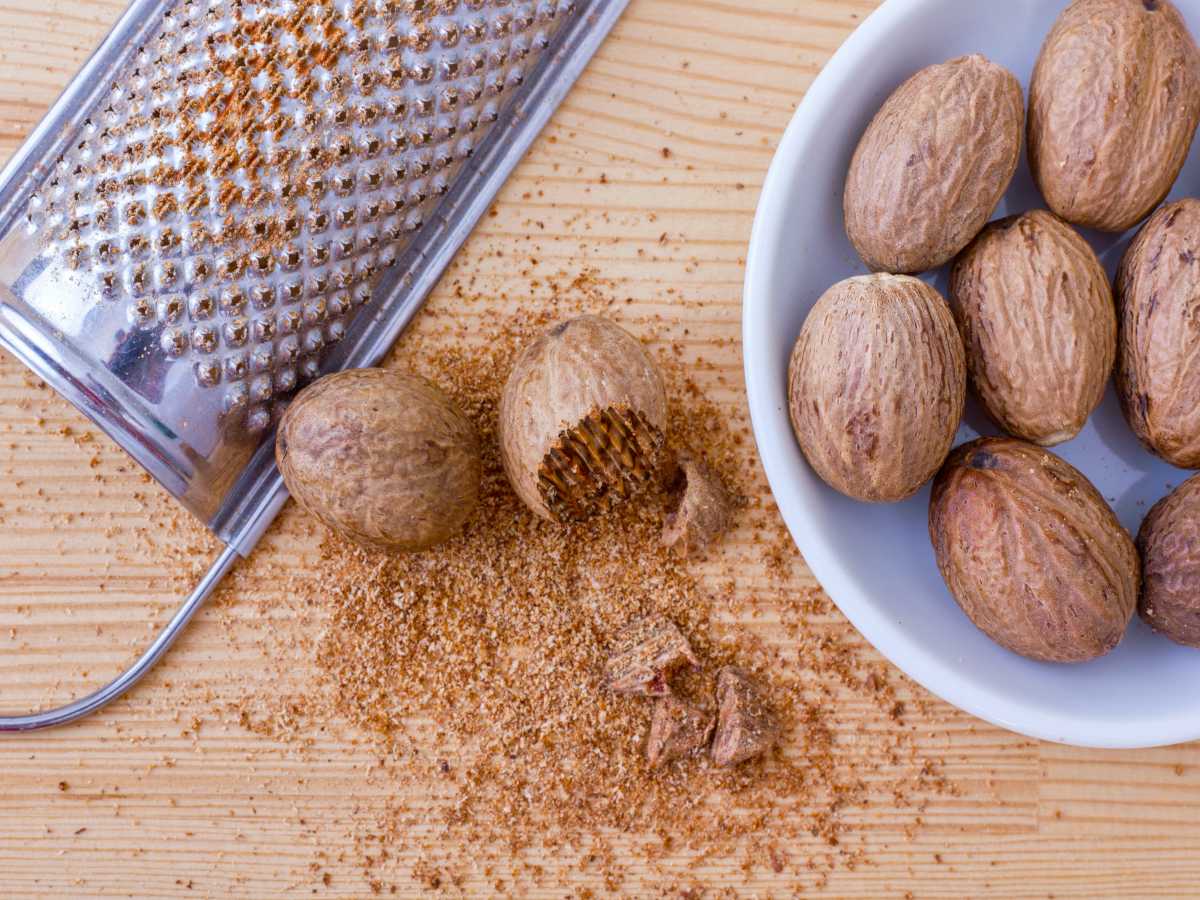
Whole kernels dried slowly: this is the form that keeps its aroma
Nutmeg at a glance
Item
Detail
Botanical name
Myristica fragrans
Family
Myristicaceae
Part used
Seed kernel (nutmeg); the aril is sold separately as mace
Forms of use
Freshly grated in food and drinks, warm infusion of milk or plant milk, essential oil (external use and diffusion only)
Harvest season
In the tropics the tree fruits almost continuously, with two main pickings a year; dried kernels are sold all year round
Taste
Warm, sweet, woody, faintly bitter, with a resinous finish
What it is credited with
In traditional herbalism, nutmeg is classed as a warming digestive spice and was used to ease heavy digestion, trapped wind, bloating and digestive cramping.
Old kitchen practice added a pinch to rich or fatty dishes for the same reason — comfort after eating rather than flavour alone.
It has a long reputation as an appetite stimulant, which is why it appears in convalescence recipes across many cuisines.
Sailors’ tradition and folk use credit grated nutmeg with settling queasiness and travel sickness.
Naturopathy regards it as a tonic spice, used when energy feels flat and nerves feel frayed — always in culinary pinches, never in spoonfuls.
Aromatherapy describes the essential oil as warming and comforting, and uses it heavily diluted in massage blends over stiff backs, tired shoulders and aching joints.
Diffused in a room, the oil is traditionally used to make breathing feel easier and the air feel warmer during the cold half of the year.
A single drop of the essential oil, well diluted in water, features in traditional mouth rinses for sore gums and mouth discomfort — spat out, never swallowed.
How to use it
Grated, in cooking — the everyday way
Grate the whole kernel on the finest side of a grater or a dedicated nutmeg mill.
Grate only what the recipe needs: in powder form the aroma fades within weeks.
Normal culinary amount: a few passes of the grater for a dish serving four — roughly a small pinch per person.
Add it at the end of cooking or off the heat, so the volatile oil does not evaporate.
Classic pairings: béchamel and cheese sauces, potato gratins and mash, spinach, pumpkin, cauliflower, sausage meat and pâtés.
On the sweet side: custards, rice pudding, apple and pear dishes, spice cakes, mulled drinks, hot chocolate.
Grate only what you need: powdered nutmeg loses its aroma fast
The warm evening drink
Heat a cup of milk or plant milk without boiling it.
Off the heat, add one small pinch of freshly grated nutmeg and, if you like, a little honey or a scrap of cinnamon.
Stir, leave to stand three to five minutes, drink slowly after a heavy meal or in the evening.
Keep it to one cup, and not every single day — this is a spice, not a tea.
Essential oil — external use only
Massage: one or two drops in a tablespoon of a carrier oil such as sweet almond or sunflower, rubbed over the lower back, shoulders or a stiff joint.
Diffusion: two or three drops in a cold diffuser, for fifteen to twenty minutes in a well-aired room, not while people are sleeping in it.
Mouth rinse: a single drop in a glass of water with a teaspoon of honey to disperse it; swill, then spit out.
Never neat on the skin, never in the bath undiluted, never swallowed.
Forms of nutmeg and what each is for
Form
Preparation
Traditionally used for
Freshly grated kernel
Fine grater, a pinch per person, added off the heat
Flavour, and the old digestive-spice role in rich dishes
Warm milk infusion
One pinch in a cup of hot milk, stand 3–5 minutes
A comforting after-dinner or bedtime drink
Mace (the aril)
Whole blades simmered in stocks, or ground finely
A milder, more delicate version of the same warm note
Essential oil, diluted
1–2 drops in a tablespoon of carrier oil
Warming massage over back, shoulders and joints
Essential oil, diffused
2–3 drops, 15–20 minutes in an aired room
A warm, resinous atmosphere in the cold months
A tropical tree: warmth, humidity and open ground, or no fruit
Frequently Asked Questions
The one thing to remember: buy whole kernels, grate a pinch at a time straight into the dish, and leave the essential oil for external use only.
How much nutmeg is a normal amount?
A few passes of a fine grater for a dish serving four, which works out at roughly a small pinch per person. That is the culinary range and it is where nutmeg belongs. Larger spoonfuls are not a stronger remedy, they are a genuine hazard.
Can I drink nutmeg like a tea?
Not as a proper infusion of leaves would be drunk. The traditional preparation is a single pinch of freshly grated kernel stirred into a cup of hot milk or plant milk and left to stand a few minutes. Keep it to one cup, and not as a daily habit.
What is the difference between nutmeg and mace?
They come from the same fruit. Nutmeg is the hard inner seed kernel; mace is the scarlet lacy aril that wraps around it, sold as blades or ground. Mace tastes like a lighter, finer version of nutmeg and suits delicate sauces and stocks.
Is nutmeg essential oil safe for children?
No. Nutmeg essential oil must not be used by children under the age of twelve, nor by pregnant women, in any form. Ordinary pinches of grated nutmeg in family cooking are a different matter and stay within normal food use.
Why does my ground nutmeg taste of nothing?
Because the aroma sits in a volatile oil that escapes quickly once the kernel is broken up. Ground nutmeg fades within weeks, while a whole kernel keeps for years in a sealed jar away from light and heat. Grate only what the recipe calls for, and add it off the heat.
Images: CC BY 2.0: Didriks; Pixabay: Agnieszka, Gokalp Iscan, scym
This information is provided for general interest and reflects the traditional use of plants. It is not a substitute for medical advice. If you are on medication, pregnant, or in any doubt, ask a healthcare professional.
Written by Gaspard Lorthiois | Loves helping out, especially when it comes to growing things. Worked in herbal medicine, runs a farm, and dabbles in tech. Master's degree and engineer.