Home » Health » Hawthorn: traditional uses, infusions and cautions
Hawthorn: traditional uses, infusions and cautions
·
0
Hawthorn is the thorny hedgerow tree whose creamy blossom appears in late spring and whose small red berries follow in autumn. Herbalists have used its flowers, leaves and fruit for centuries, mostly as a gentle infusion. This page sets out which part to pick, how to brew it, what it tastes like, and who should leave it alone.
Hawthorn at a glance
Item
Detail
Botanical name
Crataegus laevigata (and C. monogyna)
Family
Rosaceae
Parts used
Flowering tops mainly; also young leaves and berries
Forms of use
Infusion, decoction, tincture, capsules and drops from extracts, culinary jelly
Harvest season
Young leaves in early spring, flowers in late spring, berries from early to mid-autumn
Taste
Flowers faintly sweet and almondy; berries floury, mildly tart, slightly astringent
What it is credited with
Traditional European herbalism has long treated hawthorn flower as a plant of the heart, used to calm a fluttering or racing pulse of nervous origin.
Naturopathy credits the flowering tops with a soothing, antispasmodic quality, said to lower the nervous system’s excitability.
Herbalists recommend hawthorn infusion for restless evenings, broken sleep and a general sense of nervous tension, usually as a short course rather than a permanent habit.
It has a reputation in traditional practice for supporting the circulation in older people, alongside rest and gentle exercise.
In folk herbalism it was offered to women through the menopausal years for palpitations, heat surges and poor sleep.
The berries are astringent, and country tradition used a sweetened berry preparation as a gargle to soothe a scratchy throat.
Cosmetic herbalism uses a cooled flower or berry decoction as a face wash for skin prone to redness and small blemishes.
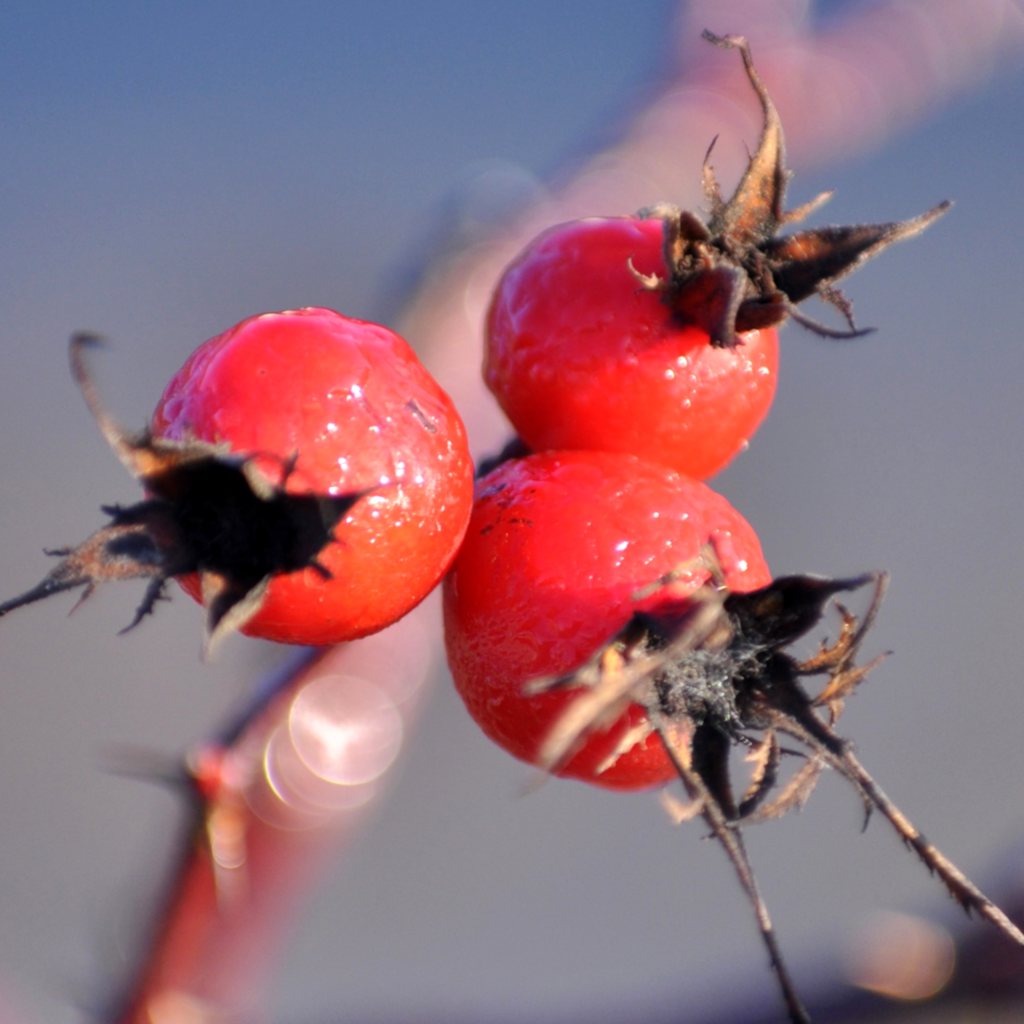
Haws ripen from early autumn and suit jelly better than raw snacking
How to use it
Flower infusion (the everyday form). Use a heaped teaspoon of dried flowering tops per mug. Pour on water just off the boil, cover, and leave it for ten minutes. Strain.
When to drink it. One mug in the late afternoon and one after the evening meal is the classic rhythm, kept to a one- or two-week course, then a break.
Taste and pairing. Mild, hay-like, a little almondy. Lemon balm or lime blossom rounds it out; a drop of honey suits it well.
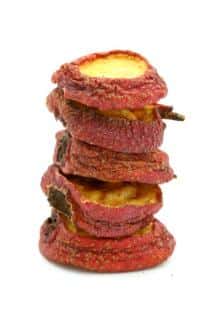
Berry decoction. Simmer a spoonful of dried berries in a small pan of water for ten minutes, sweeten with honey, let it cool, and use it as a gargle.
Face wash. Make the same decoction with flowers or berries, strain through a cloth, cool completely, and dab on with cotton wool. Keep it in the fridge and use within two days.
Tincture, capsules and drops. Made from standardised extracts. Follow the maker’s instructions on the label rather than improvising, as strengths differ widely.
In the kitchen. The bright green very young leaves are tender enough to scatter into a salad or nibble on a walk. Berries are mealy raw but make a fine, faintly rose-scented jelly or jam — cook them, then sieve out the stony seeds.
Which preparation, and what it is used for
Form
Part and preparation
Traditional purpose
Infusion
Dried flowering tops, steeped ten minutes, covered
The classic calming evening drink of herbalism
Decoction
Berries or flowers simmered, then strained
Gargle for a scratchy throat, or a cooled face wash
Tincture and capsules
Commercial extracts of flower and leaf
Longer, measured courses; dosed by the label
Culinary
Young leaves raw; berries cooked into jelly
Food, not remedy — a hedgerow flavour
Growing your own
Well-drained, cool, rich soil suits hawthorn best. Plant in full sun or light part shade.
It shrugs off extreme conditions, wide temperature swings and wind, which is why it makes such a good hedge.
A pot soon feels too tight unless you are growing it as a bonsai and pruning roots and stems regularly.
Expect visits from red spider mites, aphids and caterpillars — they rarely do lasting damage.
The one thing to remember: a heaped teaspoon of dried hawthorn flowers per mug, steeped ten minutes under a lid, taken in the evening for a week or two — and never alongside heart medication without asking your doctor.
Which part of hawthorn do I actually use?
The flowering tops are the part herbalists use most, picked in late spring with the first young leaves attached. Berries, gathered from early to mid-autumn, are used for gargles, face washes and jelly. The very young spring leaves are simply edible, tender enough for a salad.
What does hawthorn tea taste like?
Gentle and hay-like, with a faint almond note from the flowers. It is not bitter and needs no disguising, though honey suits it. Lime blossom or lemon balm makes a pleasant blend if you find it too plain on its own.
How long should I drink it for?
Traditional practice keeps hawthorn to a course of one or two weeks, one or two mugs a day, then a pause. It is treated as a seasonal helper rather than a permanent fixture. If you feel you need it continuously, that is a conversation for a health professional.
Can I take hawthorn if I am on heart tablets?
Not without asking first. Hawthorn is known to interact with several cardiac and blood-pressure medications, including beta-blockers, digoxin-type drugs and diuretics. Speak to your doctor or pharmacist, and never swap a prescribed medicine for the plant.
Are hawthorn berries worth eating?
Raw, they are floury and unexciting — pleasant enough to nibble on a walk but nothing more. Cooked and sieved, they make a surprisingly good jelly with a faint rose scent. Always remove the stony seeds rather than crushing them.
This information is provided for general interest and reflects the traditional use of plants. It is not a substitute for medical advice. If you are on medication, pregnant, or in any doubt, ask a healthcare professional.
Written by Gaspard Lorthiois | Loves helping out, especially when it comes to growing things. Worked in herbal medicine, runs a farm, and dabbles in tech. Master's degree and engineer.