Home » Health » Ravintsara essential oil: what it is and how it is traditionally used
Ravintsara essential oil: what it is and how it is traditionally used
·
0
Ravintsara is the Madagascan camphor tree, and its leaves are steam-distilled into one of the most widely used essential oils in aromatherapy. This page sets out what the oil contains, what herbalists and aromatherapists traditionally credit it with, how to use it tonight in a diffuser, a steam bowl or a massage blend — and who should leave it alone.
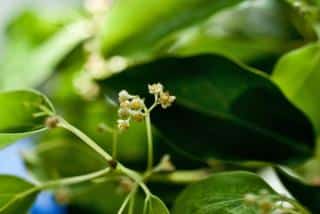
Only the leaves are gathered and distilled into essential oil
Ravintsara at a glance
Item
Detail
Botanical name
Cinnamomum camphora (cineole chemotype)
Family
Lauraceae
Part used
Leaves (steam-distilled)
Forms of use
Essential oil: diffusion, dry or steam inhalation, diluted massage oil
Harvest season
Leaves are picked through the growing year, most often from late spring to late summer
Taste and aroma
Fresh, clean and camphorous, close to eucalyptus; sharp and cooling on the palate
Origin
Asian tree, established in Madagascar in the nineteenth century
What it is credited with
Aromatherapy treats it as the classic cold-season diffuser oil, reached for when the household air feels stale and breathing feels blocked.
Traditional use in Madagascar turned to the leaves for winter ailments and the general run-down feeling that goes with them.
Herbalists describe it as clearing and expectorant in inhalation, and use it when a cough is loose and rattling rather than dry.
Naturopathy credits the diluted oil, massaged along the spine and the soles of the feet, with a reviving, tonic effect at the end of a long day.
Aromatherapy practice also gives it a reputation for steadying frayed nerves and easing everyday tension when inhaled from a tissue or a diffuser.
Massage traditions use it well diluted on tight, overworked muscles after exercise or heavy garden work.
Blenders pair it with niaouli, cinnamon or grapefruit essential oils to push the blend in a particular direction — clearing, warming or calming.
How to use it
Ravintsara is an essential oil, not a tea plant. Everything below is external or airborne. It is never used neat on skin and never swallowed without a qualified practitioner guiding you.
The oil is always diluted or diffused, never used neat
In a diffuser
A few drops in the water reservoir of an electric diffuser, or on the pad of a passive one.
Run it for a short session — a quarter of an hour is plenty — then let the room air out.
Best in a living room or hallway, not in a closed bedroom overnight.
Steam inhalation
A bowl of hot, not boiling, water; a few drops on the surface; a towel over the head.
Eyes shut, breathe through the nose for a couple of minutes, then stop.
Traditionally done in the evening, once a day at most during a cold spell.
Dry inhalation
One drop on a tissue or a cotton pad, held a hand’s width from the face.
Two or three slow breaths is the whole method — the simplest way to try the oil before committing to a blend.
Diluted massage oil
Work to a light dilution: a very small amount of essential oil lost in a generous spoonful of carrier oil such as sweet almond, apricot kernel or sunflower.
Massage over the upper back and chest, along the spine, or on tired calves and wrists.
Patch test the inside of the elbow first and wait a day before spreading it further.
Wash your hands afterwards and keep the blend away from eyes, lips and mucous membranes.
Forms of use compared
Form
Preparation
Traditionally used for
Diffusion
A few drops in a diffuser, short sessions
Aromatherapy’s cold-season room oil, for air that feels stale
Steam inhalation
A few drops on hot water, towel over the head
Credited by herbalists with a clearing effect on blocked breathing
Dry inhalation
One drop on a tissue
Reputed in aromatherapy to lift flagging spirits and steady tension
Diluted massage oil
Well diluted in a plant carrier oil
Naturopathy’s reviving rub for tired legs and tight muscles
Frequently Asked Questions
The one thing to remember: a few drops in a diffuser or on a tissue is the simplest and safest way to meet ravintsara — everything applied to skin goes into a carrier oil first.
Is ravintsara the same thing as ravensara?
No. Ravintsara is Cinnamomum camphora, cineole chemotype, from Madagascar; ravensara is Ravensara aromatica, a different tree with a different composition. The two names are constantly muddled on shop shelves. Check the botanical name on the bottle before you buy.
Can I put it straight on my skin?
No — dilute it in a plant carrier oil such as sweet almond or apricot kernel. A very small amount of essential oil in a generous spoonful of carrier is the usual working strength. Patch test the inside of your elbow and wait a day before using it more widely.
Can I diffuse it with children in the house?
Not for children under three, who should not be exposed to it at all. For older children, keep sessions short, diffuse in a room they are not sitting in, and air the room afterwards. Cineole-rich oils are generally kept away from young children.
What does it smell and taste like?
Fresh, clean and camphorous, very close to eucalyptus, with a slightly sweet edge. On the palate it is sharp and cooling, which is why it is used in the air and on the skin rather than as a flavouring.
How often can I use it?
Aromatherapy practice favours short, occasional use rather than constant exposure: a brief diffuser session, one steam inhalation in the evening, or a massage blend applied when needed. Take breaks, and stop if the smell starts to feel overpowering.
This information is provided for general interest and reflects the traditional use of plants. It is not a substitute for medical advice. If you are on medication, pregnant, or in any doubt, ask a healthcare professional.
Written by Gaspard Lorthiois | Loves helping out, especially when it comes to growing things. Worked in herbal medicine, runs a farm, and dabbles in tech. Master's degree and engineer.