Home » Health » Pineapple: traditional uses, how to prepare it, and what to watch for
Pineapple: traditional uses, how to prepare it, and what to watch for
·
0
Pineapple (Ananas comosus) is a herbaceous perennial from Central and South America, grown for its juicy, acid-sweet fruit. Here is what the fruit and its stem actually contain, what herbalism and naturopathy traditionally make of them, and how to use pineapple tonight — fresh, juiced, cooked or as a tenderising marinade — plus the cautions that come with it.
Pineapple at a glance
Item
Detail
Botanical name
Ananas comosus
Family
Bromeliaceae
Origin
Central and South America
Parts used
Ripe flesh, juice, core and stem (for bromelain), rind for infusions
Picked fully ripe in the hottest part of the year; under glass, fruit ripens from midsummer to early autumn
Taste
Sweet and markedly acidic, fragrant, slightly resinous near the core
What it is credited with
Digestion after a heavy meal. Naturopathy credits fresh pineapple, eaten at the end of a protein-rich meal, with making the meal sit more lightly, thanks to its bromelain content.
Sluggish transit. Its fibre gives it a long-standing reputation for keeping intestinal transit moving and easing that bloated, uncomfortable feeling low in the abdomen.
Water retention. Herbalists have traditionally used pineapple, and infusions of its rind, as a mildly diuretic food, part of the classic “drainage” repertoire of spring cures.
Joint stiffness and knocks. In traditional herbalism, preparations from the pineapple stem were used to ease aching, stiff joints and the soreness that follows a strain or a bruise.
Puffiness and swelling. Naturopathy has long associated bromelain-rich pineapple stem with reducing the feeling of heaviness and swelling in tired legs.
A scratchy throat. Pineapple juice, sipped slowly and diluted, has a folk reputation for soothing a raw throat — in moderate amounts, not unlimited ones.
Small skin troubles. Applied to the skin, pineapple flesh has traditionally been used on insect bites and minor grazes for its decongesting, cleansing reputation.
Old-fashioned worming cures. Folk medicine in its native range credited unsweetened pineapple juice and the rind with deworming properties — a historical use, nothing more.
How to use it
Fresh, the simplest form
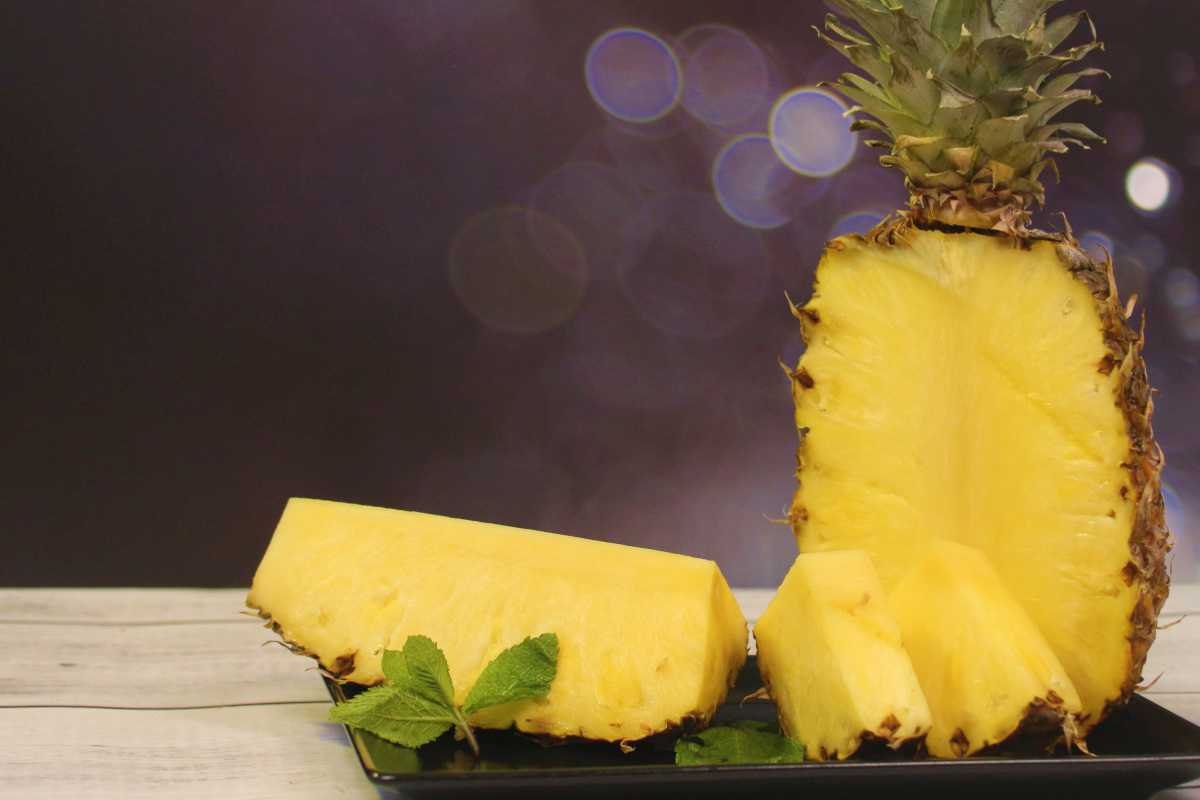
Cut a ripe pineapple into rings or chunks and eat one or two slices at the end of a meal.
Keep a little of the fibrous core on each slice: it is tougher to chew but the most bromelain-rich part of the edible fruit.
Ripeness test: the fruit should smell sweet at the base, and a central crown leaf should pull out with gentle resistance.
Juice
Blend fresh flesh, strain if you prefer, and drink a small glass, diluted half-and-half with water if the acidity bites.
Drink it within the hour — fresh juice loses its fragrance fast and ferments quickly in warmth.
Rinse your mouth with plain water afterwards: pineapple is acidic and unkind to tooth enamel.
Rind infusion
Scrub the outside of an untreated pineapple, then simmer the washed rind in water for 10 to 15 minutes, covered.
Strain, let it cool, and drink one or two cups across the day, for no more than a week or two at a stretch.
Flavour it with a slice of ginger, a stick of cinnamon or a few mint leaves; it needs no sugar.
In the kitchen
Marinade: a few tablespoons of fresh juice over chicken, pork or firm fish for 20 to 30 minutes, no longer, or the surface turns mushy.
Sweet and sour: add chunks to curries, stir-fries, rice dishes or grilled skewers in the last few minutes of cooking.
Grilled or pan-caramelised: thick slices in a dry hot pan, turned once, with a grind of black pepper or a scrape of vanilla.
Baking note: use cooked or tinned pineapple in mousses and jellies — fresh fruit will stop gelatine setting.
On the skin
Press a small piece of fresh flesh on an insect bite for a minute or two, then rinse the area with clear water.
Never use it on broken, weeping or burnt skin, and stop at the first sign of stinging or redness.
Forms of pineapple and what each is used for
Form
How to prepare it
Traditionally used for
Fresh slices
One or two rings, core included, at the end of a meal
Lightness after a rich meal; fibre for transit
Fresh juice
Small glass, diluted, drunk within the hour
Sipped for a scratchy throat; refreshing drink
Rind infusion
Washed rind simmered 10–15 minutes, strained
The classic mildly diuretic “drainage” drink
Marinade
Juice over meat or fish, 20–30 minutes maximum
Tenderising proteins before cooking
Fresh flesh, topical
Pressed briefly on intact skin, then rinsed
Insect bites and minor skin irritations
Frequently Asked Questions
The one thing to remember: one or two slices of ripe fresh pineapple, core included, at the end of a rich meal — that is the traditional use, and the easiest to try tonight.
One or two slices, core included, after a rich meal
Which part of the pineapple is the most interesting?
The flesh gives fibre, vitamin C and B-group vitamins. The fibrous core and the stem are the parts richest in bromelain, the protein-digesting enzyme. Keeping a little core on each slice is the simplest way to get some, and the washed rind can be simmered into an infusion.
Why does fresh pineapple make my mouth tingle?
That is the bromelain working on the proteins in your mouth, combined with the fruit’s natural acidity. It is normal and passes quickly. If it turns into itching, swelling or hives, stop eating it and get advice — pineapple allergy exists and can cross-react with latex.
How long should a pineapple rind infusion cure last?
Naturopathy treats it as a short seasonal drink, not a daily habit: one or two cups a day for a week or two, then a break. Skip it altogether if you have kidney trouble or already take a diuretic.
Can I use pineapple juice in a jelly or mousse?
Not fresh. Bromelain breaks down gelatine and your dessert will never set. Use cooked or tinned pineapple for those recipes, since heat deactivates the enzyme, and save the fresh fruit for eating or marinating.
Is pineapple safe if I am on blood thinners?
A slice of fruit with a meal is food. Concentrated stem or bromelain preparations are a different matter, as bromelain is known to interact with anticoagulant and antiplatelet medicines, and with some antibiotics. Check with your doctor or pharmacist before starting any pineapple cure.
This information is provided for general interest and reflects the traditional use of plants. It is not a substitute for medical advice. If you are on medication, pregnant, or in any doubt, ask a healthcare professional.
Written by Gaspard Lorthiois | Loves helping out, especially when it comes to growing things. Worked in herbal medicine, runs a farm, and dabbles in tech. Master's degree and engineer.